(7% discount is applied at checkout)
Cart is empty
Your go-to destination for cutting-edge server products
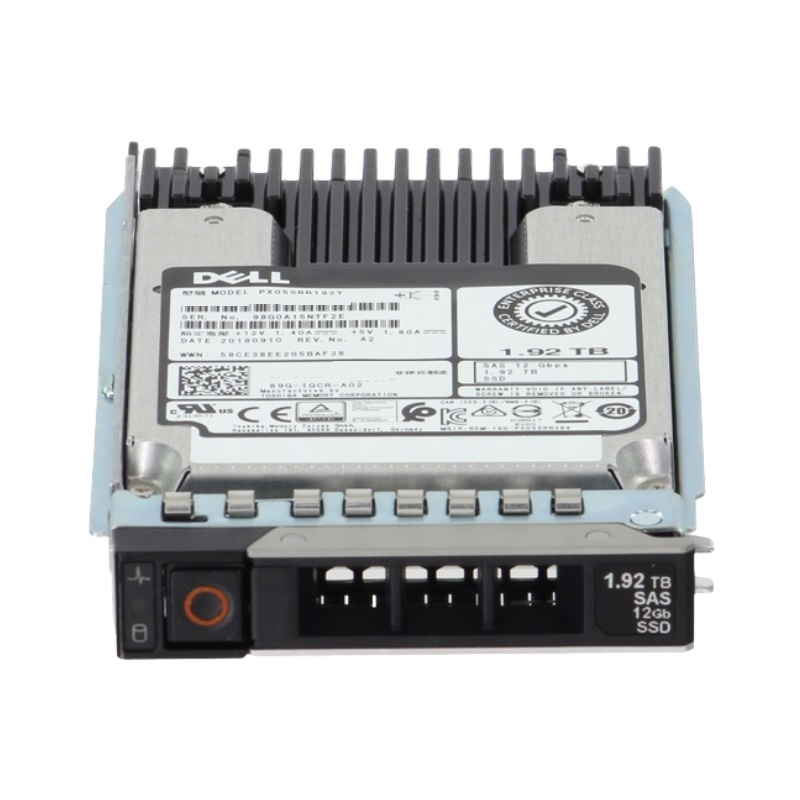


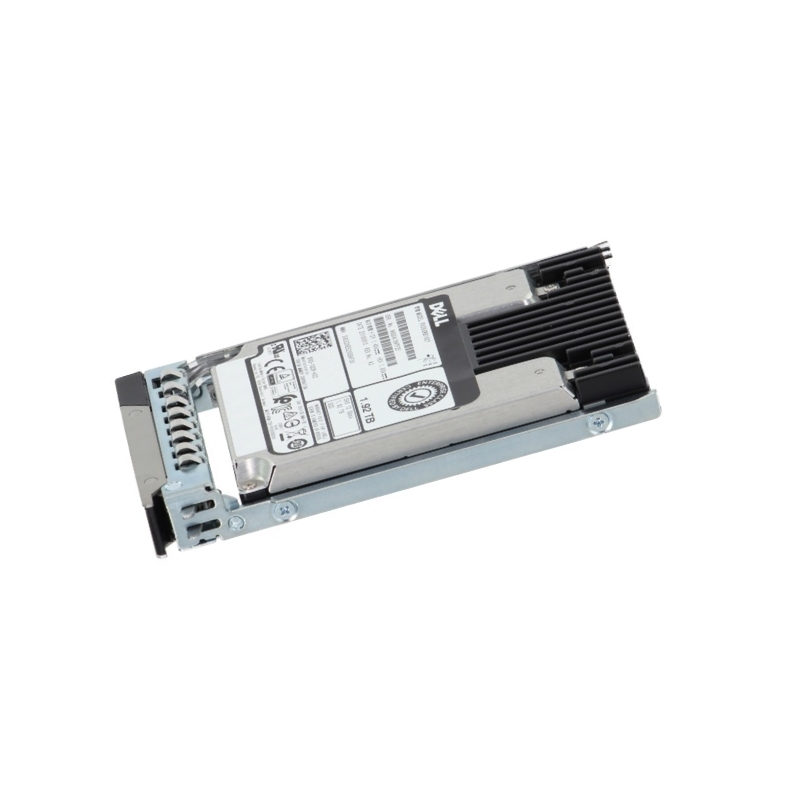
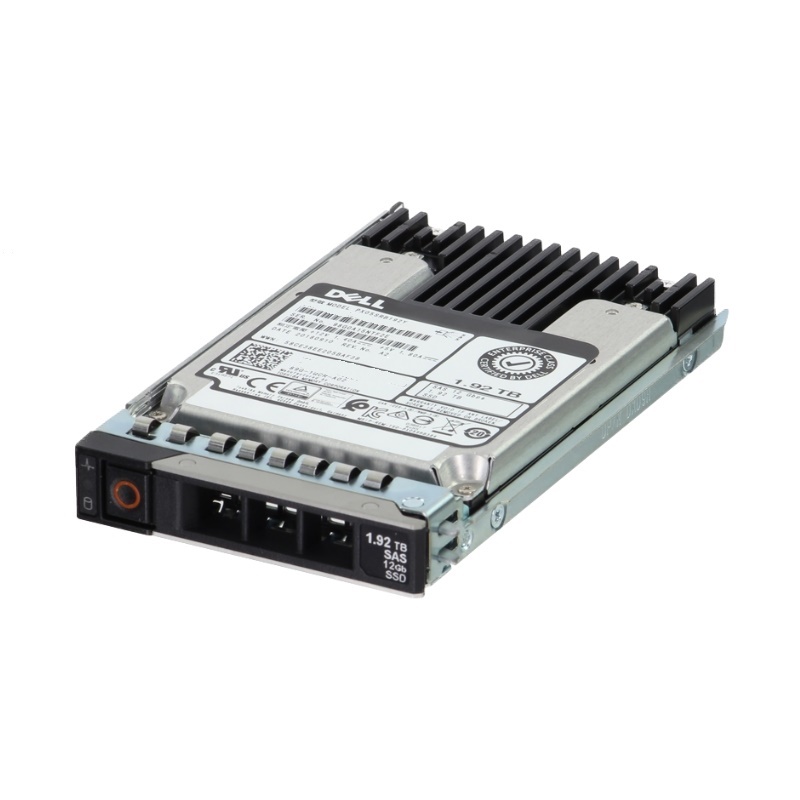
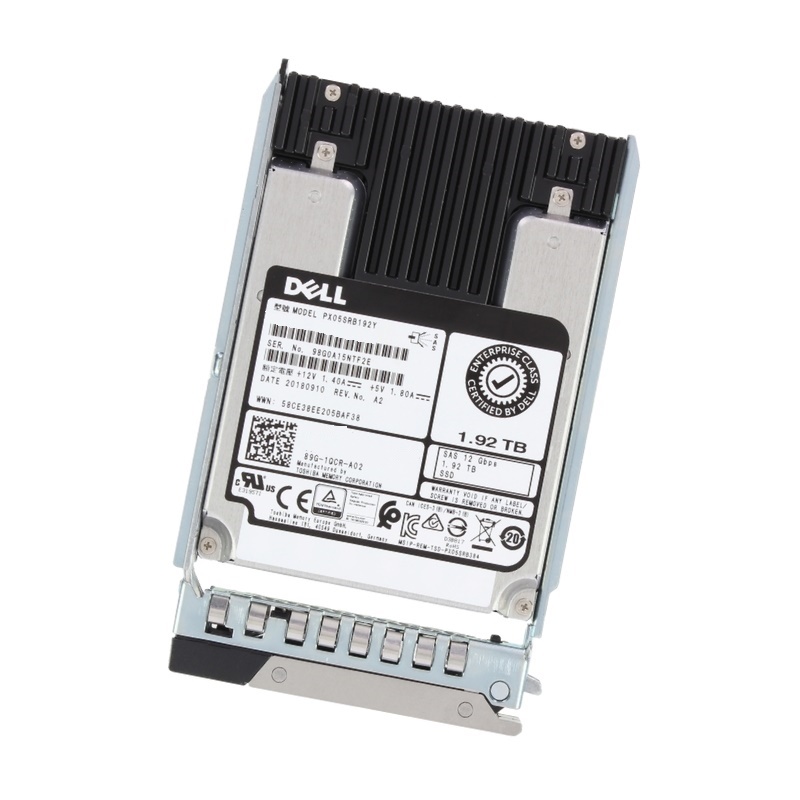
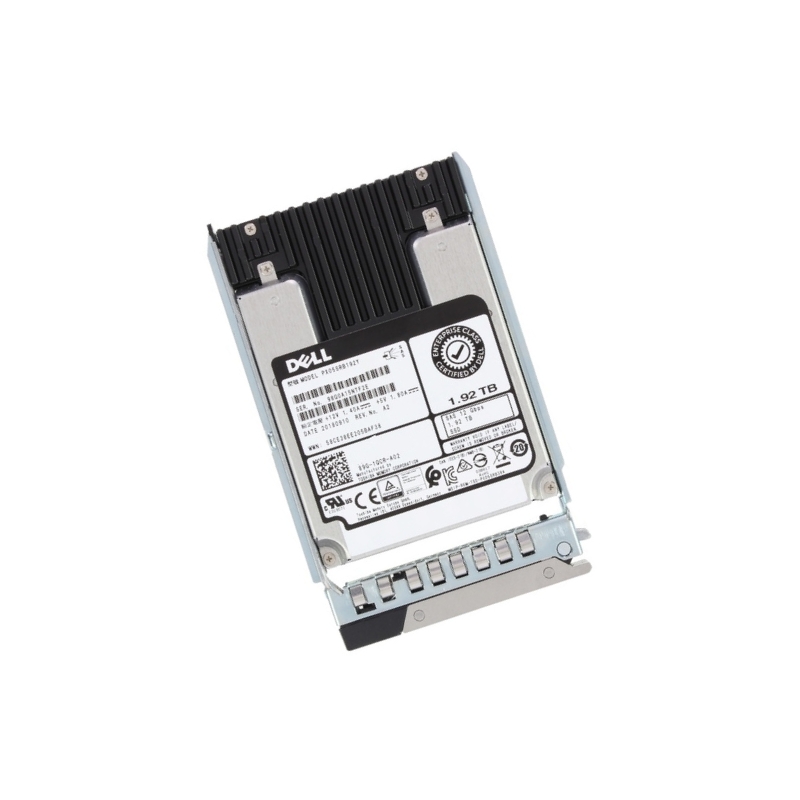
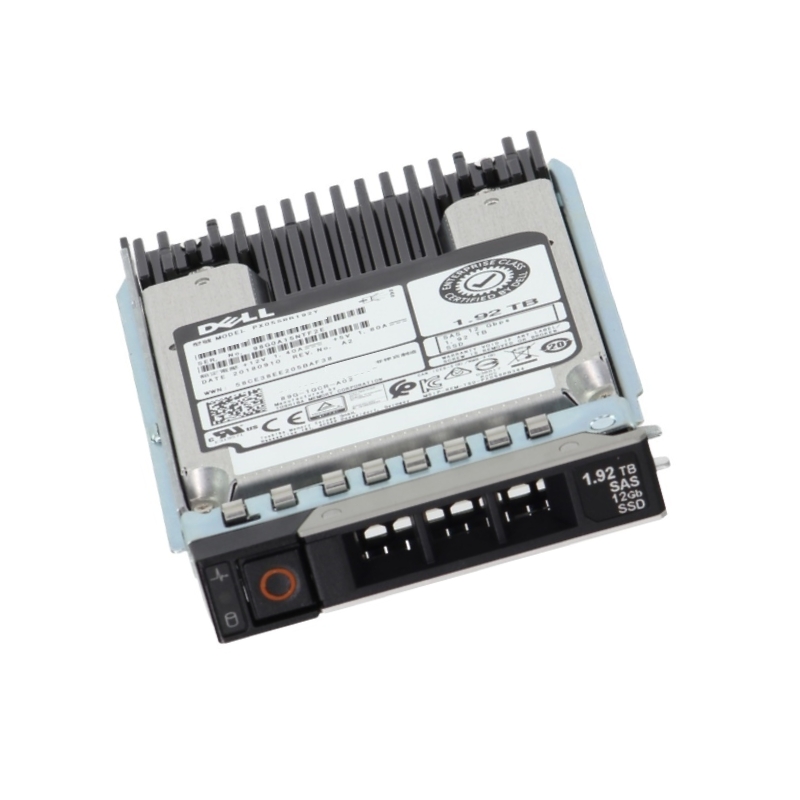
Dell HNMJJ 1.92TB SAS 12GBPS Value Mixed Use Hot-plug Drive with Tray SSD. New Sealed in Box (NIB) 1 Year Warranty
The HNMJJ Dell 1.92TB SAS 12Gbps Value Mixed‑Use Hot‑Plug Drive with Tray belongs to a specialized class of enterprise storage devices optimized for mixed workloads. In this category, the emphasis is on delivering a well-balanced combination of performance, endurance, and reliability while maintaining affordability and compatibility with existing server infrastructures.
Engineered for environments that demand a balance between read and write performance, this SSD features V-NAND TLC (Triple-Level Cell) flash memory, delivering dependable performance across various workloads. Whether managing transactional databases or virtual environments, it maintains consistent speed and endurance.
This 2.5" drive integrates effortlessly into enterprise infrastructures. It includes a single 12Gbps SAS interface and is compatible with standard hot-plug bays, enabling efficient upgrade paths and minimal downtime during maintenance.
This SSD is optimized for Dell PowerEdge systems, making it a flexible choice for a broad range of server platforms. It ensures optimal performance in demanding environments such as virtualization, database processing, and cloud computing.
This drive delivers robust throughput and dependable responsiveness for operations requiring high IOPS. It is ideal for applications including cloud storage platforms, high-performance computing, and data center operations.
The HNMJJ Dell 1.92TB SAS 12Gbps Value Mixed‑Use Hot‑Plug Drive with Tray belongs to a specialized class of enterprise storage devices optimized for mixed workloads. In this category, the emphasis is on delivering a well-balanced combination of performance, endurance, and reliability while maintaining affordability and compatibility with existing server infrastructures. The following sections unpack the key aspects, subcategories, and deployment contexts to help you understand why this SSD is a compelling choice for data centers, virtualization farms, and hybrid storage setups.
This category organizes SSDs that are engineered for “mixed-use”—i.e. they are rated to handle both read-intensive and write-intensive operations. Unlike pure write-intensive or read-intensive drives, mixed-use SSDs strike a compromise, making them suitable for general-purpose enterprise workloads. The HNMJJ falls under this middle-ground class, particularly suitable where occasional bursts of writes exist alongside heavy read operations.
Within mixed-use SSDs, you can find further segmentation by capacity (e.g. 480 GB, 960 GB, 1.92 TB, 3.84 TB), interface (SAS, NVMe, SATA), and performance class (value-tier, mainstream-tier, premium-tier). The HNMJJ is positioned as a value-tier mixed-use SAS SSD, meaning it aims to deliver dependable performance at a favorable cost-per-gigabyte relative to premium-tier alternatives.
The HNMJJ supports a capacity of 1.92 TB, which is a sizable footprint for many enterprise workloads. It utilizes **V‑NAND TLC (Triple-Level Cell)** architecture — a memory technology that stores three bits per cell while leveraging vertical stacking to enhance density and endurance. This is common in many enterprise SSDs aiming for balanced cost and durability in the mixed-use bracket.
This SSD uses a **SAS (Serial Attached SCSI)** interface rated at **12 Gbps**. SAS remains a favored protocol in enterprise and data center environments because of its robustness, compatibility, dual-path capabilities, and backward-compatibility with 6 Gbps SAS or SATA bridges when needed.
With a **2.5‑inch form factor** and a **hot-pluggable tray**, this drive is designed for quick deployment and replacement. The tray ensures proper alignment, cooling, and mechanical support in server bays. Hot-swappability means that the drive can be removed or inserted without shutting down the server, dramatically reducing maintenance windows.
The external data transfer rate is documented at **1.2 GB/s**, which corresponds to the peak sequential throughput in favorable conditions. Real-world sustained performance will depend on workload characteristics (block size, IO depth, queue depth, read/write mix). Still, in its category, this throughput is competitive and suitable for many mid-tier enterprise tasks.
Firmware in enterprise SSDs plays a critical role in garbage collection, wear leveling, error correction, and performance consistency over time. Mixed-use SSD firmware must manage both write amplification and read latency, balancing the two demands. The HNMJJ’s firmware is likely tuned to ensure stable performance under mixed IO patterns rather than extremes in either direction.
This category of SSDs is effective for deployment in a variety of environments where reliable, moderate-to-high performance is demanded across different IO patterns. Here are typical use cases and deployment contexts where a SAS mixed-use SSD such as the HNMJJ shines.
In virtual machine hosts, IO tends to be a mix of reads (VM boot, paging) and writes (updates, snapshots, logging). A balanced mixed-use drive reduces bottlenecks. The HNMJJ is well-suited as a backing storage medium in hypervisors and hyperconverged systems, where consistent latency and moderate throughput are essential across many concurrent VMs.
Smaller transactional databases that aren’t exclusively write-heavy — such as ERP systems, e-commerce platforms, or CRM backends — also benefit from a balanced SSD. The HNMJJ can serve as either primary storage or tiered storage with caching above slower disk tiers. It handles reads for queries and writes for updates with solid consistency.
Many administrators use enterprise SSDs like the HNMJJ for operating system volumes in servers because of faster boot times, reliability, and fault tolerance. The mixed-use nature ensures that daily OS operations (reads) and updates or intermediate writes don’t push the drive out of spec prematurely.
The SSD can act as a cache or fast-tier layer in a hybrid storage array. In these configurations, hot data is promoted to this drive, while colder data remains on spinning media. The mixed-use design ensures that caching bursts (which may include writes) are handled without overwhelming the drive.
An essential aspect of this category is compatibility — not merely physical fit but firmware coherency, pathing, vendor integration, and supportability. The HNMJJ excels in this regard for certain Dell PowerEdge systems.
These servers typically support 2.5‑inch SAS or NVMe bays, backplane compatibility, and hot-swap trays. The HNMJJ is validated to operate reliably in these platforms, with firmware compatibility and pathing integration.
The drive’s SAS interface ensures compatibility with enterprise backplanes and controllers. Firmware-level features such as SMART support, error reporting, background scrubbing, and predictive failure monitoring are expected to integrate with Dell’s management tools (e.g. iDRAC or OpenManage).
Beyond vendor-listed throughput numbers, real-world performance is shaped by latency, IO consistency, IO size distribution, and workload mixing. The following key performance attributes define the user experience in this category.
Mixed-use SSDs aim to deliver low latency across a range of random IO patterns. While sequential throughput may reach 1.2 GB/s, random read/write IOPS (e.g. 4K, 8K blocks) matter more for database, virtualization, and mixed workloads. The HNMJJ is expected to maintain predictable latency under steady load because its firmware balances wear leveling and caching tasks transparently.
Many mixed-use SSDs offer high burst throughput to accommodate spikes in activity (e.g. during backups or snapshots). However, sustained performance over long durations matters more in continuous enterprise tasks. This category of SSDs is designed so that bursts can be absorbed without large degradation in sustained rate. The 1.2 GB/s spec represents a peak that should taper gracefully when thermal or wear constraints activate.
One of the challenges in SSD performance is variance over time as the drive fills, garbage collection operates, and wear-leveling intervenes. A well-designed mixed-use SSD manages these factors so that performance degradation is minimal and gradual rather than abrupt. The HNMJJ is categorized to operate reliably even as it approaches capacity thresholds, maintaining usable performance under typical enterprise service conditions.
Physical management—power draw, heat dissipation, and durability—is critical in large-scale server environments. SSDs in this category must meet stringent operational conditions.
Mixed-use SSDs aim to balance performance against power consumption. Under light load, they may downshift power states to conserve energy, and under heavier load, they may draw higher current. The drive’s design ensures that power budgets in rack systems remain manageable, even with dozens of SSDs operating simultaneously.
Always confirm that the drive’s firmware is tested and supported by your server vendor. Dell often issues specific firmware bundles for storage devices; deploying a drive with untested or mismatched firmware may lead to compatibility issues or degraded performance. Ensure your iDRAC, RAID controller, or SAS controller supports the HNMJJ’s firmware revision.
Analyze your workloads: if writes dominate heavily, a write-optimized drive may be better; if reads dominate, a read-optimized drive may suffice. But many workloads are mixed. For environments where usage patterns shift over time (e.g. evolving VM workloads, seasonal bursts), the flexible mixed-use class provides a safer baseline. Use performance monitoring to project growth and plan for possible upgrades.
Because even enterprise SSDs can fail, plan redundancy at the architectural level. Use RAID (e.g. RAID‑1, RAID‑10), erasure coding, or mirrored setups. The hot-plug nature of HNMJJ makes it easy to replace failed drives quickly without service disruption, but system-level redundancy is still essential.
Use synonyms and closely related terms—such as “enterprise-grade SAS SSD”, “hot-swap tray SSD drive”, “balanced-performance mixed-use storage”, “Dell-compatible SSD 1.92 TB SAS 12 Gbps”—to capture variations in user search queries. These terms should naturally appear in paragraphs, bullet lists, and headings without forced repetition.
Within a larger catalog, you should link to related subcategories (e.g. “Dell 960 GB mixed‑use SAS SSDs”, “Dell SAS write-intensive SSDs”, “bays and trays for 2.5‑inch SAS drives”) using descriptive anchor text. For example: “Explore our full range of Dell-compatible mixed-use SAS SSDs” or “Check out trays and hot-swap sleds for 2.5″ SAS drives”. These internal links reinforce the semantic structure and help distribute ranking authority.
Given the finite nature of flash, plan ahead for a refresh cycle or phased replacement. A typical enterprise SSD in mixed-use classification may have a contract lifecycle of 3 to 5 years. Monitor total bytes written (TBW), remaining spare area, and SMART warning thresholds to schedule preemptive replacements before performance or reliability degrade noticeably.
A key purchasing criterion is batch uniformity. Drives from the same production lot, or firmware revision, tend to perform more uniformly, which simplifies load balancing and avoids cases where one slow drive becomes a bottleneck. For the HNMJJ line, ordering drives from the same SKU and firmware version helps maintain consistency.
At scale, these SSDs can form the backbone of high-availability, high-throughput storage racks. They may be grouped under storage enclosures, distributed arrays, or used as caching layers above bulk HDD storage. The balanced nature of mixed-use workloads helps in environments where usage patterns shift across time or cycles.
If your workload is heavily write-dominant—like high-frequency logging, video capture, or large-scale analytics with frequent writes—a write-optimized SSD may outperform a mixed-use SSD in endurance and sustained throughput. Exceeding the write profile for which the drive is rated can lead to accelerated wear and performance degradation.
Implement product schema or aggregate offer schema to provide structured metadata (e.g. capacity, interface, manufacturer, part number). This helps search engines better understand the content and can improve presentation in search results (e.g. showing “Dell 1.92TB SAS SSD” with specs in search preview).


 Contact Us
 Information
 Catalog
 Solid State Drives (SSD)
 Network Switches
 Hard Disk Drives
 HBA & Controllers
 PC & Servers
 PC & Server Memory
 CPU & Processors
 Network Routers
 Power Supplies
 Tape Drives & Libraries
 Network Devices
 Computer & Network Cables