(7% discount is applied at checkout)
Cart is empty
Your go-to destination for cutting-edge server products
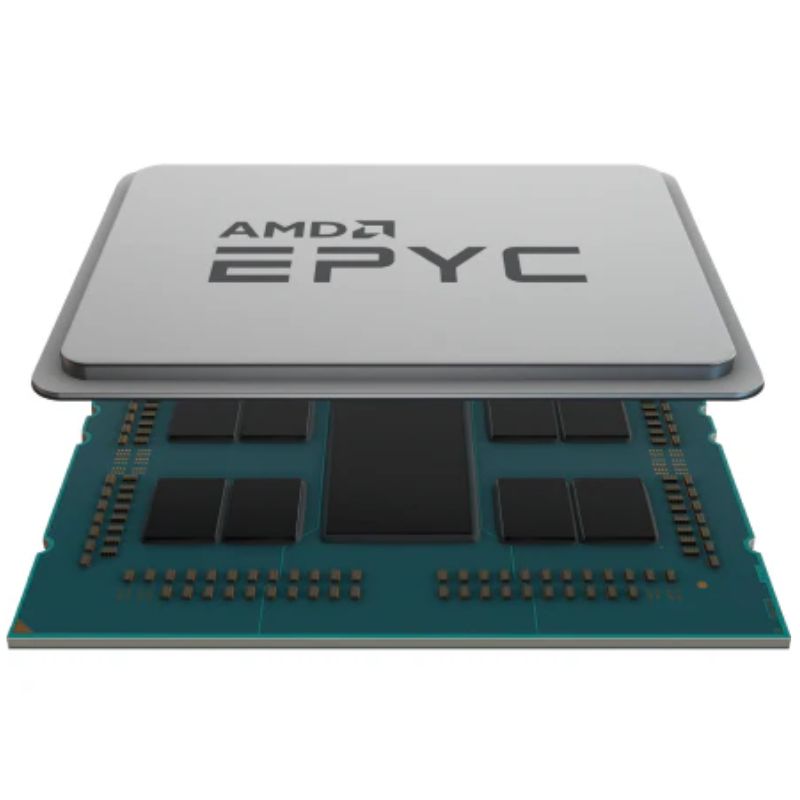


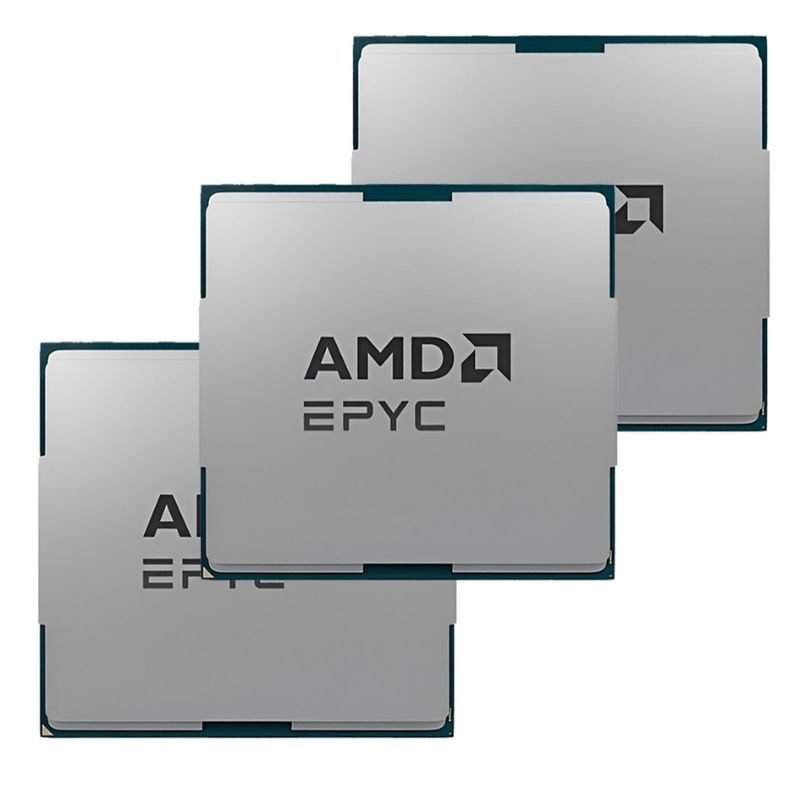
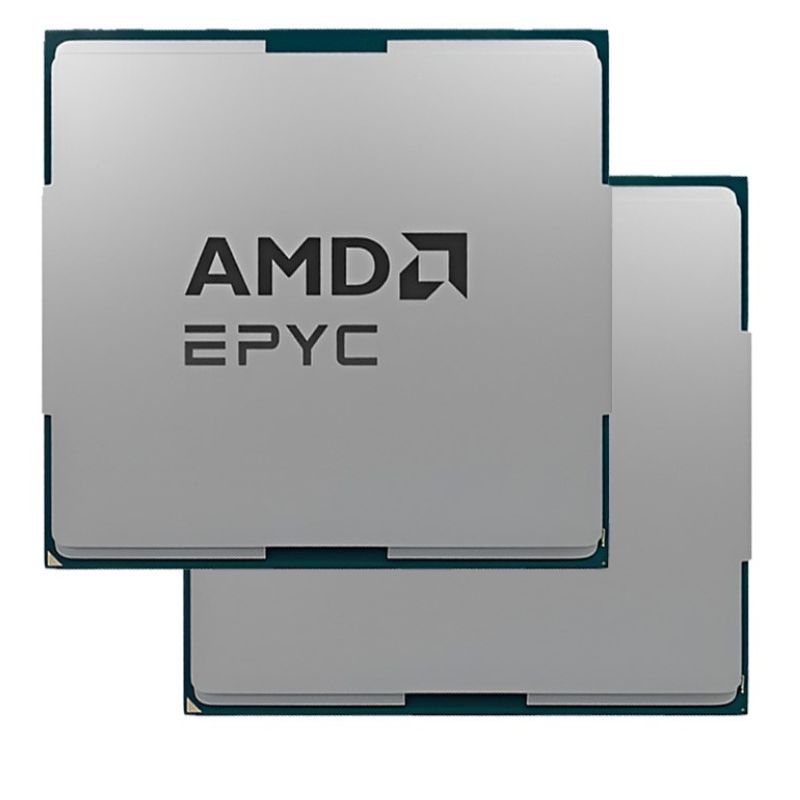
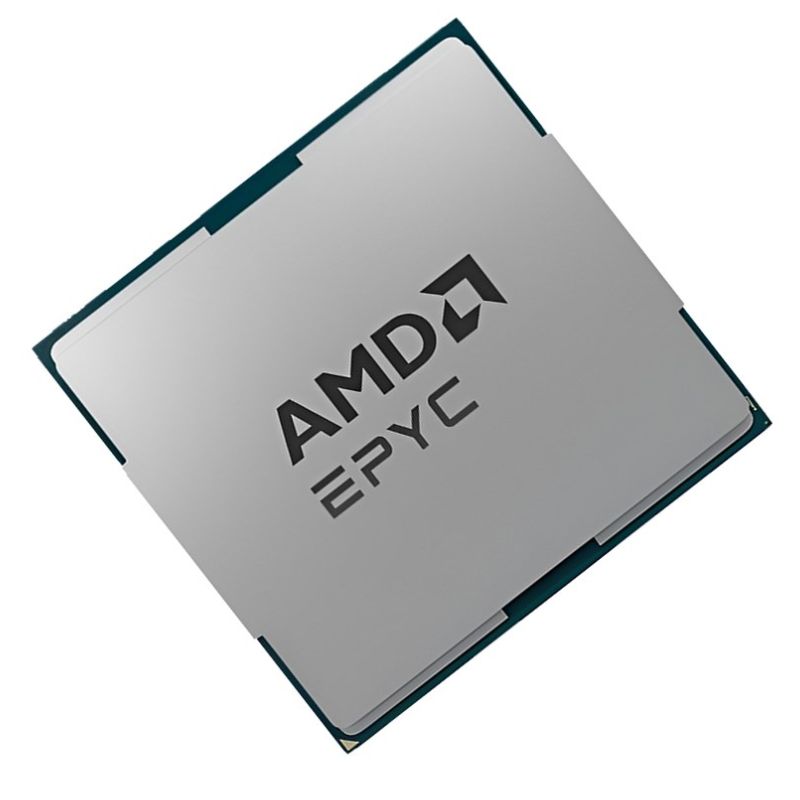
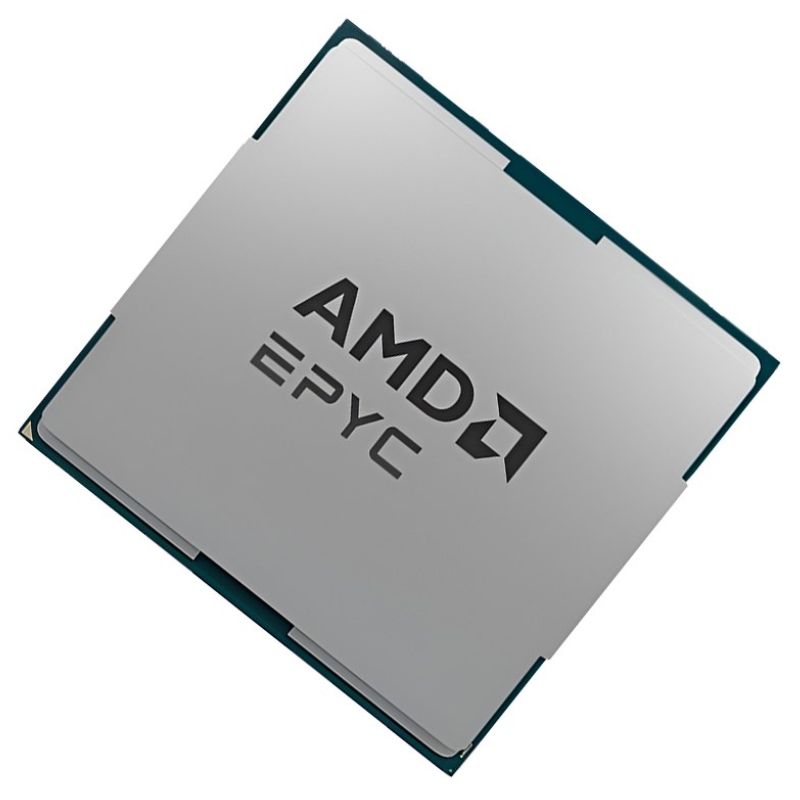
AMD 100-000000791WOF Genoa X EPYC 9384X 32-Core 3.10GHz Up To 4.0GHz 256MB L3 Cache 320W TDP Socket SP5 Processor. New (System) Pull with 1-Year Replacement Warranty. Call
The AMD EPYC 9384X Genoa X processor delivers exceptional multi-threaded performance, engineered for data-intensive workloads and enterprise-grade applications. With a robust 32-core, 64-thread configuration, it’s built to handle the most demanding environments.
The AMD 100-000000791WOF Genoa X EPYC 9384X 32-Core 3.10GHz Up To 4.0GHz 256MB L3 Cache 320W TDP Socket SP5 Processor defines a powerful tier within the EPYC line where core density, single-thread responsiveness and expansive cache combine to serve the most demanding enterprise, cloud and high-performance computing workloads. This category centers on a single-socket server CPU that blends a high base frequency with substantial boost capability, a very large shared L3 cache measured at 256MB, and a robust thermal design power of 320W. Designed for Socket SP5 platforms, the EPYC 9384X is positioned where scalability and platform feature richness meet the need for predictable, long-running performance under saturation.
The architecture behind AMD 100-000000791WOF Genoa X EPYC 9384X emphasizes a harmonious balance between compute throughput and latency-sensitive execution. With 32 physical cores and simultaneous multithreading support, the EPYC 9384X is optimized to handle large thread counts and mixed workload profiles — from multi-tenant virtualization to large in-memory databases. The 3.10GHz base clock provides stable sustained operation under heavy server loads, while the dynamic boost capability up to 4.0GHz helps accelerate single-threaded sections of modern enterprise applications and code paths with high instruction-level dependency. The substantial 256MB of L3 cache is a distinguishing hardware feature: it increases effective memory locality, reduces L3 miss rates for cache-friendly code, and shrinks the latency gap between on-chip data and main memory for many database, analytics, and caching workloads.
When integrated into production servers, AMD 100-000000791WOF Genoa X EPYC 9384X frequently demonstrates strong throughput across multi-core benchmarks while also delivering compelling single-thread bursts when required. The frequency headroom to 4.0GHz enables applications that momentarily need higher cycles per second to complete latency-sensitive tasks faster without compromising multi-threaded capacity. In environments that run mixed workloads—where some processes are heavily parallel and others are latency-bound—this behavior is particularly valuable. Real-world deployments often pair the EPYC 9384X with large memory footprints and fast NVMe storage to exploit the CPU’s cache and core resources efficiently, yielding improved query completion times for database queries and faster orchestration cycles in containerized microservice fabrics.
The 256MB L3 Cache in the AMD 100-000000791WOF Genoa X EPYC 9384X is architected to serve as a broad, shared reservoir of frequently accessed data. This size of shared cache changes workload behavior: it shrinks the number of costly trips to DRAM for hot data sets and benefits server applications with high temporal and spatial locality. Applications such as in-memory key-value stores, large-scale caching layers, and advanced analytics frameworks gain from a lower cache miss ratio and steadier I/O behavior. The cache also helps smooth out bursts in memory demand, providing a buffer that protects against brief spikes in DRAM latency and can meaningfully improve tail latencies for transaction-heavy services.
Socket SP5 platforms are engineered to deliver extensive I/O, memory expandability and enterprise-grade manageability for EPYC Genoa and Genoa X processors. When choosing motherboards and server chassis for the AMD 100-000000791WOF Genoa X EPYC 9384X, it is important to focus on board-level power delivery, VRM cooling, and BIOS-level support for the processor’s boost behavior. Rack designs that include adequate airflow, high-capacity power supplies and a thermal envelope designed for 320W TDP processors are preferred to ensure consistent boost behavior under sustained workloads.
Systems built around AMD 100-000000791WOF Genoa X EPYC 9384X typically emphasize large memory capacities and balanced channel population to achieve predictable bandwidth and latency. Memory configuration decisions directly affect throughput for memory-bound applications; as such, planning for populated DIMM slots across channels and selecting appropriate ECC-capable modules ensures both reliability and performance. Modern server designs that accommodate this processor often provide flexibility for large DIMM capacities and multiple DIMM ranks per channel, allowing administrators to tailor memory configurations to the unique needs of virtualization hosts, analytic nodes, or in-memory databases.
In HA clusters and fault-tolerant architectures, choosing AMD 100-000000791WOF Genoa X EPYC 9384X yields a clear advantage in consolidation ratios and workload densification due to the processor’s core count and cache. However, designers must balance the consolidation benefits with redundancy needs: denser virtual machine packing increases the blast radius of a single host failure.
The AMD 100-000000791WOF Genoa X EPYC 9384X is highly suited for a broad spectrum of server roles. It excels in virtualization and hyperconverged infrastructure where multiple VMs or containers must run concurrently, in database servers where cache size and core parallelism reduce query latencies, and in application servers handling heavy concurrency. Its characteristics also fit well with compute nodes in distributed analytics clusters and with the control-plane components of cloud-native platforms where processing bursts are common.
Cloud providers and private datacenter operators often adopt configurations based on AMD 100-000000791WOF Genoa X EPYC 9384X to increase VM density, reduce per-instance cost, and maintain strong per-thread performance. The combination of many cores and large shared cache improves performance-per-dollar for multi-tenant environments and enables more aggressive oversubscription ratios when paired with fast storage and carefully calibrated CPU pinning. When architecting tenant isolation, administrators should consider NUMA boundaries, CPU topology and memory placement strategies to avoid cross-node latency effects that can appear in highly consolidated environments.
Operating a 320W TDP processor like the AMD 100-000000791WOF Genoa X EPYC 9384X requires server-level attention to cooling path design and power provisioning. Effective cooling strategies start with chassis selection that promotes front-to-back airflow and continue with heatsink and cold-plate solutions sized to dissipate continuous thermal loads. Redundant fans with variable speed control, direct-touch heat spreaders and high-performance thermal interface materials help maintain junction temperature headroom that in turn preserves turbo behavior. Power supplies should be chosen with sufficient headroom for peak sustained CPU draw combined with storage and network adapters, and power distribution must respect server vendor guidelines for rail stability and transient response.
Success with the AMD 100-000000791WOF Genoa X EPYC 9384X depends not only on hardware selection but also on software and firmware integration quality. OS kernels, hypervisors and container runtimes must be validated for performance and stability on Socket SP5 platforms, and vendors commonly provide optimized drivers and tuning profiles to extract maximum efficiency. Configuration profiles for power management, hugepage allocation, and scheduling affinity are part of a recommended deployment playbook that ensures consistent performance across nodes in a compute cluster. Collaboration between server OEMs, operating system vendors and application teams results in improved out-of-the-box behavior and a smoother path to achieving target SLAs.
Choose the AMD 100-000000791WOF Genoa X EPYC 9384X when the deployment requires a robust general-purpose server CPU with an emphasis on consolidation, cache-sensitive workloads, and mixed-spectrum performance. It is an excellent choice for service providers and enterprises building mid-to-large scale clusters where high per-socket capability reduces the number of required servers while maintaining strong per-thread responsiveness for synchronous application components.


 Contact Us
 Information
 Catalog
 Solid State Drives (SSD)
 Network Switches
 Hard Disk Drives
 HBA & Controllers
 PC & Servers
 PC & Server Memory
 CPU & Processors
 Network Routers
 Power Supplies
 Tape Drives & Libraries
 Network Devices
 Computer & Network Cables