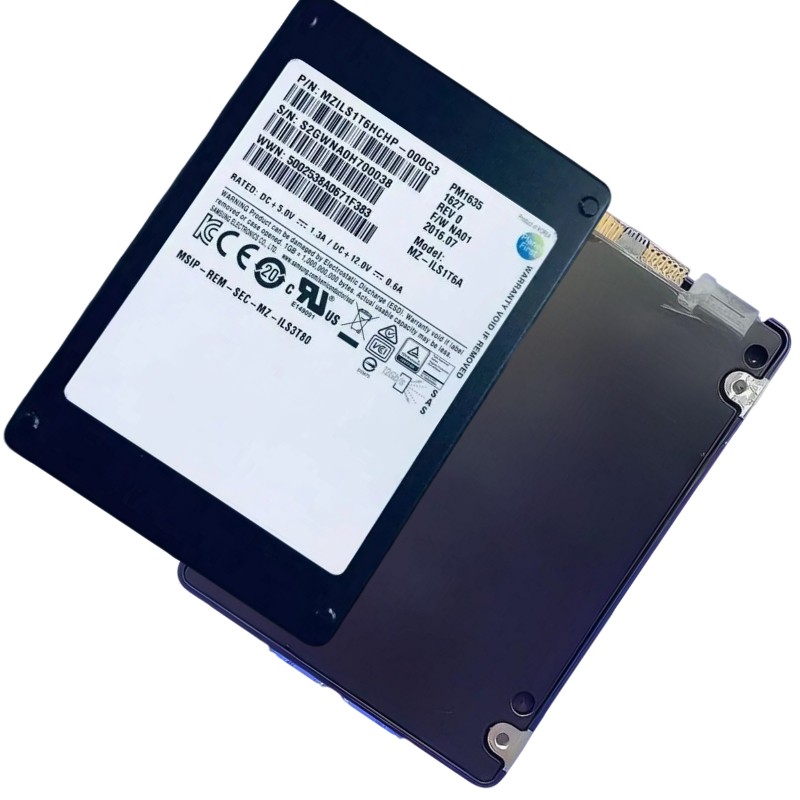
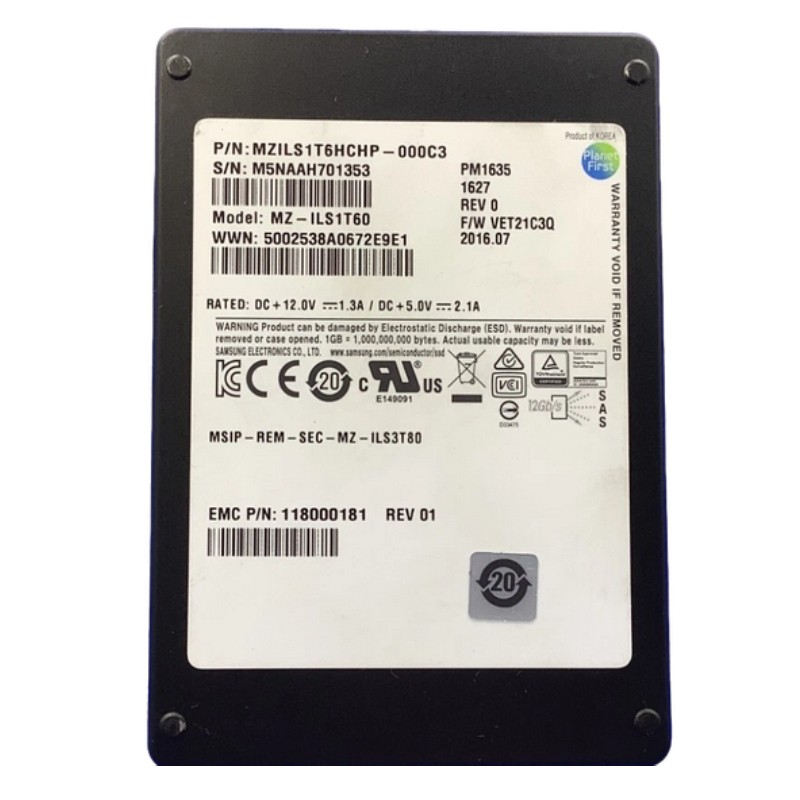
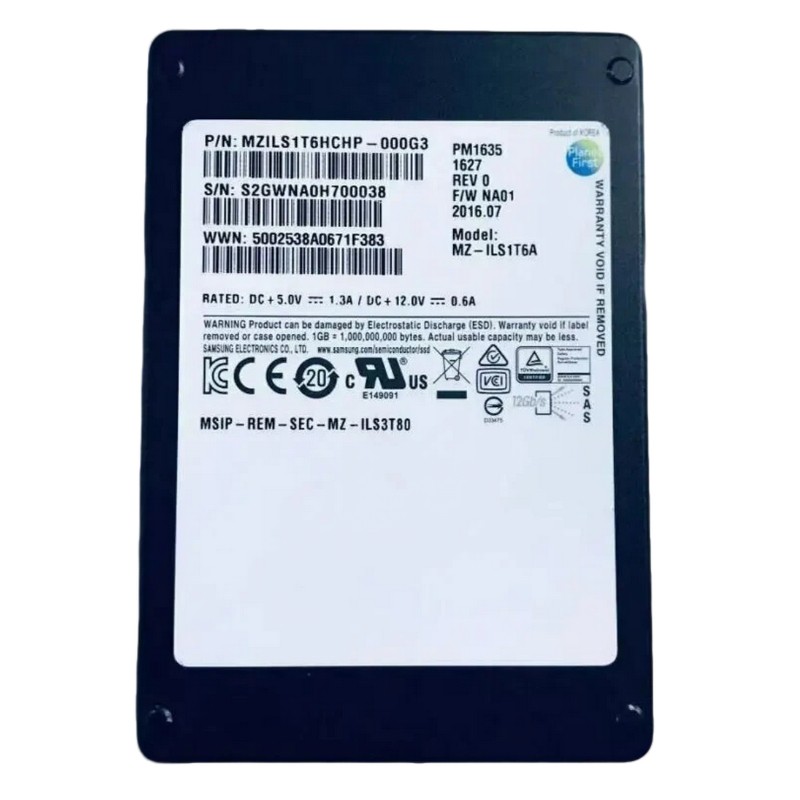
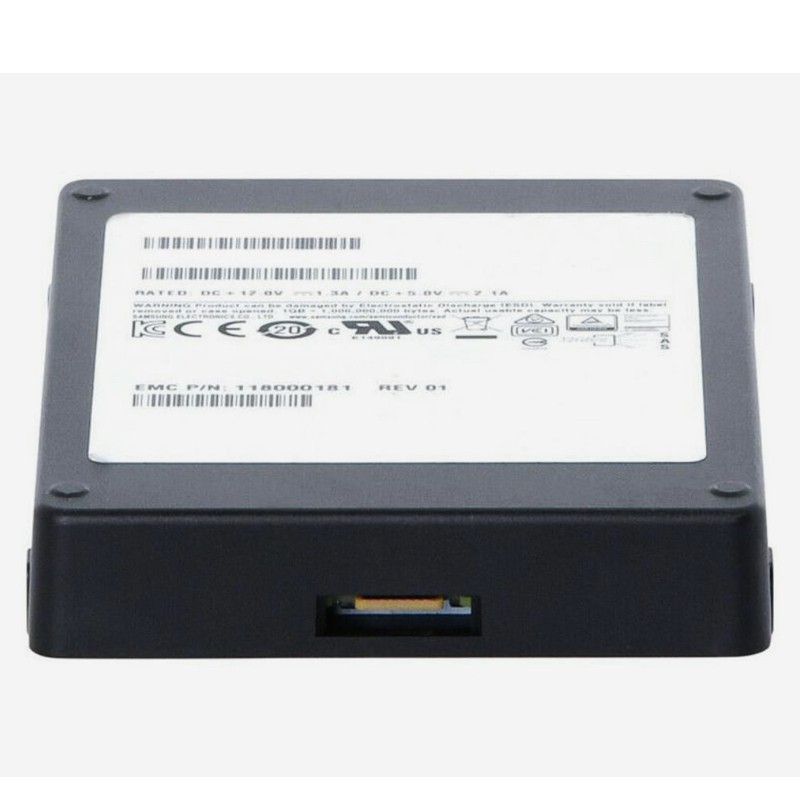
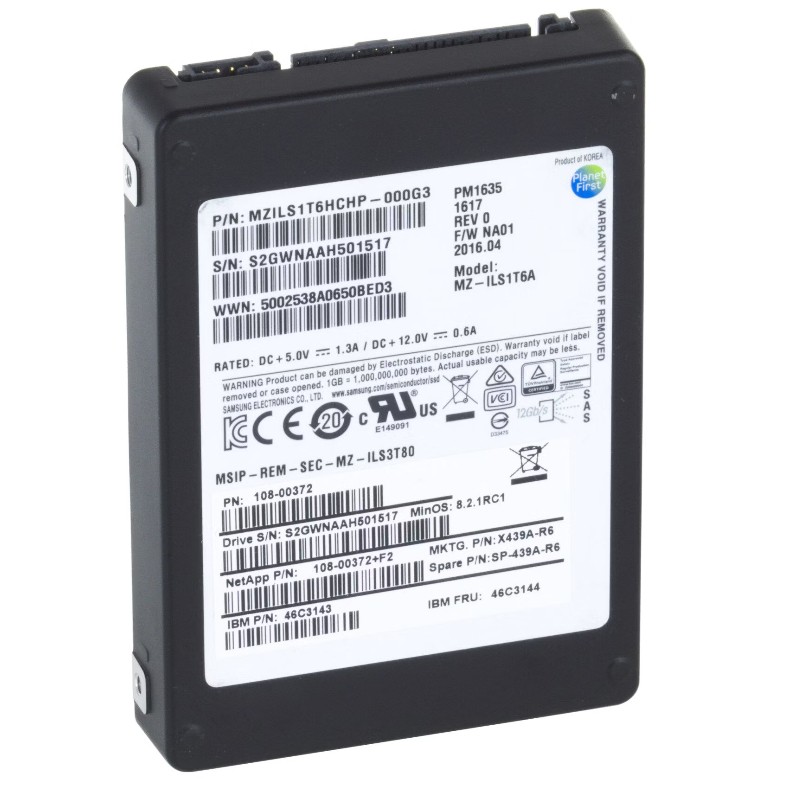
This enterprise-class SSD is built for high-speed, data-intensive applications that demand reliable and consistent throughput. With its SAS 12Gbps interface, the EMC 118000539 drive ensures seamless integration into existing storage arrays and servers.
Engineered for enterprise use, the EMC 118000539 SSD excels in high-availability setups, server virtualization, large-scale databases, and structured data storage. Its durable build and efficient SAS protocol make it an optimal choice for IT administrators.
Don't let the size fool you — this 2.5-inch solid-state drive delivers powerful performance without taking up unnecessary space in your chassis. It’s ideal for scaling dense storage environments without sacrificing speed or efficiency.
EMC has a long-standing reputation for delivering dependable hardware to enterprise and cloud infrastructure providers. The 118000539 SSD continues this legacy, offering a blend of storage capacity and robust architecture for critical workloads.
If your current setup struggles with read/write speeds or lacks fault tolerance, the EMC 118000539 SSD offers a future-ready upgrade path. The SAS 12Gbps interface ensures fast, reliable data transfers across all layers of your system.
Enterprise Solid State Drives
The category of enterprise solid state drives (SSDs) featuring the EMC 118000539 model represents cutting-edge storage solutions engineered for demanding workloads. These devices fall within the subcategory of SAS (Serial Attached SCSI) high‑throughput SSDs, intended for mission‑critical systems where reliability, endurance, and consistent I/O performance are non‑negotiable. In large data centers, virtualization deployments, analytics clusters, and high‑transaction environments, these SSDs serve as the backbone of storage infrastructures.
Storage Capacity and Practical Use
The drive delivers 1.6 terabytes (TB) of flash storage. In enterprise settings, this capacity is suited for:
- Boot volumes and operating system images for virtual machines.
- Database storage layers—both for transaction logs and indexes.
- Cache layers in caching appliances or hybrid storage systems.
- High‑availability cluster shared storage pools where many hosts require fast read/write performance.
Form Factor: 2.5‑inch Physical Design
Compact yet powerful, the 2.5‑inch format ensures wide compatibility with modern blade servers, storage arrays, and rack servers. Advantages include:
- Reduced enclosure size, enabling more drives per rack unit, increasing storage density.
- Improved airflow management and cooling efficiency by placing many smaller drives in server trays.
- Flexibility in mixed drive cabinets: using 2.5‑inch SSDs alongside larger 3.5‑inch HDDs in hybrid racks.
SAS 12Gbps Interface Advantages
The interface type SAS‑12Gb/s (often referred to as 12Gbps SAS) ensures that data transfer bottlenecks are minimized. In detail:
- Bidirectional throughput: SAS supports full‐duplex communication in many setups, enabling concurrent read and write operations without sacrificing speed.
- Backward compatibility: The drive can often interoperate with earlier SAS controllers (6Gbps), though at reduced speeds, preserving upgrade paths.
- Signal integrity: SAS uses differential signaling, robust connectors, and twisted pair cabling that mitigate interference and signal degradation in dense deployments.
Performance Metrics and Operational Efficiency
Latency, IOPS, and Throughput Expectations
Although specific published IOPS values or latency numbers for EMC 118000539 may vary with workload pattern, these SSDs are engineered for:
- Low read/write latency: Crucial for database queries, real‑time transaction processing, and responsive virtualization.
- High random IOPS: Mixed workload performance (random small reads and writes) is optimized.
- Consistent sustained throughput: Large sequential transfers (e.g. backups, bulk data moves) benefit from full 12Gbps bandwidth.
Power Efficiency
Enterprise SSDs in this category must balance power draw with performance. Key features include:
- Low idle power consumption to reduce heat load when drives are not active.
- Active power draw scaling with workload, but designed to remain within server or array power envelope limits.
- Thermal sensors and firmware throttling to manage temperature spikes during heavy I/O bursts.
Virtualization and Hyperconverged Infrastructure
In virtual machine‑heavy environments, responsiveness and consistency are critical. This SSD supports:
- Fast booting of VMs, snapshots, and cloning with minimal overhead.
- Lower latency upon VM live migration.
- Sufficient capacity per drive to host multiple virtual disks with room for expansions.
Database and Transaction Processing Workloads
For transactional databases (SQL, NoSQL) where read/write patterns are unpredictable, this drive category provides:
- Strong random write performance with minimal latency penalties.
- Durable write cycles and protection mechanisms to avoid data corruption during sudden power loss.
- Multiple IO queues and command layers to optimize concurrency.
High‑Performance Computing & Analytics
Analytic workloads—such as big data processing, data mining, real‑time log analysis, or machine learning pipelines—benefit from the attributes of the EMC 118000539 SSDs by offering:
- Rapid data ingest and retrieval at large scale.
- Sustained sequential read/write throughput to feed analytic engines.
- Ability to perform in bursty workloads without steep performance drop‑off.
Cache, Tiering, and Hybrid Storage Systems
When used as high‑speed cache or flash tier in mixed storage systems, these SSDs can dramatically improve system responsiveness by:
- Reducing read latency for frequently accessed “hot” data.
- Absorbing write bursts to reduce load on slower tiers.
- Enabling tiering policies that offload cold data to lower‑cost, high‑capacity media (e.g. HDDs).
Reliability, Endurance & Data Protection Features
Endurance Ratings and Expected Wear
This class of SSDs, including EMC 118000539, are built with endurance in mind. Core elements include:
- High program/erase cycle thresholds to support continuous write workloads.
- Wear leveling algorithms to distribute writes evenly across NAND flash blocks.
- Over‑provisioned flash space reserved for spare blocks to replace failed ones, preserving performance and reliability over time.
Data Integrity and Error Correction
Maintaining data integrity is central. Features likely present in this model include:
- End‑to‑end data path protection ensuring data written from host to NAND and back is checked for errors.
- Error Correction Code (ECC) to detect and correct bit errors that occur over time.
- PCIe SAS controller features, including read‑modify‑write, bad block remapping, and sector remapping.
Power Loss Protection & Safeguards
Unexpected power event can wreak havoc on sensitive storage. Drives in this category generally offer:
- Capacitors or firmware‑driven flush routines to ensure volatile data in write buffers is committed to NAND on power fails.
- Protected firmware that maintains stored metadata even during power interruptions.
- Design measures minimizing data corruption risks in multi‑drive array deployments.
Compatibility and Integration Considerations
To fully exploit the performance of EMC 118000539 SSDs, systems should offer compatible infrastructure:
- SAS 12Gbps controllers or SAS HBAs (Host Bus Adapters) / RAID controllers supporting 12Gb/s lanes.
- SAS backplanes or interconnects rated for 12Gbps to avoid bottlenecks.
- Firmware compatibility in storage controllers to handle enterprise SSD features like TRIM, thermal management, power management, and secure erase.
Rack Servers, Blade Chassis, and Storage Arrays
The 2.5‑inch form factor allows these drives to fit into a diverse set of hardware housing:
- Full‑height / half‑height blade server bays designed for SSDs.
- Storage arrays and JBOD (Just a Bunch Of Disks) expansion shelves with mixed SSD / HDD slots.
- Hybrid storage enclosures where hot‑plug capability and drive replacement are crucial.
Operating Systems, Drivers & Firmware Requirements
To ensure smooth operation, the following are important:
- Operating systems with native SAS driver support (e.g. modern Linux kernels, Windows Server, VMware ESXi).
- Firmware updates for SSDs and SAS controllers to address known bugs, enhance performance, and fix reliability issues.
- Monitoring tools to be able to track SMART metrics, wear leveling, temperature, latency over time.
Scalability & Replacement Strategy
Planning for growth and replacement helps in optimizing the investment:
- Assess data growth rates to ensure sufficient spare drive capacity and array expansion slots.
- Plan for staggered SSD deployment so firmware and hardware compatibility remain consistent.
- Maintain spare drives of same model/firmware for hot swaps to avoid model mismatch performance penalties.
Heat Dissipation and Thermal Throttling Risks
Even though 2.5‑inch enterprise drives are designed to handle heat, heavy write or mixed workloads may lead to increased internal temperatures. Mitigation includes:
- Proper server airflow design, including front‑to‑back cooling and adequate fans.
- Rack configuration that avoids stacking drives in poorly ventilated bays.
- Use of SSD monitoring to detect thermal events and trigger firmware‑controlled throttling before damages occur.
Firmware and Compatibility Pitfalls
Potential issues can arise if firmware versions across drives or controllers are mismatched, or if the system lacks up‑to‑date drivers. Common challenges are:
- Unexpected behavior in redundancy systems (RAID), especially with drive dropouts if firmware is buggy.
- Differences in write amplification or garbage collection strategies that might vary performance or wear across different firmware revisions.
- Incompatibility in SMART attribute reporting, making automated health monitoring harder if older management tools don’t interpret newer data fields.
Benchmarking and Performance Tuning Tips
Test Scenarios for Real‑World Results
To measure what this drive can really deliver, simulate your expected production workload. Consider:
- Small random write/read mixes, typical for database or transaction applications.
- Large sequential transfers, such as backup or streaming data flows.
- Mixed workload bursts – reads, writes, interspersed – to test endurance under stress.
- Overprovisioning levels to assess performance and wear compensation.
Firmware and Driver Optimization
Ensure optimal performance by:
- Updating controller and drive firmware to the latest stable version from EMC.
- Enabling features like write caching, when safe and supported, or power loss protection.
- Configuring SAS multipath or path failover correctly to avoid write stalls or redundancy issues.
- Fine‑tuning RAID stripe sizes or file system block sizes to match typical I/O patterns.
EMC 118000539 vs. SATA SSD Equivalents
While SATA SSDs often cost less per gigabyte, they lag significantly behind in sustained throughput and low latency under concurrent operations. Key differences are:
- SATA typically maxes out lower link speeds (~6Gbps), whereas this SAS 12Gb/s drive doubles that limit.
- SATA controllers may not have enterprise‑grade error correction or certified power loss protection.
- Reliability, write endurance, and consistency tend to be lower for budget or consumer SSDs when under heavy enterprise loads.
EMC SAS SSDs vs. NVMe SSDs
NVMe drives (PCIe interface) offer potential higher bandwidth and lower latency—but practical considerations include:
- NVMe requires PCIe slots, NVMe backplanes, or suitable adapters; not all existing EMC or SAS infrastructure supports migration easily.
- Thermal and power demands of high‑end NVMe drives can surpass those of SAS SSDs in certain workloads.
- For many workloads, especially those already optimized for SAS, gains from NVMe may only be incremental unless the rest of infrastructure (network, CPU, cooling) is upgraded accordingly.
Enterprise HDDs vs. SAS SSDs like EMC 118000539
Hard Disk Drives (HDDs) still offer cost advantages in dense capacity, but in this category, SAS SSDs deliver substantially higher IOPS, better latency, lower power use per IOPS, and superior durability. Trade‑offs include:
- Throughput per dollar for large, rarely accessed (cold) data might still favor HDDs.
- Mechanical components in HDDs make them more vulnerable to shock, vibration, and heat than solid state counterparts.
- HDDs have slower seek times and are ill‑suited for random read/write heavy workloads that SSDs handle with ease.
Security, Firmware & Compliance Considerations
Firmware Integrity & Updates
Firmware plays a pivotal role in maintaining performance, security, and reliability. For devices in this category:
- Secure firmware signing to prevent unauthorized or corrupted code installations.
- Vendor‑provided updates that address vulnerabilities, performance inefficiencies, and feature enhancements.
- Rollback capabilities in firmware in case a new version introduces instability.
Data Security & Encryption
For many enterprise users, data protection at rest and in transit is essential. This class of SSD typically supports or pairs with:
- Self‑Encrypting Drive (SED) features, or firmware‑level encryption protocols.
- Compatible with encryption tools and key management practices in data center environments.
- End‑to‑end data protection including secure erase or cryptographic erase options to retire or repurpose drives securely.
Regulatory & Environmental Compliance
EMC SSDs are usually certified for an array of industrial and environmental standards. This category often complies with:
- RoHS (Restriction of Hazardous Substances)
- ERT (Energy‑related Technology) or equivalent power efficiency regulations
- Certifications for shock, vibration, and temperature extremes suitable for data center operations
- Manufacturing quality standards such as ISO, and other compatibility certifications with EMC systems
Assessing Workload Profiles
Choice depends heavily on what your data access patterns look like:
- If workloads are write‑heavy (e.g. logging, database commits), prioritize drives with high endurance and power loss protection.
- If reads dominate (analytics, caching), focus on read latency, throughput, and possibly larger read cache sizes in firmware.
- For mixed workloads, maintain balance: strong random I/O performance, moderate sequential speeds, thermal stability.
Balancing Capacity vs Performance Needs
You may need more terabytes or prefer slightly lower capacity drives for higher cost efficiency. Consider:
- Whether 1.6TB per drive is enough for current needs with growth margin.
- If having fewer higher‑capacity or more lower‑capacity drives preserves consistency in performance or redundancy.
- Trade‑offs in array design: more smaller drives gives more parallelism; fewer large drives may reduce overhead in maintenance and cooling.
Future Trends & Innovations in SAS SSDs
Increasing Densities and Enhanced NAND Technologies
Advances in NAND flash design—such as more layers, tighter cell geometries (MLC, TLC, or even QLC with robust endurance enhancements)—are pushing capacities higher while improving cost‑per‑terabyte. Future EMC or SAS category SSDs may go beyond 1.6TB significantly without compromising endurance or performance.
Improved Power Efficiency and Thermal Designs
As data center energy costs rise and sustainability becomes more central, future drives will focus on:
- Lower idle and active power consumption.
- Materials and manufacturing processes that improve thermal conduction from drive chassis to server airflow.
- Firmware that dynamically scales performance to minimize waste during non‑peak operation.
Stronger Security and Compliance Features
Expect increased adoption of built‑in encryption, secure erase, certificate‑based authentication of firmware, and compliance with tougher regulatory standards globally (e.g. GDPR, HIPAA in specific regions). These developments will become more standard in enterprise SAS SSD models.





 Contact Us
 Information
 Catalog
 Solid State Drives (SSD)
 Network Switches
 Hard Disk Drives
 HBA & Controllers
 PC & Servers
 PC & Server Memory
 CPU & Processors
 Network Routers
 Power Supplies
 Tape Drives & Libraries
 Network Devices
 Computer & Network Cables