(7% discount is applied at checkout)
Cart is empty
Your go-to destination for cutting-edge server products
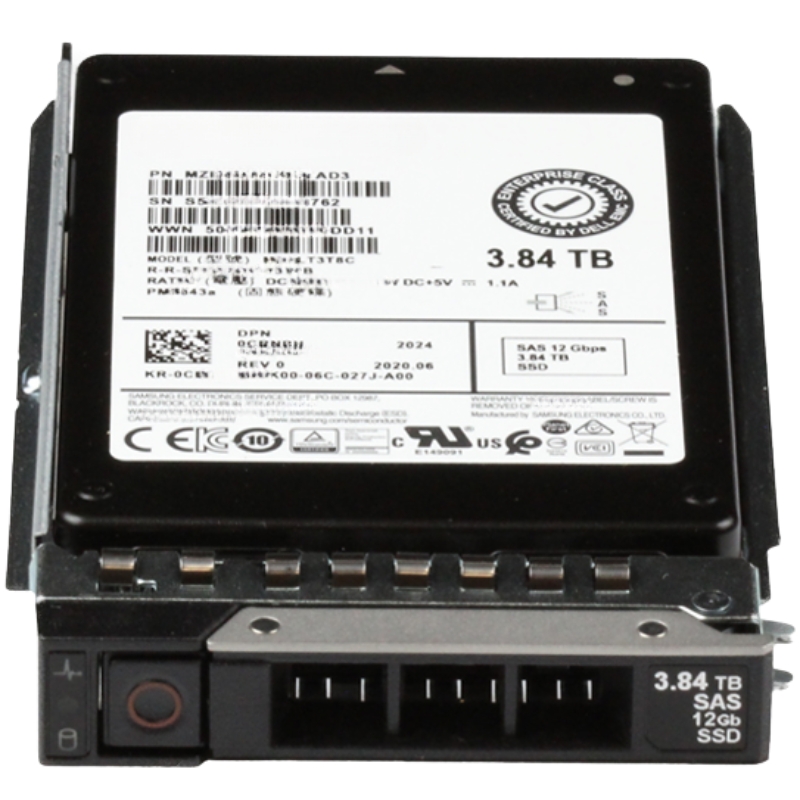


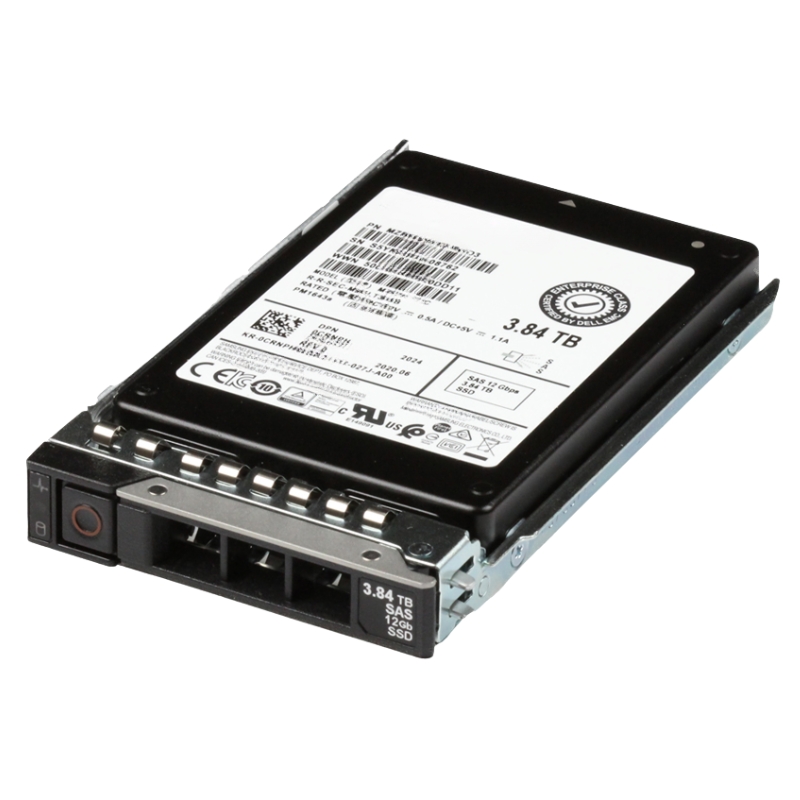
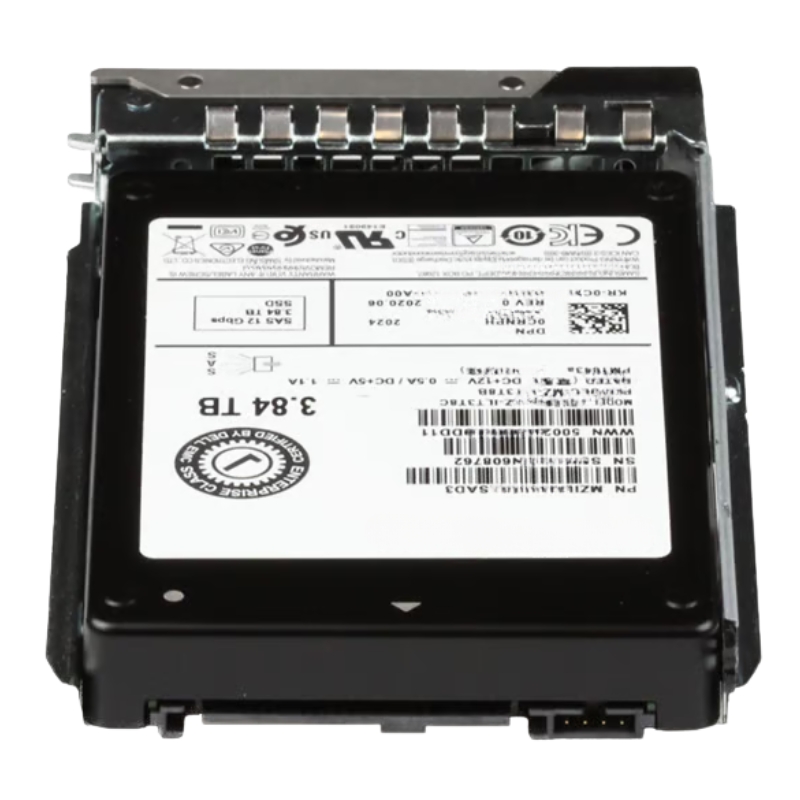
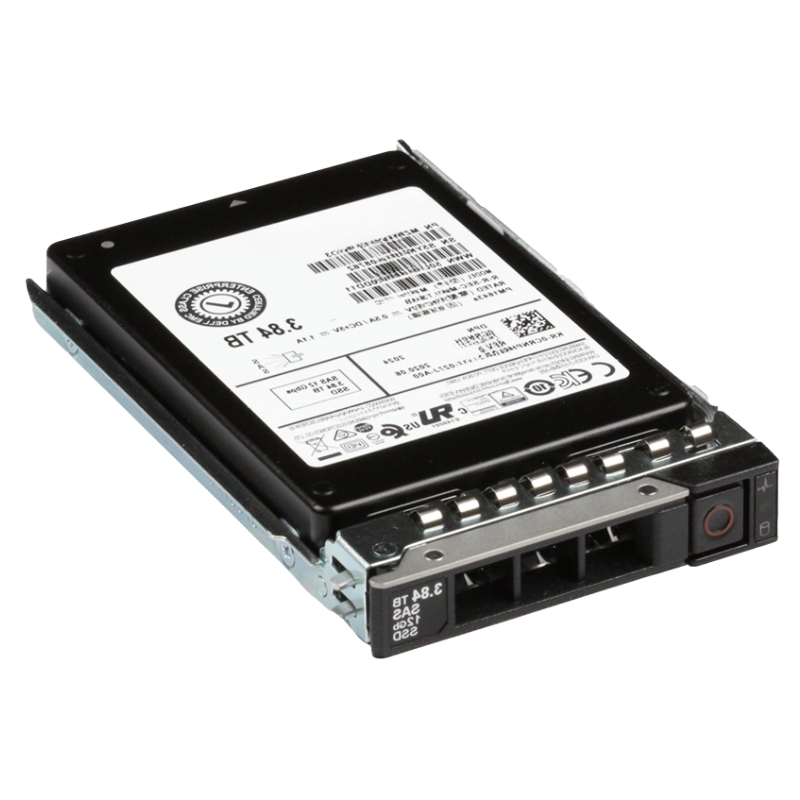
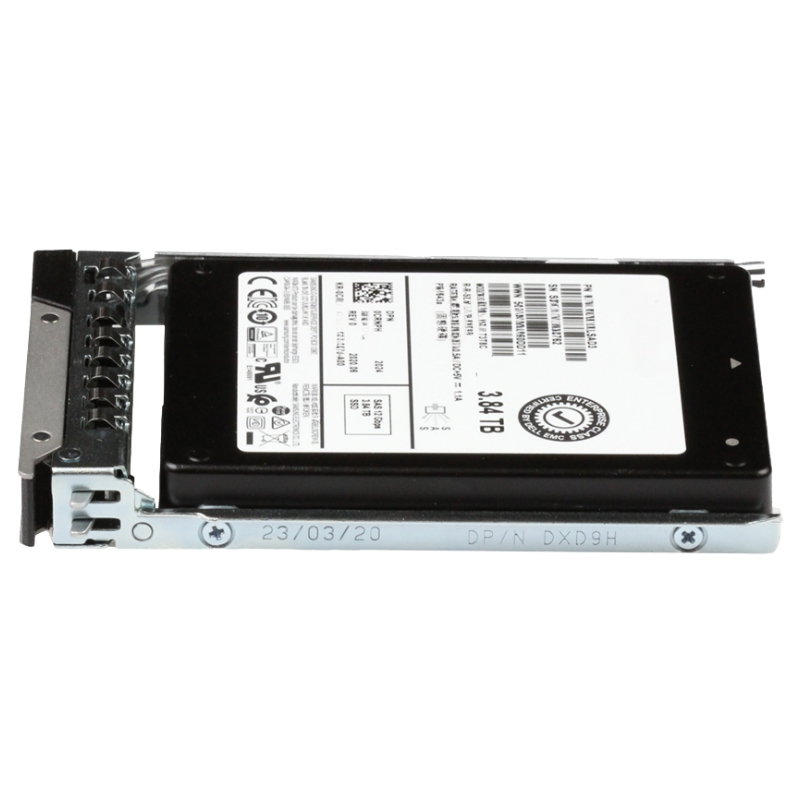
EMC 118000632 3.84TB SAS 12GBPS 2.5 Inch Read Intensive Enterprise Solid State Drive. Excellent Refurbished with 1 year replacement warranty
Designed for enterprise workloads, the EMC 118000632 offers exceptional performance and reliability. This 3.84TB solid-state drive delivers swift data processing, leveraging SAS 12Gbps connectivity and a compact 2.5-inch form factor, perfect for high-density server configurations.
Performance & Speed Metrics
This enterprise-grade SSD is optimized for read-intensive operations, balancing endurance with high throughput. It's ideal for applications requiring fast access speeds and consistent uptime.
The EMC 118000632 is engineered with endurance in mind, targeting read-dominant workloads such as boot drives, virtual environments, cloud-based storage arrays, and archival systems. Its robust SAS interface ensures data integrity and consistent delivery under 24/7 operation.
This drive is fully compliant with enterprise data center standards. The 12Gb/s SAS connection ensures rapid communication with host systems while remaining backward compatible with older SAS speeds.
Within the broader solid state drive landscape, read‑intensive enterprise SSDs occupy a crucial niche: these are engineered to deliver exceptional performance in predominantly read‑oriented workloads. The EMC 118000632 3.84TB SAS 12Gbps Read‑Intensive Enterprise SSD exemplifies this category. Optimized for high throughput, minimal latency, and sustained read performance, such drives are tailored for applications like database querying, virtualization, file servers, content delivery, web serving, indexing, and analytics, where reads far outnumber writes.
This solid state drive is made by EMC, a trusted name in enterprise storage and data infrastructure. The part number 118000632 uniquely identifies this model in EMC’s product lineup. It belongs to the class of enterprise SSDs designed for read‑intensive duty, differentiating it from mixed‑use or write‑intensive SSDs.
Equipped with enterprise endurance characteristics, this model is designed for long‑term, consistent operation. EMC implements strong error correction, power loss protection, and firmware tailored to preserve data integrity. Thermal throttling and wear leveling mechanisms ensure predictable lifespan—even under continuous read workloads interspersed with write bursts.
The drive includes firmware optimizations typical of enterprise offerings: advanced error correction (e.g. ECC), bad block management, data path protection (volatile or non‑volatile cache protection depending on model), SMART monitoring, and support for monitoring tools. Some firmware versions may allow adaptive write caching, background garbage collection, wear‑leveling, and other techniques to retain steady performance over the drive’s lifecycle.
In virtual desktop infrastructure, virtual machine images experience high random read demands, especially during startup storms where many VMs are booted simultaneously. The EMC 118000632’s high random read IOPS and generous read bandwidth make it ideal for hosting VM image disks, base templates, and frequently accessed portions of VM storage.
For services delivering static content—such as media files, images, logs, or web site assets—this drive ensures minimal latency and high throughput. Large file reads (video streaming or backup retrieval) benefit from its strong sequential performance; small file or fragmented content access benefits from excellent random read capability.
Database systems used for analytics, reporting, OLAP, or search use patterns where data is read frequently, often over contiguous or large block ranges, with occasional write activity (inserts, updates). The high sequential read speed and strong random read metrics provide fast query resolution and low response times.
The EMC 118000632 can serve as a high‑performance caching tier in multi‑tiered storage arrays. In architectures where “hot data” is separated from “cold data,” this SSD can hold frequently accessed (“hot”) content, speeding access and reducing load on slower, higher‑capacity disks. Works well in front of slower SAS or SATA HDDs, or in hybrid arrays combining flash and disk.
Even in setups designed for long‑term archival or cloud‑scale storage, this drive can aid in snapshot operations, read‑replication, and serving archived content that still needs periodic access. Its endurance and reliability ensure longevity for archival indices, search logs, or infrequently updated content serving.
Compared to mixed‑use SSDs, read‑intensive models like the 118000632 sacrifice some write throughput or endurance in favor of substantially higher read IOPS and consistency. Write‑intensive drives may outperform in raw write benchmarks, but for scenarios where writes are rare or moderate, this EMC model delivers better cost‑per‑GB for read value, lower latency, and reduced thermal/power stress during write bursts.
Its DWPD of 1 means it can sustain writing the full capacity per day over the warranty without exceeding rating. For read‑predominant workloads, actual wear will be much lower, translating to extended usable life—often significantly beyond the warranty period if writes are infrequent. Proper system integration, firmware updates, temperature control, and monitoring further enhance lifespan.
Ensure your system supports SAS 12Gbps. If currently using lower SAS or SATA, performance may be bottlenecked. Check that backplane, controller firmware, and connectors are rated for 12Gbps to fully leverage the interface’s speed.
Review whether the drive supports power‑loss protection or capacitor backup (if available in this model) to prevent data loss during sudden shutdowns. Multipath configurations, redundant controllers, and mirrored or RAID setups are also advised for mission‑critical data.
Implementing RAID levels such as RAID‑10 or RAID‑5/6 with read‑oriented optimization can help balance redundancy and performance. The EMC 118000632 works well in RAID configurations where read latency and throughput matter, while writes are buffered or cached appropriately to avoid performance drops.
Using dual‑port SAS or multi‑controller storage architectures allows redundancy and failover. Multipath I/O ensures that if one path fails, the other path continues without significant performance loss. Proper load balancing across paths keeps latency low and leverages full interface bandwidth.
Choosing proper block or cluster size for the filesystem is essential. For large sequential reads, larger block sizes (e.g. 64KB or 128KB) reduce overhead. For metadata or small file loads, smaller blocks yield better random access efficiency. Aligning partition boundaries and using appropriate striping when used in RAID enhances performance.
In large file transfers—such as streaming video, backups, or moving large VM images—users can expect sustained sequential reads up to ~2100 MB/s and writes approaching ~2000 MB/s in optimized conditions. Performance will depend on host controller, cabling, queue depth, and temperature control.
Under heavy random small block read demands (such as many simultaneous IOPS), this SSD typically delivers up to 450,000 random 4KB read IOPS. Write IOPS for 4KB blocks peak near 58,000 under lower queue depth or burst usage, though sustained write loads will be lower due to write amplification and internal background tasks.
Expect very low latency for read requests—milliseconds or less—especially for cached, well‐aligned, high queue‑depth operations. For write requests, latency may vary more due to caching strategy, write buffering, and controller behavior, but remains superior to traditional spinning disks. Tight firmware tuning and stable power considerably improve consistency.
Over time, read‑intensive SSDs may experience minor performance decline as write amplification and wear accumulate. But with wear leveling, thermal control, and firmware maintenance, performance retains most of its original characteristics well into the service life. Drives with low write pressure often show very little degradation.
EMC’s enterprise SSDs typically incorporate strong ECC (error correction code), cyclic redundancy checks, and built‑in validation features. They detect and correct bit errors in real time, guard against data corruption, and maintain integrity over the drive’s cell lifespan.
While read‑intensive models may not always include full capacitive backup, many are engineered with features that ensure metadata, write cache, or internal buffers flush correctly to NAND in case of unexpected power loss. It’s important to check drive documentation for specific power loss protection guarantees.
For data privacy, these drives may support encryption at rest—either via firmware or through host/controller encryption. Secure erase options allow organizations to sanitize the drive before decommissioning. Compliance with standards such as FIPS, GDPR, HIPAA or others depends on firmware capabilities and management policies.
Mixed‑use drives typically provide higher write endurance and may handle more intensive write workloads, but often at the expense of read consistency and cost per gigabyte. The EMC 118000632, being read‑focused, shines when the majority of operations read data; in those scenarios, its cost effectiveness, performance, and reliability often surpass mixed‑use counterparts.
If your application involves heavy logged writes, large numbers of updates, or real‑time transactional workloads, you might consider write‑intensive models. These alternatives tend to have higher DWPD ratings (e.g. 3‑10 DWPD), stronger caching, or use higher endurance NAND. However, they usually cost more per TB, draw more power, and may have higher cooling requirements.
In large‑scale data centers where space, power, and thermal efficiency are prime concerns, deploying SSDs like EMC 118000632 in 2.5‑inch bays allows for high density. A rack packed with these low‑power, high throughput SSDs can serve thousands of read operations per second while minimizing power draw and cooling needs.
Providers offering static content delivery, media streaming, caching, or web hosting will benefit from this drive’s ability to handle many concurrent reads with low latency. Content distribution networks (CDNs) that must serve large numbers of small requests—images, CSS, JS, page fragments—will also find this SSD valuable.
Large enterprise software systems requiring fast boot times, rapid file system traversal, and frequent metadata access (such as file indices, search indexes, and log hosts) will see pronounced performance improvements. Virtual machines hosted on storage volumes made from these drives benefit from shorter I/O paths, improved responsiveness, and more predictable latency.
While write activity for backups and replication often occurs in bursts, the majority of time is spent reading archive, restoring data, or verifying integrity. The EMC 118000632 is rugged enough to serve those restore paths smoothly, and fast sequential read speeds reduce recovery time objectives (RTOs).
Before deployment, verify that the firmware version aligns with your host bus adapter or storage controller. Updates may resolve stability issues, unlock performance improvements, or add compatibility with newer driver stacks. Ensure the BIOS, RAID controller, HBA, or storage fabric supports SAS 12Gbps and any features like TRIM, persistent write caches, or secure erase operations.
Challenge is to ensure high throughput without shortening drive lifespan. Overspecifying write capacity for a read‑intensive SSD is wasteful; underspecifying may lead to write saturation. Use write caching or buffering when possible, but ensure data safety through proper flush mechanisms, raid write penalties, or power loss protection.
While drives with higher DWPD ratings do allow more writes per day, that does not always translate to better performance for read‑dominated workloads. Higher DWPD often means compromises in read latency or higher cost per TB. For applications largely reading data, a lower DWPD drive like EMC 118000632 offers better read throughput per dollar and efficiency.
Though SAS 12Gbps is a standard, implementation varies. Controller design, signal path quality, cable quality, firmware, and host controller queue depth all affect realized performance. Proper hardware design matters as much as the nominal interface rating.
No SSD remains perfectly identical in performance forever. Wear leveling, NAND cell aging, drive warming, and internal housekeeping tasks can introduce small delays or slowdowns. But with good drive design, these effects are minimized, and the EMC 118000632 is engineered to retain strong performance even under prolonged operational periods.
EMC’s SSD portfolio typically spans multiple endurance and performance tiers. This drive sits in the read‑intensive tier. Mixed‑use variants balance read/write more evenly, with higher DWPD, while write‑intensive models often carry premium endurance and price. Understanding where 118000632 falls helps match cost, performance, and lifespan expectations.
Other drives in the same or adjacent subcategory may offer lower capacities (e.g. 1.92TB, 1.6TB) or higher/lower performance (e.g. lower latency NAND, different internal caching). Choosing capacity increments that align with data growth helps maximize utilization and avoid over‑provisioning waste.
If expanding storage arrays, ensure uniformity in interface speed, form factor, and firmware if possible. Mixed generations of SSDs can be used, but performance will often be limited by the slowest drive. Also, check compatibility of hot‑spare settings, spare pool usage, and replacement thresholds.
Run tests using representative workloads: synthetic benchmarks for both random small block and sequential large block, along with mixed‑read/write ratio patterns. Compare actual latency, 99th percentile response times, and consistency under sustained load.
Continued improvements in NAND types (e.g., TLC, QLC, and evolving 3D NAND) are enabling greater capacities with lower cost, though sometimes with trade‑offs in write endurance. Drives tailored for read‑intensive workloads benefit from high density NAND that supports large capacities like 3.84TB without extreme write endurance demands.
While SAS 12Gbps remains common, interface speeds are increasing. SAS 24Gbps, NVMe, and other direct attach protocols are emerging. However, many enterprises maintain SAS infrastructures, making high performance SAS drives like EMC 118000632 still highly relevant due to compatibility and investment protection.
Firmware optimizations, adaptive caching, machine learning‑based wear prediction, dynamic provisioning—all are increasingly integrated. Monitoring and telemetry help operators understand real usage and tune for efficiency. In this category, value often comes from software that enhances hardware capability.
Drives with lower idle power, higher performance per watt, and lower heat output contribute to greener data centers. Read‑intensive SSDs typically burn fewer watts under mixed load than many write‑intensive alternatives or spinning disk farms, reducing carbon footprint and environmental cost over time.
Effective cooling, including rack design, airflow management, ventilation, and thermal sensors, directly affects drive reliability and prevents thermal throttling. Drives inside densely‑packed racks need thoughtful design to ensure each SSD operates within its safe temperature range.


 Contact Us
 Information
 Catalog
 Solid State Drives (SSD)
 Network Switches
 Hard Disk Drives
 HBA & Controllers
 PC & Servers
 PC & Server Memory
 CPU & Processors
 Network Routers
 Power Supplies
 Tape Drives & Libraries
 Network Devices
 Computer & Network Cables