(7% discount is applied at checkout)
Cart is empty
Your go-to destination for cutting-edge server products
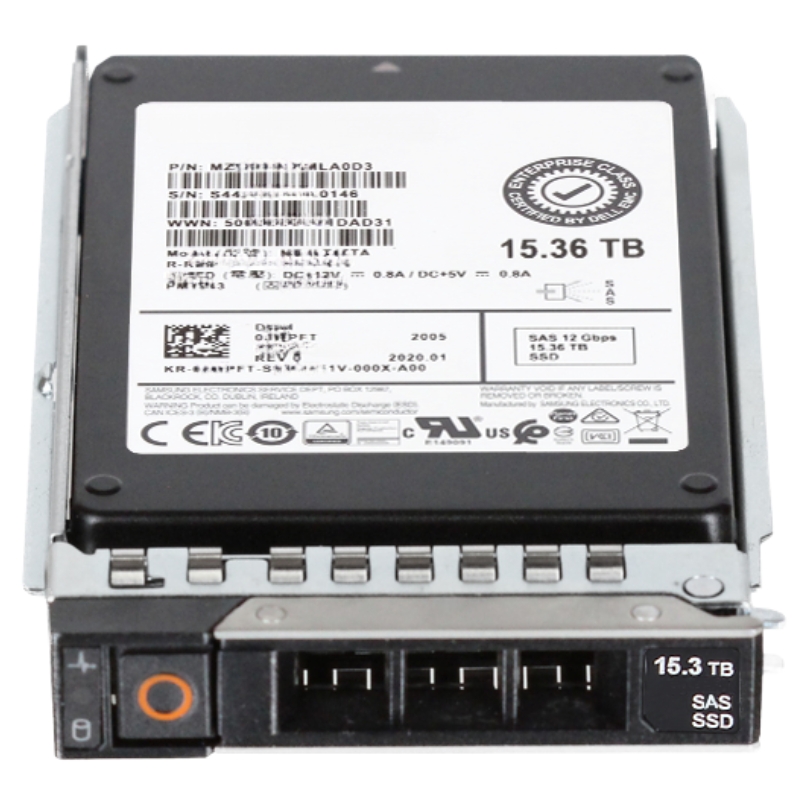


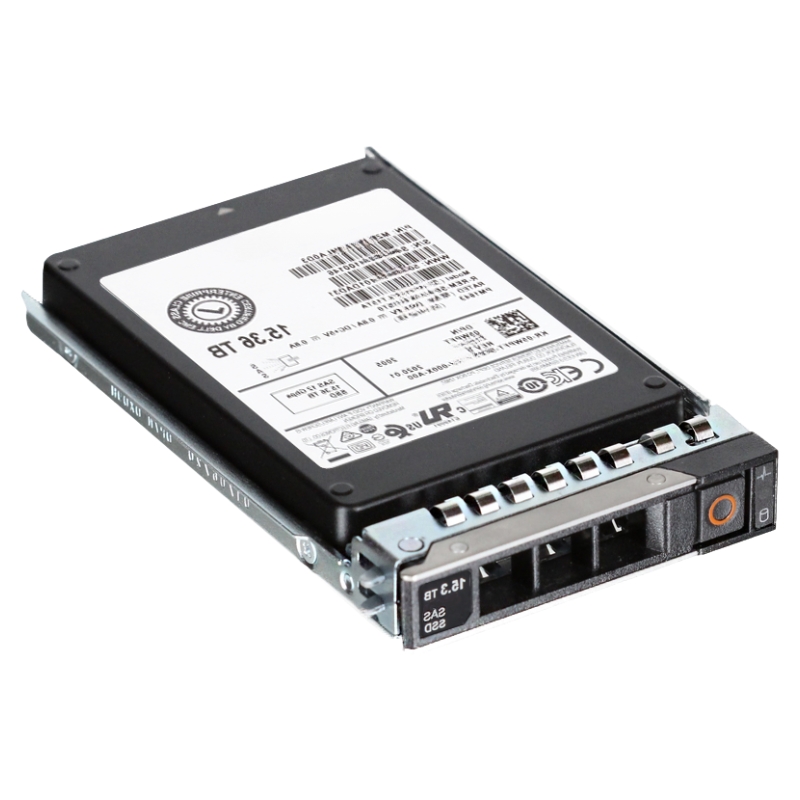
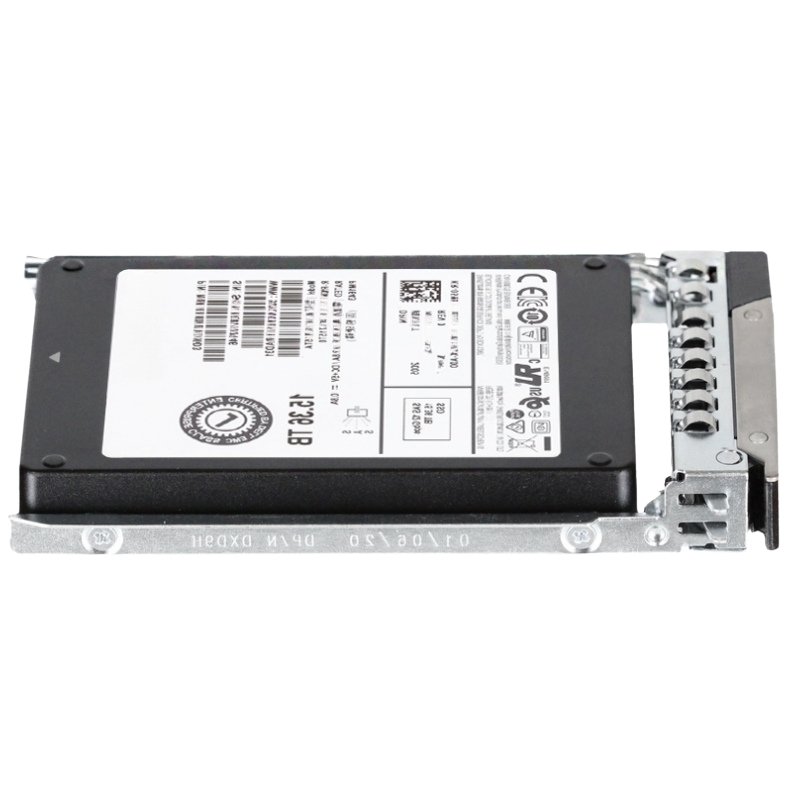
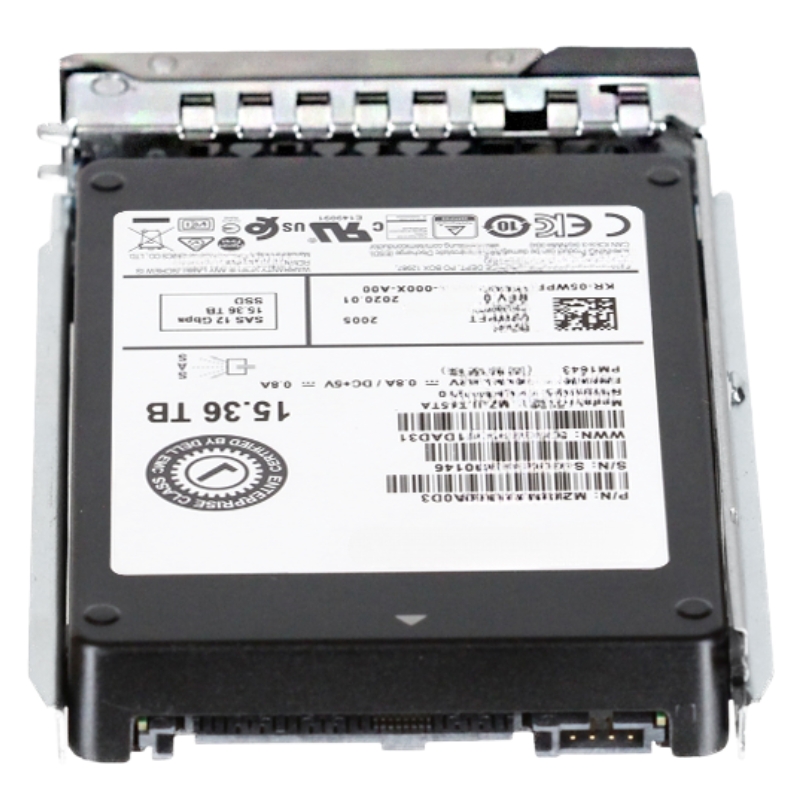
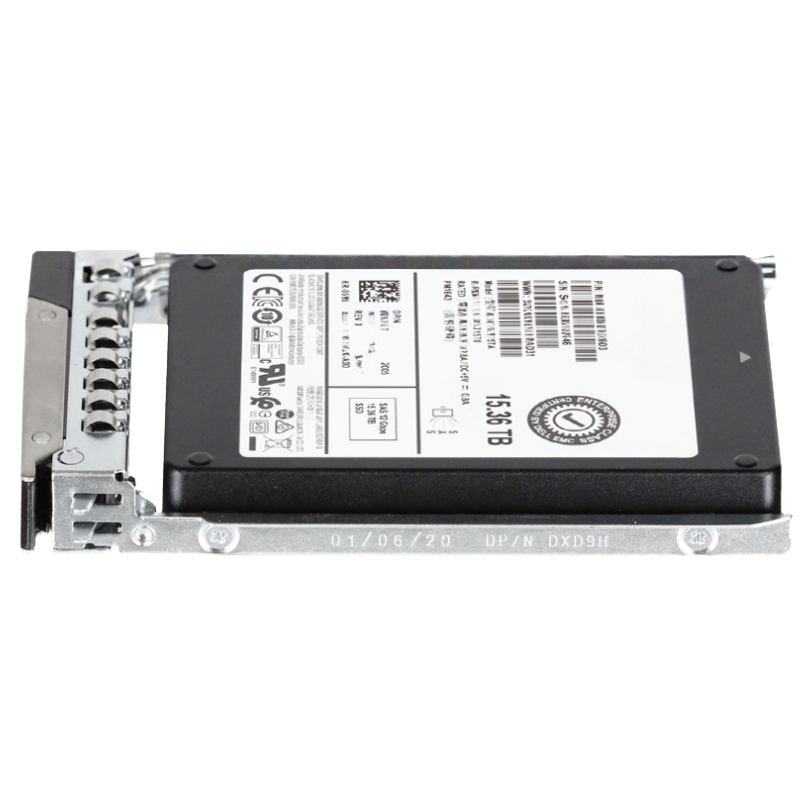
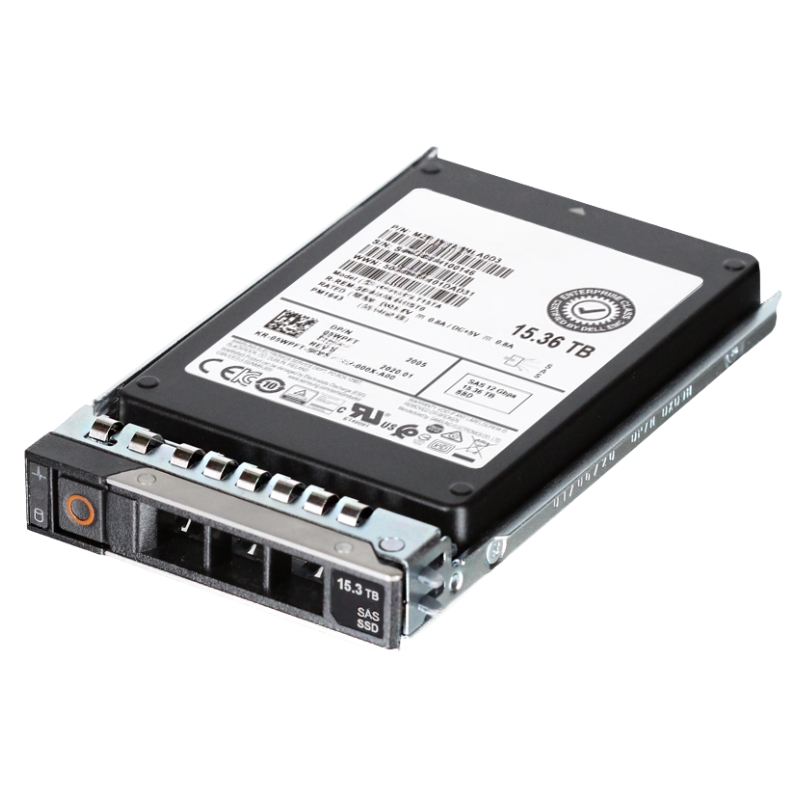
EMC 118033345 15.36TB SAS 12Gbps Pm1643 2.5 Inch Enterprise Solid State Drive. Excellent Refurbished with 1 year replacement warranty
The EMC PM1643 118033345 is a high-capacity enterprise-class solid-state drive designed to meet the rigorous demands of data-intensive environments. With 15.36TB of storage, this SAS-based SSD offers exceptional reliability, speed, and efficiency for mission-critical applications.
This enterprise SSD is engineered to handle data-intensive workloads such as virtualization, database management, analytics, and cloud applications. Its SAS interface ensures faster transfer rates and reduced latency, making it a reliable storage solution for critical IT infrastructures.
Large-capacity SSDs like this model compress more usable TBs into the same number of drive bays. This reduces the number of chassis, controllers and power/cooling overhead required to achieve a given capacity, improving total cost of ownership (TCO) for read-heavy and certain mixed workloads. When used with deduplication and compression-aware stacks, effective capacity becomes even more favorable for archive-adjacent or tier-1 consolidation projects.
Consistent performance for business-critical apps
Enterprise firmware and in-drive features aim to provide consistent latency and throughput under sustained I/O; that makes the PM1643 a fit for databases, virtualized environments, analytics and storage tiering in SAN/NAS arrays. These drives are often selected for environments where predictable response times matter more than peak synthetic benchmarks.
SAS (Serial Attached SCSI) at 12Gbps is the physical and link layer used by the PM1643. SAS remains popular for enterprise arrays because it supports advanced management (SCSI command set), full duplex operation in some topologies, and more rigorous error handling and link management than consumer SATA. Using SAS 12Gb/s allows storage arrays to avoid single-controller bottlenecks and leverage enterprise RAID and controller features.
Although the nameplate capacity is 15.36TB, usable capacity will vary depending on firmware reserved space, provisioning (e.g., RAID overhead), and the array’s metadata/formatting. Many OEM variants provide platform-specific firmware which may reserve additional sectors for performance/consistency, so always check the drive’s reported capacity in your target server array before large-scale procurement.
Enterprise SSDs trade raw capacity for endurance tuning and special features. The PM1643 family typically offers endurance ratings (expressed in Drive Writes Per Day — DWPD) that suit enterprise workloads; OEM-branded variants may list a specific DWPD (for example, some listings indicate 1 DWPD for certain PM1643 SKUs), plus high MTBF figures and power-loss protection capacitors that protect in-flight data during unexpected power events. Check the exact OEM part number for the advertised DWPD and warranty details before deployment.
Power-loss protection (PLP) circuitry and firmware safeguards are a critical differentiator for enterprise SSDs. The PM1643 family includes design elements to flush volatile caches to non-volatile storage during a power-failure event, reducing the risk of partial writes and metadata corruption. This behavior is particularly important in RAID arrays and write-intensive environments.
The drives expose a comprehensive set of S.M.A.R.T. and vendor-specific attributes to controllers and management stacks. Metrics include temperature, media wear indicators, erased block counts and power-on hours — essential telemetry for predictive maintenance in large installations. Use enterprise monitoring to trigger alerts and schedule replacements before failures occur.
The PM1643 is commonly available as OEM SKUs for Dell/EMC, HPE and other vendors; the EMC part number 118033345 maps to Samsung’s PM1643 variants installed in Dell/EMC arrays, so check vendor compatibility lists and firmware support when mixing drives across vendors. OEM-labeled drives may include vendor-specific firmware and identification strings that matter for array controllers and support contracts.
Although the mechanical form factor is 2.5", some arrays use sleds/trays that change dimensions or connector positions. Confirm that the physical tray, hot-swap connector and latch style of your host server match the drive or that you have the correct OEM carrier. Drives purchased as “bare” may require an OEM tray for hot-swap compatibility.
Enterprise storage controllers can be strict about firmware signatures and supported models. Installing an OEM-labeled PM1643 (for example EMC 118033345) into a chassis expecting a different vendor’s firmware may work electrically, but it can affect warranty entitlements and supportability. When deploying at scale, coordinate firmware versions between drives and array controllers to ensure stable behavior and predictable rebuild performance.
Large databases that require high random-read IOPS and low-latency transactions benefit from the PM1643’s predictable performance. The drive’s enterprise optimizations minimize latency spikes during sustained workloads and background housekeeping, improving application SLAs.
VDI and virtualized server farms see clear gains in boot storms and consolidated VM I/O due to the drive’s random read/write performance. The high capacity also lets administrators host many VMs per chassis without sacrificing performance tiers.
When used as a cache or hot tier in hybrid arrays, PM1643 drives serve frequently accessed data with SSD-level latencies while spinning disks handle cold storage — a model that dramatically speeds end-user access and analytics queries.
Large sequential throughput (multi-gigabytes per second) enables fast scanning of large datasets, accelerating analytics jobs and backup/restore windows where sequential read/write is the bottleneck.
High-capacity enterprise SSDs are commonly available as both factory-new OEM units and refurbished, tested pulls from retired servers. Refurbished drives can be significantly cheaper but check the seller’s testing, reconditioning, warranty and the drive’s reported health metrics before purchase. OEM part numbers such as 118033345 appear frequently in refurbished markets; ensure serial number provenance and erase procedures meet your compliance needs.
If your workload needs higher endurance (more DWPD) or lower cost-per-GB, consider comparing the PM1643 against other enterprise SAS SSDs such as Seagate Nytro family or competing Samsung PM series SKUs. If ultra-low latency and maximum IOPS are paramount, NVMe drives (U.2 / U.3) provide a different performance envelope but require NVMe-capable controllers and may not be drop-in replacements for SAS arrays. The PM1643 is a balanced choice when backwards compatibility with SAS storage controllers and predictable enterprise behavior are required.
Large-capacity SSD rebuilds may be faster than HDD rebuilds but still take substantial time due to data size; plan rebuild windows and choose RAID levels with rebuild efficiency in mind (erasure coding and modern RAID variants can reduce rebuild impact). Also, coordinate background maintenance windows (garbage collection, firmware updates) with application owners.


 Contact Us
 Information
 Catalog
 Solid State Drives (SSD)
 Network Switches
 Hard Disk Drives
 HBA & Controllers
 PC & Servers
 PC & Server Memory
 CPU & Processors
 Network Routers
 Power Supplies
 Tape Drives & Libraries
 Network Devices
 Computer & Network Cables