(7% discount is applied at checkout)
Cart is empty
Your go-to destination for cutting-edge server products
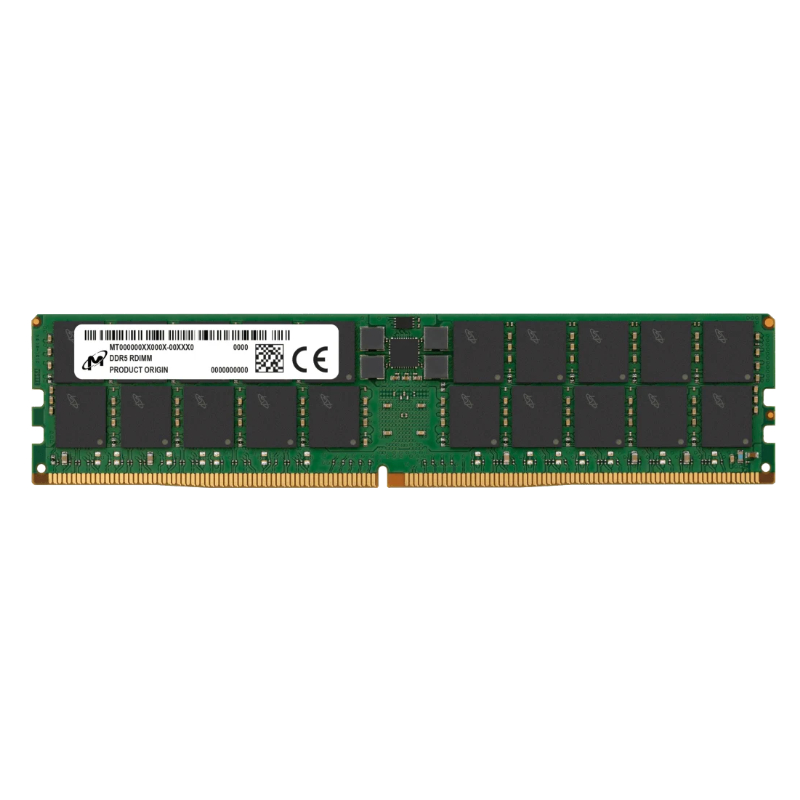


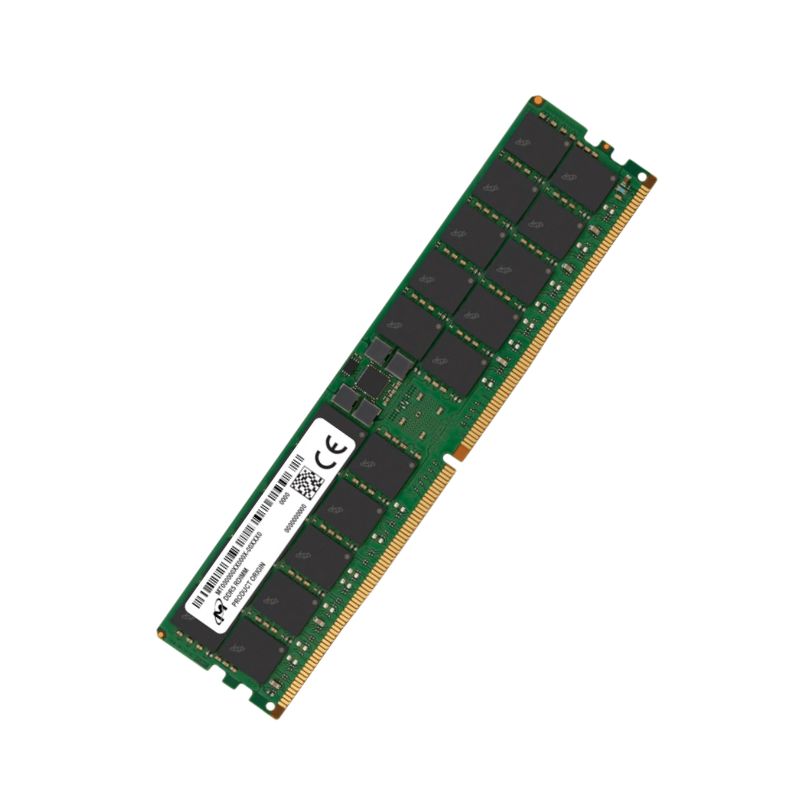
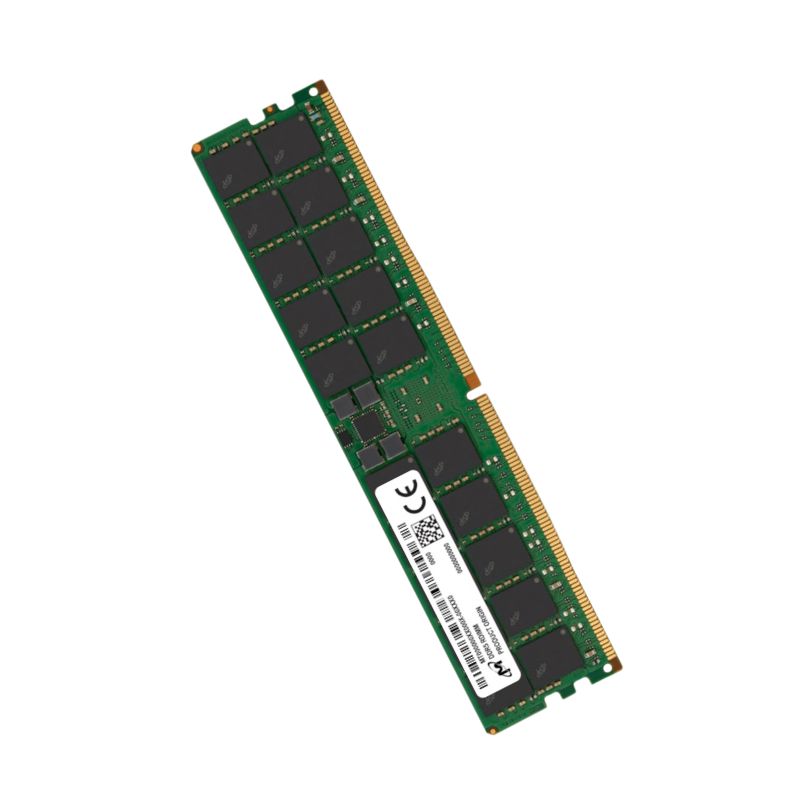
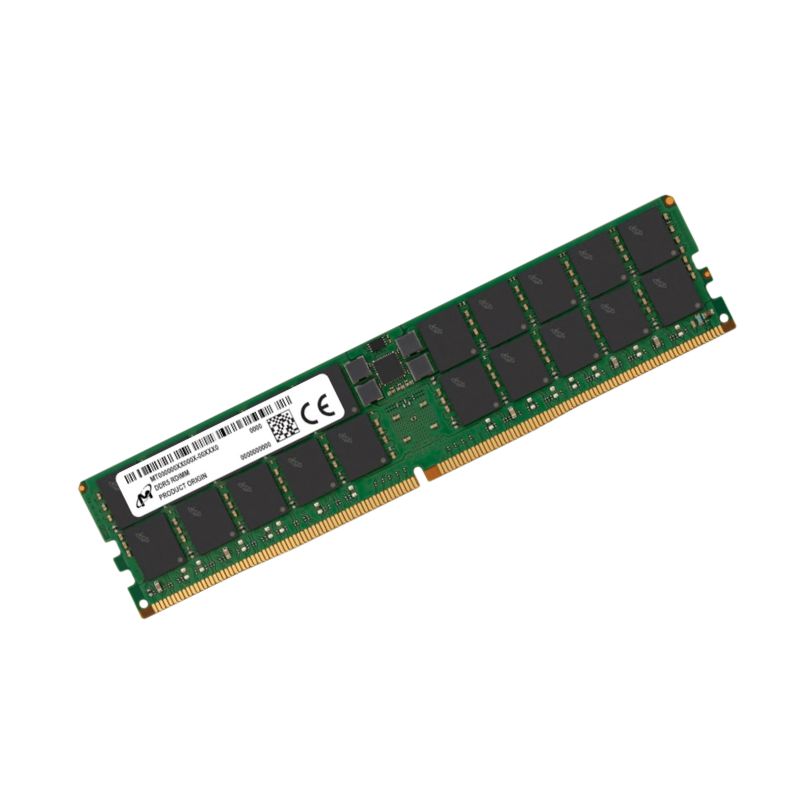
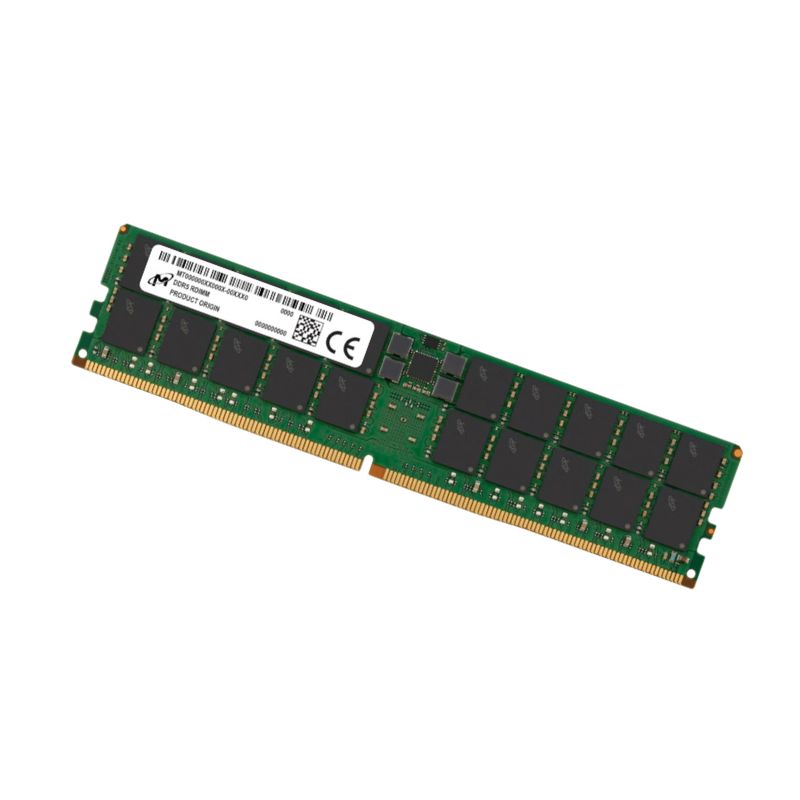
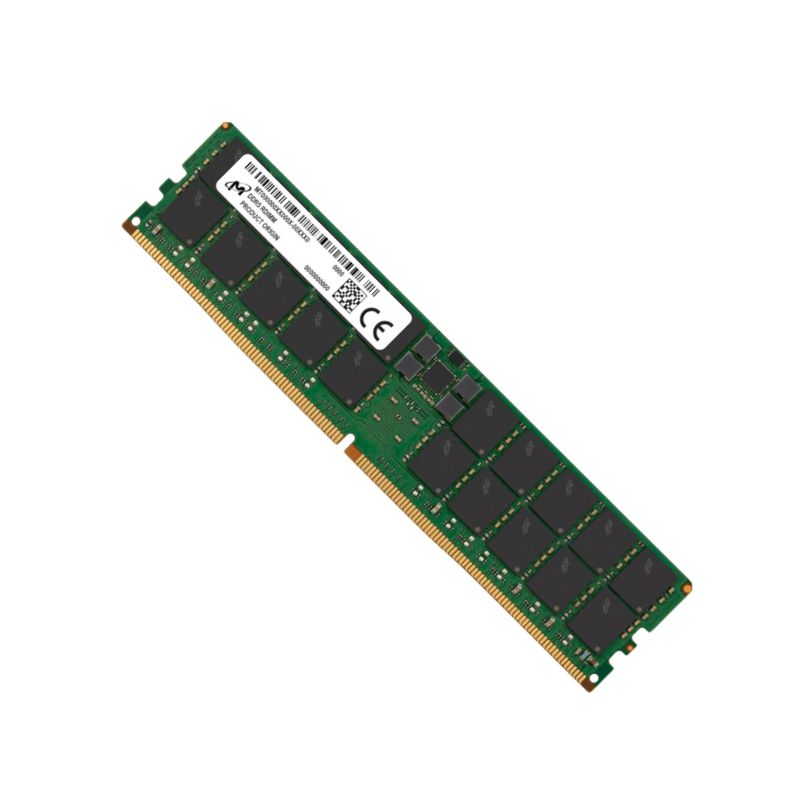
Micron MTC40F2047S1RC56BB1T 128GB PC5-44800 DDR5-5600MHz ECC Registered CL46 288-pin RDIMM Memory Module. New Sealed in Box (NIB) with 3 Years Warranty
The category of enterprise-grade DDR5 Registered DIMMs (RDIMMs) represents a critical evolution in server and workstation memory technology, engineered to meet the growing demands of data-intensive computing environments. Products such as the Micron 128GB PC5-44800 DDR5-5600MHz ECC CL46 288-pin RDIMM exemplify this category by combining high capacity, advanced error correction, and next-generation bandwidth. This class of memory is designed for deployment in enterprise servers, data centers, cloud infrastructure, virtualization platforms, and high-performance computing systems where reliability, scalability, and sustained performance are non-negotiable.
DDR5 RDIMM modules are fundamentally different from consumer-grade memory. They incorporate a register (or buffer) between the memory controller and DRAM chips, reducing electrical load and enabling support for significantly higher memory capacities per channel. This architectural advantage allows servers to scale memory footprints efficiently without sacrificing signal integrity, making RDIMMs the preferred choice for mission-critical systems.
DDR5 memory introduces a wide range of technological improvements over DDR4, all of which define this category. Increased bandwidth is one of the most notable advancements, with PC5-44800 memory delivering up to 44.8 GB/s per module. This increase directly benefits applications such as in-memory databases, real-time analytics, artificial intelligence workloads, and large-scale virtualization.
Another defining characteristic of DDR5 RDIMMs is the introduction of on-die ECC, which works alongside traditional system-level ECC to improve data integrity. While on-die ECC is primarily focused on manufacturing yield and internal reliability, when combined with full ECC support in RDIMM modules, it creates a robust error detection and correction framework ideal for enterprise deployments.
The 128GB capacity class within this category is designed specifically for environments that demand extremely large memory pools. Enterprise virtualization hosts, database servers, and ERP systems benefit from the ability to allocate vast amounts of RAM per CPU socket. High-capacity RDIMMs reduce the total number of modules required to reach target memory sizes, improving airflow, lowering power consumption per gigabyte, and simplifying system configuration.
Memory-intensive workloads such as SAP HANA, Oracle databases, and large-scale virtualization platforms like VMware vSphere or Microsoft Hyper-V rely heavily on high-density RDIMMs. The ability to maintain high bandwidth at large capacities is a key reason why DDR5 RDIMM modules are rapidly becoming the standard in next-generation enterprise hardware.
Error Correcting Code (ECC) is a foundational requirement for enterprise memory categories. DDR5 RDIMM modules incorporate advanced ECC mechanisms capable of detecting and correcting single-bit memory errors while identifying multi-bit errors. This level of protection is essential in environments where data corruption can lead to system crashes, financial loss, or compromised data integrity.
ECC RDIMMs are particularly important in 24/7 operation environments such as cloud data centers and enterprise servers. Memory errors, while statistically rare, become increasingly likely as system memory capacity grows. The ECC capabilities within this category mitigate those risks, ensuring system stability and reliability over long operational lifecycles.
Registered DIMMs differ from unbuffered DIMMs by incorporating a register that buffers command and address signals. This buffering reduces the electrical load on the memory controller, allowing systems to support more memory modules per channel and higher total capacities. For DDR5, this architectural feature is even more critical due to the increased data rates and signaling complexity.
RDIMM architecture also enhances signal integrity at high speeds such as 5600MHz, which is particularly important for maintaining consistent performance in multi-DIMM configurations. This makes RDIMMs indispensable in dual-socket and quad-socket server platforms where memory scalability is paramount.
PC5-44800 DDR5 memory operates at an effective data rate of 5600MT/s, delivering substantial bandwidth improvements over previous generations. This performance class is well-suited for CPU architectures designed to leverage higher memory throughput, such as modern Intel Xeon Scalable and AMD EPYC processors.
CAS Latency (CL46) is optimized for stability at high speeds, balancing access latency with throughput. In enterprise environments, sustained bandwidth and predictable latency are often more important than raw low-latency metrics, especially for workloads that stream large datasets or perform parallel computations.
DDR5 RDIMMs introduce improved power management through the integration of on-module voltage regulation. This design shift moves voltage regulation closer to the memory chips, improving power efficiency and reducing noise on the motherboard. Enterprise systems benefit from more stable power delivery and improved overall energy efficiency.
Power efficiency is a critical consideration in data center environments where operational costs are heavily influenced by energy consumption and cooling requirements. High-density DDR5 RDIMMs help reduce watts per gigabyte, supporting greener and more cost-effective infrastructure deployments.
Enterprise memory modules in this category are engineered to operate reliably under sustained thermal loads. Advanced PCB designs, high-quality DRAM components, and stringent validation processes ensure consistent operation within specified temperature ranges. Many RDIMM modules are designed to work seamlessly with server airflow patterns and cooling solutions.
Thermal stability is especially important in densely populated server chassis where multiple high-capacity DIMMs are installed in close proximity. The category emphasizes long-term reliability, making these modules suitable for continuous operation in mission-critical environments.
DDR5 RDIMM modules are specifically designed for compatibility with enterprise-grade server motherboards and chipsets. They adhere strictly to JEDEC standards, ensuring interoperability across a wide range of OEM and white-box server platforms. This standardization simplifies procurement, deployment, and maintenance across heterogeneous environments.
Platform compatibility extends to support for advanced BIOS features such as memory mirroring, sparing, and advanced RAS (Reliability, Availability, Serviceability) functions. These features are commonly used in enterprise servers to further enhance system resilience.
The DDR5 RDIMM category serves a broad spectrum of industries, including finance, healthcare, telecommunications, research, and cloud services. Financial institutions rely on large memory capacities for real-time risk analysis and trading platforms. Healthcare organizations use high-density memory for imaging systems and patient data analytics.
In cloud computing, memory density directly impacts virtual machine density and service efficiency. High-capacity RDIMMs enable cloud providers to offer memory-optimized instances while maximizing hardware utilization.
One of the defining advantages of this category is its focus on scalability and future readiness. DDR5 RDIMMs are designed to support evolving CPU architectures and increasing memory demands. Investing in high-capacity, high-speed RDIMMs allows organizations to extend the useful life of their server platforms.
As software continues to evolve toward memory-centric architectures, the importance of scalable memory solutions will only increase. This category addresses those needs by offering a balance of capacity, speed, reliability, and efficiency.
Enterprise memory modules undergo rigorous validation and quality assurance processes. This includes extensive testing for signal integrity, thermal performance, and compatibility with a wide range of server platforms. Manufacturers in this category adhere to strict quality standards to ensure consistent performance across production batches.
Long product lifecycles and stable part numbering are also characteristic of enterprise memory categories. This stability is essential for organizations that require consistent configurations across large deployments and extended procurement timelines.
The DDR5 RDIMM category represents the convergence of performance, capacity, and reliability. It is purpose-built for environments where downtime is unacceptable and data integrity is paramount. By combining high-speed interfaces, advanced ECC, registered architecture, and high-density configurations, this category sets the benchmark for modern enterprise memory solutions.
Organizations adopting DDR5 RDIMMs position themselves to handle current workloads efficiently while remaining prepared for future growth. This makes the category an essential component of next-generation server and data center infrastructure.


 Contact Us
 Information
 Catalog
 Solid State Drives (SSD)
 Network Switches
 Hard Disk Drives
 HBA & Controllers
 PC & Servers
 PC & Server Memory
 CPU & Processors
 Network Routers
 Power Supplies
 Tape Drives & Libraries
 Network Devices
 Computer & Network Cables