(7% discount is applied at checkout)
Cart is empty
Your go-to destination for cutting-edge server products
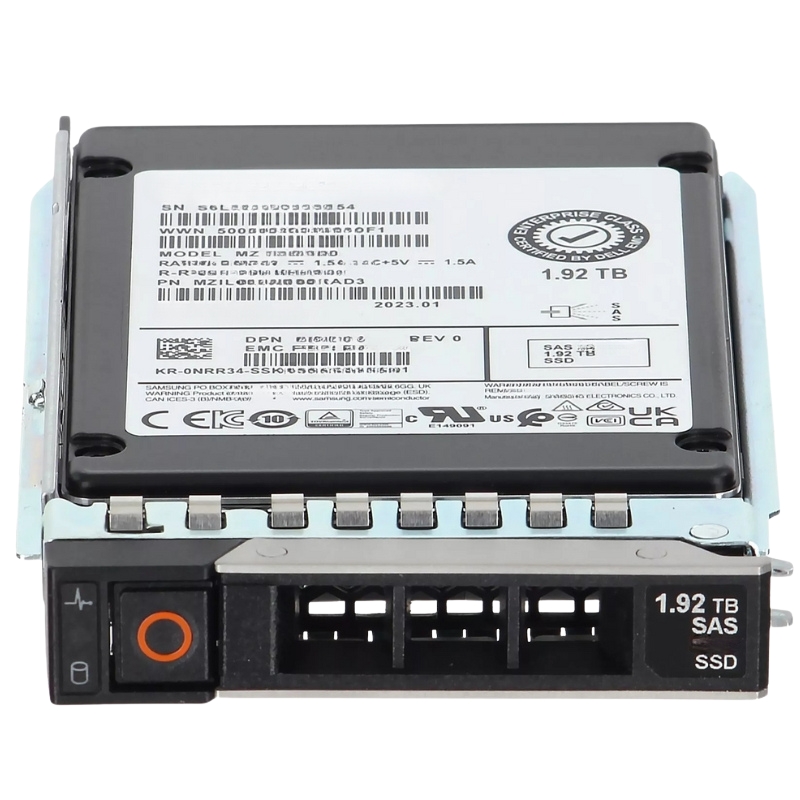


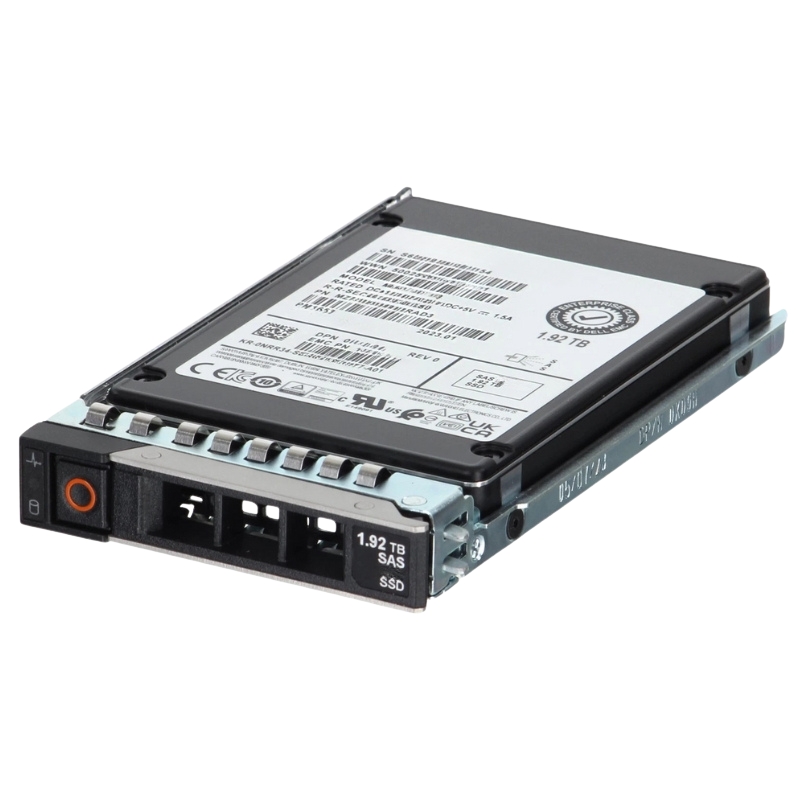
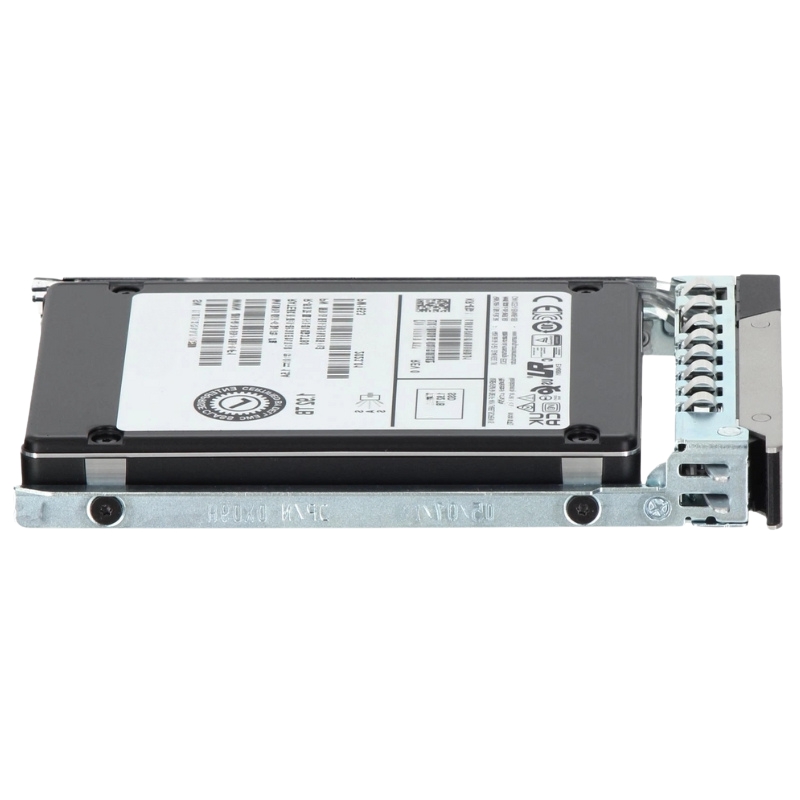
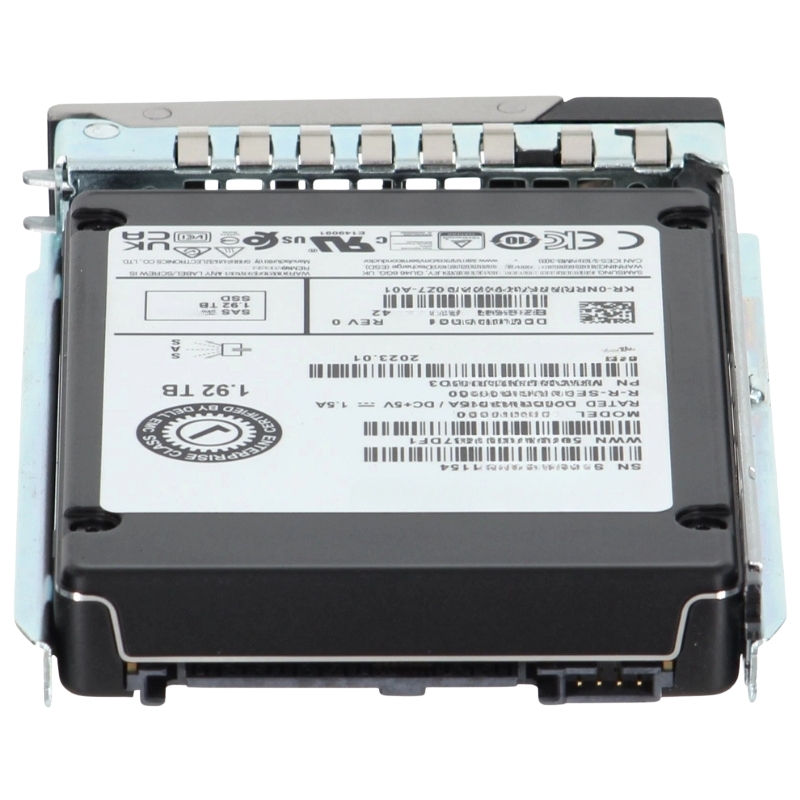
Dell 228JT 1.92TB SAS 12GBPS Mixed Use 512e 2.5inch Small Form Factor Hot-Plug Solid State Drive. New Sealed in Box (NIB) with 1 Year Warranty
Designed for modern data centers and enterprise storage arrays, the Dell 228JT 1.92TB SAS 12Gbps Mixed Use 512e 2.5-inch Small Form Factor (SFF) Hot-Plug Solid State Drive represents a compelling balance of performance, reliability, and cost-efficiency. Built to handle mixed application workloads, this drive targets environments that require consistent low-latency I/O, predictable throughput, and robust endurance characteristics. From virtualization hosts to database caching layers and tiered storage systems, the 228JT is engineered to integrate into Dell PowerEdge servers, external arrays, and a wide range of SAS-capable infrastructures, offering administrators a dependable storage building block for mid-to-large scale deployments.
The SAS 12Gbps interface used by the Dell 228JT delivers high-speed connectivity that is backwards compatible with earlier SAS generations while providing the bandwidth necessary for today's demanding workloads. The 2.5-inch small form factor allows dense server and storage array configurations, enabling higher capacity per rack unit without sacrificing cooling or serviceability. Hot-plug capability ensures drives can be serviced or replaced without taking systems offline, a critical feature for 24/7 operations and high-availability environments.
Despite the rise of NVMe and PCIe-based storage, SAS remains a staple in enterprise storage due to its mature ecosystem, broad compatibility, and strong management features. The 12Gbps speed point is a practical sweet spot for mixed workloads where sustained sequential transfers and random I/O both play roles. The Dell 228JT leverages this interface to provide consistent performance for transactional applications while maintaining the reliability and management features expected in enterprise SAS implementations.
Mixed use classification denotes a workload profile that includes a mix of read and write operations at moderate to high intensities. The Dell 228JT's 1.92TB capacity aligns well with database indices, virtual machine images, and hot tiers in hybrid storage arrays. Its endurance rating supports the write amplification typical of mixed workloads, providing a cost-effective middle ground between read-intensive and write-intensive SSDs. Careful firmware tuning and enterprise-grade NAND selection ensure steady-state performance remains predictable over the drive's life.
One of the most important attributes of enterprise SSDs is consistent latency under sustained load. The Dell 228JT incorporates enterprise-class controllers and power-loss protection strategies that minimize write interruption and reduce the risk of data corruption. Latency-sensitive operations such as database transactions, virtualization I/O, and high-frequency caching benefit from this predictability, translating directly into improved application responsiveness and user experience.
The 512e sector emulation indicates the drive presents 512-byte logical sectors while physically using 4K NAND pages (4Kn). This emulation improves compatibility with legacy operating systems and applications that expect 512-byte sector sizes. For organizations migrating from older spinning media to modern SSDs, 512e allows smoother rollouts and easier integration into existing storage stacks, reducing migration risk and avoiding certain alignment pitfalls that can impact performance.
Proper partition alignment and filesystem configuration remain important for maximizing the performance of 512e devices. When provisioning volumes on the Dell 228JT, aligning I/O to the underlying physical page boundaries will reduce write amplification and prolong drive life. Storage administrators should ensure that virtual machine images, logical volumes, and database filesystems are configured with 4K alignment best practices to reap the full performance benefits of the drive.
The Dell 228JT is suitable for a range of enterprise workloads. Common deployment scenarios include virtualization hosts running mixed guest profiles, database acceleration tiers requiring steady random IOPS, mail servers, and application servers with frequent read-write activity. It is also well suited for caching layers in tiered storage architectures, where the drive accelerates performance-sensitive data paths while bulk storage remains on higher-capacity HDDs or cost-optimized arrays.
In virtualization clusters, predictable I/O and endurance are essential for maintaining service quality across many tenants and workloads. The 1.92TB capacity is an effective balance — large enough to host multiple virtual disks or intensive VM workloads, yet compact enough to allow high-density deployments. The drive's mixed use profile supports the read-write dynamics common in virtualized environments, helping to minimize noisy-neighbor effects and ensuring fair access to storage resources.
Transactional databases demand sustained low-latency and reliable write behavior. The Dell 228JT provides strong random IOPS performance and deterministic latency, making it a good fit for database log storage or working set acceleration. When paired with proper caching and write-back strategies at the application or storage controller level, the drive can significantly reduce query response times and improve overall throughput.
Enterprise SSDs must meet stringent reliability standards, and the Dell 228JT is designed with features to safeguard data integrity and minimize downtime. Power loss protection (PLP) ensures that write data in flight is protected during unexpected power events, reducing the likelihood of incomplete transactions. Advanced error correction (ECC) methods detect and correct bit errors, while background media management routines handle wear leveling and bad block retirement to extend usable life.
Thermal performance is a practical concern in dense server environments. The Dell 228JT is optimized for the thermal envelopes typical in 2.5-inch drive bays, but administrators should still ensure adequate airflow and rack-level cooling to maintain optimal operating temperatures. Proper thermal management enhances performance stability and prolongs drive longevity. Power consumption for SAS SSDs is generally higher than SATA counterparts and lower than some NVMe solutions; nonetheless, power budgeting at the rack level should account for large-scale SSD deployments.
Hot-plug capability is a critical feature for minimizing downtime in enterprise settings. The 228JT supports hot-swap operations in compatible Dell chassis and storage enclosures, allowing faulty drives to be replaced without powering down systems. This capability, combined with RAID or erasure coding frameworks, reduces service interruptions and supports continuous operation during maintenance windows.
Although optimized for Dell systems, the 228JT adheres to SAS standards and can interoperate with many third-party controllers and enclosures that support SAS 12Gbps. When deploying in multi-vendor environments, verify firmware compatibility and certified interoperability lists to ensure seamless operation. Leveraging Dell's management tools may provide enhanced visibility and integration, but standard management protocols ensure broad compatibility for diverse infrastructure designs.
Before large-scale deployments, perform compatibility checks and review certified firmware versions for the target server or storage platform. In some cases, vendor-specific firmware updates provide performance or stability improvements for particular controller combinations. Staged rollouts and thorough testing in a lab environment can prevent unexpected issues in production and help validate expected performance characteristics under representative workloads.
To achieve the best results from the Dell 228JT, administrators should apply common best practices in storage configuration. Aligning partitions to 4K boundaries, choosing appropriate RAID levels for mixed workloads, and tuning cache policies on storage controllers all influence performance and longevity. Additionally, workload characterization is essential — understanding the mix of sequential versus random access and read-to-write ratios will guide provisioning choices and capacity planning.
For mixed workloads, RAID 10 often provides a strong blend of performance and redundancy, while RAID 6 or erasure coding approaches may offer better raw capacity efficiency with acceptable performance trade-offs. The Dell 228JT's endurance rating and consistency under load make it suitable for RAID arrays, but administrators should balance rebuild times and failure scenarios when choosing redundancy schemes.
Proactive capacity planning anticipates growth in data volume and IOPS demand. Tracking metrics such as write amplification, average daily writes, and spare capacity utilization aids in forecasting replacement cycles and procurement needs. Lifecycle management strategies that include rolling firmware updates, SMART-based replacement policies, and staged refresh plans help maintain performance and reduce unplanned downtime over the infrastructure's life.
Security features in enterprise SSDs can include cryptographic erase, secure firmware updates, and support for encryption standards. While the Dell 228JT's specific security feature set should be validated against organizational requirements, many deployments leverage self-encrypting drive (SED) capabilities or rely on array-level encryption to meet compliance mandates. Where regulatory requirements exist, ensure that the chosen deployment model satisfies data-at-rest protection criteria and that key management procedures are in place.
When decommissioning drives, follow approved data sanitization procedures to prevent data leakage. Cryptographic erase, secure erase utilities, or physical destruction are all valid approaches depending on the sensitivity of the stored information. Maintaining auditable records of sanitization steps helps organizations meet compliance and governance obligations during hardware refresh cycles.
Selecting the Dell 228JT 1.92TB SAS 12Gbps Mixed Use 512e 2.5-inch SFF Hot-Plug SSD should be driven by workload characterization, capacity needs, and integration requirements. For organizations seeking an SSD that blends endurance, performance consistency, and broad compatibility, the 228JT is an attractive candidate. Evaluate your I/O patterns, growth forecasts, and redundancy strategies to determine whether its mixed use profile meets your operational objectives.


 Contact Us
 Information
 Catalog
 Solid State Drives (SSD)
 Network Switches
 Hard Disk Drives
 HBA & Controllers
 PC & Servers
 PC & Server Memory
 CPU & Processors
 Network Routers
 Power Supplies
 Tape Drives & Libraries
 Network Devices
 Computer & Network Cables