
(7% discount is applied at checkout)
Cart is empty
Your go-to destination for cutting-edge server products
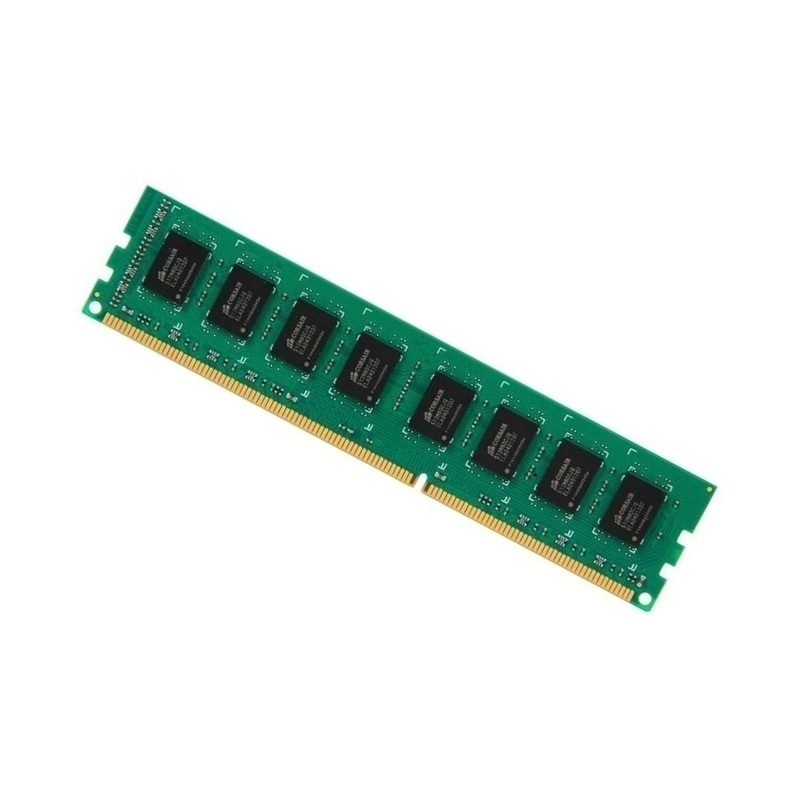
Lenovo 46W0833 32GB 2400MHZ PC4-19200 CL17 ECC Registered DDR4 SDRAM 288-Pin RAM. New (System) Pull with 1 year replacement warranty
| SKU/MPN | Warranty | Price | Condition | You save |
|---|---|---|---|---|
| 46W0833 | 1 Year Warranty | Contact us for a price | New (System) Pull | |
| 46W0833 | 1 Year Warranty | $180.00 | New (System) Pull | You save: $63.00 (26%) |
| 46W0833 | 1 Year Warranty | $289.00 | New Sealed in Box (NIB) | You save: $101.15 (26%) |
Premium server-grade memory: the Lenovo 46W0833 is a 32GB DDR4 SDRAM module engineered for reliability and stable performance in enterprise servers and workstations. Ideal for data centers, virtualization hosts, and mission-critical systems that require Error-Correcting Code (ECC) and registered buffering.
This memory is explicitly tailored for server-class motherboards and enterprise platforms:
DDR4 memory represents a significant advancement over previous DDR3 technology, offering improved performance, higher bandwidth, and reduced power consumption. The transition to DDR4 brought about fundamental changes in memory architecture, including increased prefetch buffers, bank groups for improved efficiency, and higher data transfer rates. For server environments where reliability and performance are paramount, DDR4 technology provides the foundation for modern computational demands.
The Lenovo 46W0833 operates at PC4-19200 specifications, which indicates a data transfer rate of 19200 MB/s. The "2400MHz" refers to the module's data rate, while the CAS Latency (CL17) represents the number of clock cycles between sending a column address to memory and the beginning of data response. Understanding these specifications is crucial for proper system compatibility and performance optimization in server environments.
The 32GB capacity of the Lenovo 46W0833 represents an optimal balance for modern server workloads. This capacity allows for substantial memory allocation per module while maintaining compatibility with a wide range of server platforms. The module utilizes advanced DRAM chip packaging and organization to achieve this density while maintaining signal integrity and thermal characteristics essential for 24/7 operation.
Server memory modules employ complex bank and rank architectures to maximize memory efficiency. The Lenovo 46W0833 utilizes a specific rank configuration that optimizes memory controller access patterns and reduces electrical loading on the memory channel. Understanding rank structure is essential for proper population guidelines and performance optimization in multi-processor systems.
Operating at 2400MT/s (mega transfers per second), the Lenovo 46W0833 delivers a peak bandwidth of 19.2 GB/s per module. This bandwidth is calculated using the formula: (Data Rate × Bus Width) / 8. For server applications, aggregate memory bandwidth across all populated channels becomes critical for data-intensive workloads such as database operations, virtualization, and high-performance computing.
The CL17 timing specification represents just one of several critical timing parameters that govern memory performance. Additional timings including tRCD, tRP, and tRAS work in concert to determine overall memory responsiveness. In server environments, these timings are carefully balanced to ensure both performance and stability under varying workload conditions.
Error Correction Code (ECC) memory incorporates additional bits and specialized logic to detect and correct single-bit memory errors in real-time. The Lenovo 46W0833 utilizes advanced ECC algorithms that can identify single-bit errors and correct them without system interruption. This capability is crucial for mission-critical applications where data integrity is non-negotiable, preventing silent data corruption that could compromise business operations or computational results.
While ECC memory excels at correcting single-bit errors, it also provides detection capabilities for multi-bit errors. When the Lenovo 46W0833 encounters uncorrectable errors, it triggers system protocols that may include logging the event, alerting administrators, or in severe cases, halting operations to prevent data corruption. This comprehensive error management makes ECC memory essential for financial, medical, and scientific computing environments.
Registered memory, sometimes called buffered memory, incorporates register chips between the memory controller and DRAM modules. These registers buffer the command, address, and control signals, reducing electrical load on the memory controller. The Lenovo 46W0833 utilizes this technology to enable higher memory capacities and more stable operation in multi-module configurations, though it introduces minimal additional latency compared to unbuffered memory.
In server systems with substantial memory populations, signal degradation becomes a significant challenge. Registered DIMMs like the Lenovo 46W0833 maintain signal integrity across large memory arrays by reducing the electrical load presented to the memory controller. This allows servers to support higher memory capacities while maintaining stability and performance margins.
The registered architecture enables servers to support significantly larger memory configurations than would be possible with unbuffered modules. This scalability is essential for memory-intensive applications including in-memory databases, virtualized environments, and large-scale data analytics platforms where maximum memory capacity directly translates to application performance and capability.
Modern server platforms employ multi-channel memory architectures that significantly increase available memory bandwidth. The Lenovo 46W0833 is designed to leverage these architectures, with performance scaling as additional channels are populated. Understanding your server's specific memory channel configuration is essential for optimizing memory performance across processors and memory controllers.
Virtualized environments benefit from balanced memory configurations that provide both capacity and bandwidth. The Lenovo 46W0833's 32GB capacity represents an optimal size for virtualization workloads, allowing substantial guest memory allocation while maintaining performance through adequate memory bandwidth per virtual machine.
Database servers often benefit from memory configurations optimized for both capacity and low latency. The Lenovo 46W0833 provides the reliability features essential for database integrity while delivering the performance characteristics needed for efficient query processing and transaction handling.
The Lenovo 46W0833 is designed to operate within specified temperature ranges typical of enterprise server environments. Proper airflow across memory modules is essential for maintaining optimal operating temperatures, particularly in densely populated systems. Most Lenovo servers incorporate thermal sensors that monitor memory temperature and adjust cooling accordingly.
Many server-grade memory modules, including the Lenovo 46W0833, incorporate thermal sensors that provide real-time temperature data to the system management controller. This enables proactive thermal management through fan speed adjustments and, if necessary, performance throttling to protect components from heat-related damage during extreme operating conditions.
In traditional enterprise data centers, the Lenovo 46W0833 provides the foundation for critical business applications including ERP systems, customer relationship management platforms, and collaboration services. The combination of ECC protection, high capacity, and proven reliability makes this memory ideal for applications where downtime directly impacts business operations and revenue.
For scientific computing, engineering simulation, and research applications, the Lenovo 46W0833 delivers the performance and reliability required by computational-intensive workloads. In HPC environments, memory bandwidth and capacity often directly impact time-to-solution for complex calculations and simulations.
Modern cloud infrastructure relies on memory-dense servers to maximize virtual machine density and application performance. The Lenovo 46W0833's 32GB capacity provides an optimal balance for hyperconverged infrastructure deployments where compute, storage, and networking resources are consolidated into single systems running virtualized environments.


 Contact Us
 Information
 Catalog
 Solid State Drives (SSD)
 Network Switches
 Hard Disk Drives
 HBA & Controllers
 PC & Servers
 PC & Server Memory
 CPU & Processors
 Network Routers
 Power Supplies
 Tape Drives & Libraries
 Network Devices
 Computer & Network Cables