(7% discount is applied at checkout)
Cart is empty
Your go-to destination for cutting-edge server products
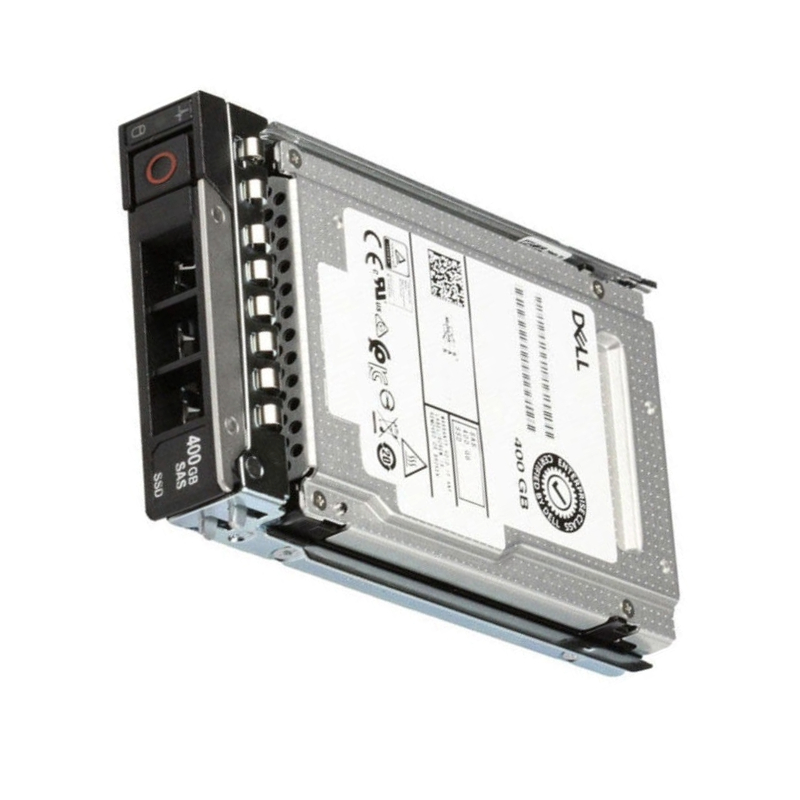


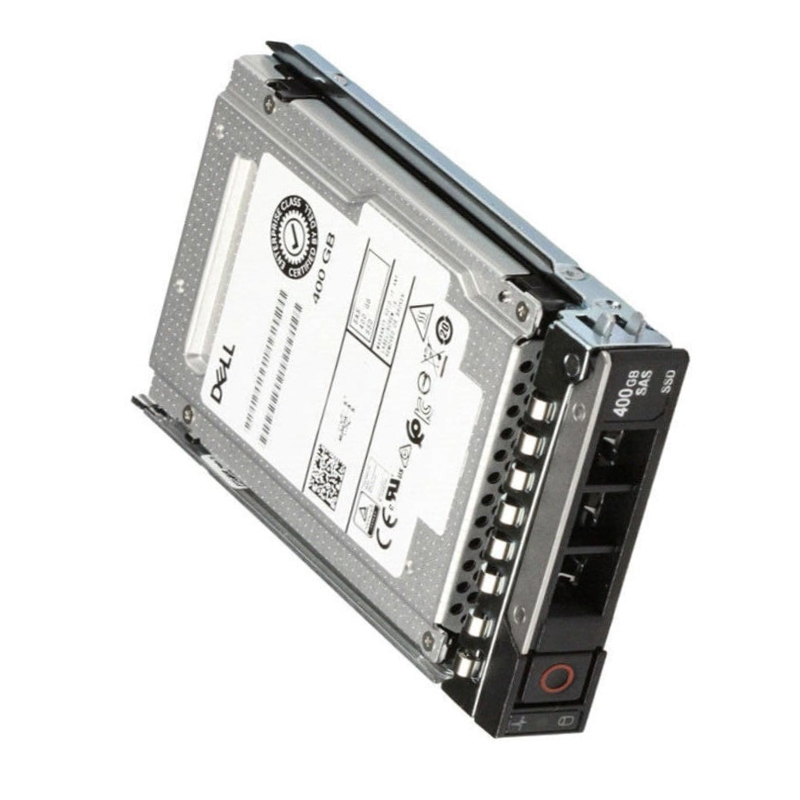
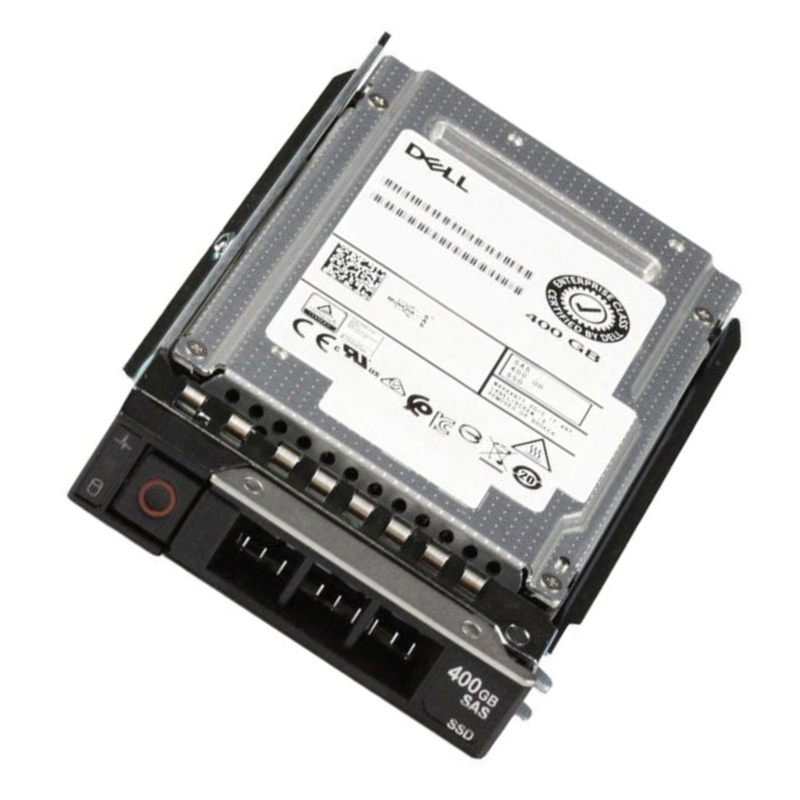
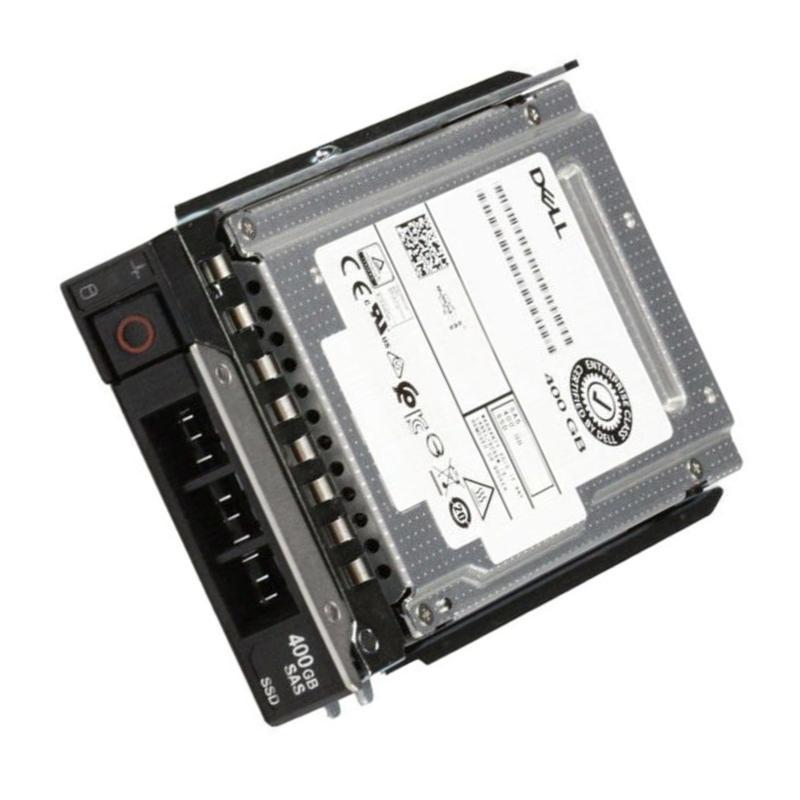
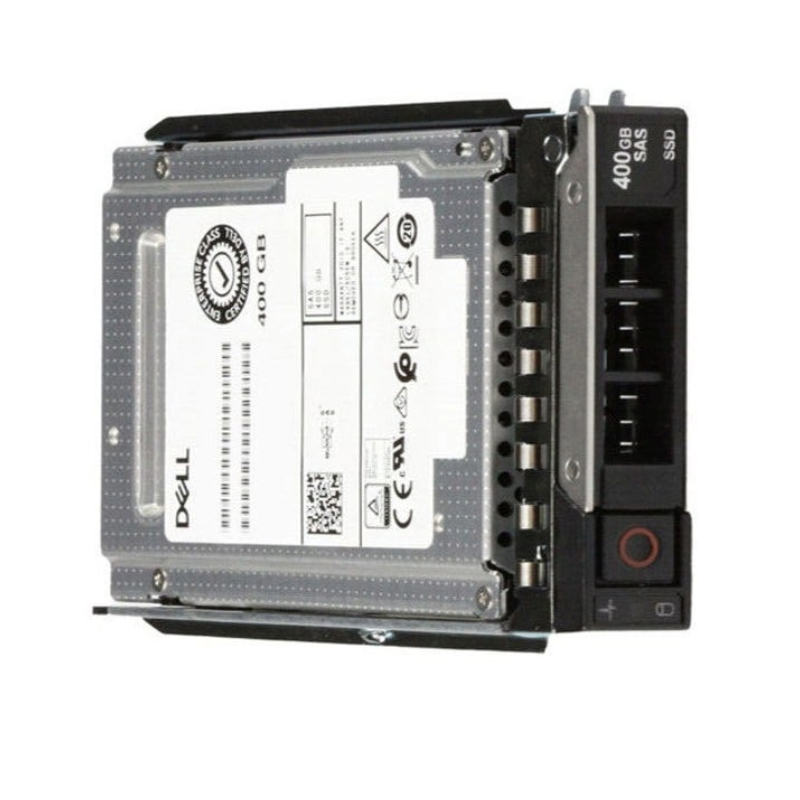
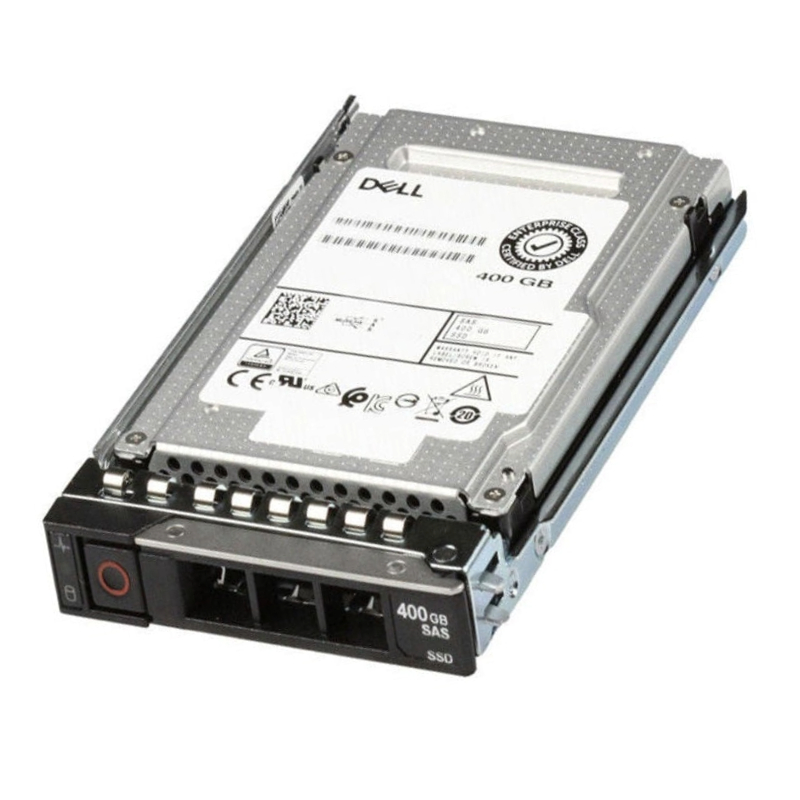
Dell 345-BCBI 400GB SAS-12GBPS Write Intensive TLC Hot-plug SSD. New Sealed in Box (NIB) with 1 Year Warranty
The Dell 345-BCBI 400GB SAS 12Gb/s solid state drive is a Dell-certified, enterprise-class storage device engineered for heavy write workloads and consistent data center performance. Built as a 2.5-inch, hot-pluggable module with an included tray for seamless integration into Dell PowerEdge MX and XR chassis, this drive pairs high endurance with predictable throughput to meet the demands of write-intensive applications. Leveraging modern 3D TLC BiCS flash technology and a high-speed 12 gigabit per second SAS interface, the 345-BCBI positions itself as a reliable workhorse for databases, logging systems, virtualization hosts, and other I/O-heavy workloads where sustained write performance and longevity are key procurement criteria.
The model designation “345-BCBI” identifies a Dell-branded SKU that maps to an enterprise 400GB form factor and feature set. The “400GB” capacity signals an optimized mid-density tier that balances cost per GB and usable capacity for intensive write scenarios. “SAS 12Gb/s” designates the interface and maximum link speed, while “Write Intensive” and “10 DWPD” (drive writes per day) indicate the drive’s endurance class and suitability for continuous, heavy write activity. The “BiCS Flash 3D TLC” element references the multi-layer cell architecture used in the NAND die construction, which enables higher density at lower cost while maintaining sufficient program/erase cycle durability when paired with enterprise firmware and overprovisioning strategies.
The 12Gb/s SAS interface enables high sequential and random I/O performance while preserving the enterprise features of SAS such as dual-porting (where applicable), robust error handling, and compatibility with SAN and server backplanes. In mixed or random small-block I/O patterns common to databases and virtual machine (VM) workloads, the 345-BCBI is tuned to deliver low latency and stable IOPS under sustained write stress. Its write-optimized firmware and internal provisioning aim to minimize performance variability so sustained write bursts do not cause long tail latencies that translate into application stalls.
Enterprise deployments prize consistent latency as much as peak IOPS numbers. The drive’s internal firmware employs techniques such as intelligent garbage collection scheduling, write combining, and wear leveling to hold latency within predictable bounds during periods of heavy host writes. This results in fewer interruptions for time-sensitive services and improved user experience for transaction-heavy applications. When combined with proper host queue depth tuning and storage controller settings, the 345-BCBI helps architects achieve a steady latency profile at scale.
For sequential write and read workloads such as backup staging, media streaming, and large file ingestion, the 12Gb/s physical link provides a wide pipe that the drive’s controller can utilize effectively. The drive’s internal caching and write acceleration mechanisms provide strong sequential write bandwidth, allowing it to act as local high-speed staging storage ahead of tiered archival layers or object stores in hybrid architectures.
Endurance rating is central to evaluating solid state drives for write-dense deployments. The specified 10 DWPD rating communicates that the SSD is designed to sustain the equivalent of writing its full capacity ten times per day, every day, over the warranty period without exceeding the engineered program/erase cycle budget. This high endurance tier makes the 345-BCBI appropriate for write-heavy tasks like database commit logs, telemetry ingestion, and real-time analytics.
Dell-certified enterprise drives undergo extensive validation and are rated with MTBF figures and advanced error correction capabilities. The drive’s onboard ECC, end-to-end data path protection, and power loss protection (where implemented in the drive family) help ensure that writes are preserved in the event of unexpected power interruptions. Together with system-level monitoring, these features protect data integrity and reduce the likelihood of silent data corruption.
3D TLC (triple level cell) BiCS flash places multiple bits per cell across vertically stacked layers. Compared with planar NAND, 3D approaches increase density and reduce cost per GB while maintaining life cycles suitable for enterprise use when paired with enterprise firmware and higher endurance provisioning. BiCS flash, in particular, is known for layering techniques that reduce cell interference and yield better endurance characteristics than equivalent planar TLC designs. For organizations seeking the balance of capacity, price, and endurance, these drives provide an attractive middle ground between lower-end consumer TLC and higher-end SLC/MLC enterprise parts.
One of the biggest advantages of selecting the Dell 345-BCBI is Dell certification for PowerEdge MX and XR platforms. Certification means the drive has been validated with these modular and rack-mount server families for mechanical fit, thermal behavior, firmware interoperability, and hot-plug reliability. The provided drive tray simplifies installation into standard 2.5-inch bays and minimizes the risk of mechanical incompatibility or misalignment. For administrators managing blade, modular, or dense rack architectures, such certification reduces integration risk and accelerates deployment timelines.
The hot-plug 2.5-inch form factor allows drives to be replaced or added without powering down the host, a critical feature for high-availability systems and maintenance windows. Combined with drive LED indicators and bay numbering on Dell chassis, service technicians can perform replacements quickly and accurately. This decreases mean time to repair (MTTR) and helps data centers meet strict uptime SLAs.
Enterprise drives are only as good as the ecosystem that manages them. Dell-certified firmware revisions for the 345-BCBI ensure compatibility with PowerEdge controllers and the server management stack. In practice, this reduces firmware-mismatch issues and enables features such as SMART telemetry reporting, predictive failure analysis, and coordinated firmware updates orchestrated by Dell OpenManage or other management tools.
The 345-BCBI is well suited to a spectrum of architectures. In hyperconverged infrastructures where compute and storage coexist on the same nodes, these drives can serve as caching or primary storage for write-intensive VMs. In traditional SAN environments, they function as high-performance tiers within tiered storage pools, offering a fast landing zone for write-heavy datasets before migration to lower-cost tiers. For database servers, the drives are recommended for transaction log devices or high-write partitions that benefit from consistent throughput and endurance predictability.
To maximize drive lifespan and performance, architects should incorporate adequate overprovisioning and capacity planning. Overprovisioning reserves a portion of the NAND for controller operations and wear leveling, which helps maintain consistent performance as the drive ages. Right-sizing — selecting the appropriate capacity and number of drives for I/O and capacity needs — reduces unnecessary writes per drive and optimizes DWPD utilization across the array.
When deploying the 345-BCBI in RAID arrays, choose RAID levels and rebuild policies that align with your availability and performance objectives. Write-optimized drives paired with RAID controllers that support fast rebuilds and consistent caching help avoid prolonged vulnerability during drive replacements. In larger arrays, consider distributed parity or erasure coding mechanisms that offer faster reconstruction and better resiliency against multiple device failures.
High endurance and continuous write activity increase the thermal footprint of SSDs. The Dell 345-BCBI is specified for operation within Dell’s validated thermal envelope when installed in PowerEdge MX and XR designs. Nevertheless, data center operators should follow chassis airflow guidelines and ensure adequate cooling when populating bays with multiple write-intensive drives. Proper thermal management extends device life and prevents throttling that can degrade performance under sustained load.
Although SSDs consume less power than spinning media at similar performance levels, write-heavy usage raises average power draw. When planning dense deployments, include drive power in rack-level power budgeting to avoid overtaxing PSUs or triggering thermal containment issues. Efficient power provisioning and monitoring tools will help keep drives within their optimal operating ranges.
Enterprises often require storage devices that support encryption and secure erase capabilities. The Dell 345-BCBI family typically integrates controller-level features that enable secure erase and may support self-encrypting drive (SED) options in specific SKUs or configurations. When sensitive data is involved, choose drives and firmware that comply with your organizational policy for cryptographic erasure and secure decommissioning.
End-of-life procedures for NAND-based storage must account for wear leveling and remnant data. Use controller-supported secure erase functions or out-of-band sanitization tools recommended by Dell to ensure data cannot be recovered once a device leaves service. Maintaining an auditable process for decommissioning and destruction of drives will satisfy compliance requirements for regulated industries.


 Contact Us
 Information
 Catalog
 Solid State Drives (SSD)
 Network Switches
 Hard Disk Drives
 HBA & Controllers
 PC & Servers
 PC & Server Memory
 CPU & Processors
 Network Routers
 Power Supplies
 Tape Drives & Libraries
 Network Devices
 Computer & Network Cables