(7% discount is applied at checkout)
Cart is empty
Your go-to destination for cutting-edge server products
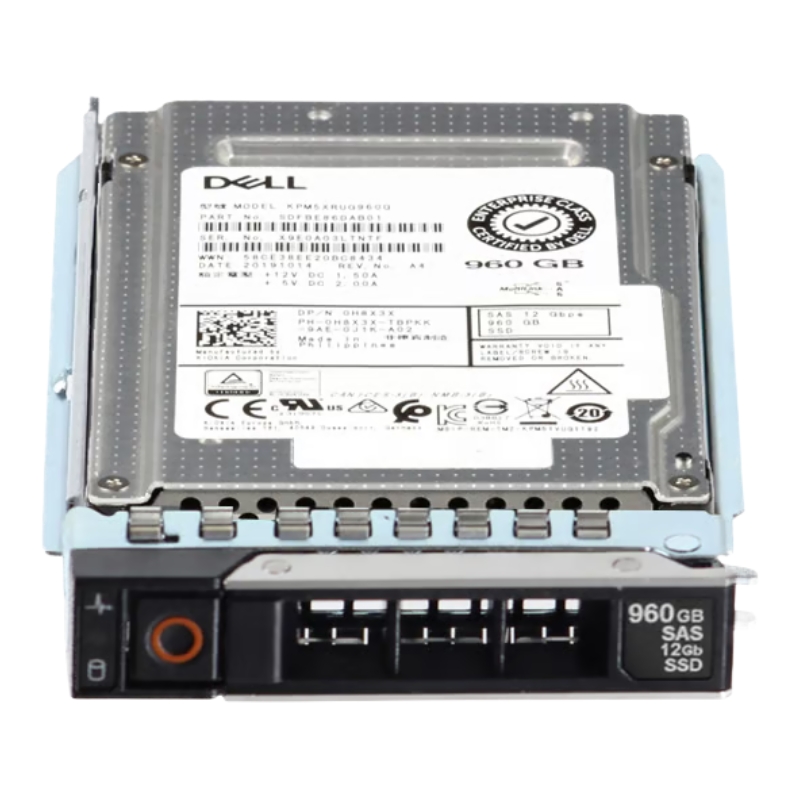


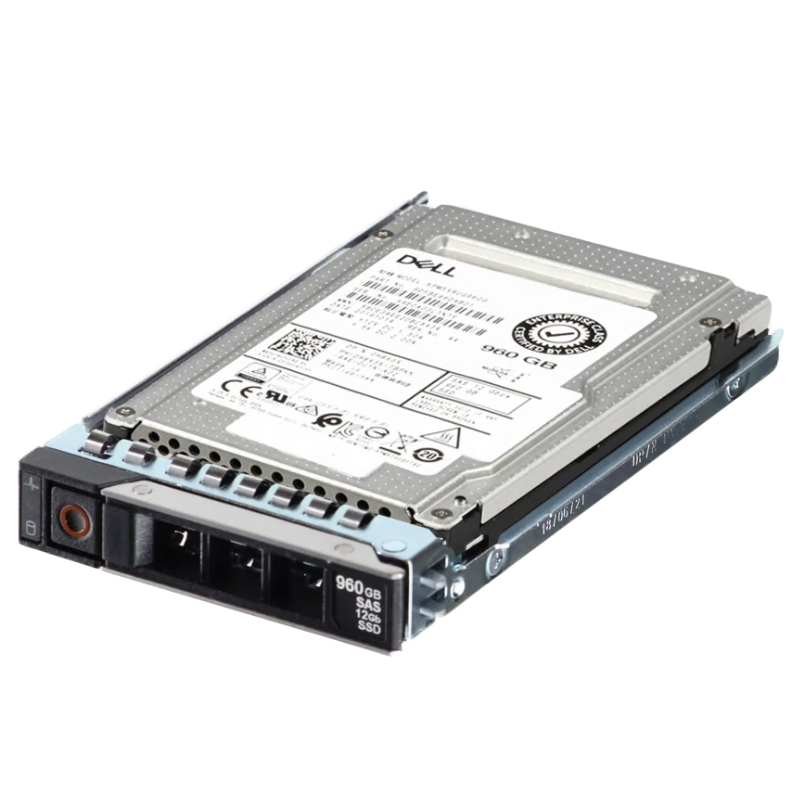
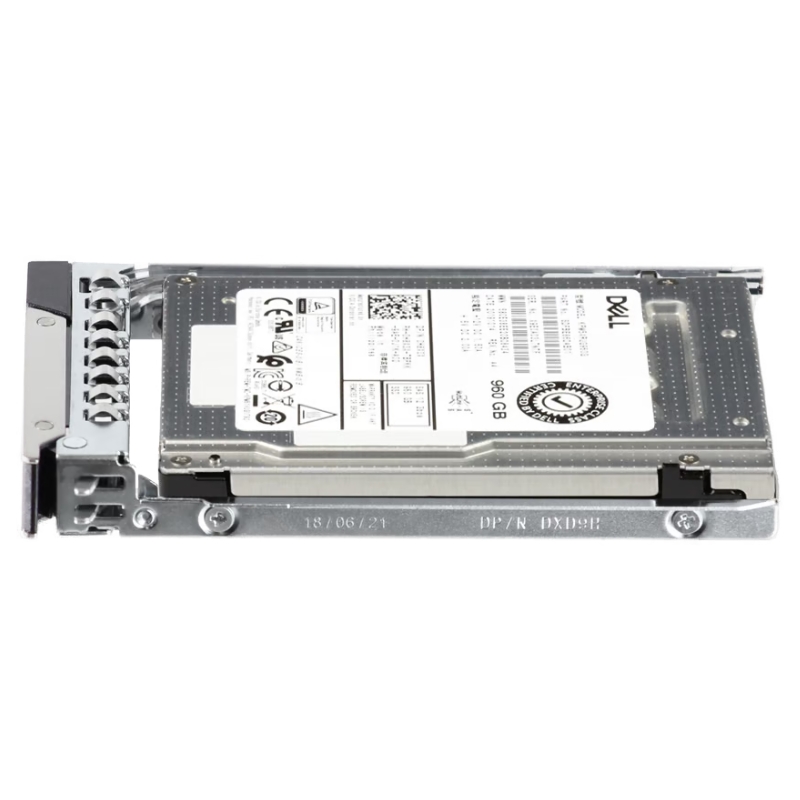
Dell 345-BCRU 960GB SAS-12GBPS Self-encrypting Sed Read Intensive 1dwpd TLC 2.5 Inch Hot-Plug Certified With Tray For 14g/15g/16g Poweredge Server SSD. New Sealed in Box (NIB) with 1 Year Warranty
This high-performance solid-state drive is engineered for data center environments requiring robust security and sustained read operations.
This storage component is validated for operation within numerous Dell PowerEdge server generations, including 14th, 15th, and 16th generation systems.
In the realm of enterprise computing, storage is not merely a component; it is the foundational pillar upon which data integrity, application performance, and business continuity rest. The Dell 345-BCRU 960GB Solid State Drive represents a meticulously engineered solution designed explicitly for the relentless demands of server environments. This SAS-based, self-encrypting drive delivers a potent combination of high throughput, robust security, and certified reliability, making it an optimal choice for read-intensive workloads across Dell's extensive PowerEdge server portfolio. Its design philosophy centers on providing a seamless, secure, and high-performance storage tier that IT managers can deploy with absolute confidence in its compatibility and endurance.
To fully appreciate the capabilities of this storage unit, one must delve into the technical particulars that define its performance envelope and integration parameters. Every specification is a carefully chosen attribute aimed at fulfilling a specific role within the data center ecosystem.
The heart of any SSD is its memory technology, which dictates performance, endurance, and cost-efficiency. The 345-BCRU leverages 960GB of V-NAND Triple-Level Cell (TLC) flash memory. TLC NAND stores three bits of data per cell, striking an exceptional balance between storage density and economic viability. When deployed in a read-intensive role, this technology offers a compelling total cost of ownership without sacrificing the performance benefits inherent to solid-state technology. The 960GB capacity point is strategically selected to serve as a high-performance boot drive, a host for frequently accessed applications, or a tier for warm data that requires faster access speeds than traditional hard disk drives can provide.
The drive utilizes the Serial-Attached SCSI (SAS) interface, specifically the 12Gb/s (SAS3) standard. SAS has long been the gold standard for enterprise and server storage due to its superior protocol efficiency, enhanced error recovery capabilities, and support for dual-port architectures for high availability—features that are critical in a server environment but often absent in consumer-grade SATA alternatives. The 12Gb/s bandwidth ensures the drive is never the bottleneck, fully saturating the link with its impressive sequential read speeds. Housed in a ubiquitous 2.5-inch form factor, it is designed for effortless integration into existing server chassis and hot-plug drive bays, ensuring backward compatibility and straightforward upgrades or replacements.
A key feature for maintaining server uptime and serviceability is hot-plug capability. The inclusion of a certified drive tray means this SSD is ready for immediate installation into any compatible PowerEdge server's hot-plug bay. This allows for the drive to be inserted or removed without powering down the entire system, a non-negotiable requirement for mission-critical systems requiring 24/7 availability. The certified tray guarantees perfect fitment, proper airflow, and correct connector alignment, eliminating potential points of failure during deployment.
Raw performance is a defining characteristic of this enterprise SSD. Its specifications are tailored to accelerate data access and reduce latency, directly translating to improved application response times and user experiences.
The drive boasts a remarkable sequential read speed of up to 4,150 MB/s, enabling the rapid transfer of large, contiguous files such as database backups, virtual machine images, or multimedia assets. Its sequential write speed of 1,450 MB/s is more than sufficient for the write demands of its read-oriented workload profile. Perhaps even more critical for server applications is random I/O performance, measured in Input/Output Operations Per Second (IOPS). The drive achieves a staggering 595,000 IOPS for random reads, allowing it to handle thousands of simultaneous small-file requests typical in web hosting, database querying, and virtualization scenarios. The random write performance of 75,000 IOPS ensures that data logging and write operations are processed with efficiency, maintaining overall system agility.
Endurance is quantified as Drive Writes Per Day (DWPD). A rating of 1 DWPD means that over its warranty period, users can completely write the drive's entire 960GB capacity once every single day. For a read-intensive drive, this is a robust rating. It is engineered to handle a significant write workload despite its classification, providing a substantial endurance buffer for real-world scenarios where write patterns can occasionally spike. This durability is a direct result of the high-quality TLC NAND and the advanced wear-leveling algorithms implemented by the onboard controller.
In an era of increasing regulatory scrutiny and cyber threats, data-at-rest security is paramount. The 345-BCRU is equipped with Self-Encrypting Drive (SED) technology, meeting specific security standards.
The SED functionality operates by automatically encrypting all data written to the NAND flash memory using robust, hardware-based encryption algorithms (often AES-256). This encryption and decryption process is performed instantly by a dedicated controller on the drive itself, resulting in zero performance penalty. The encryption keys are never stored in external software or system memory, making them virtually immune to software-based attacks. This ensures that should a drive be physically removed from the server, either for decommissioning or due to theft, the data remains cryptographically scrambled and utterly inaccessible without the proper credentials.
These drives are designed to work seamlessly with enterprise security management suites like Dell's OpenManage, allowing IT administrators to easily manage encryption keys, enforce security policies, and securely sanitize drives instantly using crypto-erase commands. Crypto-erase renders the existing encryption key obsolete, making all data permanently unreadable in a fraction of a second—a process that is vastly faster and more secure than traditional multi-pass data wiping methods.
A significant advantage of this drive is its certified compatibility across a vast array of Dell PowerEdge servers, spanning multiple generations. This ensures investment protection and simplifies procurement and maintenance for IT departments running heterogeneous data centers.
The drive is rigorously tested and validated to operate flawlessly within Dell's 14th (e.g., R740xd, R740), 15th (e.g., R750xs, R7515), and 16th (e.g., R760, R7625) generation PowerEdge servers. This cross-generational support provides immense flexibility, allowing the drive to be used in everything from existing deployed systems to the latest server platforms, ensuring consistent performance and management experience across the entire infrastructure.
The extensive list of compatible systems includes, but is not limited to:
Physical Dimensions and Installation Considerations
Precision engineering ensures the drive meets exact physical specifications for trouble-free installation. The dimensions are:
Ideal Workloads and Application Use Cases
The performance and endurance profile of the Dell 345-BCRU SSD makes it exceptionally well-suited for a range of specific applications within the data center.
Its high read throughput and IOPS make it perfect for:
Enhancing Security-Posture in Regulated Industries
The integrated SED functionality is a critical feature for organizations in healthcare (HIPAA), finance (PCI-DSS), and the public sector, where encrypting data-at-rest is often a legal or regulatory mandate. It allows these organizations to achieve compliance without the complexity and performance overhead of software-based encryption solutions


 Contact Us
 Information
 Catalog
 Solid State Drives (SSD)
 Network Switches
 Hard Disk Drives
 HBA & Controllers
 PC & Servers
 PC & Server Memory
 CPU & Processors
 Network Routers
 Power Supplies
 Tape Drives & Libraries
 Network Devices
 Computer & Network Cables