(7% discount is applied at checkout)
Cart is empty
Your go-to destination for cutting-edge server products
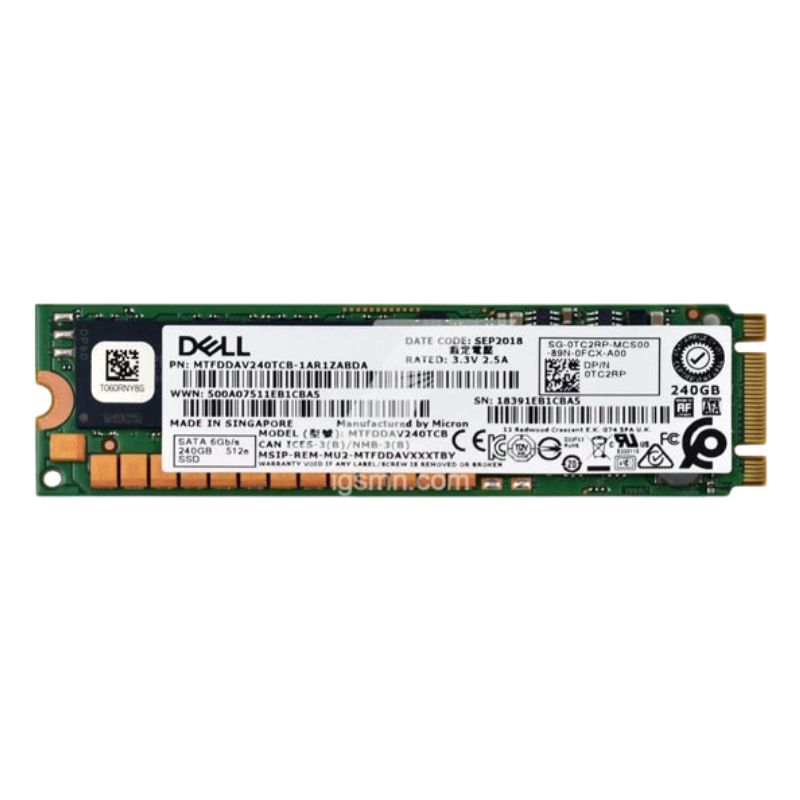


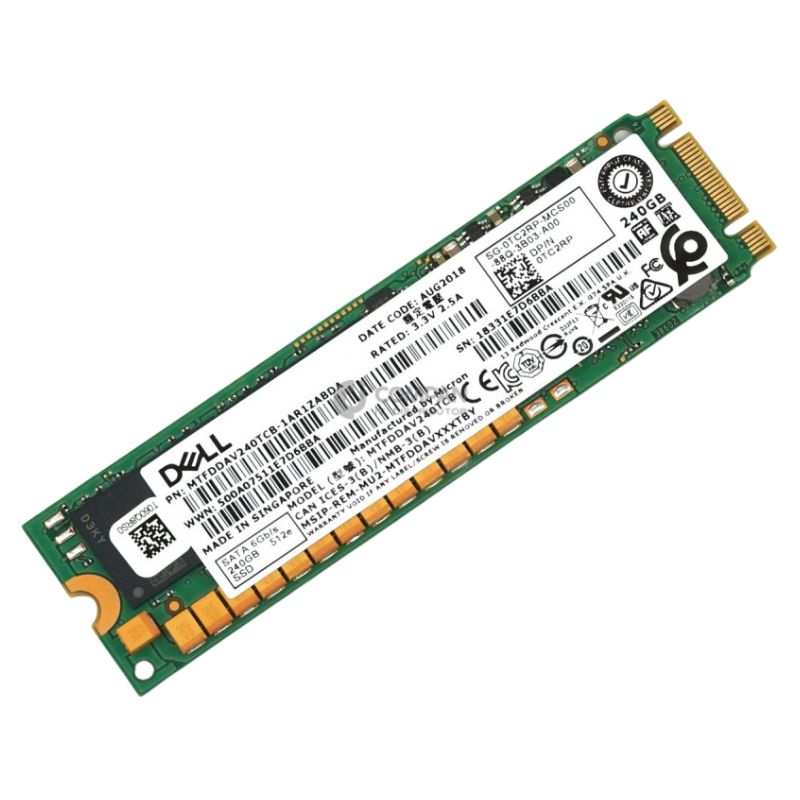
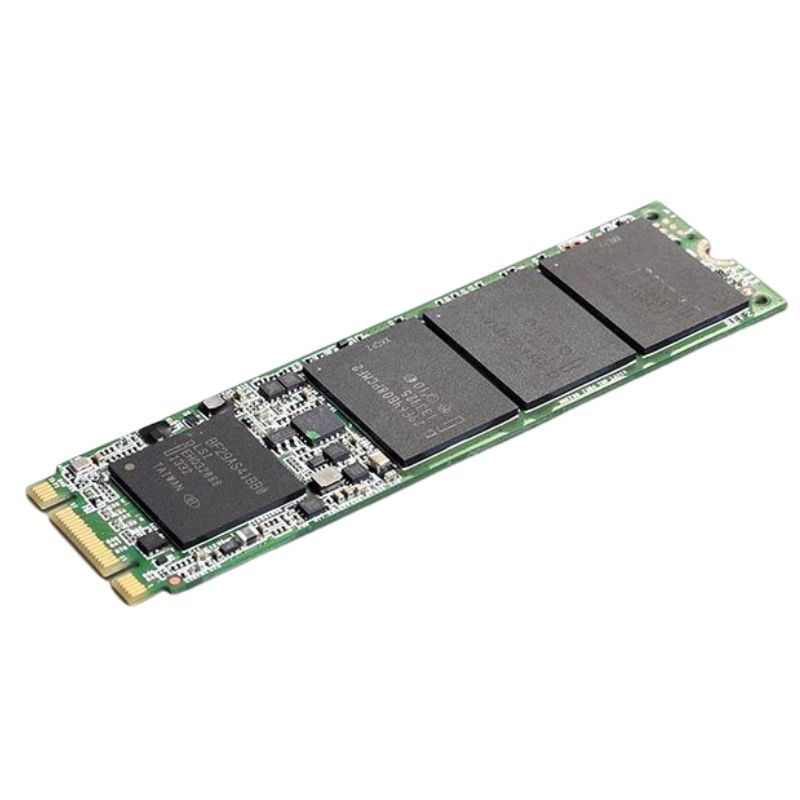
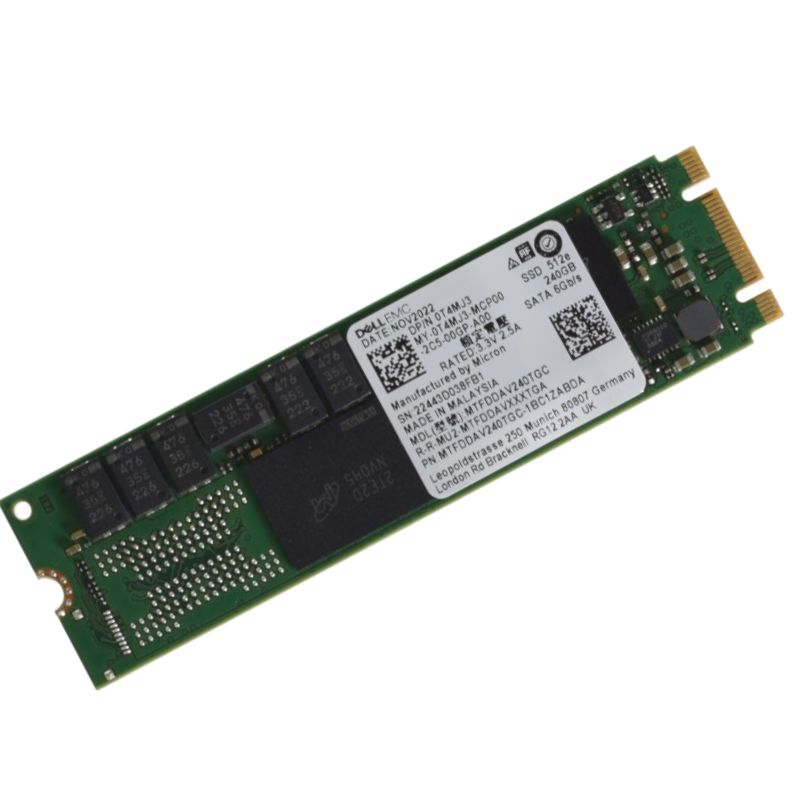
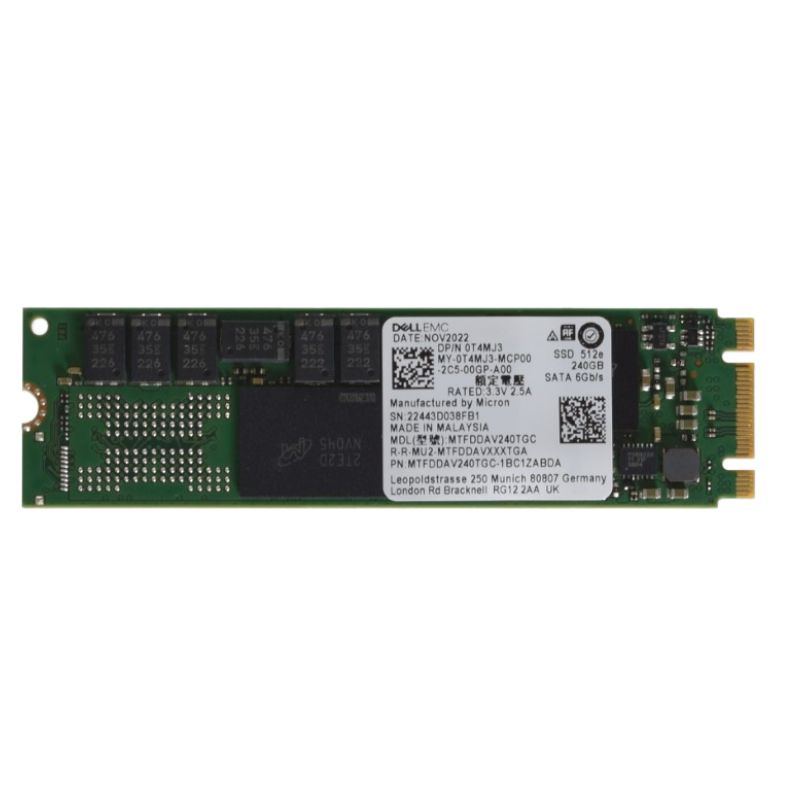
Dell 345-BEZX 240GB SATA 6GBPS M.2 2280 for Boss Card Enterprise Class TLC 3d Nand Solid State Drive. Excellent Refurbished with 1 year replacement warranty
The Dell 345-BEZX solid state drive is engineered for enterprise applications, delivering dependable storage with a balance of speed and durability. Designed for servers and data centers, this SSD leverages advanced NAND technology to provide improved performance and efficiency.
This Dell 345-BEZX SSD ensures smooth system operations and enhanced read/write capabilities. Built with enterprise-level reliability, it supports data-intensive workloads and reduces latency, making it ideal for demanding IT environments.
Developed for business-critical tasks, the Dell 345-BEZX SSD ensures consistent operation under heavy workloads. Its advanced TLC 3D NAND flash memory offers long-lasting storage stability and dependable performance.
The 240GB capacity provides an efficient balance between storage space and speed. Featuring 64-layer TLC 3D NAND, it ensures better endurance and data integrity compared to conventional SSDs.
With SATA III compatibility, this drive achieves up to 6Gbps transfer rates. Its B+M key configuration ensures broad connectivity across supported platforms.
The M.2 2280 compact design enables space-saving installation in modern servers and storage arrays, delivering enterprise-level speed within a small footprint.
The Dell 345-BEZX 240GB SATA 6Gbps M.2 2280 solid state drive is positioned for organizations that need a compact, robust, and predictable storage solution for server boot, cache and light mixed-use workloads. Built on triple-level cell (TLC) 3D NAND technology and offered in the popular M.2 2280 form factor, this drive blends the compact footprint required by modern server platforms with the enterprise-focused attributes expected in datacenter deployments. The SATA 6Gbps interface provides broad compatibility with legacy and current boot controllers, while the enterprise firmware optimizes consistency of latency, endurance and data integrity when deployed as part of Dell’s BOSS (Boot Optimized Storage Solution) card configurations or as a stand-alone M.2 storage device in compatible PowerEdge servers.
The physical profile of the M.2 2280 (22mm x 80mm) is ideal for modern server boards and compact storage backplanes. Compared with 2.5-inch drives, the M.2 form factor reduces cabling complexity and allows OEMs to design denser compute modules without sacrificing boot resilience. The SATA 6Gbps interface ensures this drive can be used in a wide range of server and workstation environments where NVMe lanes are reserved for higher-performance tier storage. For administrators focused on predictable boot behavior and compatibility with RAID or BOSS card boot controllers, a SATA M.2 solution like the Dell 345-BEZX delivers a reliable compromise between cost, speed and compatibility.
TLC 3D NAND enables higher capacity in the same footprint, lowering cost per gigabyte while still providing adequate endurance for read-mostly workloads typical of boot drives and firmware storage. The Dell 345-BEZX leverages multi-layer cell stacking to increase density and uses controller-level optimization to manage wear through advanced wear-leveling and error correction routines. These techniques extend the usable life of the drive beyond what legacy planar NAND could offer, and they improve long-term data retention and reliability under continuous server operation.
Performance for a SATA M.2 SSD is measured not only by raw sequential throughput but by sustained random I/O, latency consistency, and predictable behavior under mixed workloads. The Dell 345-BEZX is tuned for fast boot times, quick firmware updates, and low-latency access to small files and OS images. Sequential reads and writes at the SATA 6Gbps boundary deliver reliable transfer rates for large image deployment, while random read IOPS and small-block latency improvements translate directly into faster server boot and application startup.
Enterprise drives are distinguished by their firmware optimizations that protect performance during sustained use and sudden power events. The Dell 345-BEZX includes controller-level queuing and garbage collection algorithms designed to preserve performance during bursts and to recover quickly after sustained writes. This makes the drive a dependable choice where consistent response times matter, such as when the drive is used for booting multiple virtual machines, hosting local cache metadata, or storing critical system log data.
Lower latency for small reads and writes is critical for OS-level operations. The M.2 2280 SATA form factor combined with enterprise firmware delivers reduced command completion times compared with traditional spinning media. For administrators, this means improved system responsiveness, quicker patch cycles and reduced time-to-service for server maintenance tasks that rely on on-board storage.
Although SATA cannot match NVMe peak bandwidth, it provides an outstanding price/performance ratio for boot and light mixed-use workloads. The Dell 345-BEZX offers steady sequential throughput and well-managed mixed I/O performance, making it well suited to environments where thousands of servers require consistent and affordable boot storage. When deployed in clusters or hyperconverged nodes, predictable SATA M.2 behavior simplifies capacity planning and reduces variance in scheduled reboots or automated updates.
Reliability is a fundamental expectation for enterprise SSDs. The Dell 345-BEZX is built to meet the demands of always-on infrastructure by combining durable 3D TLC NAND with advanced error correction codes (ECC), wear-leveling strategies and firmware routines that help maintain drive health throughout its service life. While TLC densities increase raw capacity, the enterprise-focused firmware mitigates write amplification and strengthens data retention characteristics to provide a dependable platform for system-critical storage.
Although not every M.2 SATA drive includes full power-loss protection hardware, enterprise models and validated configurations are engineered to minimize risk of metadata corruption on sudden power events. The Dell 345-BEZX’s firmware includes safeguards for metadata flushing and transactional updates, ensuring that drive state and file system metadata are preserved whenever possible. In systems where absolute protection is required, pairing the drive with a controller or chassis that offers power-fail protection further enhances overall resiliency.
Drive health monitoring is essential in large fleets. The Dell 345-BEZX supports self-monitoring telemetry through industry-standard S.M.A.R.T. attributes, enabling administrators to track wear levels, bad block growth, and performance trends. When integrated with enterprise management suites and Dell OpenManage tools, S.M.A.R.T. data from these drives can feed predictive maintenance policies, reducing unplanned downtime and streamlining replacement workflows.
Enterprise SSDs are specified with conservative MTBF and endurance ratings to align with datacenter maintenance cycles. The Dell 345-BEZX’s endurance profile is suited to read-intensive and light mixed-use scenarios typical of boot and system storage. With proper workload placement and monitoring, administrators can expect consistent service life and predictable retirement windows that align with hardware refresh policies.
The Dell 345-BEZX is commonly chosen for boot optimization on systems that utilize Dell’s BOSS card or other dedicated boot controller architectures. The compact M.2 2280 format and SATA interface make it a natural fit for motherboards and storage mezzanine cards designed to host boot devices without consuming precious PCIe or drive bay resources. Administrators should consult platform compatibility lists and firmware compatibility matrices to confirm validated pairings, ensuring smooth integration into PowerEdge servers and automated deployment pipelines.
When used on boot-optimized cards, M.2 SATA drives can be configured in mirrored pairs to increase boot resilience. These mirrored configurations provide rapid failover for firmware and OS images, improving uptime during drive faults. For environments that require even greater redundancy, combining mirrored M.2 boot devices with network-attached or SAN-based system images can create multi-layered recovery strategies that align with enterprise recovery time objectives.
Firmware versioning and driver support are critical for long-term stability. The Dell 345-BEZX benefits from Dell-validated firmware packages and OS drivers that help ensure compatibility with typical enterprise distributions and hypervisors. Administrators should follow vendor guidance on firmware updates and testing procedures, applying updates in staged rollouts to mitigate risk and ensure broad compatibility across diverse hardware pools.
Security for on-board storage extends beyond hardware encryption. The Dell 345-BEZX can be integrated into broader server security strategies that include secure boot, system attestation and platform-based encryption mechanisms where supported. While optional encryption features depend on controller and platform support, administrators can implement file-system level or full-disk encryption layered with platform security features to safeguard sensitive firmware and system data.
Secure deployment practices include confident handling of cryptographic keys, separation of duties for system updates, and ensuring that sensitive images stored on the device are encrypted at rest. Role-based access to system management tools reduces the likelihood of accidental exposure, and combining physical security controls with logical encryption ensures that drives removed from service do not leak sensitive data.
From a procurement perspective, the Dell 345-BEZX delivers a competitive cost per gigabyte for enterprise-validated M.2 storage while providing the manageability and support expected in corporate environments. When multiplied across rack-scale deployments, the savings from selecting M.2 SATA boot devices instead of larger 2.5-inch or NVMe boot tiers can be substantial. However, lifecycle planning should factor in endurance, warranty terms and replacement cadence to ensure total cost of ownership (TCO) aligns with organizational maintenance budgets.
Overprovisioning and workload placement are simple yet powerful levers for extending drive longevity and maintaining consistent performance. Allocating a portion of the drive as spare area, or choosing slightly larger capacities to reduce write pressure on each cell, can meaningfully lengthen useful life. Administrators responsible for large fleets will find that a modest up-front investment in capacity or overprovisioning yields lower replacement and maintenance costs over time.
Warranty coverage and vendor support are important differentiators in enterprise purchasing decisions. Dell-certified drives are typically sold with manufacturer support and RMA options that fit into existing service contracts. Aligning procurement with support contracts ensures predictable replacement logistics, faster troubleshooting and consistent firmware updates that are tested for compatibility on enterprise platforms.
The Dell 345-BEZX 240GB M.2 SATA drive shines in several common data center and edge scenarios. As a boot drive for virtualized hosts, it reduces boot times and assists with fast host rotations. In hyperconverged or clustered systems, these drives offer a low-cost local storage tier for OS images or cache metadata. In edge and remote office environments with constrained space and limited on-site maintenance, the small size and solid-state reliability help minimize service visits and simplify remote management. Systems integrators also value the predictable performance profile when standardizing hardware builds across diverse deployments.
Using M.2 SATA SSDs for boot devices and cache layers is common practice. The Dell 345-BEZX provides the responsiveness needed for local caching of metadata and frequently accessed small files, freeing higher-tier shared storage for data-heavy workloads. This separation of duties between local and networked tiers leads to more efficient storage architectures and makes it easier to scale compute independently of primary storage arrays.
For edge servers and compact converged systems where space and power budgets are constrained, the M.2 2280 format allows integrators to achieve high density without compromise. The drive’s low-power idle states and small footprint are especially useful where thermal and energy management are priorities, such as in micro-datacenters, telecom sites, or distributed compute nodes.


 Contact Us
 Information
 Catalog
 Solid State Drives (SSD)
 Network Switches
 Hard Disk Drives
 HBA & Controllers
 PC & Servers
 PC & Server Memory
 CPU & Processors
 Network Routers
 Power Supplies
 Tape Drives & Libraries
 Network Devices
 Computer & Network Cables