(7% discount is applied at checkout)
Cart is empty
Your go-to destination for cutting-edge server products
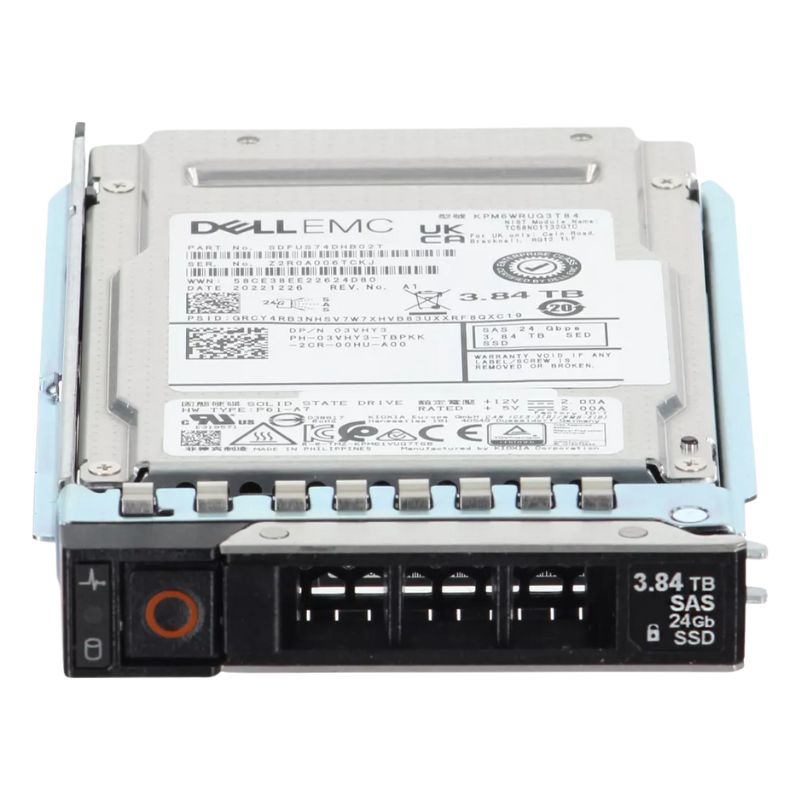


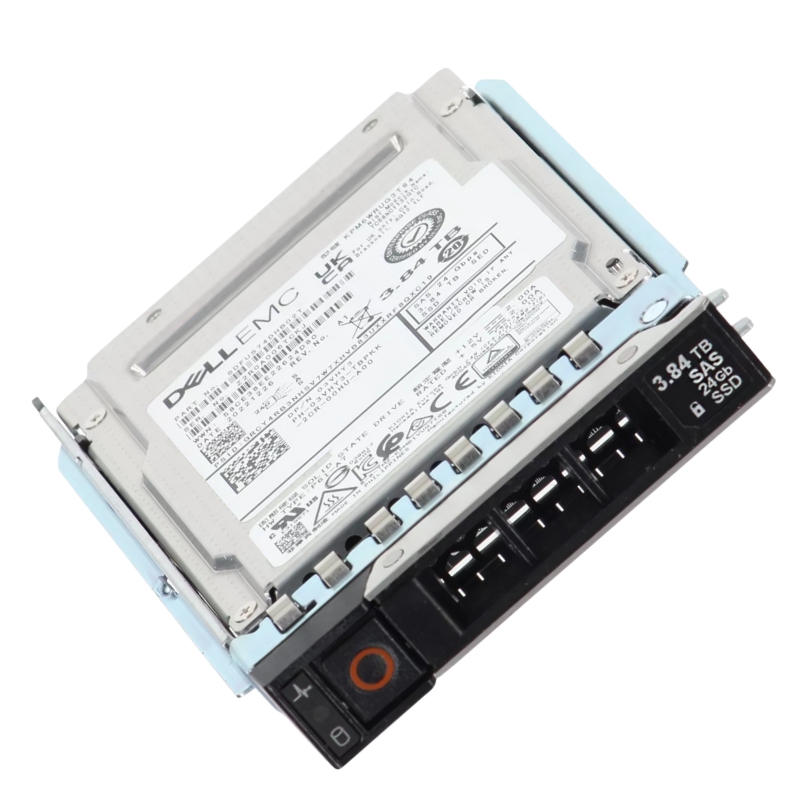
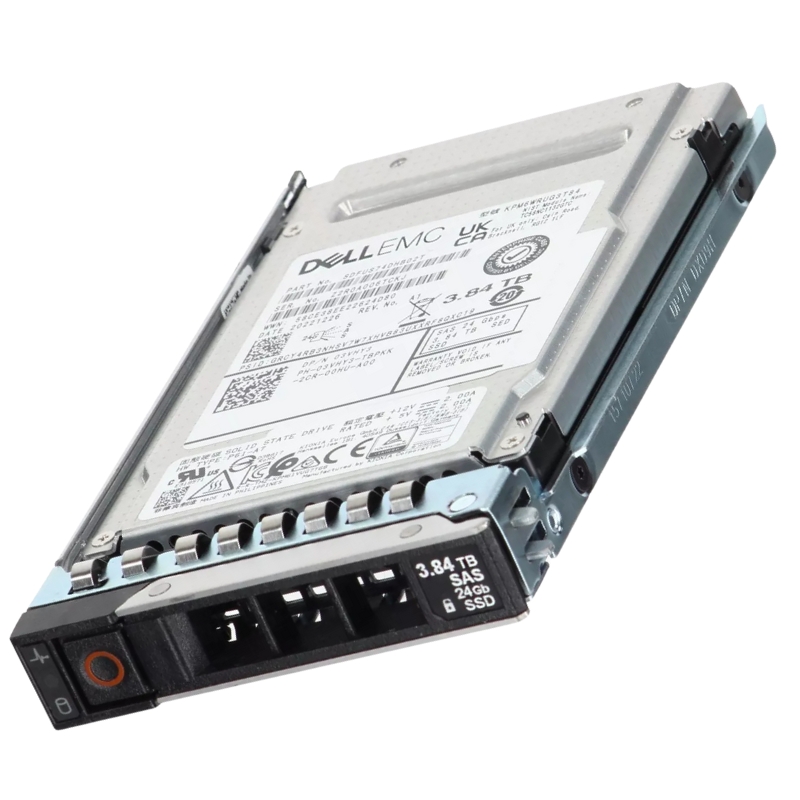
Dell 345-BGJV 3.84TB Self Encrypting Sed SAS 24GBPS RI 1DWPD TLC 2.5Inch Enterprise Class Solid State Drive. New Sealed in Box (NIB) with 1 year Warranty
The Dell 345-BGJV is a high-performance 3.84TB SAS 24Gbps Self-Encrypting Solid State Drive engineered for Dell EMC 14G, 15G, and 16G PowerEdge servers. Designed with advanced BiCS Flash™ TLC NAND technology, this read-intensive SSD provides outstanding data throughput, strong encryption, and reliable endurance, making it ideal for enterprise workloads requiring secure storage and consistent performance.
This Dell 345-BGJV SSD integrates seamlessly with a wide range of Dell PowerEdge rack, tower, and modular servers, ensuring flexible deployment across data center infrastructures.
The Dell 345-BGJV 3.84TB Self-Encrypting Drive (SED) is an enterprise-class 2.5-inch SAS solid state drive engineered for modern PowerEdge server environments. Built to meet rigorous datacenter demands, this drive combines SAS 24Gbps interface reliability with self-encrypting drive security, read-optimized endurance characteristics, and an industry-standard small form factor. Whether your architecture runs 14th, 15th, or 16th generation Dell EMC PowerEdge servers, the 345-BGJV model provides a straightforward migration path for workloads that require consistent read performance, strong data protection, and simple lifecycle management. This section examines the technical attributes, operational benefits, deployment scenarios, and procurement considerations for the Dell 345-BGJV, framed for channel partners, system admins, and procurement teams seeking high-availability storage for virtualization, database caching, analytics, and large-scale web services.
The drive’s 2.5-inch small form factor (SFF) makes it suitable for high-density server chassis and blade configurations. The SAS 24Gbps interface delivers an enterprise-proven connection standard with advanced command queuing and multipath capabilities essential for clustered server environments. Because SAS controllers include robust error recovery and full-duplex operation, the 345-BGJV is optimized for deployments where predictable latency and compatibility with hardware RAID, HBAs, and SAS expanders are mandatory. The physical and electrical compatibility with PowerEdge server drive bays ensures hot-plug replacement and easy field servicing without disrupting server uptime.
Data security is embedded into the 345-BGJV as a hardware-based Self-Encrypting Drive. SED capability provides transparent encryption of user data at rest without the CPU or host operating system bearing the processing overhead. For organizations pursuing compliance frameworks such as GDPR, HIPAA, or corporate encryption mandates, SEDs simplify key management and drive retirement procedures. When combined with Dell EMC’s management utilities and enterprise key management systems, the drive supports secure erase, cryptographic erase, and rapid rekeying workflows that shorten decommission cycles while protecting sensitive information from unauthorized access.
The 345-BGJV is tuned for read-intensive environments and is specified at approximately 1 drive write per day (1 DWPD), a common endurance rating for workloads that predominantly read data while requiring occasional write operations. This endurance profile is ideal for content delivery platforms, analytics read caches, search indexes, large-scale virtualization with read-heavy guest footprints, and database reporting nodes. The use of TLC (triple-level cell) NAND with enterprise firmware allows the drive to balance capacity and cost-efficiency while maintaining the reliability expected in production infrastructures.
Enterprise deployments demand more than just raw capacity; they require sustained performance under mixed I/O and consistent mean time between failures (MTBF). The Dell 345-BGJV’s internal engineering focuses on power-loss protection, advanced wear leveling, and enterprise-class error correction algorithms. These firmware-level features, along with thermal management design and rigorous validation on PowerEdge platforms, reduce the risk of data corruption and increase service continuity. The drive is tested under Dell EMC qualification processes so administrators can expect compatibility with server firmware updates and chassis backplanes.
Efficient power management is essential in dense server deployments. The 345-BGJV firmware and hardware implement adaptive power modes and thermal throttling policies designed to keep the drive within safe operational thresholds without sacrificing long-term performance. Thermal reporting integrates into host monitoring frameworks, enabling predictive maintenance and adaptive cooling strategies. Administrators benefit from consistent thermal telemetry when planning rack-level cooling, enabling lower total cost of ownership through reduced cooling costs and extended component life.
A significant advantage for IT teams standardizing on Dell EMC hardware is proven compatibility. The 345-BGJV is validated for use across PowerEdge generations 14, 15, and 16, allowing straightforward upgrades and spares consolidation. Compatibility testing covers hot-swap behavior, backplane signaling, firmware integration with iDRAC and OpenManage ecosystems, and RAID controller interoperability. This consistency reduces deployment risk, simplifies inventory management, and speeds time-to-repair during fault replacement cycles.
Firmware plays a central role in drive reliability and security. Dell provides firmware bundles and update pathways that are integrated into server management suites like iDRAC and Dell OpenManage. Administrators should track firmware revisions for the 345-BGJV to take advantage of bug fixes, performance optimizations, and security patches. Dell’s lifecycle tools also help plan drive firmware rollouts across fleets, offering staged updates and rollback options to minimize service disruptions.
While specific IOPS and latency figures depend on host configuration and workload patterns, the 345-BGJV’s specification as a read-intensive drive means it delivers strong sequential and random read throughput. The SAS 24Gbps interface enables multi-command queuing and high sustained throughput for large dataset reads. Administrators typically place this drive in tiers where read cache performance, fast index scans, or content delivery are primary requirements. When used in hybrid arrays, the drive can serve as the hot-read tier, complementing higher-endurance write-optimized SSDs for logging and transaction processing.
Practical deployments for the 345-BGJV include virtualization hosts that run read-heavy virtual desktop infrastructure (VDI) pools, read-replica database servers, analytics nodes that scan large volumes of historical data, and media streaming servers that emphasize consistent read bandwidth. In clustered or hyperconverged setups, the drive is commonly used as a read tier or cache to accelerate reads while lower-capacity, higher-endurance SSDs manage write-intensive metadata and journaling.
In addition to hardware encryption, the drive supports enterprise operational controls that aid compliance. Features such as secure erase, cryptographic key management compatibility, and audit-friendly retirement procedures simplify compliance reporting. IT teams can integrate SED lifecycle events into broader security policies—ensuring that drives taken out of service are cryptographically sanitized in accordance with organizational policy. For industries that require stricter chain-of-custody or data destruction proof, SEDs shorten the time and reduce the cost associated with secure decommissioning.
Effective use of SEDs requires a key management strategy. The 345-BGJV can work with centralized key managers and enterprise PKI systems, providing the capability for remote locking, key rotation, and recovery key frameworks. Integration with Dell’s management stack and third-party key management solutions enables policies that align with regulatory needs and corporate governance. Planning key recovery and rotation is vital to prevent inadvertent data inaccessibility while maintaining robust security controls.
When deploying the Dell 345-BGJV at scale, architects should consider drive population density, RAID topology choices, and thermal profiles for each rack. Read-intensive SSDs often perform best in RAID configurations tuned for read resiliency and rapid rebuild times. Using dual-controller architectures and multipath I/O reduces single points of failure and improves sustained availability. Regular monitoring of SMART attributes, firmware levels, and power/thermal telemetry will help identify trends before they affect service levels. For large fleets, automating telemetry collection and alerting through Dell OpenManage or third-party monitoring platforms enhances operational efficiency and shortens mean-time-to-repair.
Capacity planning for the 3.84TB capacity must balance usable space after RAID overhead and reserved endurance pools. For high-density read cache deployments, consider the ratio of cache capacity to working dataset size and the read/write hit ratios that affect effective performance. Employing the 345-BGJV as the read tier within a multi-tier storage architecture—alongside higher-endurance drives for write-heavy workloads and high-capacity HDDs for cold storage—optimizes cost per GB while delivering application-appropriate performance.


 Contact Us
 Information
 Catalog
 Solid State Drives (SSD)
 Network Switches
 Hard Disk Drives
 HBA & Controllers
 PC & Servers
 PC & Server Memory
 CPU & Processors
 Network Routers
 Power Supplies
 Tape Drives & Libraries
 Network Devices
 Computer & Network Cables