
(7% discount is applied at checkout)
Cart is empty
Your go-to destination for cutting-edge server products
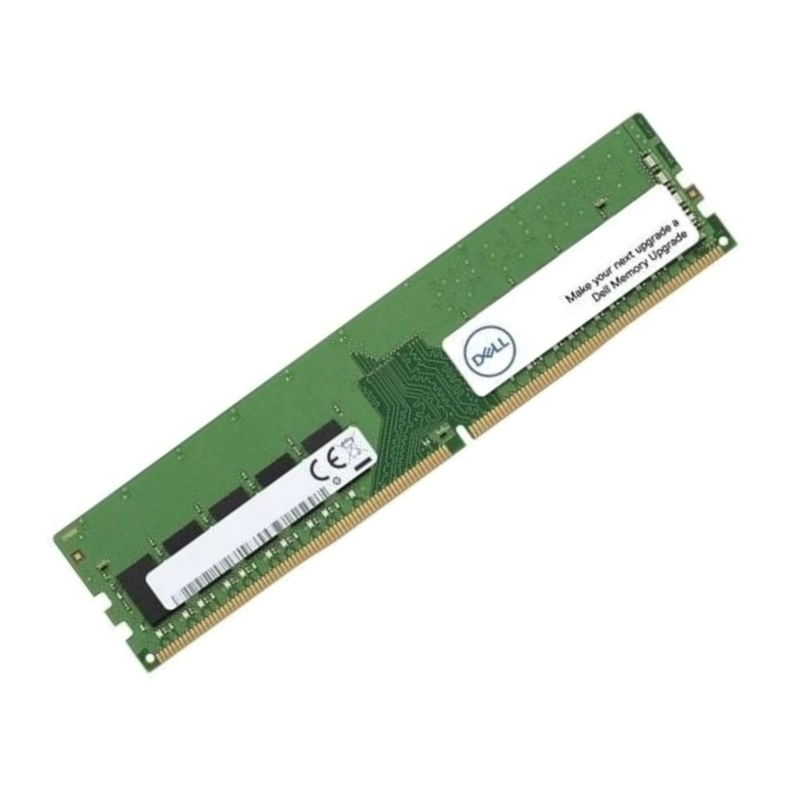
Dell 370-BBRN 64GB PC5-44800 DDR5 5600MT/S 2RX4 ECC Registered 1.1V CL46 SDRAM 288-Pin RDIMM Module Memory. New (System) Pull with 1 year replacement warranty - Samsung Version
| SKU/MPN | Warranty | Price | Condition | You save |
|---|---|---|---|---|
| 370-BBRN | 1 Year Warranty | $3,446.00 | New Sealed in Box (NIB) | You save: $1,206.10 (26%) |
| 370-BBRN | 1 Year Warranty | $2,688.00 | New (System) Pull | You save: $940.80 (26%) |
Welcome to the definitive resource for the Dell 370-BBRN 64GB PC5-44800 DDR5 server memory module. This category represents the cutting edge of enterprise memory technology, specifically engineered to deliver unparalleled performance, reliability, and efficiency for modern data centers, high-performance computing environments, and mission-critical server applications.
The transition from DDR4 to DDR5 memory represents one of the most significant advancements in server memory architecture in recent years. Dell's 370-BBRN module embodies this technological leap forward, offering substantial improvements in bandwidth, power efficiency, and capacity scaling that directly address the evolving demands of contemporary enterprise workloads.
DDR5 technology introduces several fundamental architectural changes that distinguish it from previous generations:
Unlike DDR4's single 64-bit channel, DDR5 implements two independent 32-bit subchannels. This architectural enhancement significantly improves memory access efficiency and reduces latency by allowing simultaneous operations across different subchannels, effectively doubling the command/address bus efficiency compared to DDR4.
DDR5 modules incorporate on-die ECC capabilities that correct errors within the DRAM chips themselves before data is transmitted to the system. This first layer of error correction works in conjunction with traditional module-level ECC to provide unprecedented data integrity and reliability for mission-critical applications.
DDR5 moves the power management integrated circuit (PMIC) from the motherboard to the memory module itself. This distributed power architecture enables more precise voltage regulation, reduces noise, and improves signal integrity while operating at lower voltages (1.1V compared to DDR4's 1.2V).
The Dell 370-BBRN represents a specific configuration within the broader DDR5 server memory ecosystem. Understanding its technical specifications is crucial for proper implementation and performance optimization.
With a substantial 64GB capacity per module, the 370-BBRN enables significant memory density in modern server platforms. The 2RX4 designation indicates a dual-rank configuration with x4 DRAM organization, which provides an optimal balance between capacity, performance, and electrical loading characteristics.
The dual-rank design allows for improved memory controller efficiency by enabling rank-level parallelism. While one rank is busy with memory access operations, the memory controller can issue commands to the second rank, effectively hiding some latency and improving overall memory bandwidth utilization.
The 370-BBRN operates at a data rate of 5600MT/s (MegaTransfers per second), significantly outperforming previous-generation DDR4 modules that typically maxed out at 3200MT/s. This performance boost directly translates to improved application responsiveness, faster data processing, and reduced wait states for memory-intensive workloads.
The CL46 timing specification represents the number of clock cycles between a read command and when the data becomes available. While higher than typical DDR4 CAS latencies, the significantly faster clock speeds of DDR5 result in lower absolute latency (measured in nanoseconds) despite the higher cycle count.
The "ECC Registered" designation indicates two critical features that distinguish server-grade memory from consumer modules:
ECC technology can detect and correct single-bit memory errors in real-time, while also detecting (though not correcting) multi-bit errors. This capability is essential for maintaining data integrity in enterprise environments where even minor memory corruption can have catastrophic consequences for business operations, financial transactions, or scientific computations.
Registered DIMMs (RDIMMs) incorporate register chips between the memory controller and DRAM modules. These registers buffer command, address, and control signals, reducing the electrical load on the memory controller and enabling support for higher memory capacities per channel. This comes at the cost of a slight increase in latency (typically one clock cycle) but is essential for scaling memory subsystems in multi-processor servers with large memory configurations.
Proper compatibility verification is essential when deploying the Dell 370-BBRN memory module. While DDR5 represents a significant technological advancement, it requires specific platform support to function correctly.
The 370-BBRN is specifically validated for compatibility with Dell PowerEdge servers featuring Intel Xeon Scalable Processors (Sapphire Rapids and later) and AMD EPYC 7004 series processors (Genoa and later). These platforms incorporate memory controllers specifically designed to leverage DDR5 capabilities.
Dell engineers memory solutions in conjunction with server platforms to ensure optimal performance, thermal management, and reliability. The 370-BBRN includes Dell-specific firmware optimizations that may not be available in generic DDR5 modules, ensuring seamless integration with iDRAC management controllers and optimal performance in PowerEdge systems.
Proper memory population is critical for achieving optimal performance in multi-channel memory architectures. Server platforms typically require specific slot population sequences to maximize memory bandwidth and maintain signal integrity.
For optimal performance, memory channels should be populated symmetrically with identical modules. Mixing different memory capacities, speeds, or technologies within a system can result in all modules operating at the lowest common specifications, potentially negating the performance advantages of the 370-BBRN.
The performance characteristics of the Dell 370-BBRN make it particularly well-suited for specific classes of workloads that benefit from high memory bandwidth, large capacity, and uncompromising reliability.
Modern in-memory database systems like SAP HANA, Oracle Database In-Memory, and Microsoft SQL Server In-Memory OLTP maintain entire datasets in system memory to eliminate disk I/O bottlenecks. The 370-BBRN's combination of high bandwidth and large capacity enables faster query processing, real-time analytics, and improved transaction throughput for these memory-intensive applications.
Server virtualization platforms benefit significantly from high-density, high-performance memory. The 370-BBRN enables higher virtual machine density per host while maintaining performance service level agreements, directly impacting consolidation ratios and total cost of ownership in virtualized environments.
Scientific computing, engineering simulation, financial modeling, and other HPC workloads often exhibit memory-bound characteristics where application performance is limited by memory bandwidth rather than computational power. The 370-BBRN's 5600MT/s data rate provides the necessary memory bandwidth to keep computational resources fully utilized.
While GPUs typically handle the core computation in AI training workloads, system memory plays a critical role in data preprocessing, model management, and inference serving. The 370-BBRN's capacity and bandwidth support larger batch sizes and more complex model architectures, reducing training times and improving inference throughput.
Enterprise memory solutions must deliver not only performance but also exceptional reliability and serviceability characteristics to meet the availability requirements of modern data centers.
The 370-BBRN implements a comprehensive error management strategy that extends beyond basic ECC capabilities:
This background process continuously scans memory for correctable errors and proactively repairs them before they can accumulate into uncorrectable errors. This preventative maintenance occurs transparently during normal system operation without impacting performance.
Depending on the server platform, the 370-BBRN may support advanced error correction schemes like Single Device Data Correction (SDDC) and Double Device Data Correction (DDDC), which can correct errors spanning entire DRAM devices or pairs of devices, significantly enhancing fault tolerance.
DDR5 modules operate at higher data rates than previous generations, making effective thermal management critical for maintaining stability and longevity.
The 370-BBRN includes integrated temperature sensors that enable real-time thermal monitoring through the server's management controller. This allows for proactive thermal management through dynamic fan control policies and potential performance throttling if safe operating temperatures are exceeded.
The module's physical design incorporates optimized component placement and thermal interface materials to facilitate efficient heat dissipation. Proper server airflow is essential to maintain modules within their specified operating temperature range, particularly in high-ambient environments or densely populated memory configurations.
Successfully deploying the Dell 370-BBRN requires attention to several implementation considerations to maximize performance, reliability, and return on investment.
Strategic memory planning involves balancing capacity requirements, performance objectives, and budget constraints:
While higher memory capacities enable larger working sets and improved virtualization density, populating all memory slots may require operating at lower data rates due to signal integrity constraints. Understanding platform-specific guidelines for optimal speed/capacity configurations is essential for balancing these competing objectives.
When initially populating servers, consider leaving expansion capacity for future memory upgrades. This approach provides flexibility to accommodate growing memory requirements without requiring complete memory replacement or operating with mixed memory populations that may impact performance.
The 370-BBRN is designed to integrate seamlessly with Dell's comprehensive systems management ecosystem:
Dell's Integrated Dell Remote Access Controller (iDRAC) provides comprehensive memory health monitoring, alerting, and inventory management capabilities. The 370-BBRN includes Dell-specific firmware that enables advanced features like predictive failure analysis and detailed performance telemetry.
Dell OpenManage systems management suite provides centralized monitoring and management capabilities for memory modules across the enterprise, enabling proactive maintenance, automated inventory management, and simplified firmware updates.
Understanding how the 370-BBRN compares to other memory technologies helps contextualize its value proposition within the broader server memory landscape.
The transition from DDR4 to DDR5 delivers substantial performance improvements beyond just increased data rates:
The 370-BBRN's 5600MT/s operation provides approximately 75% more theoretical bandwidth than comparable DDR4-3200 modules. This bandwidth advantage directly translates to improved performance for memory-intensive applications and higher overall system throughput.
Despite the performance increase, the 370-BBRN operates at a lower voltage (1.1V vs. 1.2V for DDR4) and incorporates more sophisticated power management capabilities. This results in improved performance per watt, an increasingly important metric in power-constrained data center environments.
The 370-BBRN's ECC RDIMM architecture represents the optimal balance for enterprise workloads compared to alternative memory types:
While UDIMMs offer slightly lower latency, they lack the scalability and robust error correction required for mission-critical server applications. RDIMMs support significantly higher memory capacities per channel and provide superior signal integrity in densely populated memory configurations.
LRDIMMs incorporate additional buffering to support even higher memory capacities but incur additional latency and cost penalties. For most enterprise workloads, RDIMMs provide the optimal balance of performance, capacity, and cost-effectiveness.
The Dell 370-BBRN exists within a rapidly evolving memory technology landscape shaped by several key industry trends:
DDR5 represents the current generation of server memory technology, with the specification supporting data rates up to 8400MT/s in future implementations. The 370-BBRN's 5600MT/s operation positions it in the mainstream performance segment of the DDR5 ecosystem.
While DDR5 will remain the dominant server memory technology for the foreseeable future, emerging technologies like CXL (Compute Express Link) attached memory and persistent memory solutions are creating new architectural possibilities for tiered memory systems that complement rather than replace traditional DRAM.
Modern enterprise workloads continue to evolve in ways that increase memory demands:
The shift toward containerized applications and microservices architectures creates more fragmented memory access patterns that benefit from the improved efficiency of DDR5's dual subchannel architecture.
The growth of real-time analytics and edge computing deployments creates demand for memory solutions that deliver both high performance and exceptional reliability in potentially challenging environmental conditions.


 Contact Us
 Information
 Catalog
 Solid State Drives (SSD)
 Network Switches
 Hard Disk Drives
 HBA & Controllers
 PC & Servers
 PC & Server Memory
 CPU & Processors
 Network Routers
 Power Supplies
 Tape Drives & Libraries
 Network Devices
 Computer & Network Cables