(7% discount is applied at checkout)
Cart is empty
Your go-to destination for cutting-edge server products
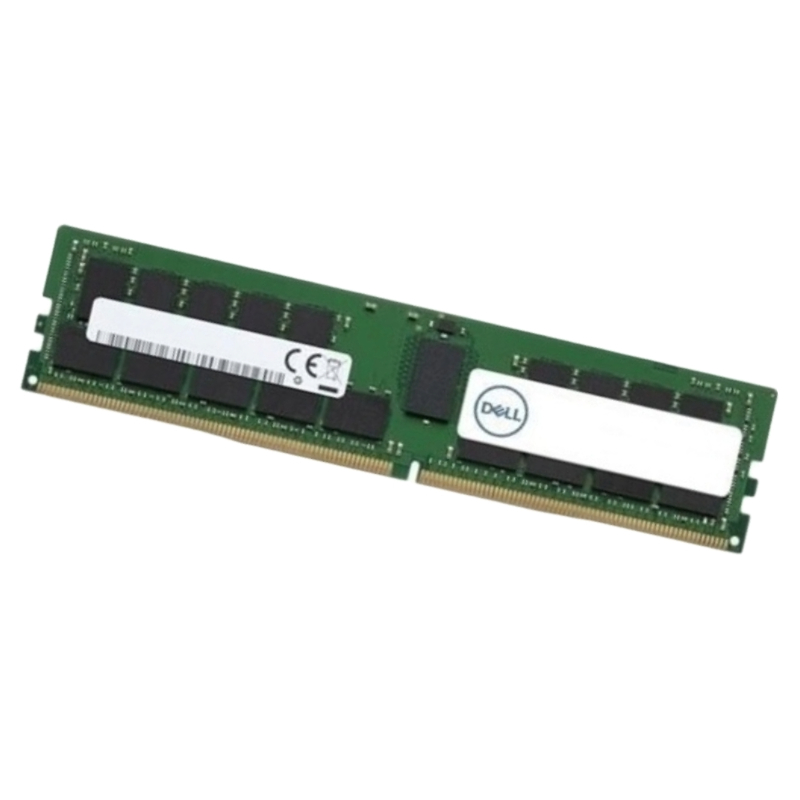


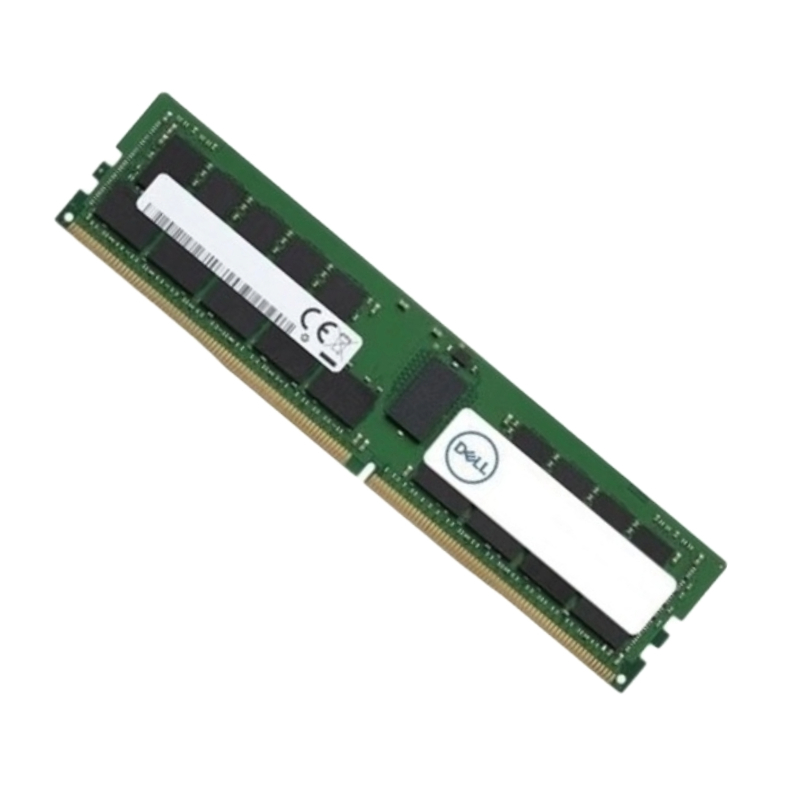
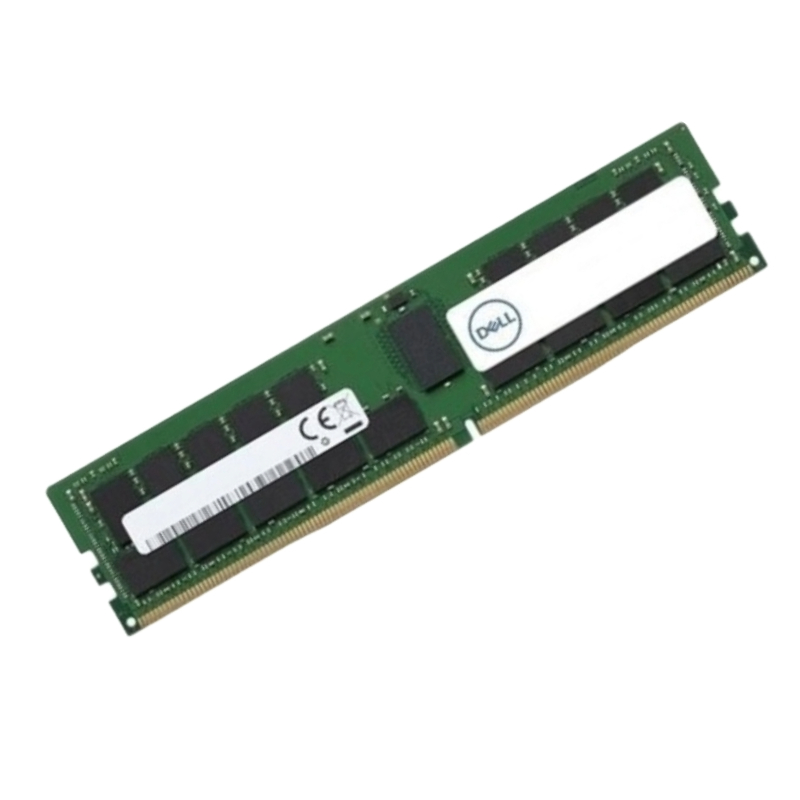
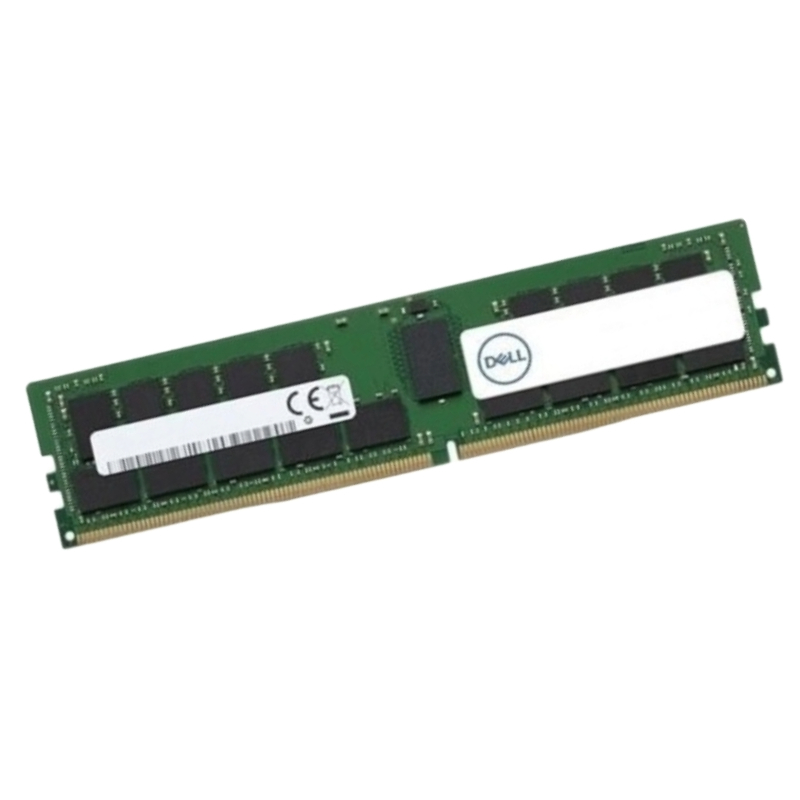
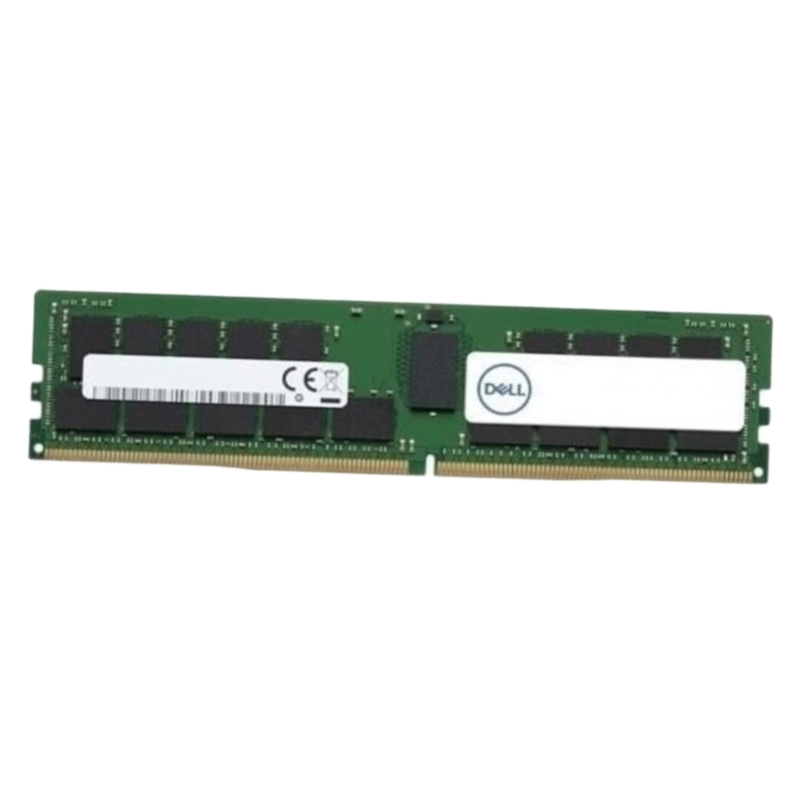
Dell 370-BCDQ 256GB 4800MHz PC5-38400 1rx4 Ecc Registered 1.1v Cl40 DDR5 SDRAM 288-pin RDIMM Memory Module Bundle For Server. New Sealed in Box (NIB) - Samsung Version
The Dell 370-BCDQ memory bundle contains eight RDIMM modules, each with a capacity of 32GB, delivering a total kit size of 256GB. Each module is a single-rank x4 (1Rx4) Registered DDR5 RDIMM engineered for server-class reliability. The 1Rx4 organization is optimized for high-density server DIMM population while maintaining signal integrity and compatibility with enterprise dual inline memory module (DIMM) slots designed for registered modules.
These modules use DDR5 SDRAM technology with a JEDEC-compliant 288-pin RDIMM form factor. DDR5 introduces on-die ECC and improved channel architectures compared to DDR4; the Dell 370-BCDQ modules conform to DDR5 electrical and mechanical standards for 288-pin RDIMM sockets used in modern server platforms. The registered architecture leverages a register in the DIMM to buffer address and command signals for improved stability and higher DIMM counts per channel.
Rated at PC5-38400, these modules operate at an effective data rate of 4800MT/s (commonly referred to as 4800MHz). The timing specification CL40 indicates a CAS latency of 40 clock cycles at the standard operating frequency. The modules are specified to run at a nominal voltage of 1.1V, consistent with DDR5 power reductions compared to previous generations. Together, the 4800MT/s data rate, CL40 latency, and 1.1V nominal voltage define the performance and power characteristics across server workloads.
These RDIMMs are designed to work with server memory controllers that support ECC (Error-Correcting Code). DDR5 incorporates on-die ECC for improved device-level reliability, and the module-level ECC mechanism, in conjunction with the server platform’s ECC implementation, provides multi-level error mitigation. The registered buffer reduces the electrical loading on the memory controller, enabling reliable operation with higher DIMM counts while ECC mechanisms detect and correct single-bit errors and detect multi-bit errors per platform design.
Registered modules in the Dell 370-BCDQ bundle are validated for thermal and electrical stability under sustained server workloads. The design includes thermal sensing and PCB-level optimizations to maintain signal integrity across temperature ranges typical in rack and blade servers. These modules are intended for systems where continuous uptime and data integrity are required, such as virtualization hosts, database servers, and compute clusters.
The Dell 370-BCDQ RDIMM bundle is targeted at modern server platforms that accept DDR5 registered DIMMs and support PC5-38400 (4800MT/s) memory speeds. Compatible server families include current-generation enterprise servers from Dell and other OEMs that specify 288-pin DDR5 RDIMM support in their technical specifications. Compatibility depends on the server’s BIOS/UEFI memory support list, maximum supported DIMM size per slot, memory population rules, and BIOS microcode that recognizes 1Rx4 module organizations.
With a data transfer rate of 4800MT/s, these modules deliver high aggregate memory bandwidth suited for data-intensive workloads. CAS latency of 40 cycles reflects DDR5’s tradeoff between higher clock rates and raw cycle latency; the net access latency in nanoseconds is a function of both clock frequency and cycle count. In multi-socket servers, the aggregate memory throughput scales with the number of memory channels and population density, so this 256GB kit enables substantial working set sizes while maintaining bandwidth for parallel workloads.
The Dell 370-BCDQ RDIMM bundle is ideal for virtualization, in-memory databases, analytics, large-scale caching, and application servers where high capacity is as important as bandwidth. The registered buffering makes it suitable for systems with many DIMMs per channel, while DDR5’s internal improvements aid multi-threaded and high-concurrency tasks. Paired with modern CPUs that support DDR5 memory controllers, the modules support environments that require predictable, high-throughput memory performance.
Each RDIMM in this bundle uses a multi-layer PCB with optimized trace routing for signal timing and impedance control. The 288-pin edge connector and keyed notch are compatible with JEDEC-standard RDIMM sockets. Module height and component placement are designed to fit standard server DIMM retention systems; however, physical interference should be checked in densely populated systems or where large CPU coolers or adapters are present.
Operating at 1.1V and rated for server environments, these DDR5 RDIMMs exhibit lower power consumption per transfer relative to previous generations. Despite lower voltage, thermal management remains important in high-density servers. Adequate chassis airflow and correct rack placement mitigate elevated temperatures that could otherwise trigger thermal throttling or reduce long-term reliability. The modules are tested under JEDEC thermal profiles to ensure stable operation across typical server temperature ranges.
DDR5’s architectural improvements contribute to better power efficiency at the module level. The 1.1V nominal voltage reduces total power draw compared to DDR4 DIMMs at higher voltages, which can be meaningful in large-scale deployments. That said, power profiling at the system level should be performed during capacity planning because additional DIMMs increase total power draw and heat load on power delivery subsystems and cooling infrastructure.
The 256GB capacity of this eight-module RDIMM kit suits consolidation of virtual machines where each VM requires substantive memory. Balanced across memory channels, the kit allows hypervisors to allocate generous guest RAM while preserving memory bandwidth for I/O and CPU-bound tasks. Registered ECC ensures error correction for long-running VMs and reduces the risk of memory-induced corruption in multi-tenant environments.
In-memory database engines and analytic processing benefit from large contiguous memory pools. The Dell 370-BCDQ kit supports large working sets and high throughput, enabling database caching layers and columnar stores to operate with reduced disk I/O. Platform-level tuning, including NUMA awareness and memory affinity settings, will maximize the effective performance when deploying these modules for database workloads.
For scale-out compute clusters, deploying standardized memory kits simplifies orchestration and lifecycle management. Using identical RDIMM kits across nodes ensures predictable behavior during rolling upgrades, cluster rebalancing, and failure replacement. The 1Rx4 configuration provides a practical balance between capacity and compatibility for clustered compute nodes that require significant RAM per node.
SPD (Serial Presence Detect) programming on each module contains voltage, timing, and speed parameters used by the host to initialize the DIMM during POST (Power-On Self Test). The Dell 370-BCDQ modules include JEDEC-compliant timing tables for PC5-38400 operation and may include vendor-validated XMP-like profiles or additional SPD entries for enhanced performance on supporting platforms. Accurate SPD data ensures reliable timing training and correct enumeration of ranks and serial presence.
The registered buffer on each RDIMM stores address and command signals to reduce electrical loading on the memory controller. Register placement, buffering topology, and remote termination strategies are optimized on the module PCB to preserve signal integrity at high data rates. These design aspects are critical for stable operation in multi-DIMM per channel configurations and help maintain signal margins at 4800MT/s.
While raw CAS latency numbers provide a baseline, real-world latency and throughput depend on memory channel interleaving, platform topology, and workload access patterns. Benchmarking with synthetic memory tests, server-level application benchmarks, and workload simulations will reveal the effective performance of the Dell 370-BCDQ kit in a given environment. Administrators should measure both sustained bandwidth and access latency across representative workloads when planning deployments.
The Dell 370-BCDQ 256GB (8×32GB) RDIMM bundle combines high capacity with DDR5 4800MT/s performance and registered ECC robustness. The 1Rx4 organization supports scalable server population while maintaining signal integrity and compatibility with enterprise-class servers that accept JEDEC-standard 288-pin RDIMM modules.
Engineered for data center operations, these modules are suitable for virtualization, database, analytics, and compute cluster deployments where capacity, error correction, and consistent throughput are required. Proper system firmware, adherence to population rules, and matched module usage deliver predictable results in production environments.


 Contact Us
 Information
 Catalog
 Solid State Drives (SSD)
 Network Switches
 Hard Disk Drives
 HBA & Controllers
 PC & Servers
 PC & Server Memory
 CPU & Processors
 Network Routers
 Power Supplies
 Tape Drives & Libraries
 Network Devices
 Computer & Network Cables