(7% discount is applied at checkout)
Cart is empty
Your go-to destination for cutting-edge server products
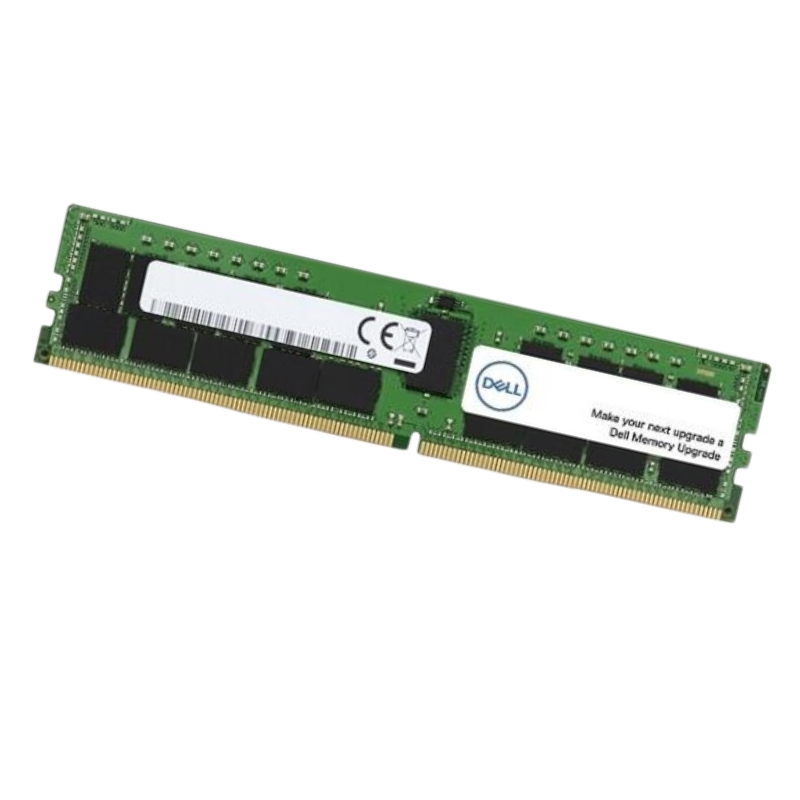


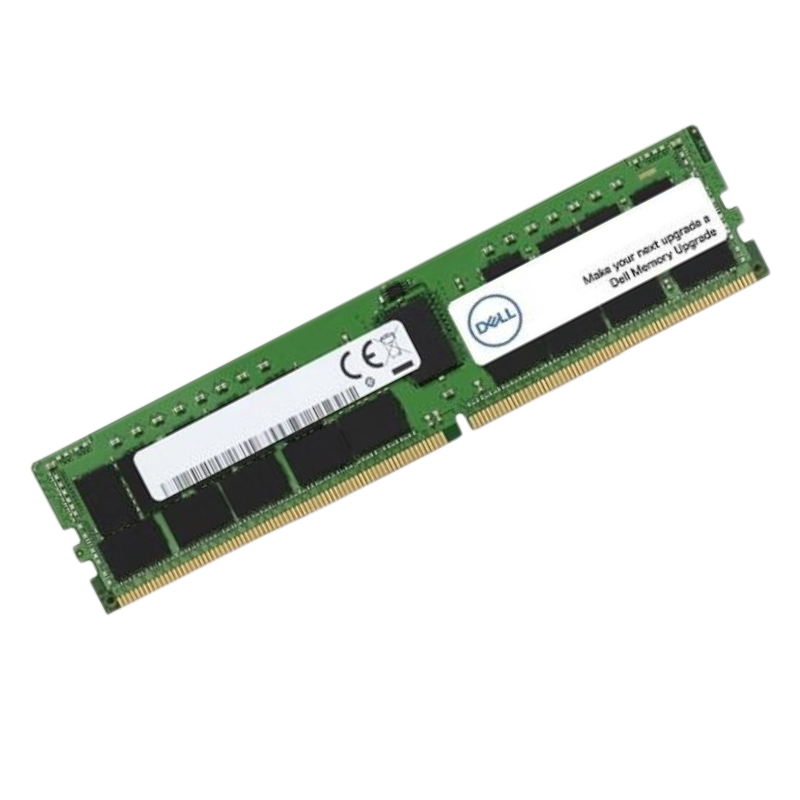
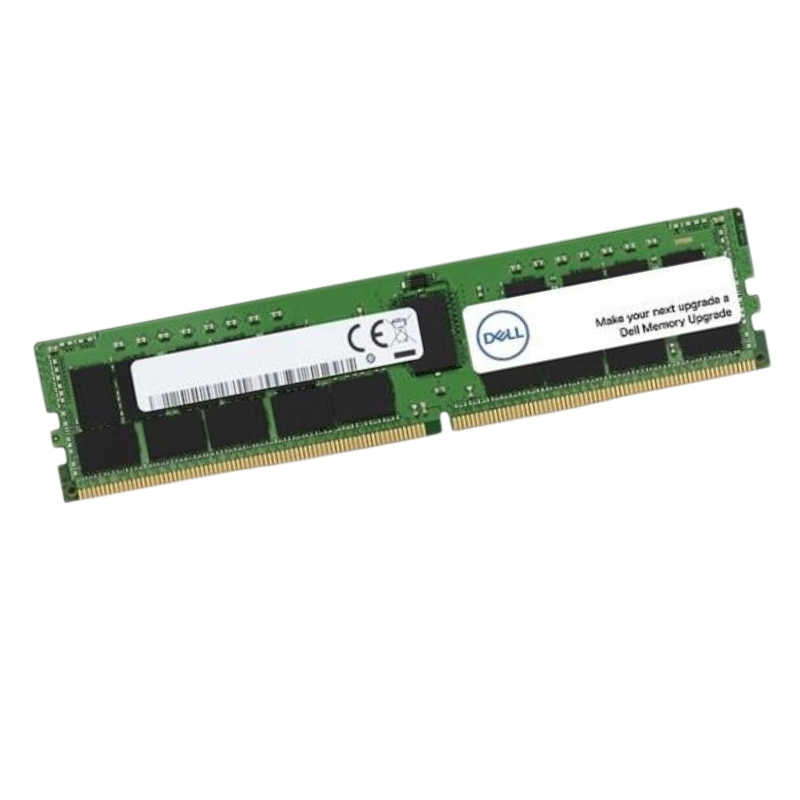
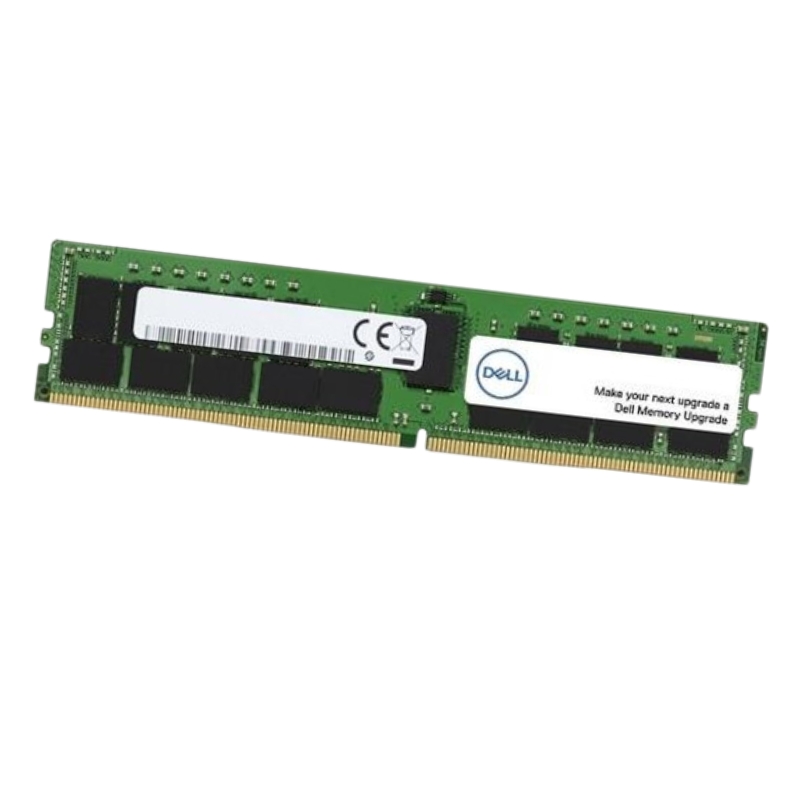
Dell 370-BCKC 512GB DDR5 5600MHz PC5-44800 2rx8 Ecc Registered 1.1v Cl46 SDRAM 288-pin RDIMM Bundle For Poweredge RAM Server. New Sealed in Box (NIB) - Samsung Version
The Dell 370-BCKC is a factory-configured server memory kit engineered for modern PowerEdge platforms that require high-density, high-bandwidth memory. This kit ships as 16 DIMMs of 32GB each, totaling 512GB of DDR5 SDRAM configured as Registered ECC (RDIMM). Each memory module adheres to the DDR5 PC5-44800 specification, rated for 5600MT/s data rate and optimized for 1.1V nominal operation. The modules are organized as 2Rx8 (dual-rank) x8 width devices, offering a balance of capacity, rank interleaving, and electrical loading suitable for dual-socket and multi-socket PowerEdge servers.
Each RDIMM in the 370-BCKC kit is a 288-pin form factor compliant with standard RDIMM mechanical specifications used in modern server motherboards. The DDR5 architecture on these modules introduces features such as on-die ECC, improved power management with PMIC integration on DIMMs, and dual-channel improvements at the memory controller level. Operating at 1.1 volts, these modules strike a designed balance between performance and power efficiency compared to previous DDR generations.
The 2Rx8 designation indicates each 32GB module is constructed with two ranks of x8 DRAM chips. Dual-rank modules provide advantages in effective parallelism and often deliver higher throughput in many server workloads due to enhanced rank interleaving across the memory controller. 2Rx8 modules are commonly preferred in density-focused server builds because they allow higher per-socket capacity while maintaining compatibility with a wide range of DDR5 memory controllers.
The kit is specified with a CL46 CAS latency at 5600MT/s (PC5-44800). While absolute CAS numbers are larger than legacy DDR4 timings, the higher internal transfer rates of DDR5 provide substantially greater sustained bandwidth. In practice CL46 at 5600MT/s yields significantly improved real-world memory throughput and application-level performance for memory-bound workloads compared to lower-frequency DDR4 modules, especially in multi-threaded, server-class scenarios.
High-frequency DDR5 at 5600MT/s combined with a 512GB capacity in a single kit translates into tangible benefits for a broad set of server workloads. The substantial capacity reduces the need for paging to storage, improving latency-sensitive database and in-memory processing tasks. The combination of dual-rank modules and high transfer rates improves effective memory concurrency and bandwidth for virtualization hosts, large-scale databases, high-performance analytics, and in-memory caching layers.
For virtualization hosts running multiple virtual machines (VMs) or containers, memory capacity and bandwidth are critical. The Dell 370-BCKC supports dense VM consolidation by providing 512GB per node in a compact DIMM count (16 DIMMs), enabling more VMs at stable memory performance. ECC Registered operation protects against single-bit memory errors, improving uptime in multi-tenant environments where data integrity and availability are essential.
In-memory databases and caching platforms (such as SAP HANA, Redis, Memcached, and in-memory components of modern DBMSs) benefit directly from high capacity and high sustained bandwidth. The 5600MT/s throughput reduces memory bottlenecks during scans, joins, and analytics queries, while the large 512GB footprint allows handling larger working sets entirely in RAM. Dual-rank RDIMMs give favorable access patterns for database engines that utilize concurrent multi-threaded memory access.
HPC workloads that stress memory bandwidth—scientific simulations, finite element analysis, machine learning training pipelines (where CPU memory bandwidth still matters for data feeding), and vectorized workloads—achieve improved node-level performance with DDR5 at 5600MT/s. The 370-BCKC kit provides both the raw throughput and the capacity needed for memory-hungry pre-processing stages and data staging in distributed compute clusters.
Registered ECC (RDIMM) modules are built for server-grade reliability. The 370-BCKC incorporates ECC functionality to detect and correct single-bit errors and detect multi-bit errors, while registration reduces electrical loading on the memory bus for improved signal integrity across multiple DIMMs. Additionally, DDR5’s on-die ECC complements system-level ECC by improving the reliability of the DRAM array itself. Together, these layers of error detection and correction enhance data integrity in long-running, high-availability server environments.
DDR5’s 1.1V operating voltage reduces overall DIMM power compared with earlier higher-voltage modules. However, higher operating frequencies and dense per-module capacities increase power draw per socket compared to lower-speed memory. The 370-BCKC is designed for stable thermal behavior within server airflow envelopes; its operation benefits from adequate chassis airflow and standard PowerEdge cooling policies. PMICs (Power Management ICs) on DDR5 RDIMMs regulate on-DIMM power rails, improving voltage stability and reducing transient-related failures.
The lowered nominal voltage and improved power distribution of DDR5 contribute to improved performance-per-watt. For large-scale deployments where many servers are populated with high-density memory kits, the cumulative reduction in power consumption can be material. Administrators should, however, balance the higher absolute power of many high-speed DIMMs against the benefits of reduced workload runtimes due to greater throughput.
With 2Rx8 modules, rank interleaving across channels improves effective parallel access, smoothing hotspots that can become bottlenecks during concurrent memory reads and writes. Channel interleaving offers the advantage of concurrently servicing more memory requests, which is useful for multi-threaded workloads. When scaling capacity by adding more DIMMs, the RDIMM architecture maintains signal integrity and reduces electrical stress on the memory controller compared with unregistered solutions.
While the primary role of this memory kit is performance and reliability, hardware-level ECC and on-DIMM features contribute to data integrity, which can be a security-relevant characteristic in some deployments (e.g., cryptographic key stores, secure caches, and memory-resident secrets). Registered ECC mitigates data corruption risks caused by transient faults, thereby reducing the opportunity for silent data corruption that can undermine security assurances in sensitive applications.
For organizations building clusters or scale-out architectures, the repeatable density offered by the 370-BCKC simplifies capacity planning. With 512GB per server node, architects can estimate per-node capacity and plan the ratio of compute-to-memory accordingly. The predictability of RDIMM performance at rated speeds makes it easier to design balanced clusters where memory-hosted datasets are distributed across nodes to minimize inter-node traffic.
Compared to lower-frequency DDR5 kits or lower-density DIMMs, the 370-BCKC stands out in delivering both high capacity and high bandwidth simultaneously. Kits that use single-rank modules at similar capacities might offer different electrical loading and potentially different achievable speeds depending on server population. The choice of 2Rx8 RDIMMs at 32GB per module is a widely recommended compromise for enterprise deployments seeking maximum usable capacity without sacrificing the high-speed operation that modern workloads demand.
Dual-rank modules can provide higher effective throughput in many access patterns by allowing the memory controller to switch between ranks and overlap precharge/activate cycles. For commercial databases, virtualization hypervisors, and mixed transactional/analytic workloads, this behavior frequently leads to measurable performance gains compared to equivalent single-rank alternatives, particularly when memory access patterns are random or heavily concurrent.
Mixing memory modules of different speeds, capacities, or manufacturers is generally discouraged for production critical systems. If different modules are mixed, the memory controller will typically train to the slowest common speed and conservative timing parameters, reducing the performance advantage of higher-rated modules like the 370-BCKC. For predictable latency and bandwidth, populate all channels with identical modules or follow vendor-recommended mixed-population rules when unavoidable.


 Contact Us
 Information
 Catalog
 Solid State Drives (SSD)
 Network Switches
 Hard Disk Drives
 HBA & Controllers
 PC & Servers
 PC & Server Memory
 CPU & Processors
 Network Routers
 Power Supplies
 Tape Drives & Libraries
 Network Devices
 Computer & Network Cables