
(7% discount is applied at checkout)
Cart is empty
Your go-to destination for cutting-edge server products
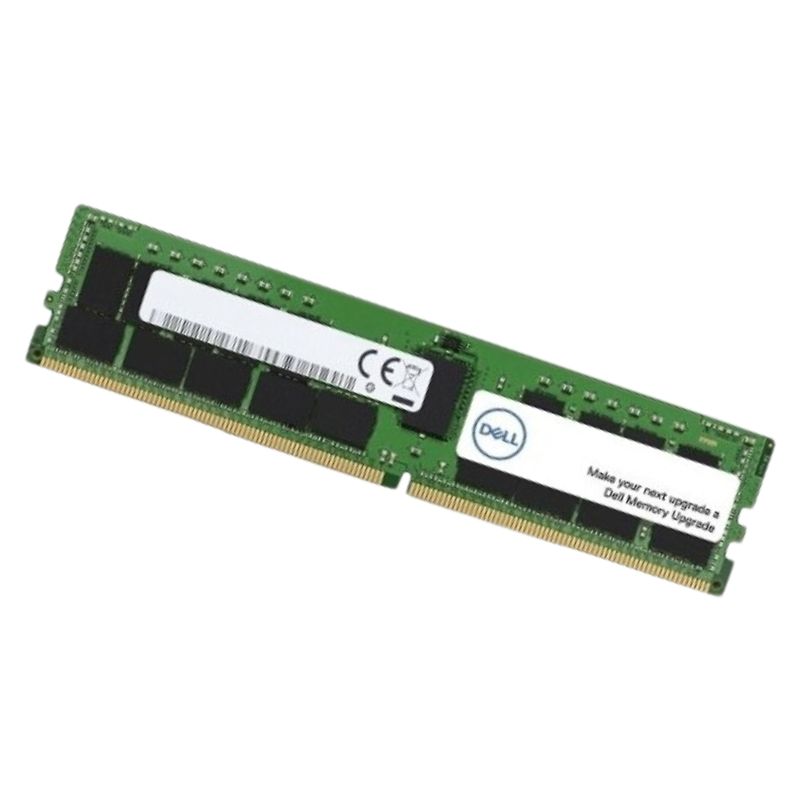
Dell 370-BCQH DDR5 4800MT/s Pc5-38400 256GB ECC DIMM Registered 288-pin Rdimm Server Memory Module. New (System) Pull with 1 year replacement warranty - Samsung Version
| SKU/MPN | Warranty | Price | Condition | You save |
|---|---|---|---|---|
| 370-BCQH | 1 Year Warranty | Contact us for a price | New (System) Pull with 6-Months Replacement Warranty | |
| 370-BCQH | 1 Year Warranty | $9,316.00 | New Sealed in Box (NIB) | You save: $3,260.60 (26%) |
High-capacity Dell 370-BCQH memory module — a single 256GB DDR5 registered DIMM engineered for servers and workstations that demand robust reliability and fast throughput. Ideal for data centers, virtualization hosts, and memory-intensive applications.
Designed for enterprise servers and high-density rack systems that support DDR5 RDIMM, ECC, and PC5-38400 speeds. Common deployments include:
The transition from DDR4 to DDR5 represents one of the most significant advancements in server memory technology in recent years. Dell's 370-BCQH memory module embodies this technological leap, offering substantial improvements in speed, efficiency, and reliability. DDR5 architecture introduces fundamental changes to the memory subsystem, including doubled burst lengths, improved channel efficiency, and enhanced power management capabilities that collectively deliver superior performance for demanding server applications.
DDR5 technology incorporates several critical enhancements over previous generations. The implementation of two independent 40-bit data channels (32 data bits with 8 ECC bits each) per module effectively doubles the concurrent data access capabilities. The decision feedback equalization (DFE) feature enables higher data transfer rates without signal degradation, while the integrated voltage regulation module moves power management directly to the memory module, providing more stable and efficient power delivery.
The 4800MT/s (Mega Transfers per second) specification of the Dell 370-BCQH represents the module's data transfer capability, indicating it can perform 4.8 billion data transfers per second. This substantial bandwidth improvement, approximately 50% faster than standard DDR4-3200 modules, enables servers to process more simultaneous requests, handle larger datasets in memory, and reduce processing bottlenecks in data-intensive applications. The increased transfer rate directly translates to improved application performance, faster database queries, and enhanced virtual machine density.
The massive 256GB capacity of the Dell 370-BCQH memory module represents the cutting edge of server memory density. This high-density design enables organizations to maximize their memory capacity within limited physical space constraints, reducing the total number of modules required to achieve substantial memory configurations. For example, a single server with 16 memory slots can support up to 4TB of total memory using these modules, making it ideal for memory-intensive applications such as in-memory databases, large-scale virtualization, and high-performance computing workloads.
The 256GB capacity provides significant advantages for contemporary enterprise workloads. Virtualization environments benefit from increased virtual machine density with more memory available for guest operating systems. Database servers experience improved performance through larger buffer pool allocations, while scientific computing applications can process larger datasets entirely in memory, avoiding slower disk-based processing. The high-density design also reduces power consumption per gigabyte and simplifies cable management within server enclosures.
The Dell 370-BCQH incorporates Error Correcting Code (ECC) technology, which detects and corrects single-bit memory errors in real-time while detecting multi-bit errors. This reliability feature is critical for enterprise environments where data integrity is paramount. The Registered DIMM (RDIMM) design includes a register between the memory controller and DRAM chips, which reduces electrical load on the memory controller and enables higher module capacities and more stable operation in multi-module configurations.
The ECC implementation in this module utilizes a sophisticated algorithm that adds redundant bits to stored data, creating a checksum that can identify and correct errors automatically. This process occurs transparently to the operating system and applications, ensuring data integrity without performance penalties. The module's error correction capabilities extend beyond simple error detection to include error logging, which helps system administrators identify potentially failing modules before they cause system instability.
The PC5-38400 designation specifies the module's peak bandwidth capability of approximately 38,400 MB/s. This classification follows JEDEC standards and ensures compatibility with systems designed for this performance level. The module operates at a base frequency of 4800MT/s with carefully optimized timings that balance latency and throughput characteristics. While DDR5 typically exhibits higher absolute latency than DDR4, the architectural improvements and increased bandwidth more than compensate for this in most server workloads.
The Dell 370-BCQH delivers exceptional memory bandwidth that significantly outperforms previous-generation DDR4 modules. In standardized benchmarks, systems equipped with these modules demonstrate approximately 50-60% higher memory bandwidth compared to equivalent DDR4-3200 configurations. While absolute latency measurements show modest increases due to the higher base clock speeds, the effective latency for most server workloads improves due to architectural enhancements such as bank grouping and prefetch optimizations.
In practical deployments, the performance characteristics of the 370-BCQH translate to measurable improvements in application responsiveness and throughput. Database servers show reduced query times, virtualization platforms support higher VM densities with consistent performance, and scientific applications complete computations faster. The combination of high bandwidth and large capacity enables workloads that were previously impractical due to memory constraints or performance limitations.
Despite the significant performance increase over DDR4 technology, the Dell 370-BCQH operates at a lower nominal voltage of 1.1V compared to DDR4's 1.2V, contributing to improved power efficiency. The module incorporates advanced power management features including multiple power-down states and fine-grained refresh options that reduce power consumption during periods of low utilization. The integrated voltage regulation improves power delivery efficiency by minimizing conversion losses and providing cleaner power to the DRAM components.
The thermal design of the 370-BCQH addresses the increased power density of high-performance DDR5 modules through optimized component placement and thermal interface materials. Server systems designed for these modules typically include enhanced airflow management and, in some configurations, dedicated memory cooling solutions. Proper system cooling is essential to maintain optimal performance, as excessive temperatures can trigger thermal throttling mechanisms that reduce operating speeds to protect the hardware.
The Dell 370-BCQH is engineered to meet rigorous enterprise reliability standards with extensive component-level testing and validation. The modules undergo comprehensive stress testing under various environmental conditions including temperature extremes, vibration, and electrical margin testing. This thorough validation process ensures consistent operation in demanding 24/7 server environments with typical rated lifetimes exceeding the warranty period under normal operating conditions.
Advanced failure prevention capabilities include built-in monitoring for various error conditions, temperature tracking, and performance degradation detection. The modules work in conjunction with Dell's OpenManage system management solutions to provide early warning of potential issues through predictive failure analysis. This proactive approach to maintenance helps organizations address potential problems before they result in system downtime or data corruption.
The 370-BCQH modules contain firmware that enables advanced management capabilities through the integrated Dell Remote Access Controller (iDRAC). This firmware provides detailed health monitoring, configuration management, and inventory tracking features. Regular firmware updates released by Dell address compatibility issues, security vulnerabilities, and occasionally enhance performance or reliability characteristics based on field experience and continued validation.
In high-performance computing environments, the Dell 370-BCQH enables researchers and engineers to tackle increasingly complex simulations and data analysis tasks. The combination of high bandwidth and large capacity allows scientific applications to maintain massive datasets in memory, reducing I/O bottlenecks and accelerating time to results. Applications in fields such as computational fluid dynamics, genomic sequencing, and climate modeling benefit substantially from the memory capabilities provided by these modules.
Specific HPC workloads that benefit from the 370-BCQH include finite element analysis, where large matrices can be processed entirely in memory; molecular dynamics simulations that require rapid access to particle position data; and machine learning training tasks that utilize large model parameters and training datasets. The memory subsystem often becomes the limiting factor in these applications, making the performance characteristics of these modules directly impactful on research productivity.
Virtualization platforms represent one of the most common deployment scenarios for the Dell 370-BCQH memory modules. The high density enables service providers and enterprise IT departments to maximize virtual machine density per physical host, improving consolidation ratios and reducing total cost of ownership. The memory bandwidth supports demanding virtualized workloads including database servers, application servers, and virtual desktop infrastructure with consistent performance.
In virtual desktop infrastructure deployments, the memory subsystem directly impacts the number of concurrent users supported and the responsiveness of the virtual desktops. The 370-BCQH modules enable higher user densities while maintaining performance service level agreements. Similarly, application virtualization platforms benefit from the increased memory capacity and bandwidth, allowing more application instances to run concurrently with reduced resource contention.
Modern in-memory database systems such as SAP HANA, Oracle Database In-Memory, and various NoSQL platforms derive significant performance benefits from the characteristics of the Dell 370-BCQH. These systems maintain entire databases or substantial portions in system memory to eliminate disk I/O bottlenecks. The large 256GB module capacity enables larger database instances to reside entirely in memory, while the high bandwidth supports the rapid data access patterns characteristic of analytical queries.


 Contact Us
 Information
 Catalog
 Solid State Drives (SSD)
 Network Switches
 Hard Disk Drives
 HBA & Controllers
 PC & Servers
 PC & Server Memory
 CPU & Processors
 Network Routers
 Power Supplies
 Tape Drives & Libraries
 Network Devices
 Computer & Network Cables