
(7% discount is applied at checkout)
Cart is empty
Your go-to destination for cutting-edge server products
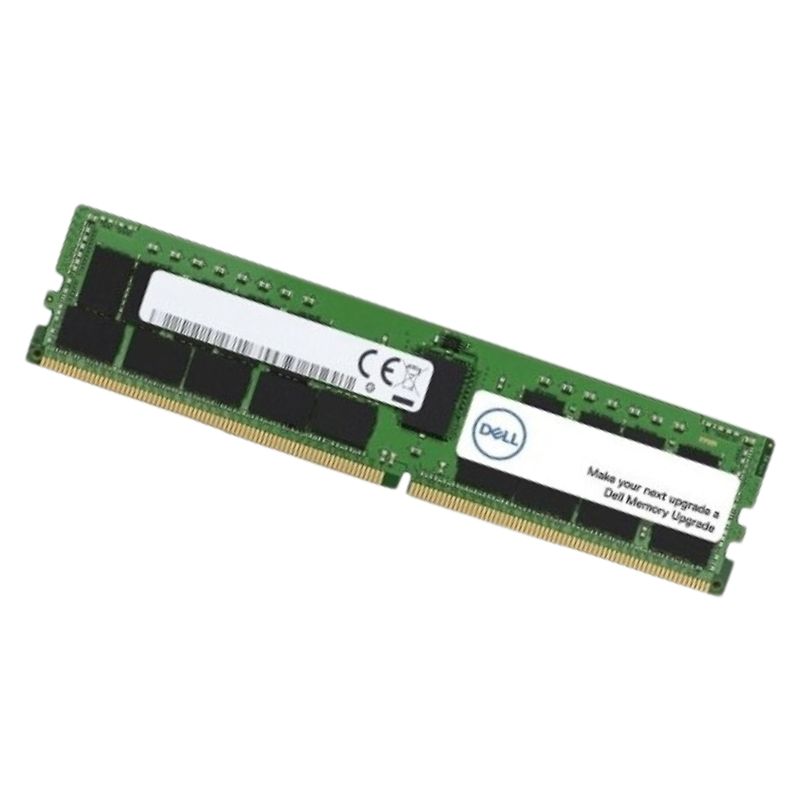
Dell 370-BCQH DDR5 4800MT/s Pc5-38400 256GB ECC DIMM Registered 288-pin Rdimm Server Memory Module. New Sealed in Box (NIB) with 1 Year Replacement Warranty - Hynix Version
| SKU/MPN | Warranty | Price | Condition | You save |
|---|---|---|---|---|
| 370-BCQH | 1 Year Warranty | $13,008.00 | New (System) Pull with 6-Months Replacement Warranty | You save: $4,552.80 (26%) |
| 370-BCQH | 1 Year Warranty | Contact us for a price | New Sealed in Box (NIB) |
Upgrade your server or workstation performance with the Dell 370-BCQH 256GB DDR5 RDIMM. This high-capacity memory stick delivers ultra-fast data transfer, error-correcting reliability, and enterprise-grade stability — ideal for virtualization, large databases, and compute-heavy workloads.
Technical Specifications
This Dell-branded registered memory is engineered for enterprise systems that require:
The Dell 370-BCQH represents a significant leap forward in server memory technology, building upon the DDR4 foundation with revolutionary improvements in performance, efficiency, and reliability. DDR5 memory architecture introduces fundamental changes that benefit enterprise computing environments, including higher bandwidth capabilities, improved power management, and enhanced error correction mechanisms. The 4800MT/s data rate represents a substantial increase over previous generation DDR4 modules, which typically operated at 3200MT/s or lower speeds. This increased data transfer rate translates directly to improved application performance, faster data processing, and reduced latency across memory-intensive workloads.
DDR5 technology incorporates several key architectural innovations that distinguish it from previous generations. The command/address bus operates at double data rate, similar to the data bus, providing significant improvements in command efficiency. The introduction of Decision Feedback Equalization (DFE) enables better signal integrity at higher speeds, allowing for the 4800MT/s data rate while maintaining stability. Additionally, DDR5 features on-die ECC (Error Correction Code) that corrects bit errors before they leave the DRAM device, working in conjunction with the traditional ECC capabilities that correct errors across the entire memory channel.
One of the most significant improvements in DDR5 technology is the revolutionary approach to power management. The Dell 370-BCQH utilizes a built-in power management IC (PMIC) that distributes power more efficiently across the memory module. This architectural change moves the voltage regulation from the motherboard to the memory module itself, enabling more precise power delivery and reducing signal integrity issues. The PMIC allows for better power distribution, improved voltage regulation, and enhanced power efficiency, which is particularly valuable in dense server configurations where power consumption and heat generation are critical concerns.
The Dell 370-BCQH offers an impressive 256GB capacity in a single DIMM module, representing the high-density capabilities of DDR5 technology. This substantial capacity enables organizations to maximize their memory density within existing server form factors, reducing the total number of DIMMs required to achieve large memory configurations. For memory-intensive applications such as in-memory databases, virtualized environments, and high-performance computing clusters, this high-density approach translates to better resource utilization, reduced power consumption per gigabyte, and simplified infrastructure management.
DDR5 memory introduces a redesigned bank architecture that significantly improves concurrent access capabilities. The Dell 370-BCQH utilizes a dual 32-bit sub-channel architecture with independent sub-channel control, effectively doubling the bank resources compared to DDR4. This architecture features 8 bank groups with 4 banks each per sub-channel, totaling 64 banks that can be accessed simultaneously. The burst length has been doubled to BL16, and the bank grouping allows for more efficient command scheduling, reducing bottlenecks and improving overall memory controller efficiency in enterprise workloads.
Operating at 4800MT/s (MegaTransfers per second), the Dell 370-BCQH delivers substantial bandwidth improvements over previous generation memory. The PC5-38400 designation indicates the module's peak transfer rate of 38,400 MB/s per DIMM. This speed is achieved while maintaining the reliability and stability required for enterprise environments. The timing parameters for this module are optimized for server workloads, balancing performance with signal integrity requirements. The improved speed enables faster data access for CPU cores, reduced wait states, and better overall system responsiveness under heavy computational loads.
The Dell 370-BCQH incorporates sophisticated Error Correction Code (ECC) capabilities that are essential for enterprise and data center environments. ECC technology detects and corrects single-bit memory errors in real-time, preventing data corruption and system crashes that can result from soft errors. The module utilizes a x4 DRAM device architecture with built-in on-die ECC that works in conjunction with the traditional sideband ECC to provide comprehensive error protection. This dual-layer ECC approach ensures data integrity across various error scenarios, from single-bit errors to more complex multi-bit errors that could potentially impact system stability.
DDR5 memory introduces on-die ECC as a complementary technology to the traditional ECC that has been standard in server memory for years. On-die ECC operates within each DRAM device, correcting errors before they are transmitted to the memory controller. This internal error correction reduces the error rate seen by the system-level ECC, improving overall reliability and potentially extending the usable lifespan of the memory modules. The traditional ECC then provides additional protection for errors that occur during data transmission between the memory module and the memory controller, creating a comprehensive error protection scheme.
The Dell 370-BCQH utilizes Registered DIMM (RDIMM) architecture, which incorporates memory registers between the memory controller and the DRAM devices. These registers buffer the command, address, and control signals, reducing the electrical load on the memory controller and enabling support for higher module capacities and greater numbers of DIMMs per channel. The registered design improves signal integrity, especially in systems with large memory configurations, by isolating the memory controller from the capacitive load of multiple DRAM devices. This architecture is particularly beneficial for servers requiring large memory capacities, as it enables more stable operation with fully populated memory configurations.
The Dell 370-BCQH delivers substantial bandwidth improvements over previous generation memory technologies, with a theoretical peak bandwidth of 38,400 MB/s per module. In practical server applications, this increased bandwidth translates to improved performance for memory-intensive workloads such as database operations, virtualization, scientific computing, and data analytics. While DDR5 typically operates with higher CAS latency than DDR4 in terms of absolute clock cycles, the significantly increased data rate results in comparable or better actual latency in nanoseconds. The improved bank architecture and command efficiency further help mitigate latency impacts for real-world server workloads.
In enterprise environments, the performance benefits of DDR5 memory become particularly evident under specific workload types. Database servers benefit from the increased bandwidth for large query operations and transaction processing. Virtualized environments see improved performance when running multiple virtual machines with memory-intensive applications. High-performance computing applications experience faster processing times for memory-bound calculations. Content delivery and caching systems benefit from the combination of high capacity and bandwidth for storing and serving large datasets. The 256GB capacity per module further enhances these benefits by reducing the memory footprint and simplifying large memory configurations.
Modern server platforms support multiple memory channels per CPU socket, typically ranging from 8 to 12 channels in current-generation platforms. When populated in optimal configurations across all available memory channels, the Dell 370-BCQH modules can deliver aggregate memory bandwidth exceeding 300 GB/s per CPU socket. This massive bandwidth enables servers to feed data to high-core-count processors more efficiently, reducing CPU stall times and improving overall system utilization. The scalability of DDR5 memory also supports future server platforms with increased channel counts and higher data rates, protecting infrastructure investments as technology evolves.
The Dell 370-BCQH is ideally suited for data center and enterprise environments where reliability, performance, and capacity are paramount. In traditional enterprise applications, these modules support large-scale ERP systems, CRM platforms, and business intelligence applications that require substantial memory resources for optimal performance. The ECC protection ensures data integrity for critical business operations, while the high capacity enables consolidation of multiple application instances on fewer physical servers, improving resource utilization and reducing total cost of ownership.
Virtualized environments represent one of the most significant use cases for high-capacity server memory modules. The 256GB capacity of the Dell 370-BCQH enables hypervisors to support larger numbers of virtual machines per physical host, improving consolidation ratios and reducing hardware requirements. In cloud infrastructure, these modules support memory-intensive instance types for applications such as in-memory databases, big data processing, and high-performance computing workloads. The reliability features ensure stable operation in multi-tenant environments where hardware failures can impact multiple customers simultaneously.
High-performance computing (HPC) applications frequently benefit from large memory capacities and high bandwidth. The Dell 370-BCQH supports scientific computing, engineering simulations, financial modeling, and research applications that process large datasets in memory. The combination of high capacity and bandwidth enables researchers and engineers to solve larger problems more efficiently, reducing time to insight. Similarly, big data analytics platforms benefit from the ability to cache large datasets in memory, accelerating query performance and analytical processing for business intelligence and machine learning applications.


 Contact Us
 Information
 Catalog
 Solid State Drives (SSD)
 Network Switches
 Hard Disk Drives
 HBA & Controllers
 PC & Servers
 PC & Server Memory
 CPU & Processors
 Network Routers
 Power Supplies
 Tape Drives & Libraries
 Network Devices
 Computer & Network Cables