(7% discount is applied at checkout)
Cart is empty
Your go-to destination for cutting-edge server products
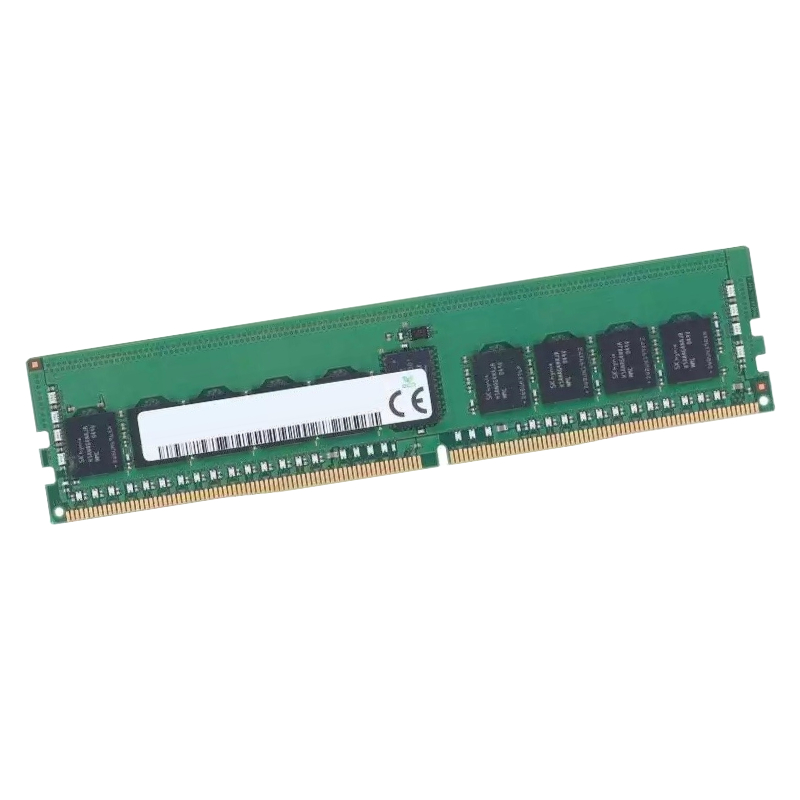


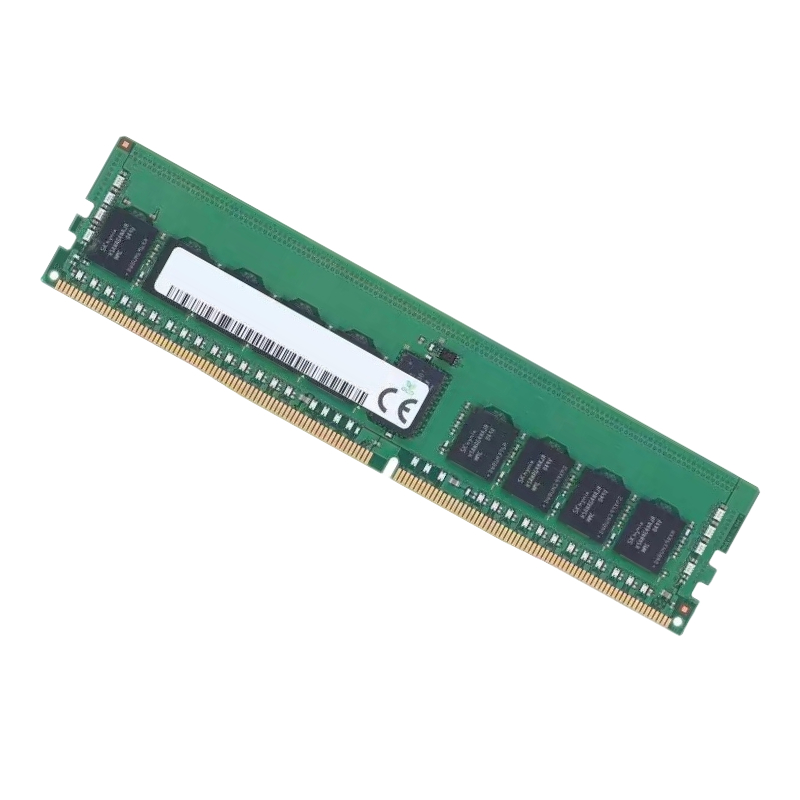
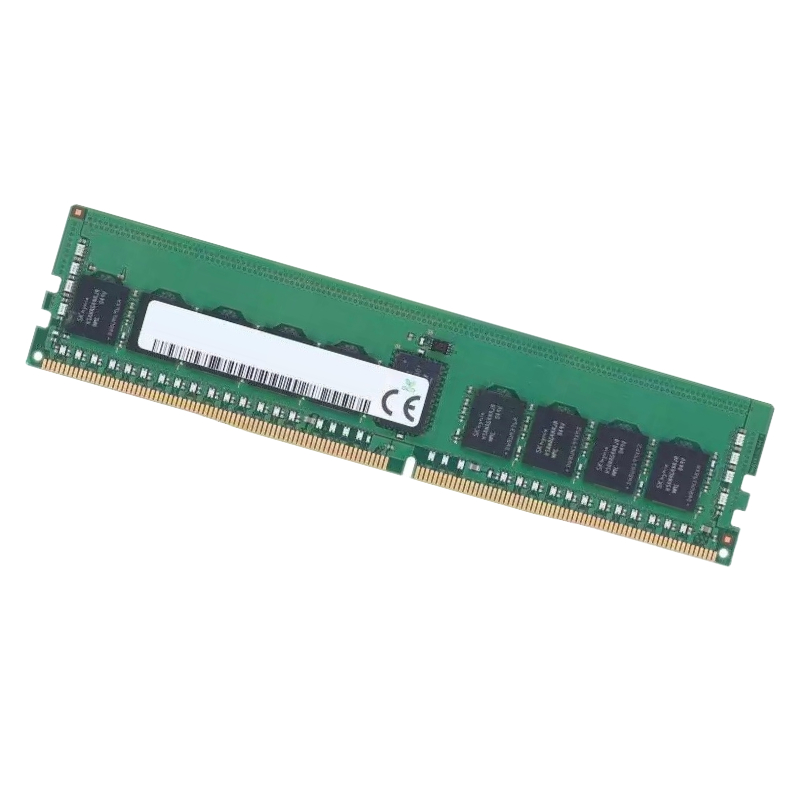
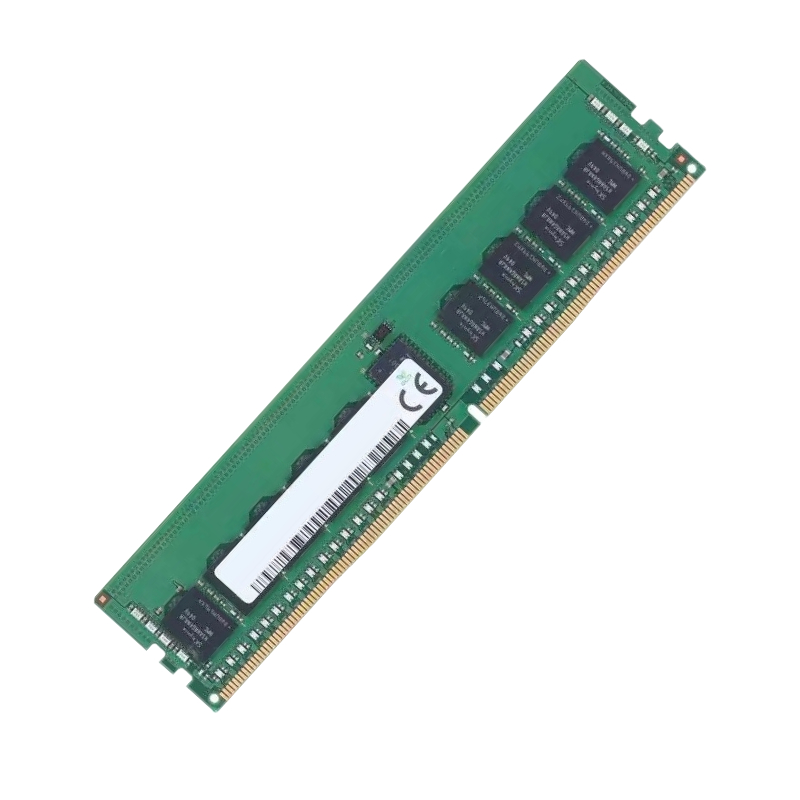
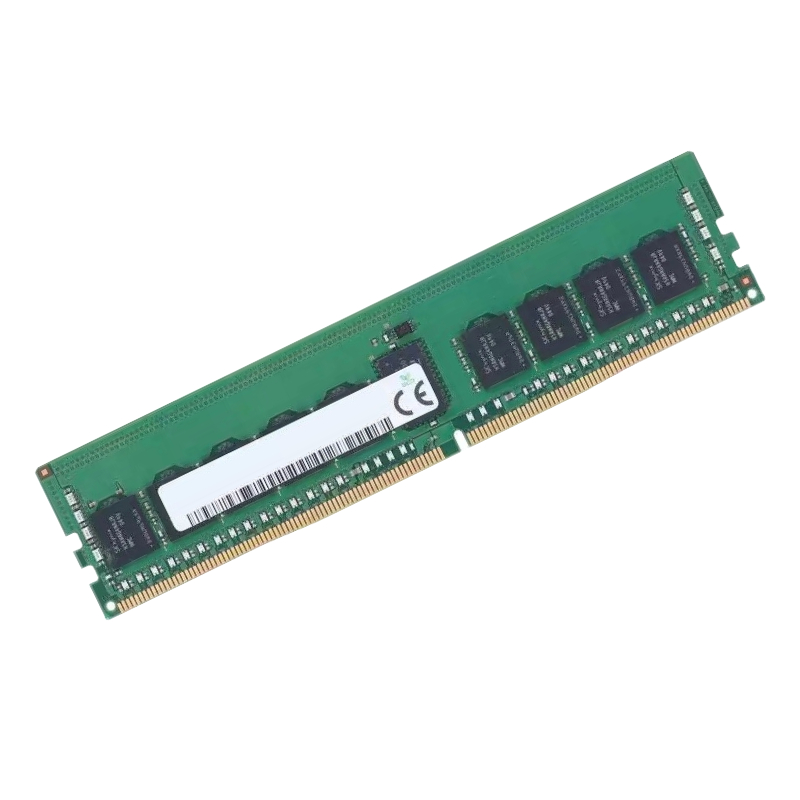
Dell 370-BCQX 16GB DDR5 4800MHz PC5-38400 1rx8 Ecc Registered 1.1v Cl46 SDRAM 288-pin RDIMM Memory Module For Server. New Sealed in Box (NIB) - Samsung Version
The Dell 370-BCQX 16GB DDR5 4800MHz PC5-38400 1Rx8 ECC Registered 1.1V CL46 SDRAM 288-Pin RDIMM Memory Module is a high-performance server memory solution designed to boost data transfer speeds, enhance system stability, and deliver outstanding reliability for enterprise applications.
This Dell DDR5 RDIMM module is engineered for use with multiple Dell PowerEdge servers, ensuring maximum compatibility and performance consistency.
The Dell 370-BCQX represents the cutting edge of server memory technology, marking a significant leap forward from previous DDR4 standards. DDR5 memory introduces substantial improvements in performance, power efficiency, and reliability that are critical for modern server environments. With a base speed of 4800MHz, this memory module operates at nearly double the frequency of standard DDR4-2666 modules, while simultaneously reducing operating voltage from 1.2V to 1.1V. This combination of higher performance and lower power consumption makes DDR5 technology particularly valuable for data centers and enterprise environments where both computational throughput and energy efficiency are paramount concerns.
Dell's 370-BCQX module leverages several revolutionary DDR5 architectural enhancements. The implementation of two independent 40-bit data channels (32 data bits with 8 ECC bits each) per module effectively doubles the burst length and bank groups compared to DDR4. This architectural shift allows for significantly improved concurrent access patterns and reduced latency in memory-intensive operations. The onboard power management IC (PMIC) represents another critical advancement, distributing power management from the motherboard to the memory module itself. This localized power delivery enables more precise voltage regulation, improved signal integrity, and better power efficiency across varying workload conditions.
The "1rx8" designation in the Dell 370-BCQX specification indicates a single-rank module with x8 DRAM device organization. This configuration means the memory module contains a single set of memory chips that the memory controller can access simultaneously, with each chip having an 8-bit data interface. The x8 organization provides an optimal balance between performance, capacity, and compatibility for most server applications. This configuration is particularly well-suited for systems requiring moderate memory capacity while maintaining excellent performance characteristics and power efficiency. The single-rank design ensures compatibility with a wide range of server platforms and typically allows for higher maximum memory speeds compared to dual-rank configurations in the same memory channel.
The PC5-38400 classification specifies the module's theoretical peak transfer rate of 38,400 MB/s. This metric is calculated based on the module's 4800 MT/s (mega transfers per second) data rate operating across a 64-bit data interface (8 bytes). The calculation follows: 4800 MT/s × 8 bytes = 38,400 MB/s. This substantial bandwidth represents a significant improvement over previous generation memory technologies and enables servers to handle memory-intensive workloads more efficiently. Applications such as database management, virtualization, scientific computing, and large-scale data analytics particularly benefit from this increased memory bandwidth, which helps prevent memory bottlenecks from limiting overall system performance.
The Dell 370-BCQX operates with CAS Latency (CL) timing of 46 cycles at 4800MHz. While this absolute latency figure may appear higher than DDR4 modules (typically CL15-22), the significantly faster clock speed results in substantially better real-world performance. The actual time delay is calculated as CL divided by the clock speed (in MHz), resulting in nanosecond latency. At CL46 and 4800MHz, the Dell module delivers excellent real-world latency while providing dramatically improved bandwidth. The memory subsystem automatically manages timing parameters through serial presence detect (SPD) programming, ensuring optimal compatibility and performance without requiring manual configuration in supported Dell PowerEdge servers and compatible systems.
The Dell 370-BCQX incorporates Error Correction Code technology, a critical feature for server environments where data integrity is non-negotiable. ECC memory includes additional bits beyond the standard data bits to detect and correct single-bit memory errors in real-time. This 16GB module actually contains additional DRAM chips to store the ECC information, typically adding approximately 12.5% overhead to the physical memory components. The ECC implementation can detect single-bit errors and correct them automatically without interrupting system operation, while also detecting (though not correcting) multi-bit errors. This capability dramatically reduces silent data corruption, system crashes, and unexpected downtime that can result from memory errors, making ECC memory essential for business-critical applications, financial systems, and scientific computing.
As a Registered DIMM (RDIMM), the Dell 370-BCQX incorporates memory buffers (registers) between the memory controller and the DRAM chips. These buffers reduce the electrical load on the memory controller by handling signal timing and amplification, enabling support for higher memory capacities per channel and improved signal integrity at high speeds. This architecture is particularly beneficial in multi-processor systems and servers with large memory configurations, as it allows for more memory modules to be installed without overwhelming the memory controller's electrical capabilities. Compared to Unbuffered DIMMs (UDIMMs), RDIMMs typically support higher capacities and more reliable operation in demanding server environments, though with slightly increased latency due to the buffering process.
While the Dell 370-BCQX is a Registered DIMM, it's important to distinguish it from Load-Reduced DIMMs (LRDIMMs) which represent another step in server memory evolution. LRDIMMs utilize memory buffers that isolate the data bus completely from the DRAM chips, enabling even higher memory capacities per channel but typically at the cost of slightly higher latency and cost. The 370-BCQX RDIMM configuration provides an optimal balance for most enterprise applications, offering excellent performance, compatibility, and capacity characteristics without the premium cost associated with LRDIMM technology. This makes the 370-BCQX suitable for the majority of server deployments where extreme memory capacity (beyond 1TB per server) is not required.
The Dell 370-BCQX's 4800MHz operating frequency and DDR5 architecture deliver exceptional performance in bandwidth-sensitive applications. Database servers, particularly those running large in-memory databases like SAP HANA or Oracle Database In-Memory, benefit significantly from the increased memory bandwidth. Virtualization environments with high virtual machine density also show substantial improvement, as the increased bandwidth allows more efficient memory sharing and reduced contention between virtual machines. High-performance computing applications, including scientific simulations, financial modeling, and data analytics platforms, can process larger datasets more efficiently with the 370-BCQX's improved memory throughput, often reducing computation times for complex algorithms.
For enterprise database systems like Microsoft SQL Server, Oracle Database, and MySQL, the combination of ECC protection and high bandwidth makes the Dell 370-BCQX an excellent choice. These applications demand both high performance for query processing and absolute data integrity to prevent database corruption. The module's ECC capabilities ensure that single-bit errors—which occur regularly in large memory arrays due to cosmic radiation and other environmental factors—are corrected before they can affect database integrity. Meanwhile, the 4800MHz operating speed enables faster query execution, particularly for operations involving large table scans, complex joins, and in-memory processing that characterize modern database workloads.
In virtualized environments using VMware vSphere, Microsoft Hyper-V, or similar hypervisors, the Dell 370-BCQX provides the performance and reliability needed to support high-density virtual machine configurations. The memory module's bandwidth enables faster live migration operations (vMotion), reduced memory contention between virtual machines, and improved performance for memory-intensive virtual workloads. The ECC functionality is particularly valuable in virtualized environments where memory errors could potentially affect multiple virtual machines simultaneously. For cloud service providers and enterprise private clouds, this combination of performance and reliability helps maintain service level agreements and ensures consistent performance across tenant workloads.
The Dell 370-BCQX incorporates several DDR5-specific power management features that contribute to its 1.1V operating voltage and overall energy efficiency. The onboard Power Management IC (PMIC) represents a fundamental architectural shift from previous memory generations, moving power delivery and regulation from the motherboard to the memory module itself. This distributed power architecture enables more precise voltage control, reduced power supply noise, and improved power delivery efficiency. The PMIC allows for fine-grained power states and faster transitions between active and low-power modes, enabling servers to conserve energy during periods of reduced memory activity without compromising performance when full bandwidth is required.
The Dell 370-BCQX is designed to operate within standard server environmental conditions, typically supporting temperatures from 0°C to 85°C case temperature. The module incorporates thermal sensors that enable the system to monitor memory temperature and adjust cooling accordingly. In properly configured Dell PowerEdge servers, the system management firmware can dynamically adjust fan speeds based on memory temperature readings, ensuring adequate cooling while optimizing acoustic performance and power consumption. For deployments in higher ambient temperature environments or in servers with unusual airflow characteristics, additional system-level cooling considerations may be necessary to maintain optimal memory reliability and performance.
To ensure long-term reliability of Dell 370-BCQX modules, proper server cooling configuration is essential. Dell PowerEdge servers typically include optimized airflow designs that direct cooling air across memory modules in sequential order. Obstructions to this airflow path, such as incorrectly installed components or cabling, can create hot spots that may affect memory stability. Regular maintenance of air filters and verification of fan operation helps maintain proper memory cooling. In high-ambient-temperature environments or densely configured servers, additional system fans or different fan speed policies may be necessary to maintain memory temperatures within specification. The iDRAC system management in Dell servers provides comprehensive temperature monitoring and alerting capabilities to help administrators identify potential cooling issues before they affect system reliability.
The Dell 370-BCQX memory module includes firmware integration specifically designed for Dell PowerEdge servers, enabling advanced management capabilities through the integrated Dell Remote Access Controller (iDRAC). This integration allows system administrators to monitor memory health, temperature, performance metrics, and error statistics in real-time. The firmware supports predictive failure analysis, alerting administrators to potential memory issues before they cause system downtime. Dell's proprietary firmware also ensures optimal compatibility with Dell's BIOS and system management features, including memory-specific configurations like operating frequency selection, patrol scrubbing intervals, and error threshold policies that can be customized based on workload requirements.


 Contact Us
 Information
 Catalog
 Solid State Drives (SSD)
 Network Switches
 Hard Disk Drives
 HBA & Controllers
 PC & Servers
 PC & Server Memory
 CPU & Processors
 Network Routers
 Power Supplies
 Tape Drives & Libraries
 Network Devices
 Computer & Network Cables