
(7% discount is applied at checkout)
Cart is empty
Your go-to destination for cutting-edge server products
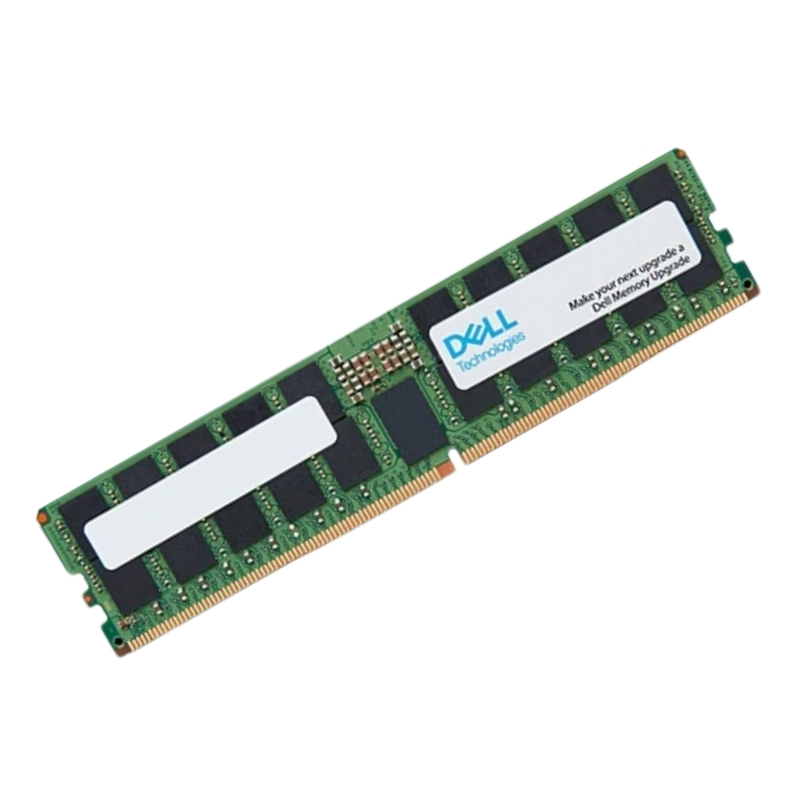
Dell 370-BCQZ 128GB 4800Mhz Pc5-38400 Cl40 Ecc Registered 4rx4 Ecc 1.1v Ddr5 SDRAM 288-pin Rdimm Memory Module. New Sealed in Box (NIB) - Samsung Version
| SKU/MPN | Warranty | Price | Condition | You save |
|---|---|---|---|---|
| 370-BCQZ | 1 Year Warranty | $5,985.00 | New (System) Pull | You save: $2,094.75 (26%) |
| 370-BCQZ | 1 Year Warranty | $6,427.00 | New Sealed in Box (NIB) | You save: $2,249.45 (26%) |
This premium Dell memory module delivers exceptional performance for demanding server applications, featuring cutting-edge DDR4 technology with robust error correction.
The 370-BCQZ Dell 128GB (1x128GB) 4800MHz PC5-38400 CL40 ECC Registered 4Rx4 1.1V DDR5 SDRAM 288-Pin RDIMM memory module represents the next evolution of server-grade memory, offering unmatched capacity, bandwidth, and reliability. Designed for enterprise environments that demand ultra-high memory density and robust performance, this DDR5 Registered DIMM (RDIMM) is ideal for mission-critical workloads like virtualization, high-performance computing (HPC), AI modeling, and large-scale databases.
DDR5, or Double Data Rate 5, is the latest generation of SDRAM, superseding DDR4. The 370-BCQZ module is part of this new wave of memory that offers significant improvements in data rate, efficiency, and reliability. DDR5 doubles the bandwidth of its predecessor while reducing power consumption, thanks to the new 1.1V operating voltage standard and integrated power management chips (PMIC).
RDIMM modules, such as this one, include a register (buffer) between the DRAM modules and the system's memory controller. This feature enhances signal integrity and supports higher memory densities and frequencies. For servers that operate under heavy multi-user loads or run virtualization layers, RDIMMs are essential for maintaining stability and performance.
This memory module supports ECC, which automatically detects and corrects single-bit memory errors. ECC is crucial in server environments where memory integrity ensures that mission-critical applications run without interruption or data corruption. The ECC functionality of this module operates in conjunction with the RDIMM register to provide a resilient foundation for modern enterprise systems.
At 4800MHz, this memory module offers a peak theoretical bandwidth of 38.4GB/s. In environments where high-speed data access and processing are required, such as in-memory databases or analytics workloads, this increase in speed directly translates to reduced latency and faster computational throughput.
The CL40 latency rating might appear higher than DDR4 equivalents, but due to the faster clock cycles and increased prefetch buffer (16n in DDR5 versus 8n in DDR4), the actual delay in nanoseconds is comparable or even superior. This means applications benefit from faster memory access even with higher CAS latency values.
Operating at only 1.1 volts, DDR5 memory modules like the 370-BCQZ are more power-efficient than their DDR4 counterparts. Additionally, integrated temperature sensors and the new PMIC architecture help regulate voltage delivery and thermal load, enhancing overall system stability under stress.
In virtualized environments, memory oversubscription and high VM density place extreme demands on memory. A 128GB DDR5 RDIMM allows consolidation of more virtual machines per physical server, improving ROI while maintaining optimal performance levels across instances.
For scientific modeling, AI/ML workloads, and simulation platforms, memory bandwidth and capacity directly affect execution time. This high-capacity 128GB module ensures larger datasets can be processed in-memory, reducing dependency on slower storage I/O operations and accelerating overall computation.
Enterprise-class databases such as SAP HANA, Oracle, and Microsoft SQL Server benefit immensely from high-capacity RDIMMs. In-memory processing enables real-time analytics and insights, made possible with the high memory footprint provided by modules like the 370-BCQZ.
The 370-BCQZ is certified for use in select Dell PowerEdge servers designed to support DDR5 memory. It is essential to consult Dell's server compatibility matrix to ensure system BIOS and firmware versions are aligned for DDR5 support and maximum module population.
Systems that support large memory footprints can benefit from scaling out with multiple 128GB RDIMMs, reaching memory capacities up to 2TB or more per server node. This enables data center operators to build scale-up architectures without requiring additional hardware.
With its 4Rx4 rank configuration, this module is engineered for higher capacity and improved signal integrity. Multi-rank designs enable interleaving strategies that optimize memory access speeds and reduce bottlenecks during high-load operations.
As an OEM-certified Dell memory product, the 370-BCQZ undergoes rigorous validation and testing for thermal tolerance, error rates, and signal integrity. This makes it a trusted solution for mission-critical enterprise deployments where uptime is paramount.
To achieve optimal memory bandwidth and enable multi-channel configurations, modules should be installed according to the motherboard’s population guidelines. Using matched pairs or sets enhances performance by activating memory interleaving and minimizing latency.
Ensure your server’s BIOS and memory controller firmware are updated to support DDR5 memory profiles. Updated microcode allows the system to accurately recognize the memory module’s specifications and enables advanced features such as thermal monitoring and ECC reporting.
Compared to DDR4-3200 memory, DDR5-4800 offers a 50% increase in transfer speed, resulting in a noticeable performance uplift in memory-bound applications. Tasks like multi-threaded rendering, live data analytics, and real-time video processing benefit the most.
DDR5 consumes less power per bit transferred, thanks to its 1.1V operating voltage versus 1.2V in DDR4. This allows data centers to operate more efficiently, reducing heat output and power consumption over thousands of modules in production environments.
With DDR5 support built into recent Intel Xeon Scalable (Sapphire Rapids) and AMD EPYC Genoa platforms, high-performance servers are now engineered to leverage the benefits of high-capacity RDIMMs like the 370-BCQZ. These modules are crucial to future-ready IT infrastructure.
As data workloads expand and application demands increase, having scalable and reliable memory modules ensures long-term value. Investing in high-density DDR5 RDIMMs provides an upgrade path without requiring total system overhauls.
With a lower operating voltage and improved power management, DDR5 memory modules contribute to energy-efficient computing. This aligns with corporate sustainability goals and reduces operational expenses related to power and cooling.
Integrated thermal sensors allow real-time monitoring of module temperatures, which can be tracked through server management software. This proactive approach helps prevent thermal-related failures and extends the lifecycle of the memory components.
Genuine 370-BCQZ modules should be procured through Dell-authorized distributors or certified IT hardware resellers. Ensuring authenticity guarantees access to Dell support and warranty services while minimizing the risk of counterfeit hardware.
Enterprises deploying hundreds or thousands of modules benefit from streamlined configuration tools and automated provisioning workflows. Dell’s system management software assists in memory diagnostics, provisioning, and asset tracking across clusters and racks.


 Contact Us
 Information
 Catalog
 Solid State Drives (SSD)
 Network Switches
 Hard Disk Drives
 HBA & Controllers
 PC & Servers
 PC & Server Memory
 CPU & Processors
 Network Routers
 Power Supplies
 Tape Drives & Libraries
 Network Devices
 Computer & Network Cables