
(7% discount is applied at checkout)
Cart is empty
Your go-to destination for cutting-edge server products
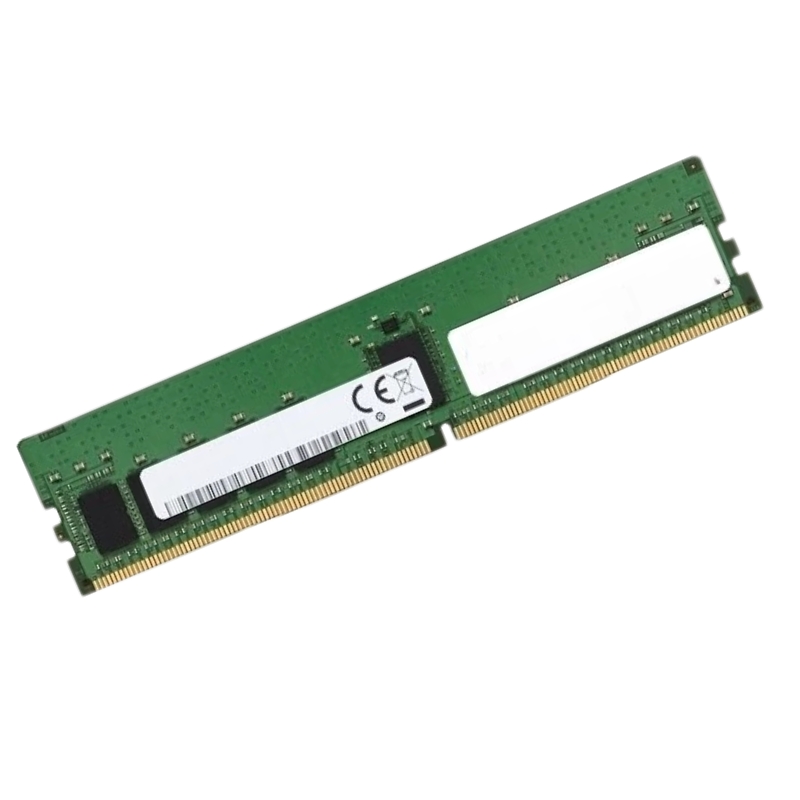
Dell 370-BCRS 64GB DDR5 4800MHz Pc5-38400 Dual Rank Ecc Registered Cl40 SDRAM 288-pin RDIMM Memory Module For Server. New (System) Pull with 1 year replacement warranty - Samsung Version
| SKU/MPN | Warranty | Price | Condition | You save |
|---|---|---|---|---|
| 370-BCRS | 1 Year Warranty | $2,539.00 | New (System) Pull | You save: $888.65 (26%) |
| 370-BCRS | 1 Year Warranty | $3,681.00 | New Sealed in Box (NIB) | You save: $1,288.35 (26%) |
High-performance server-grade RAM engineered for reliability and throughput. The Dell 370-BCRS is a 64GB DDR5 RDIMM (Registered) module with ECC support, optimized for data centers, workstations and enterprise servers requiring robust error correction and consistent latency.
This Dell 370-BCRS module is engineered for enterprise servers and compatible Dell platforms that accept DDR5 RDIMMs. Ideal for:
The Dell 370-BCRS represents the cutting edge of server memory technology, specifically engineered to meet the demanding requirements of contemporary enterprise servers, data centers, and high-performance computing environments. As a 64GB DDR5 module operating at 4800MHz, it delivers significant advancements in bandwidth, efficiency, and reliability over previous DDR4 generations, making it an essential component for businesses scaling their digital infrastructure.
DDR5 memory marks a fundamental shift in server architecture, offering more than just a speed increase from DDR4. The Dell 370-BCRS leverages key DDR5 innovations including a burst length of 16, two independent 40-bit sub-channels (32 data bits with 8 ECC bits each) for improved concurrency, and a more robust command/address bus. These architectural improvements translate to tangible performance benefits in multi-user, multi-threaded server applications where parallel processing is critical.
Unlike its predecessors, DDR5 incorporates decision feedback equalization (DFE) to enable higher I/O speed without signal integrity degradation. The power management has been completely redesigned with the PMIC (Power Management Integrated Circuit) moving from the motherboard to the memory module itself. This allows for more precise voltage regulation and better power delivery, which is particularly valuable in densely populated server configurations where power efficiency directly impacts operational costs.
The "4800MHz" refers to the data transfer rate of 4,800 million transfers per second, while "PC5-38400" denotes the module's theoretical peak bandwidth of approximately 38,400 MB/s. This substantial bandwidth increase—nearly 1.5x that of typical DDR4-3200 modules—directly accelerates data-intensive workloads such as in-memory databases, virtualization, scientific simulations, and AI inference tasks.
The Dell 370-BCRS incorporates ECC (Error Correcting Code) capabilities, a non-negotiable feature for enterprise and server environments. ECC memory detects and corrects the most common types of internal data corruption, specifically single-bit errors, without interrupting system operation. This prevents silent data corruption that could lead to calculation errors, application crashes, or system instability—critical protection for financial transactions, scientific research, database integrity, and any mission-critical application where data accuracy is paramount.
ECC functionality works by adding extra bits (8 bits for every 64 bits of data) to create a checksum for verifying data integrity. When data is written to memory, the ECC algorithm calculates and stores this checksum. Upon reading the data, the algorithm recalculates the checksum and compares it to the stored value. If a single-bit error is detected, it is automatically corrected before the data is passed to the processor. Multi-bit errors, while extremely rare, are detected and reported to the operating system for appropriate handling.
This module is configured as a Registered DIMM (RDIMM), featuring a register (or buffer) between the memory controller and the DRAM chips. This register buffers the command and address signals, reducing the electrical load on the memory controller. The primary benefit is that servers can support significantly higher memory capacities and more DIMMs per channel without overloading the memory controller, enabling robust memory configurations that are essential for large-scale virtualization, database servers, and high-performance computing clusters.
Unlike Unbuffered DIMMs (UDIMMs) commonly used in desktop computers, RDIMMs introduce a slight latency increase (typically one clock cycle) due to the signal buffering. However, this trade-off is overwhelmingly beneficial in server environments where capacity, stability, and scalability far outweigh minimal latency concerns. The Dell 370-BCRS RDIMM ensures that systems can be populated with maximum memory configurations while maintaining signal integrity and system stability.
With a substantial 64GB capacity per module, the 370-BCRS enables servers to address massive datasets directly in memory, dramatically reducing reliance on slower storage subsystems. The dual-rank design means the memory chips are organized into two separate sets (ranks) that can be accessed independently, though not simultaneously. This configuration improves memory controller efficiency by allowing access to one rank while another is preparing for the next operation, resulting in better overall bandwidth utilization compared to single-rank modules at the same frequency.
The CAS Latency (CL) of 40 cycles represents the number of clock cycles between the memory controller issuing a read command and the first piece of data becoming available. While this number appears high compared to DDR4 modules (typically CL15-22), it's important to consider this in the context of DDR5's much higher clock speed. When measured in nanoseconds (the actual time delay), the latency is competitive: CL40 at 4800MHz translates to approximately 16.67 nanoseconds, comparable to DDR4-3200 CL16 (15.625 nanoseconds) while providing substantially higher bandwidth.
Server workloads typically benefit more from increased bandwidth than reduced latency, as they often involve processing large datasets spread across memory rather than repeatedly accessing small, random memory locations. The Dell 370-BCRS is optimized for these bandwidth-sensitive applications, making it ideal for virtualization, big data analytics, content delivery networks, and other scale-out server workloads.
The module utilizes the standard 288-pin DDR5 RDIMM form factor with a slightly different keying position than DDR4 to prevent accidental insertion into incompatible motherboards. This physical design ensures proper installation in supported Dell PowerEdge servers and other compatible systems designed for DDR5 technology.
The combination of high capacity, ECC protection, and DDR5 bandwidth makes the 370-BCRS particularly well-suited for:
Large memory capacity is crucial for hosting multiple virtual machines on a single physical server. The 64GB modules allow for greater VM density, while ECC ensures stability across diverse workloads, and high bandwidth prevents memory from becoming a bottleneck during periods of high consolidation.
Platforms like SAP HANA, Oracle Database In-Memory, and Microsoft SQL Server In-Memory OLTP benefit tremendously from both the capacity and bandwidth of these modules, enabling faster transaction processing and real-time analytics by keeping entire datasets in system memory.
Scientific computing, engineering simulations, and machine learning training often involve processing massive datasets that exceed cache capacities. The high bandwidth of DDR5-4800 accelerates these computations by reducing memory wait times during data fetching operations.
Compared to DDR4 memory typically operating at 2400-3200MT/s, the Dell 370-BCRS at 4800MT/s delivers approximately 50-100% higher raw bandwidth. Beyond transfer speed, DDR5's dual sub-channel architecture provides more efficient access patterns for modern multi-core processors. The improved bank grouping and same-bank refresh features further reduce latency in real-world scenarios where multiple applications are accessing memory concurrently.
DDR5 operates at a lower voltage (1.1V) compared to DDR4 (1.2V), reducing power consumption—a critical factor in large-scale deployments where even small power savings per module translate to significant operational cost reductions at data center scale. The integrated PMIC provides more stable power with better voltage regulation, which also contributes to improved reliability and stability under heavy load conditions.
In addition to traditional ECC that corrects errors in communication between the memory and memory controller, DDR5 incorporates on-die ECC that corrects errors within the DRAM chips themselves. This two-layer approach to error correction further enhances data integrity and module longevity, potentially extending the useful life of the memory in 24/7 operation.


 Contact Us
 Information
 Catalog
 Solid State Drives (SSD)
 Network Switches
 Hard Disk Drives
 HBA & Controllers
 PC & Servers
 PC & Server Memory
 CPU & Processors
 Network Routers
 Power Supplies
 Tape Drives & Libraries
 Network Devices
 Computer & Network Cables