
(7% discount is applied at checkout)
Cart is empty
Your go-to destination for cutting-edge server products
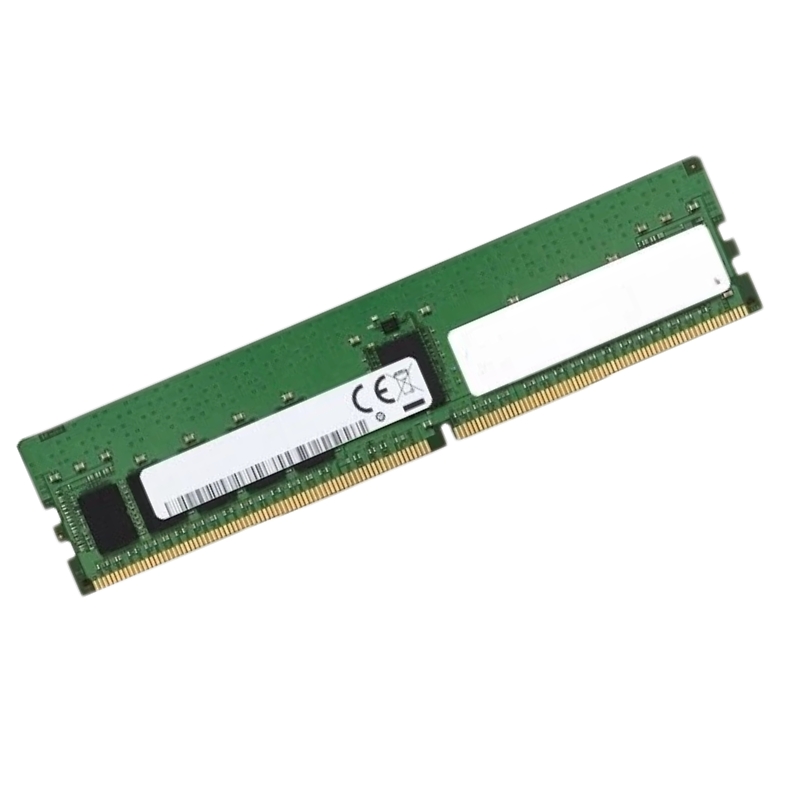
Dell 370-BCSB 64GB DDR5 5600MHz Pc5-44800 2rx4 ECC Registered Cl46 SDRAM 288-pin Memory Module For Poweredge Server. New (System) Pull with 1 year replacement warranty - Samsung Version
| SKU/MPN | Warranty | Price | Condition | You save |
|---|---|---|---|---|
| 370-BCSB | 1 Year Warranty | $2,688.00 | New Sealed in Box (NIB) | You save: $940.80 (26%) |
| 370-BCSB | 1 Year Warranty | $3,446.00 | New Sealed in Box (NIB) | You save: $1,206.10 (26%) |
Upgrade your server’s performance with the Dell 370-BCSB 64GB (1x64GB) DDR5 5600MT/s PC5-44800 2Rx4 ECC Registered 1.1V CL46 SDRAM 288-Pin RDIMM Memory Module. Designed for maximum efficiency and reliability, this high-capacity DDR5 memory module ensures lightning-fast data transfer and enhanced stability for demanding workloads.
The Dell 370-BCSB 64GB DDR5 RDIMM Memory module is engineered for use in enterprise-grade Dell PowerEdge servers. It ensures seamless integration and top-tier performance across a wide range of systems.
Server memory represents the critical backbone of enterprise computing infrastructure, fundamentally different from standard desktop memory in its requirements for stability, reliability, and error-free operation. Unlike consumer-grade RAM, server memory must maintain continuous operation under heavy workloads while protecting against data corruption that could cripple business operations. The Dell 370-BCSB 64GB DDR5 module exemplifies this specialized category of memory designed specifically for the demanding environments of data centers, enterprise servers, and high-availability computing systems.
The transition from DDR4 to DDR5 represents the most significant advancement in memory technology in nearly a decade. DDR5 memory modules like the Dell 370-BCSB deliver substantial improvements across multiple performance metrics including bandwidth, power efficiency, and capacity scaling. With base speeds starting at 4800MT/s compared to DDR4's 3200MT/s maximum, DDR5 provides an immediate 50% performance uplift while offering significantly more headroom for future scalability. The architecture changes in DDR5 enable higher memory densities while maintaining signal integrity through improved channel efficiency and on-die ECC capabilities.
DDR5 introduces several revolutionary architectural changes that distinguish it from previous generations. The command/address bus operates at double data rate, effectively doubling the bandwidth of this critical pathway. The burst length has been doubled to BL16, enabling more efficient data transfers per operation. Perhaps most significantly, DDR5 implements a dual sub-channel architecture that allows for better bank grouping and reduced latency in memory access patterns. These architectural enhancements work in concert to deliver the 5600MT/s performance of the Dell 370-BCSB while maintaining stability through advanced signal integrity features.
The Dell 370-BCSB features a substantial 64GB capacity on a single memory module, representing the optimal balance between density and performance for modern server configurations. This high-density design enables organizations to maximize their memory capacity within limited physical slots, reducing overall system cost and complexity while maintaining performance thresholds. The single 64GB module configuration provides flexibility for scaling memory incrementally while offering immediate benefits for memory-intensive applications including virtualization, database management, and high-performance computing workloads.
The decision between using a single 64GB module versus two 32GB modules involves careful consideration of performance, scalability, and cost factors. A 1x64GB configuration provides maximum flexibility for future expansion since additional slots remain available for memory upgrades. While dual-channel configurations can offer bandwidth advantages in some scenarios, modern server architectures with multiple memory channels can effectively utilize single-module configurations without significant performance penalties. The Dell 370-BCSB's 64GB density makes it ideal for memory-constrained systems where maximum capacity is the primary consideration.
Operating at 5600 million transfers per second (MT/s), the Dell 370-BCSB delivers exceptional memory bandwidth that directly translates to improved application performance and system responsiveness. The PC5-44800 designation indicates the module's peak transfer rate of 44,800 MB/s, significantly outpacing previous-generation DDR4 memory. This increased bandwidth proves particularly beneficial for data-intensive applications including in-memory databases, scientific computing, and virtualized environments where memory speed directly correlates to overall system throughput and user experience.
The 5600MT/s speed of the Dell 370-BCSB provides tangible benefits across various enterprise workloads. Database applications experience reduced query times due to faster memory access, while virtualization platforms benefit from improved guest operating system performance. Content delivery systems and web servers handle concurrent requests more efficiently, and scientific applications complete computational tasks faster. The performance advantages become increasingly pronounced as memory utilization increases, making the 5600MT/s specification particularly valuable for systems operating under heavy memory load.
The 2Rx4 (2 Rank by 4) organization of the Dell 370-BCSB represents an optimized approach to memory density and performance. In this configuration, the memory module contains two independent ranks, each with a 4-bit prefetch architecture. This organization allows for improved memory access parallelism while maintaining signal integrity across the memory bus. The 2R design enables better utilization of memory channels compared to single-rank modules, while the x4 configuration provides optimal compatibility with server memory controllers and advanced error correction features.
Memory ranks represent logically independent memory areas that can be accessed separately, enabling the memory controller to hide precharge and activation delays by switching between ranks. The Dell 370-BCSB's dual-rank architecture effectively doubles the available banks compared to single-rank modules, providing more concurrent access opportunities. The x4 organization refers to the physical arrangement of memory chips and their data width, with x4 chips being specifically designed for optimal operation with advanced ECC capabilities and memory mirroring features in enterprise environments.
The Dell 370-BCSB supports advanced ECC technologies including Chipkill and SDDC (Spare Device Data Correction) that provide enhanced protection beyond standard single-bit error correction. Chipkill technology can survive the complete failure of an individual memory chip while maintaining system operation, a capability that standard ECC cannot provide. SDDC extends error correction to include entire memory devices, offering protection against multi-bit errors that would typically cause system failures. These advanced error correction features make the Dell 370-BCSB particularly suitable for mission-critical applications where maximum uptime is essential.
The Dell 370-BCSB utilizes Registered DDR5 technology (RDIMM), which incorporates a register between the memory controller and the DRAM chips to buffer command and address signals. This architectural difference distinguishes server-grade memory from the unbuffered DIMMs (UDIMMs) commonly used in desktop systems. The register reduces electrical load on the memory controller, enabling support for higher memory densities and more modules per channel while maintaining signal integrity. This makes RDIMMs like the Dell 370-BCSB ideal for multi-socket servers and memory-intensive applications that require large memory configurations.
At the heart of the Dell 370-BCSB's registered architecture is the RCD (Registering Clock Driver), a specialized chip that receives, re-times, and re-drives command and address signals from the memory controller to the DRAM devices. This signal conditioning ensures clean, synchronized communication between the memory controller and individual memory chips, even in large memory configurations with significant physical trace lengths. The RCD operates at the same frequency as the memory bus, maintaining timing relationships critical for reliable operation at the module's 5600MT/s data rate.
Registered DDR5 modules like the Dell 370-BCSB offer several distinct advantages in server environments. They support higher memory capacities per channel, enable more stable operation with large numbers of memory modules, and provide better signal integrity across varied physical configurations. The reduced electrical load on the memory controller allows for more memory channels and higher frequencies while maintaining reliability. These characteristics make RDIMMs the preferred choice for servers requiring large memory footprints, including database servers, virtualization hosts, and high-performance computing clusters.
The Dell 370-BCSB operates at a remarkably low 1.1 volts, representing a significant reduction from previous memory generations while delivering substantially higher performance. This reduced operating voltage translates directly to lower power consumption and reduced heat generation, critical factors in dense server deployments where energy efficiency and cooling capacity directly impact operational costs. The DDR5 standard incorporates sophisticated power management features including fine-grained power states that allow the memory subsystem to optimize power consumption based on workload demands without compromising performance.
A key innovation in DDR5 memory is the integration of a Power Management IC (PMIC) directly on the memory module. The Dell 370-BCSB utilizes this advanced power delivery system to provide more stable and efficient power distribution to the memory chips. The on-module PMIC enables better voltage regulation, reduces noise, and improves signal integrity compared to motherboard-based power delivery systems used in previous memory generations. This localized power management contributes to the module's reliability while supporting advanced power-saving features that adapt to varying workload demands.
The Dell 370-BCSB incorporates an optimized thermal solution designed to maintain safe operating temperatures under sustained heavy workloads. The module features a carefully engineered heat spreader that efficiently dissipates heat generated during operation, preventing thermal throttling that could impact performance. The mechanical design ensures compatibility with various server cooling solutions while providing adequate thermal headroom for operation in challenging environmental conditions commonly encountered in data center environments. Proper thermal management extends the module's operational lifespan and maintains consistent performance characteristics throughout its service life.
The Dell 370-BCSB excels in virtualized environments where memory density and reliability directly impact the number of virtual machines that can be efficiently hosted on a single physical server. The module's 64GB capacity and ECC protection make it ideal for hypervisors like VMware vSphere, Microsoft Hyper-V, and KVM, where memory errors could potentially affect multiple virtual machines simultaneously. The high bandwidth of the 5600MT/s interface improves memory performance for memory-intensive virtual workloads, while the advanced error correction ensures maximum uptime for critical business applications.
Database management systems including SQL Server, Oracle Database, and MySQL benefit significantly from the Dell 370-BCSB's combination of high capacity, fast data transfer rates, and robust error correction. In-memory database platforms particularly leverage the module's performance characteristics to reduce query times and improve transaction throughput. The ECC capabilities protect against data corruption that could compromise database integrity, while the registered architecture ensures stable operation in memory-intensive configurations commonly deployed for large database instances.
Scientific computing, engineering simulation, and research applications demand both high memory bandwidth and uncompromising data accuracy. The Dell 370-BCSB delivers the performance required for complex computational workloads while ensuring result integrity through advanced ECC protection. Applications in fields including computational fluid dynamics, finite element analysis, genomic sequencing, and climate modeling benefit from the module's capacity to handle large datasets and its ability to maintain error-free operation during extended computation periods.
The Dell 370-BCSB undergoes extensive qualification and testing procedures to ensure reliable operation in enterprise environments. Each module is subjected to rigorous environmental testing, compatibility validation, and endurance testing under extreme operating conditions. Dell's comprehensive testing methodology includes system-level validation across the entire server portfolio, ensuring consistent performance and compatibility. This thorough qualification process differentiates genuine Dell memory from third-party alternatives and provides organizations with confidence in their infrastructure investments.
The Dell 370-BCSB incorporates advanced diagnostic capabilities that integrate with Dell's server management ecosystem. The module supports predictive failure analysis through continuous monitoring of error rates and environmental conditions. This telemetry data enables proactive maintenance planning and helps prevent unplanned downtime by identifying potential issues before they impact system operation. The diagnostic capabilities extend to detailed memory testing routines that can be executed without system downtime, providing comprehensive validation of memory health during maintenance windows.


 Contact Us
 Information
 Catalog
 Solid State Drives (SSD)
 Network Switches
 Hard Disk Drives
 HBA & Controllers
 PC & Servers
 PC & Server Memory
 CPU & Processors
 Network Routers
 Power Supplies
 Tape Drives & Libraries
 Network Devices
 Computer & Network Cables