
(7% discount is applied at checkout)
Cart is empty
Your go-to destination for cutting-edge server products
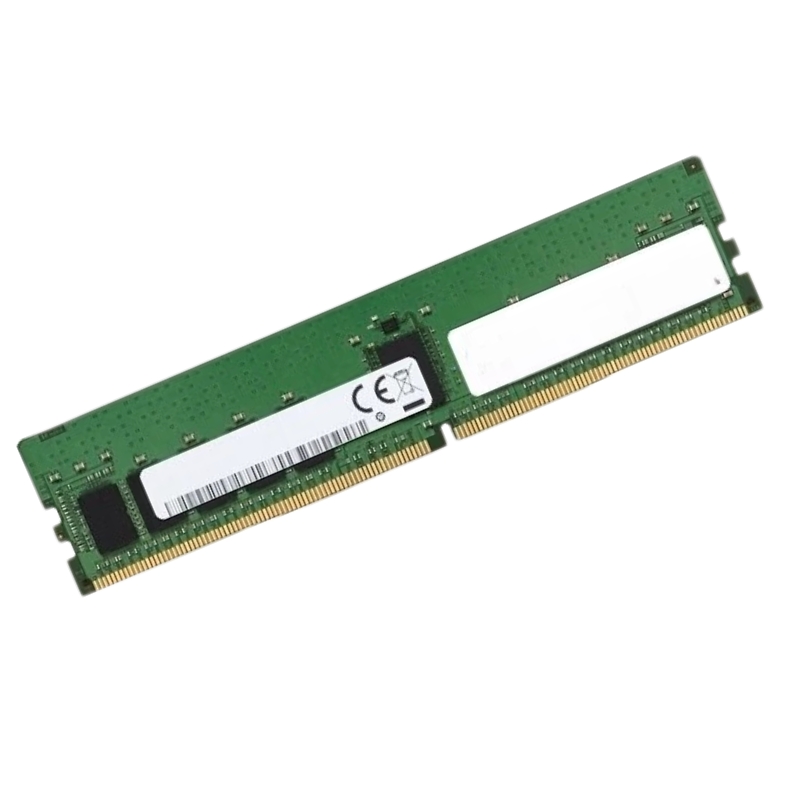
Dell 370-BCSB 64GB DDR5 5600MHz Pc5-44800 ECC Registered Cl46 SDRAM 288-pin Memory Module For Poweredge Server. New Sealed in Box (NIB) - Samsung Version
| SKU/MPN | Warranty | Price | Condition | You save |
|---|---|---|---|---|
| 370-BCSB | 1 Year Warranty | $2,688.00 | New Sealed in Box (NIB) | You save: $940.80 (26%) |
| 370-BCSB | 1 Year Warranty | $3,446.00 | New Sealed in Box (NIB) | You save: $1,206.10 (26%) |
The Dell 370-BCSB 64GB DDR5 5600MT/s RDIMM is a high-performance memory module designed to deliver exceptional speed, efficiency, and reliability for enterprise-grade servers. With advanced ECC technology and optimized DDR5 architecture, this memory ensures smooth multitasking and stability under heavy workloads.
This Dell 64GB DDR5 5600MT/s RDIMM module is fully compatible with the following Dell PowerEdge systems:
DDR5 represents the fifth generation of Double Data Rate synchronous dynamic random-access memory, marking a significant evolutionary step from previous DDR4 technology. This Dell 370-BCSB module embodies the cutting-edge advancements in memory technology specifically engineered for server environments where reliability, performance, and data integrity are paramount. DDR5 architecture introduces fundamental changes to the memory subsystem, including doubled burst length, improved channel efficiency, and onboard power management that collectively deliver substantial performance improvements over previous generations.
Error Correcting Code (ECC) memory represents a critical technology for enterprise and server environments where data corruption cannot be tolerated. The Dell 370-BCSB implements advanced ECC algorithms that can detect and correct single-bit memory errors automatically, while also detecting (though not correcting) multi-bit errors. This capability is essential for maintaining system stability and preventing data corruption in mission-critical applications, financial transactions, scientific computing, and database management where even minor memory errors could have catastrophic consequences.
ECC memory modules include additional memory chips that store special codes. When data is written to memory, the ECC algorithm calculates and stores a checksum. Upon reading the data, the system recalculates the checksum and compares it to the stored value. If a single-bit error is detected, the system automatically corrects it using the redundant information before the data is processed by the CPU. This transparent error correction occurs without any performance penalty or system interruption, ensuring continuous operation and data integrity.
The Dell 370-BCSB employs a sophisticated 2Rx4 (2 Rank by 4) architecture configuration. This design indicates the module contains two independent ranks of memory chips, with each rank organized in a x4 configuration (four data bits per chip selection). The 2Rx4 architecture provides optimal signal integrity and electrical loading characteristics, making it particularly suitable for high-density memory configurations in multi-processor server systems. This configuration allows for efficient memory access patterns and improved overall system performance compared to alternative architectures.
Within the 2Rx4 architecture, each rank operates as an independent selection unit that can be accessed by the memory controller. The x4 organization refers to the data width per DRAM chip, which affects how memory accesses are distributed across the physical chips on the module. This specific organization provides an optimal balance between performance, power consumption, and signal integrity, particularly important in systems operating at the high frequencies characteristic of DDR5 technology.
Operating at 5600MT/s (MegaTransfers per second), the Dell 370-BCSB delivers substantial bandwidth improvements over previous generation memory. The PC5-44800 designation indicates the peak transfer rate of 44,800 MB/s per module, representing a significant performance uplift that directly impacts data-intensive applications. The CL46 timing (CAS Latency 46) must be understood in the context of the higher operating frequency; while the absolute latency in clock cycles is higher than DDR4 modules, the actual time delay is comparable or improved due to the much faster clock cycles of DDR5 technology.
The theoretical peak bandwidth of 44,800 MB/s is calculated based on the transfer rate of 5600 MT/s across the 64-bit data interface. In practical applications, actual achievable bandwidth depends on numerous factors including memory controller efficiency, system architecture, and workload characteristics. However, this substantial bandwidth enables faster data processing for memory-intensive applications such as virtualization, database operations, scientific simulations, and high-performance computing workloads.
The module utilizes the standard 288-pin RDIMM form factor, specifically designed for server environments. The physical layout ensures proper compatibility with Dell PowerEdge and other compatible server platforms. Operating at 1.1 volts represents a significant reduction from DDR4's 1.2V operation, contributing to improved power efficiency and reduced thermal output. This lower voltage operation is particularly important in dense server configurations where power consumption and heat dissipation are critical design constraints.
DDR5 introduces sophisticated power management capabilities through the Power Management IC (PMIC) located on the memory module itself. This represents a fundamental architectural shift from previous generations where power management was primarily handled by the motherboard. The onboard PMIC enables more precise voltage regulation, better power delivery efficiency, and improved stability, particularly important during power state transitions and in systems with numerous installed modules.
In virtualized infrastructure, memory capacity and reliability are often the limiting factors for virtual machine density. The 64GB capacity of the Dell 370-BCSB makes it ideal for virtualization hosts running VMware vSphere, Microsoft Hyper-V, or other hypervisors. The ECC protection ensures the stability of multiple virtual machines, while the high bandwidth supports memory-intensive virtualized applications. The module's reliability characteristics are particularly valuable in environments where hardware failures would impact multiple business-critical services simultaneously.
With 64GB per module, a typical dual-processor server with 16 memory slots can support up to 1TB of memory using these modules. This capacity enables substantial virtual machine density, potentially hosting dozens to hundreds of virtual machines depending on their individual memory requirements. The ECC protection becomes increasingly important as VM density increases, since memory errors could potentially affect multiple business services simultaneously.
Database servers, particularly in-memory databases like SAP HANA or large Microsoft SQL Server instances, benefit significantly from the combination of high capacity, high bandwidth, and ECC protection offered by the Dell 370-BCSB. The module's performance characteristics directly impact query performance, transaction throughput, and overall database responsiveness. For database applications, the data integrity ensured by ECC technology is non-negotiable, as memory corruption could lead to catastrophic database corruption.
In technical computing environments such as computational fluid dynamics, finite element analysis, weather modeling, and genomic sequencing, large memory capacity and high bandwidth are essential for processing massive datasets. The Dell 370-BCSB's specifications make it suitable for HPC clusters and workstations where computational accuracy and performance are critical. The ECC protection is particularly valuable in scientific computing where undetected memory errors could compromise research results or simulations requiring days or weeks of computation time.
For memory-bound applications where performance is limited by memory bandwidth rather than processor speed, the 5600MT/s data rate of the Dell 370-BCSB provides tangible performance benefits. Applications such as large-scale matrix operations, image processing, and data analytics typically show performance scaling directly correlated with memory bandwidth improvements, making these modules particularly effective for such workloads.
The transition from DDR4 to DDR5 represents one of the most significant generational improvements in memory technology. While DDR4 typically operates at voltages around 1.2V with maximum speeds around 3200MT/s, DDR5 operates at 1.1V with speeds starting at 4800MT/s and extending beyond 5600MT/s. Beyond the raw speed increase, DDR5's architectural improvements including doubled burst length, more bank groups, and onboard power management contribute to substantial real-world performance gains, particularly in multi-threaded server workloads.
The Dell 370-BCSB's 5600MT/s operation provides approximately 75% more theoretical bandwidth than DDR4-3200, while operating at lower voltage for improved power efficiency. This combination of higher performance and lower power consumption is particularly valuable in data center environments where both computational throughput and operational costs are critical considerations.
Registered (buffered) memory, as used in the Dell 370-BCSB, includes register chips that buffer the command and address signals between the memory controller and the DRAM chips. This reduces the electrical load on the memory controller, enabling support for higher memory capacities and more memory modules per channel. In contrast, unbuffered memory provides slightly lower latency but supports fewer modules and lower total capacity. For server applications requiring large memory configurations, registered memory is the preferred and often required solution.
While both RDIMMs and LRDIMMs are registered modules, LRDIMMs include additional buffering on the data signals as well, further reducing electrical load and enabling even higher capacity memory configurations. The Dell 370-BCSB as an RDIMM provides an optimal balance between performance, capacity, and cost for most enterprise applications, while LRDIMMs are typically reserved for maximum capacity configurations where the additional cost is justified by the capacity requirements.
The Dell 370-BCSB is designed and tested to meet rigorous enterprise reliability standards. The modules undergo extensive compatibility testing, thermal validation, and signal integrity analysis to ensure stable operation in demanding server environments. This comprehensive validation process differentiates genuine Dell memory from aftermarket alternatives, ensuring optimal compatibility and reliability in Dell PowerEdge systems.
Despite operating at lower voltage than previous generations, the high-density design of the 64GB DDR5 module requires effective thermal management. The module includes thermal sensors that monitor operating temperature and can communicate with the system management controller to trigger thermal throttling if necessary to maintain safe operating conditions. Proper system airflow is essential for maintaining optimal memory performance and reliability, particularly in densely populated configurations.


 Contact Us
 Information
 Catalog
 Solid State Drives (SSD)
 Network Switches
 Hard Disk Drives
 HBA & Controllers
 PC & Servers
 PC & Server Memory
 CPU & Processors
 Network Routers
 Power Supplies
 Tape Drives & Libraries
 Network Devices
 Computer & Network Cables