
(7% discount is applied at checkout)
Cart is empty
Your go-to destination for cutting-edge server products
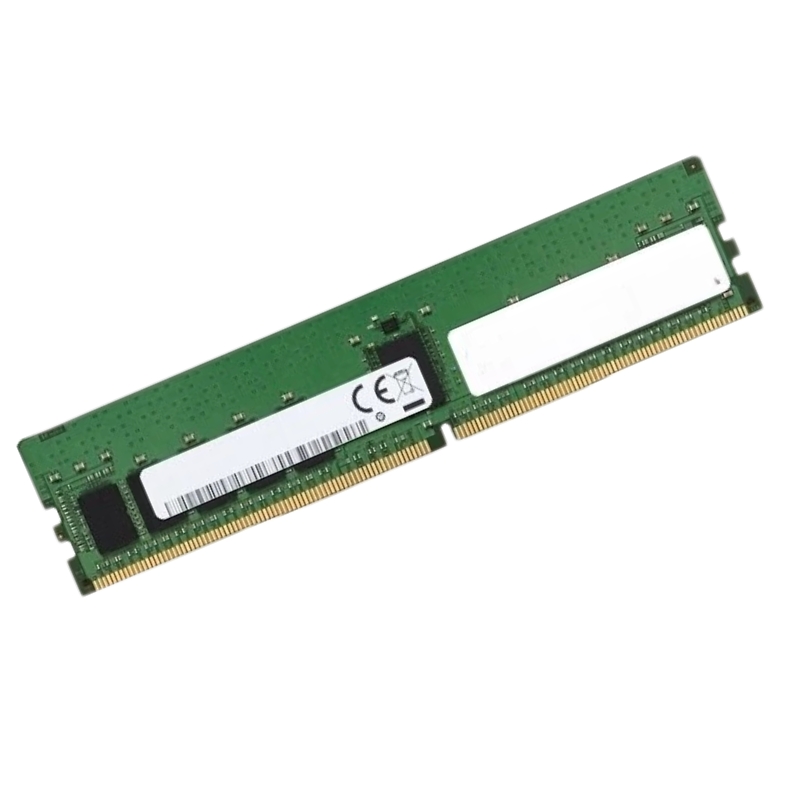
Dell 370-BCSL 64GB DDR5 5600MHz PC5-44800 2rx4 Ecc Registered 1.1v Cl46 SDRAM 288-pin RDIMM Memory Module. New (System) Pull with 1 year replacement warranty - Samsung Version
| SKU/MPN | Warranty | Price | Condition | You save |
|---|---|---|---|---|
| 370-BCSL | 1 Year Warranty | $2,688.00 | New (System) Pull | You save: $940.80 (26%) |
| 370-BCSL | 1 Year Warranty | $3,446.00 | New Sealed in Box (NIB) | You save: $1,206.10 (26%) |
The Dell 370-BCSL 64GB (1x64GB) DDR5 5600MT/s PC5-44800 2Rx4 ECC Registered 1.1V CL46 SDRAM 288-Pin RDIMM Memory Module delivers cutting-edge performance and exceptional reliability for demanding enterprise workloads. Designed specifically for Dell PowerEdge servers, this memory module ensures seamless compatibility, higher bandwidth, and optimized energy efficiency.
This DDR5 memory module is fully compatible with a wide range of Dell PowerEdge servers to ensure optimal system performance and stability.
The transition from DDR4 to DDR5 represents the most significant advancement in server memory technology in nearly a decade. DDR5 memory modules, such as the Dell 370-BCSL, deliver substantial improvements in performance, power efficiency, and reliability compared to their DDR4 predecessors. While DDR4 typically operated at voltages around 1.2V, DDR5 achieves higher speeds at just 1.1V, representing a notable reduction in power consumption that translates to lower operational costs and reduced heat generation in data center environments.
DDR5 introduces several architectural innovations that fundamentally change how memory subsystems operate. The most significant change is the relocation of the power management integrated circuit (PMIC) from the motherboard to the memory module itself. This distributed power architecture allows for more precise voltage regulation and better power delivery efficiency. Additionally, DDR5 features burst length doubling to BL16 and same-bank refresh commands that improve overall memory efficiency and reduce latency during critical operations.
The Dell 370-BCSL leverages DDR5's improved signal integrity features including decision feedback equalization (DFE) which enables higher data rates while maintaining signal quality. The module's 5600MT/s data rate represents a significant boost over DDR4's maximum official speed of 3200MT/s, providing approximately 75% more bandwidth for memory-intensive applications and workloads.
The Dell 370-BCSL incorporates Error Correcting Code (ECC) technology, a critical feature for enterprise and data center environments where data integrity is paramount. ECC memory detects and corrects single-bit memory errors in real-time, preventing data corruption and system crashes that can result from soft errors caused by cosmic radiation, electrical interference, or other environmental factors. This capability is essential for applications requiring maximum uptime and data accuracy, including financial transactions, scientific computing, and database management systems.
ECC functionality works by adding extra bits to each memory word, creating a checksum that validates data integrity with each memory access. When data is written to memory, the ECC algorithm calculates and stores check bits alongside the data. Upon reading the data, the system recalculates the check bits and compares them to the stored values. If a single-bit error is detected, the system automatically corrects it without interrupting operations. For multi-bit errors, the system can flag the error and prevent corrupted data from propagating through the system.
The "Registered" designation in RDIMM indicates that the memory module includes register chips between the memory controller and the DRAM chips. These registers buffer the command and address signals, reducing the electrical load on the memory controller and enabling support for higher memory capacities per channel. The Dell 370-BCSL utilizes this technology to maintain signal integrity while supporting dense memory configurations that would be impossible with unbuffered modules.
Registered memory modules provide several advantages in server environments. By reducing the electrical load on the memory controller, RDIMMs allow systems to support more memory modules per channel while maintaining stable operation at higher speeds. This architecture also decreases power consumption compared to loading the memory controller directly with numerous DRAM chips. For the Dell 370-BCSL, this means reliable operation in multi-DIMM configurations essential for memory-intensive applications like virtualization, in-memory databases, and high-performance computing clusters.
The Dell 370-BCSL represents a specific configuration within Dell's server memory portfolio, engineered for compatibility and performance in Dell PowerEdge servers. With its 64GB capacity provided in a single 1x64GB configuration, this module offers flexibility for both capacity upgrades and new server deployments.
The 5600MT/s data rate of the Dell 370-BCSL represents the number of data transfers the module can perform per second, with "MT/s" standing for MegaTransfers per second. In DDR (Double Data Rate) technology, data is transferred on both the rising and falling edges of the clock signal, effectively doubling the data rate compared to the actual clock frequency. Therefore, a 5600MT/s module operates with a 2800MHz clock frequency while achieving 5600 million transfers per second.
The PC5-44800 designation refers to the peak theoretical bandwidth of the module. To calculate this value, we multiply the data rate (5600MT/s) by the module's data width (64 bits) and convert to bytes (divided by 8). This gives us: 5600 MT/s × 64 bits ÷ 8 = 44,800 MB/s or approximately 44.8 GB/s of theoretical peak bandwidth per module. When installed in multi-channel configurations, this bandwidth multiplies accordingly, providing massive aggregate memory bandwidth for data-intensive workloads.
The 2Rx4 designation indicates a dual-rank module with x4 DRAM organization. "Dual rank" means the module has two independent sets of memory chips that share the same memory channel but can be accessed separately, improving memory access efficiency through interleaving. The "x4" refers to the organization of the individual DRAM chips, indicating they have a 4-bit data width. This organization is particularly beneficial for server workloads as it reduces the load on the memory bus and enables better signal integrity at high speeds compared to x8 organization.
In the Dell 370-BCSL's 2Rx4 configuration, each rank operates independently, allowing the memory controller to access one rank while preparing another for the next operation. This parallelization improves overall memory efficiency and reduces effective latency. The module's internal bank structure has also been enhanced in DDR5, with bank groups increasing to 8 (up from 4 in DDR4), further improving parallelism and reducing contention between memory accesses.
The CL46 CAS Latency specification indicates the number of clock cycles between when a read command is issued and when the data becomes available. At 5600MT/s with a real clock frequency of 2800MHz, each clock cycle is approximately 0.357 nanoseconds. Therefore, a CAS Latency of 46 cycles translates to an absolute latency of approximately 16.4 nanoseconds. While this absolute latency is slightly higher than some DDR4 modules, the significantly increased bandwidth of DDR5 provides better overall performance for most server workloads, which are typically bandwidth-bound rather than latency-bound.
Beyond CAS Latency, the Dell 370-BCSL operates with a comprehensive set of timing parameters that optimize performance for server workloads. These include tRCD (RAS to CAS Delay), tRP (RAS Precharge Time), and tRAS (Active to Precharge Delay), all carefully calibrated to balance performance and stability in enterprise environments. The module's SPD (Serial Presence Detect) contains these timing parameters, allowing compatible systems to automatically configure the memory for optimal operation.
The Dell 370-BCSL delivers performance improvements across a wide range of server workloads, with particularly significant benefits for applications that are memory bandwidth-constrained. The module's 5600MT/s data rate and improved DDR5 architecture provide substantial advantages for data-intensive computing tasks common in modern enterprise environments.
In virtualized environments, memory bandwidth and capacity are critical factors determining virtual machine density and performance. The Dell 370-BCSL's 64GB capacity per module enables high VM densities, while the improved bandwidth of DDR5 ensures responsive performance even under heavy consolidation ratios. The module's ECC protection is particularly valuable in virtualization scenarios where multiple workloads share physical memory resources.
For in-memory database platforms like SAP HANA, Oracle Database In-Memory, or SQL Server In-Memory OLTP, memory bandwidth directly correlates with query performance and transaction throughput. The Dell 370-BCSL's PC5-44800 bandwidth provides the high-speed data access these platforms require, while the large 64GB module capacity enables substantial in-memory datasets without sacrificing performance.
In scientific computing and engineering simulation workloads, memory bandwidth often limits overall application performance. The Dell 370-BCSL's advanced DDR5 architecture delivers the bandwidth necessary for complex computational tasks, finite element analysis, computational fluid dynamics, and other memory-intensive HPC applications. The module's ECC protection ensures computational integrity for sensitive scientific calculations.
Beyond raw performance, the Dell 370-BCSL offers enterprise-grade reliability features essential for business-critical applications. The combination of ECC error correction and registered architecture provides a foundation for highly available systems with minimized downtime due to memory-related issues. These features are particularly valuable in environments where system availability directly impacts business operations or revenue generation.
While all electronic components have a finite lifespan, the Dell 370-BCSL is designed and tested to meet rigorous enterprise reliability standards. The module's 1.1V operating voltage reduces electrical stress on memory components compared to higher-voltage alternatives, potentially extending operational lifespan. Additionally, the module's thermal design ensures proper heat dissipation under sustained heavy workloads, further enhancing reliability.
When compared to previous-generation DDR4 memory, the Dell 370-BCSL offers substantial improvements across multiple performance dimensions. The transition from DDR4's typical 3200MT/s to DDR5's 5600MT/s represents a 75% increase in data rate, while the architectural improvements in bank groups, burst length, and command structure provide additional efficiency gains. For most server workloads, these improvements translate to significantly better performance, particularly in memory-bandwidth-constrained scenarios.
The Dell 370-BCSL operates at 1.1V compared to DDR4's typical 1.2V, representing an 8.3% reduction in operating voltage. When combined with the improved efficiency of DDR5 architecture, this lower voltage translates to better performance per watt—a critical consideration for large-scale deployments where power and cooling costs represent significant operational expenses.
Within the server memory ecosystem, the Dell 370-BCSL occupies the RDIMM (Registered DIMM) category, which balances performance, capacity, and cost. An alternative architecture, LRDIMM (Load Reduced DIMM), uses additional buffering to support even higher memory capacities but typically introduces slightly higher latency and cost. For most applications, RDIMMs provide the optimal balance of performance and capacity, making them the preferred choice for general-purpose server deployments.
While LRDIMMs can support higher capacities per module, the Dell 370-BCSL's 64GB capacity represents a sweet spot for many server configurations. This capacity allows substantial total memory in typical 16- or 32-slot servers (1-2TB per processor) while maintaining excellent performance characteristics. The 2Rx4 organization provides better signal integrity than higher-density modules, enabling stable operation at the full 5600MT/s speed rating.


 Contact Us
 Information
 Catalog
 Solid State Drives (SSD)
 Network Switches
 Hard Disk Drives
 HBA & Controllers
 PC & Servers
 PC & Server Memory
 CPU & Processors
 Network Routers
 Power Supplies
 Tape Drives & Libraries
 Network Devices
 Computer & Network Cables