(7% discount is applied at checkout)
Cart is empty
Your go-to destination for cutting-edge server products
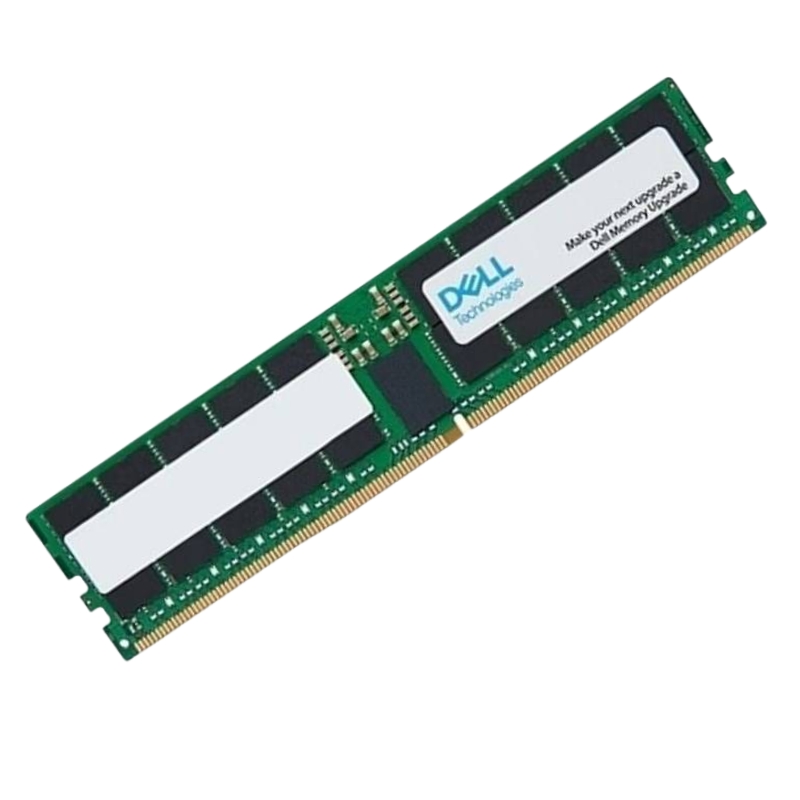


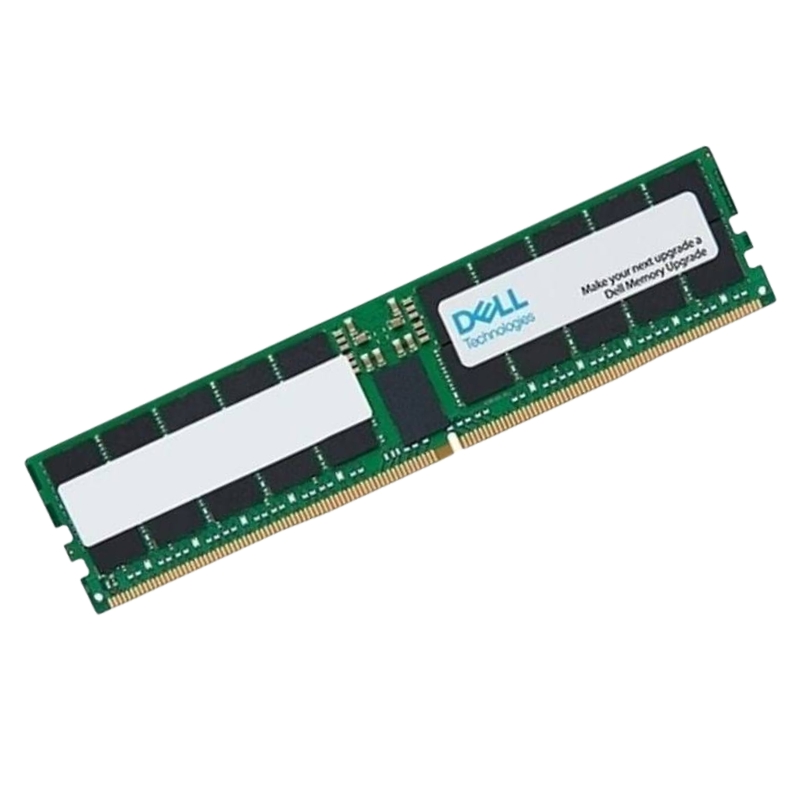
Dell 370-BDBL 64GB PC5-51200 6400MHz Cl52 Ecc Registered Dual Rank X4 1.2v DDR5 SDRAM 288-pin RDIMM Server Memory Module. New Sealed in Box (NIB) - Samsung Version
The Dell 370-BDBL 64GB DDR5 6400MHz CL52 ECC Registered Dual Rank x4 1.2V RDIMM Server Memory Module is a premium, enterprise-grade memory designed to deliver exceptional reliability and performance for demanding server applications. Built by Dell, a global leader in IT hardware innovation, this high-capacity DDR5 module ensures faster data transfer, superior stability, and efficient power management for modern data centers.
This Dell 64GB DDR5 ECC Registered RDIMM is certified for use in a range of Dell PowerEdge servers, ensuring seamless integration and optimal performance.
The transition from DDR4 to DDR5 represents the most significant advancement in server memory technology in nearly a decade. DDR5 memory, such as the Dell 370-BDBL, delivers substantial improvements in performance, power efficiency, and reliability compared to previous generations. While DDR4 typically operated at voltages around 1.2V with speeds up to 3200MT/s, DDR5 introduces a fundamental architectural shift with its 1.1V operating voltage and dramatically increased data rates starting at 4800MT/s and scaling beyond 6400MT/s. This generational leap enables data centers to process more information simultaneously while reducing overall power consumption—a critical consideration in modern computing environments where energy costs and thermal management directly impact operational expenses.
DDR5 incorporates several groundbreaking architectural changes that differentiate it from previous memory technologies. The most notable innovation is the implementation of two independent 32-bit data channels per DIMM (compared to DDR4's single 64-bit channel), effectively doubling the burst length from 8 bytes to 16 bytes. This dual-channel architecture enables more efficient data transfer and reduces latency in memory-intensive applications. Additionally, DDR5 moves the power management IC (PMIC) from the motherboard to the memory module itself, allowing for more precise voltage regulation and improved power delivery efficiency. These architectural enhancements, combined with higher densities and improved error correction capabilities, make DDR5 the ideal solution for memory-bound workloads in modern server environments.
The product name "Dell 370-BDBL 64GB PC5-51200 6400MHz CL52 ECC Registered Dual Rank X4 1.2V DDR5 SDRAM 288-pin RDIMM" contains detailed technical information about the memory module. "PC5-51200" indicates the module's theoretical peak transfer rate of 51200 MB/s, while "6400MHz" refers to the data rate in megatransfers per second. "CL52" denotes the CAS latency timing of 52 clock cycles—a specification that represents the delay between when a memory controller requests data and when it becomes available. The "Dual Rank" designation means the module has two sets of memory chips that can be accessed independently, improving performance through interleaving. "X4" refers to the organization of the DRAM chips (4-bit wide), and "1.2V" specifies the operating voltage. The "288-pin RDIMM" indicates the physical connector type (288 pins) and module type (Registered DIMM), which is specifically designed for server applications requiring high reliability and capacity.
CAS Latency (CL52 in the case of the Dell 370-BDBL) is one of the most discussed memory timing parameters, representing the number of clock cycles between when a read command is issued and when the data becomes available. While higher CAS latency numbers might suggest slower performance, this must be considered in the context of the much higher clock speeds of DDR5 memory. The actual time delay in nanoseconds is calculated by dividing the CAS latency by the clock frequency. For the Dell 370-BDBL operating at 6400MT/s with CL52, the actual latency is approximately 16.25 nanoseconds—comparable to or better than many DDR4 modules when measured in absolute time rather than clock cycles. This combination of high speed and optimized timings ensures responsive performance even in latency-sensitive applications.
The Dell 370-BDBL's PC5-51200 rating translates to a theoretical peak bandwidth of 51.2 GB/s per module. This substantial bandwidth enables servers to handle more simultaneous operations and process data more efficiently, directly impacting application performance and user experience. In a typical server configuration with multiple memory channels (often 8 or 12 channels in modern server platforms), the aggregate memory bandwidth can exceed 400 GB/s, eliminating memory bottlenecks for even the most demanding workloads. This level of performance is essential for applications such as in-memory databases, real-time analytics, scientific simulations, and AI inference engines where memory bandwidth often limits overall system throughput. The 64GB capacity per module also means that servers can achieve substantial total memory capacities with fewer DIMM slots, providing flexibility for future expansion and optimization of memory configurations.
In high-performance computing (HPC) environments, memory bandwidth and capacity are often the limiting factors in application performance. The Dell 370-BDBL's 64GB capacity and 6400MHz operating speed make it ideally suited for scientific simulations, computational fluid dynamics, weather modeling, and other HPC workloads that process massive datasets. The ECC protection ensures computational integrity over extended runtimes, which is critical when simulations may run for days or weeks. The high bandwidth enables faster data movement between processors and memory, reducing time-to-solution for complex calculations. Research institutions and universities deploying Dell PowerEdge servers with 370-BDBL memory modules can achieve significant performance improvements in applications ranging from genomic sequencing to astrophysical modeling, accelerating the pace of scientific discovery.
Virtualized environments place unique demands on server memory, requiring high density, reliability, and consistent performance across diverse workloads. The 64GB capacity of the Dell 370-BDBL allows virtualization hosts to support more virtual machines per server, improving consolidation ratios and reducing total cost of ownership. The high memory bandwidth ensures that virtual machines can access memory resources efficiently, even during periods of high contention. For cloud service providers and enterprise IT departments managing large virtualized infrastructures, deploying Dell 370-BDBL modules in PowerEdge servers enables higher VM density, improved application performance, and enhanced reliability through advanced ECC protection. The modules' compatibility with Dell's management ecosystem also simplifies capacity planning, monitoring, and maintenance in large-scale deployments.
Modern database management systems, whether traditional relational databases or emerging NoSQL platforms, are heavily dependent on memory performance and capacity. The Dell 370-BDBL's combination of high bandwidth and large capacity makes it particularly well-suited for in-memory databases such as SAP HANA, Oracle Database In-Memory, and Microsoft SQL Server with In-Memory OLTP. These systems maintain entire datasets or frequently accessed portions in memory to eliminate storage I/O bottlenecks, dramatically accelerating query performance and transaction processing. The ECC protection is especially critical in database environments where data integrity is non-negotiable. For e-commerce platforms, financial trading systems, and enterprise resource planning (ERP) applications, deploying Dell 370-BDBL memory in PowerEdge servers can reduce transaction latency, support more concurrent users, and ensure business continuity through enhanced reliability.
AI and machine learning workloads present unique memory requirements, particularly during the training phase where large datasets must be processed iteratively. While GPUs typically handle the core computation in AI training, the CPU and system memory play crucial roles in data preparation, model management, and inference operations. The Dell 370-BDBL's high bandwidth enables faster data loading and preprocessing, reducing the time spent in data pipeline operations. For inference workloads deployed at scale, the memory capacity allows larger models to be kept readily available, improving throughput and reducing latency. The ECC protection ensures model integrity throughout extended training sessions that might run for days or weeks. Research organizations and enterprises developing AI solutions can leverage Dell PowerEdge servers equipped with 370-BDBL memory to accelerate model development and deployment across various applications from natural language processing to computer vision.
The Dell 370-BDBL incorporates sophisticated error correction mechanisms that go beyond basic ECC capabilities. In addition to single-bit error correction and double-bit error detection, these modules support additional reliability features such as command/address parity detection and on-die ECC. Command/address parity helps protect against errors in the memory controller's communication with the DIMM, while on-die ECC corrects errors within individual DRAM chips before they can affect system-level data integrity. These multi-layered protection mechanisms make DDR5 RDIMMs exceptionally reliable, with calculated failure rates significantly lower than non-ECC memory. For enterprise applications where system availability measured in "nines" (99.999% uptime or better) is a business requirement, this level of memory reliability is not just a feature—it's a necessity.
Despite operating at lower voltages than previous generations, DDR5 memory modules like the Dell 370-BDBL still generate significant heat, particularly when operating at high utilization in optimized server configurations. Proper thermal management is essential for maintaining performance and reliability over the module's operational lifespan. Dell PowerEdge servers incorporate sophisticated thermal control systems that monitor memory temperature through integrated thermal sensors and adjust cooling accordingly. The 370-BDBL modules themselves include a thermal sensor that provides real-time temperature data to the system management controller. This enables proactive cooling adjustments to prevent thermal throttling and ensure consistent performance. In high-ambient temperature environments or densely configured servers, additional cooling considerations may be necessary to maintain optimal operating temperatures below the maximum specified threshold of 85°C.
Modern server platforms typically feature multiple memory channels per processor, with current-generation Intel Xeon Scalable processors supporting up to 8 memory channels. Proper utilization of these channels is critical for achieving maximum memory performance. When configuring Dell PowerEdge servers with 370-BDBL memory modules, populating all available memory channels—even with lower capacity modules—often delivers better performance than populating fewer channels with higher capacity modules. This approach maximizes parallelism and increases aggregate memory bandwidth. For memory-intensive applications, a balanced configuration across all channels typically yields the best results. Additionally, understanding the memory interleaving capabilities of the platform and configuring memory appropriately can further enhance performance by distributing memory accesses across multiple physical modules simultaneously.
Different applications have distinct memory access patterns that benefit from specific memory configurations. For latency-sensitive workloads such as database transaction processing or real-time analytics, optimizing for lower effective latency may be more important than maximizing raw bandwidth. This might involve selecting memory modules with tighter timings or configuring memory interleaving to minimize access contention. For bandwidth-intensive applications like scientific computing or video encoding, maximizing the number of populated memory channels and utilizing the highest speed modules supported by the platform typically delivers the best performance. Virtualization hosts often benefit from maximizing total memory capacity to support higher consolidation ratios, potentially accepting slightly lower bandwidth per DIMM in exchange for greater total capacity. Understanding the specific requirements of your workloads enables informed decisions when configuring Dell PowerEdge servers with 370-BDBL memory modules.


 Contact Us
 Information
 Catalog
 Solid State Drives (SSD)
 Network Switches
 Hard Disk Drives
 HBA & Controllers
 PC & Servers
 PC & Server Memory
 CPU & Processors
 Network Routers
 Power Supplies
 Tape Drives & Libraries
 Network Devices
 Computer & Network Cables