(7% discount is applied at checkout)
Cart is empty
Your go-to destination for cutting-edge server products
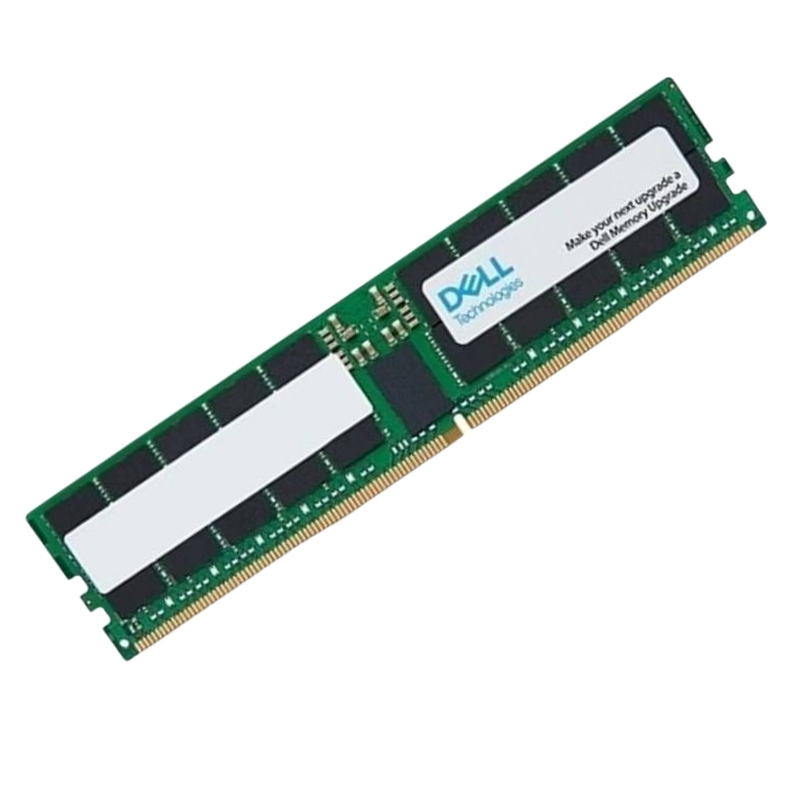


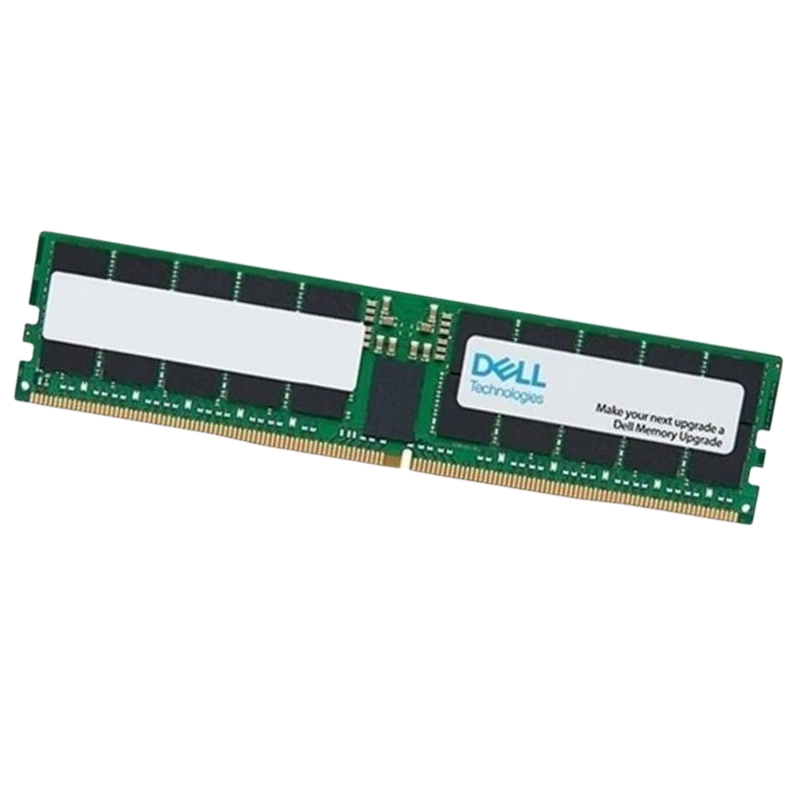
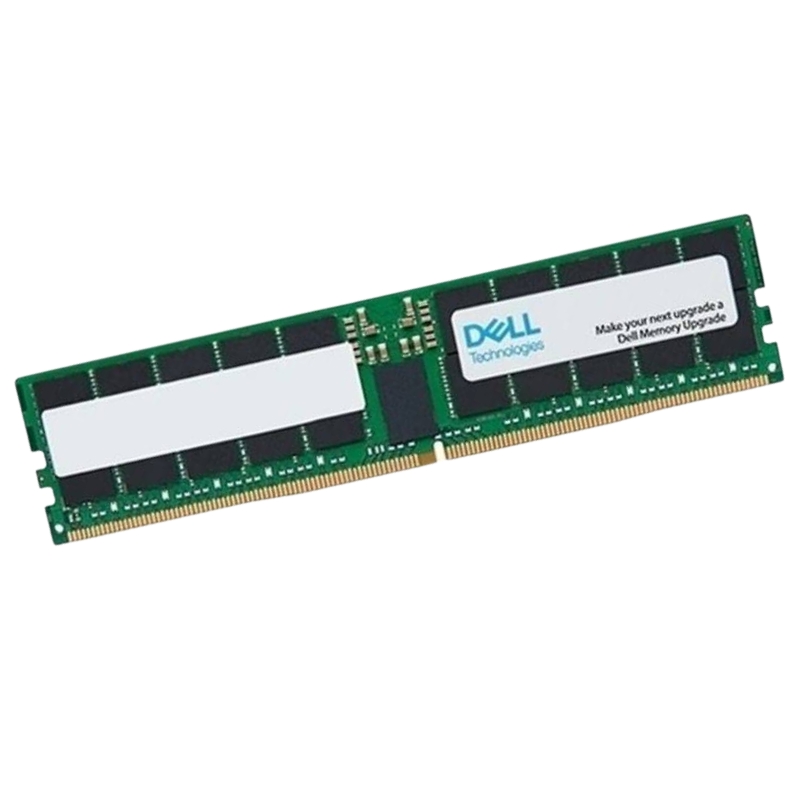
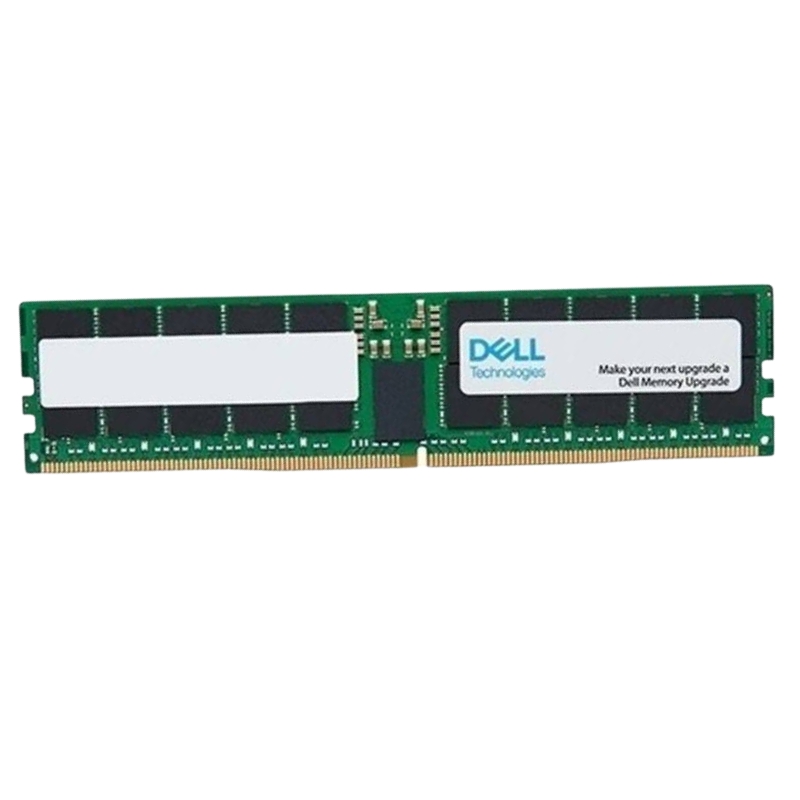
Dell 370-BDBP 32GB 6400MHz PC5-51200 Ecc Registered Dual Rank X8 Cl22 1.1v DDR5 SDRAM 288-pin RDIMM Memory Module For Server. New (System) Pull with 1 year replacement warranty - Samsung Version
| SKU/MPN | Warranty | Price | Condition | You save |
|---|---|---|---|---|
| 370-BDBP | 1 Year Warranty | $2,880.00 | New Sealed in Box (NIB) | You save: $1,008.00 (26%) |
| 370-BDBP | 1 Year Warranty | $2,304.00 | New (System) Pull | You save: $806.40 (26%) |
Upgrade your server performance with the Dell 370-BDBP 32GB DDR5 SDRAM module. This high-speed, error-correcting memory module is engineered for enterprise-class systems and delivers reliable, low-latency performance at 6400 MT/s (DDR5-6400 / PC5-51200).
Designed and validated for select Dell PowerEdge platforms — ideal as a direct replacement or performance upgrade.
The evolution of server memory has reached a significant milestone with the introduction of DDR5 technology, representing the most substantial architectural shift in memory design in over a decade. Dell's 370-BDBP 32GB DDR5 RDIMM exemplifies this technological leap, delivering unprecedented performance, efficiency, and reliability for modern enterprise environments, cloud infrastructure, and high-performance computing applications.
DDR5 memory technology represents a fundamental redesign of the memory architecture that powers today's most demanding computational workloads. Unlike previous incremental upgrades, DDR5 introduces architectural changes that fundamentally improve how data moves between processors and memory subsystems. For server environments where memory bandwidth often represents the primary bottleneck for application performance, the transition to DDR5 delivers transformative improvements that enable new capabilities across virtualized environments, database applications, artificial intelligence workloads, and real-time analytics platforms.
The DDR5 standard incorporates multiple innovations that collectively contribute to its significant performance advantages over previous generations. These include a redesigned command/address bus that operates at double the data rate, improved power management integrated circuits (PMICs) that enable more precise voltage regulation directly on the memory module, and doubled burst length that improves efficiency for sequential data access patterns common in server applications.
While DDR4 memory served as a reliable workhorse for data centers for many years, its architectural limitations became increasingly apparent as CPU core counts increased and application memory demands grew more intensive. DDR5 addresses these limitations through higher base speeds, improved channel efficiency, and enhanced reliability features that collectively provide the necessary foundation for next-generation server platforms to achieve their full computational potential.
The Dell 370-BDBP 32GB DDR5 RDIMM incorporates cutting-edge memory technology specifically engineered for compatibility and optimal performance within Dell PowerEdge server ecosystems. This module represents the culmination of extensive engineering collaboration between Dell and leading memory manufacturers to deliver a solution that meets the rigorous demands of enterprise deployment.
Understanding the detailed specifications of the 370-BDBP module provides insight into its performance characteristics and compatibility requirements:
With a substantial 32GB capacity per module, the 370-BDBP provides the density required for memory-intensive applications while maintaining optimal performance characteristics. The dual-rank configuration effectively increases memory bandwidth by enabling simultaneous access to different memory areas, while the x8 DRAM organization provides an optimal balance between performance, reliability, and manufacturing yield.
The 6400MHz data rate represents a significant performance uplift compared to mainstream DDR4 memory, which typically operates at 3200MHz or lower in server configurations. This doubling of the data rate directly translates to increased memory bandwidth, reducing potential bottlenecks in memory-intensive applications and enabling higher overall system performance. The PC5-51200 designation indicates a theoretical peak bandwidth of 51,200 MB/s per module, substantially higher than the PC4-25600 (25,600 MB/s) specification common in DDR4 server memory.
While the CL22 latency specification appears higher than typical DDR4 CL19 or CL20 modules, this must be considered in the context of the significantly faster clock speed. Due to the higher data rate, the actual time delay (measured in nanoseconds) for DDR5-6400 CL22 is comparable to or better than DDR4-3200 CL22, while providing double the bandwidth. This balance ensures that both bandwidth-sensitive and latency-sensitive applications benefit from the transition to DDR5 technology.
Enterprise server environments demand uncompromising data integrity and system stability, particularly as memory densities increase and cell sizes decrease with each successive memory generation. The Dell 370-BDBP incorporates advanced Error Correcting Code (ECC) and registered technology to meet these rigorous requirements for business-critical applications.
ECC technology represents a critical feature for server memory, providing the capability to detect and correct single-bit memory errors in real-time without impacting system performance or requiring operating system intervention. As memory densities increase and cell geometries shrink, the probability of soft errors caused by cosmic radiation or electrical interference increases, making ECC protection increasingly essential for maintaining data integrity.
The Dell 370-BDBP implements Chipkill technology, an advanced form of ECC that provides protection beyond standard single-error correction and double-error detection. Chipkill can correct multiple bit errors within the same memory device, effectively protecting against complete DRAM device failures. This capability is particularly valuable in mission-critical environments where memory errors could result in data corruption, system crashes, or computational errors in financial, scientific, or database applications.
In practical terms, ECC memory significantly reduces system crashes, silent data corruption, and unexpected reboots in server environments. For database applications, ECC ensures that transaction records remain uncorrupted. In virtualized environments, it protects against memory errors that could affect multiple virtual machines simultaneously. For scientific computing, it ensures the accuracy of computational results over extended calculation periods.
The "Registered" designation in RDIMM indicates the presence of a register or buffer between the memory controller and the DRAM chips. This architecture reduces the electrical load on the memory controller by buffering the command and address signals, enabling support for higher memory capacities and more memory modules per channel while maintaining signal integrity at higher data rates.
Understanding the differences between memory module types is essential for proper server configuration:
RDIMMs incorporate registers on the command/address bus while leaving the data bus unbuffered. This provides an optimal balance between performance, capacity, and cost for most enterprise server applications. The Dell 370-BDBP utilizes this architecture to support higher memory capacities while maintaining excellent performance characteristics.
UDIMMs lack any buffering between the memory controller and DRAM chips, resulting in lower latency but limited capacity scaling due to electrical loading constraints. UDIMMs are typically used in client systems and entry-level servers where maximum memory capacity is not a primary requirement.
LRDIMMs incorporate data buffers on both the command/address bus and the data bus, further reducing electrical load and enabling the highest possible memory capacities. However, this additional buffering introduces slightly higher latency and increased cost compared to RDIMMs.
The transition to DDR5 amplifies the benefits of registered architecture due to the higher data rates and increased signal integrity requirements. The RDIMM design enables more stable operation at 6400MHz and beyond, while supporting the dense memory configurations required for modern server workloads. Additionally, the reduced electrical load on the memory controller can contribute to improved power efficiency in large memory configurations.
The Dell 370-BDBP DDR5 RDIMM delivers tangible performance benefits across a wide spectrum of server workloads, from traditional enterprise applications to emerging computational paradigms. Understanding these performance characteristics helps organizations plan optimal server configurations for their specific use cases.
The transition from DDR4 to DDR5 represents the most significant generational bandwidth improvement in server memory history. Compared to DDR4-3200, the Dell 370-BDBP operating at DDR5-6400 delivers approximately double the theoretical memory bandwidth, reducing memory bottlenecks in bandwidth-constrained applications and enabling higher overall system utilization.
The performance impact of increased memory bandwidth varies by application type:
In virtualized environments, higher memory bandwidth enables higher virtual machine density and improved performance during periods of high activity. Memory-intensive operations such as virtual machine migration, memory ballooning, and memory compression benefit significantly from the increased bandwidth provided by DDR5 technology.
Database applications frequently benefit from both increased memory bandwidth and capacity. Larger in-memory databases can be supported, while query processing, join operations, and transaction logging all benefit from the reduced memory latency and increased bandwidth of DDR5 memory subsystems.
Scientific simulations, computational fluid dynamics, finite element analysis, and other HPC workloads are often strongly correlated with memory bandwidth. The transition to DDR5 can reduce computation times significantly for memory-bound applications, improving researcher productivity and computational efficiency.
While AI training workloads primarily utilize GPU memory, inference workloads and data preprocessing often occur on CPU systems with substantial memory subsystems. The increased bandwidth of DDR5 memory improves data feeding efficiency to both CPUs and accelerators, reducing preprocessing bottlenecks in machine learning pipelines.
The reduction in operating voltage from DDR4's 1.2V to DDR5's 1.1V represents a significant improvement in power efficiency, particularly important in large-scale data center deployments where memory subsystems can constitute a substantial portion of total system power consumption. This 8.3% reduction in operating voltage translates to meaningful power savings at scale, while the integrated PMIC enables more granular power management and improved power delivery efficiency.
Despite the higher data rates, DDR5 memory modules maintain manageable thermal characteristics through improved power efficiency and enhanced thermal design. The 288-pin RDIMM form factor includes provisions for optimal airflow and heat dissipation, while the reduced operating voltage contributes to lower power dissipation per module compared to equivalent-capacity DDR4 modules operating at higher voltages.
For large-scale data center deployments, the power efficiency improvements of DDR5 memory contribute directly to reduced operating expenses and improved Power Usage Effectiveness (PUE). A typical server with 512GB of memory could realize power savings of 15-20 watts compared to an equivalent DDR4 configuration, representing meaningful savings when multiplied across hundreds or thousands of servers.


 Contact Us
 Information
 Catalog
 Solid State Drives (SSD)
 Network Switches
 Hard Disk Drives
 HBA & Controllers
 PC & Servers
 PC & Server Memory
 CPU & Processors
 Network Routers
 Power Supplies
 Tape Drives & Libraries
 Network Devices
 Computer & Network Cables