(7% discount is applied at checkout)
Cart is empty
Your go-to destination for cutting-edge server products
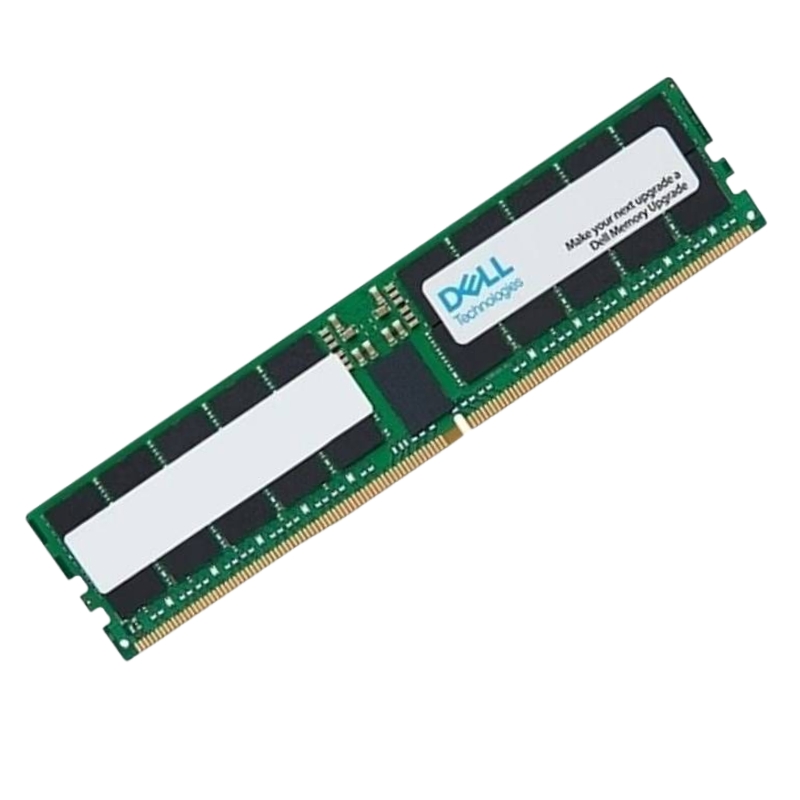


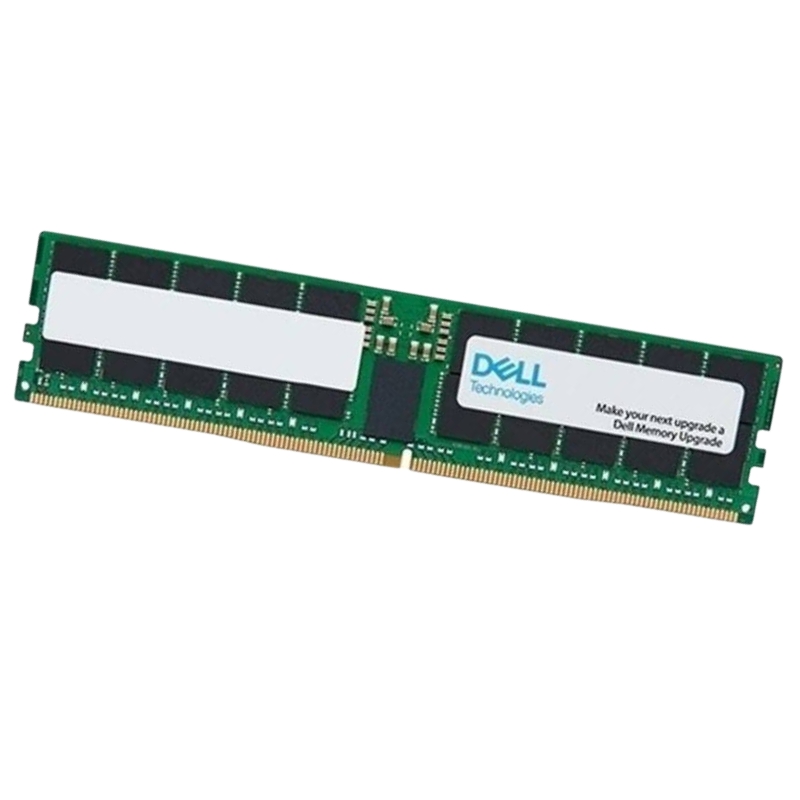
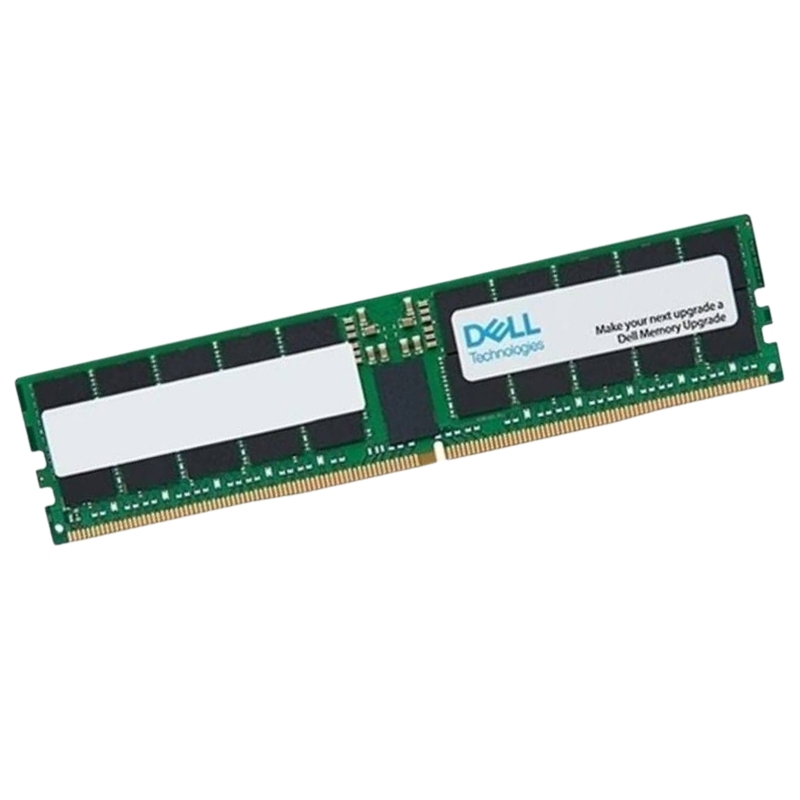
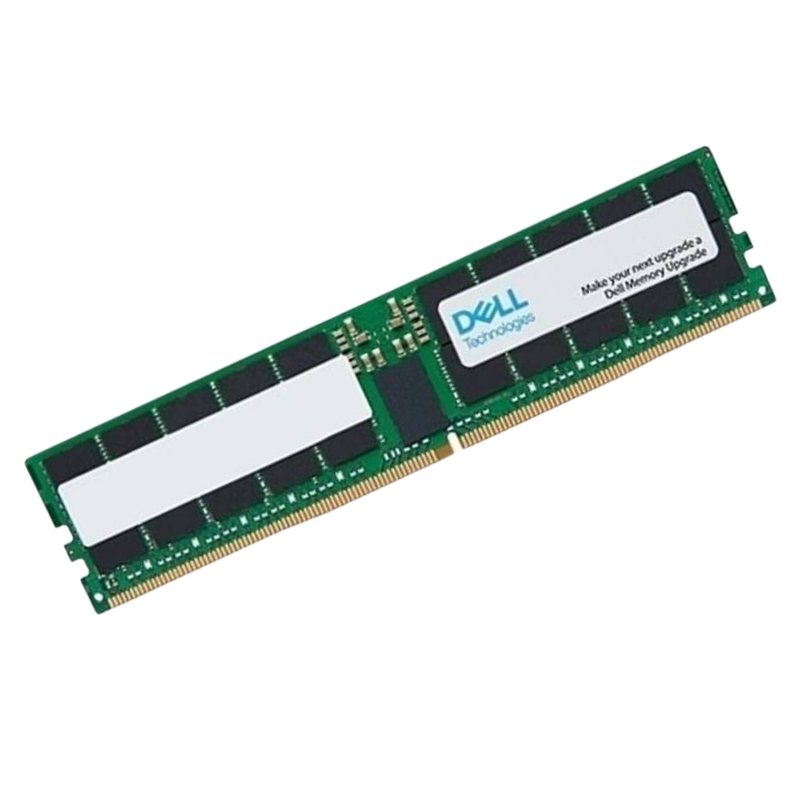
Dell 370-BDFS 96GB 6400MHz PC5-51200 Ecc Registered Dual Rank X4 Cl52 1.1v DDR5 SDRAM 288-pin RDIMM Memory Module For Server. New Sealed in Box (NIB) - Samsung Version
High-performance server memory: the Dell 370-BDFS is a 96GB DDR5 RDIMM module engineered for reliability and speed in enterprise-class systems. Ideal for database servers, virtualization hosts and mission-critical workstations requiring error-correcting, registered RAM.
Manufacturer: Dell
Part number: 370-BDFS
Product type: 96GB DDR5 SDRAM RDIMM memory module
Designed for enterprise motherboards and servers that support DDR5 RDIMM modules and ECC. Common deployments include:
The Dell 370-BDFS represents the pinnacle of server memory technology, engineered specifically for demanding enterprise environments, data centers, and high-performance computing applications. This 96GB module operates at a blazing 6400MT/s (MegaTransfers per second), delivering the bandwidth necessary to handle massive datasets, virtualization, and complex computational workloads with exceptional efficiency.
DDR5 SDRAM (Double Data Rate 5 Synchronous Dynamic Random-Access Memory) marks a significant evolutionary leap from its DDR4 predecessor. It is designed not merely as an incremental update but as a foundational shift to meet the escalating performance and capacity demands of modern server infrastructure. The architecture of DDR5 introduces several key innovations that directly translate to improved system performance, reliability, and power management.
The transition to DDR5 brings about a fundamental change in how memory subsystems are managed. Unlike DDR4, where the memory controller handled voltage regulation, DDR5 modules integrate the Power Management IC (PMIC) directly onto the memory module itself. This decentralization allows for more precise power delivery, reduced signal noise, and improved voltage regulation, which is critical for stability at high speeds and in dense memory configurations. Furthermore, DDR5's burst length is doubled to BL16, and the bank structure is increased to 32 or more banks per chip, significantly improving parallelism and overall data throughput.
The module's speed is denoted in two ways. 6400MHz refers to the data rate in MegaTransfers per second (MT/s). Due to its double data rate nature, the actual I/O clock frequency is 3200MHz, but it transfers data on both the rising and falling edges of the clock cycle, resulting in an effective 6400MT/s. The PC5-51200 designation indicates the module's theoretical peak transfer rate. Calculated as (6400 MT/s * 8 bytes per transfer) = 51,200 MB/s, or 51.2 GB/s per module. This immense bandwidth is essential for preventing CPU stalls and ensuring that processors are fed with data as quickly as they can process it.
Every aspect of the Dell 370-BDFS memory module is meticulously engineered for server-grade reliability and performance. Below is a comprehensive breakdown of its core specifications and the real-world benefits they provide.
The 96GB capacity per module is a sweet spot for modern servers, balancing high density with strong performance characteristics. This capacity allows IT administrators to build servers with massive total memory footprints using fewer DIMM slots, which can be crucial for memory-intensive applications like in-memory databases (e.g., SAP HANA), large-scale virtualization, and scientific simulations.
A "Dual Rank" module essentially presents two independent sets of memory chips to the memory controller, which it can access alternately. Think of it as having two separate "sides" of memory that the controller can switch between. This architecture increases concurrency and improves overall memory efficiency compared to a Single Rank (SR) module of the same capacity. While not as performant as a Quad Rank (QR) module in some scenarios, Dual Rank offers an excellent balance of performance, capacity, and compatibility, often allowing for higher operating speeds and more DIMMs per channel than Quad Rank configurations.
The "x4" organization refers to the data width of the individual DRAM chips on the module. Each chip has a 4-bit wide data bus. This x4 configuration is particularly important for server memory as it enables advanced reliability features like Chipkill and SDDC (Single Device Data Correction). These technologies can correct multi-bit errors and even complete chip failures, providing a level of data integrity that is non-negotiable in mission-critical environments. x4-based modules are the standard for servers where data integrity is paramount.
Memory performance is not solely defined by its clock speed; latency plays an equally critical role.
CAS Latency (CL), in this case CL52, is the number of clock cycles between the memory controller issuing a read command and the first piece of data being available. While a higher CL number might seem like a disadvantage compared to lower-latency desktop memory, it must be considered in the context of the incredibly high clock speed. The actual time delay (in nanoseconds) is calculated as (CL / Speed in MHz) * 1000. For the 370-BDFS: (52 / 6400) * 1000 = ~8.125 nanoseconds. This is a remarkably low absolute latency for a server-grade module operating at such a high frequency, ensuring responsive performance even under heavy load.
DDR5 operates at a lower voltage (1.1V) compared to DDR4 (typically 1.2V). This reduction, combined with the on-module PMIC, translates to significant power savings at scale. For a data center running thousands of servers, even a few watts saved per DIMM can result in substantial reductions in electricity costs and heat output, directly impacting the Total Cost of Ownership (TCO) and environmental footprint.
The physical and electrical design of the module ensures it integrates seamlessly into supported server platforms.
The DDR5 288-pin connector is physically different from DDR4's 288-pin design, featuring a slightly altered keying notch to prevent accidental insertion into an incompatible motherboard. The pin layout is engineered to support the higher signaling rates and new power delivery architecture of DDR5.
RDIMMs include a register, or buffer, located between the memory controller and the DRAM chips. This register buffers the command and address signals, reducing the electrical load on the memory controller. This is a cornerstone of server memory technology, as it enables the population of a much larger number of DIMMs per memory channel without degrading signal integrity. This allows servers to support the vast amounts of memory required for enterprise applications, a capability that unbuffered (UDIMM) modules cannot provide.
ECC is a non-optional feature for server memory. It allows the module to detect and correct single-bit memory errors on the fly, and detect (though not always correct) multi-bit errors. This hardware-level data integrity is crucial for preventing silent data corruption, application crashes, and system instability, which could lead to costly downtime or corrupted data sets in a business or research context.
The Dell 370-BDFS 96GB DDR5 RDIMM is not a general-purpose memory; it is a specialized component designed to excel in specific, high-demand scenarios.
Modern data centers rely heavily on virtualization platforms like VMware vSphere, Microsoft Hyper-V, and Proxmox VE. These platforms allow a single physical server to host dozens of virtual machines (VMs). Each VM requires its own allocated memory. The high density of the 96GB modules means fewer physical servers are needed to host the same number of VMs, leading to reduced hardware, power, cooling, and licensing costs. The high bandwidth ensures that "noisy neighbor" VMs do not unduly impact the performance of others, while ECC maintains the stability of the entire virtualized environment.
Applications such as SAP HANA, Oracle Database In-Memory, and Apache Spark perform their operations primarily within the system's RAM to achieve sub-second query response times. These workloads are intensely memory-bound, meaning their performance is directly limited by the amount of available memory and its speed. The 370-BDFS provides both the massive capacity to hold multi-terabyte datasets in RAM and the prodigious bandwidth of 6400MT/s to allow the CPU to process that data at the fastest possible rate, enabling real-time analytics and business intelligence.
In scientific computing, engineering simulations (CFD, FEA), and AI model training, applications often work with enormous matrices and complex models that must be loaded into memory. The speed and capacity of the system memory can be a critical bottleneck. The high bandwidth of this DDR5 memory accelerates data movement between the CPU and RAM, reducing computation time for complex algorithms and allowing researchers and engineers to achieve results faster, thereby accelerating time-to-discovery and innovation.
For large-scale file servers, email servers, and collaborative application servers (like Microsoft SharePoint), a large memory pool is used for disk caching. By storing frequently accessed data in RAM, the server can respond to user requests orders of magnitude faster than if it had to retrieve the data from physical storage (even SSDs). This significantly improves user experience and overall server responsiveness, especially in organizations with hundreds or thousands of concurrent users.


 Contact Us
 Information
 Catalog
 Solid State Drives (SSD)
 Network Switches
 Hard Disk Drives
 HBA & Controllers
 PC & Servers
 PC & Server Memory
 CPU & Processors
 Network Routers
 Power Supplies
 Tape Drives & Libraries
 Network Devices
 Computer & Network Cables