(7% discount is applied at checkout)
Cart is empty
Your go-to destination for cutting-edge server products


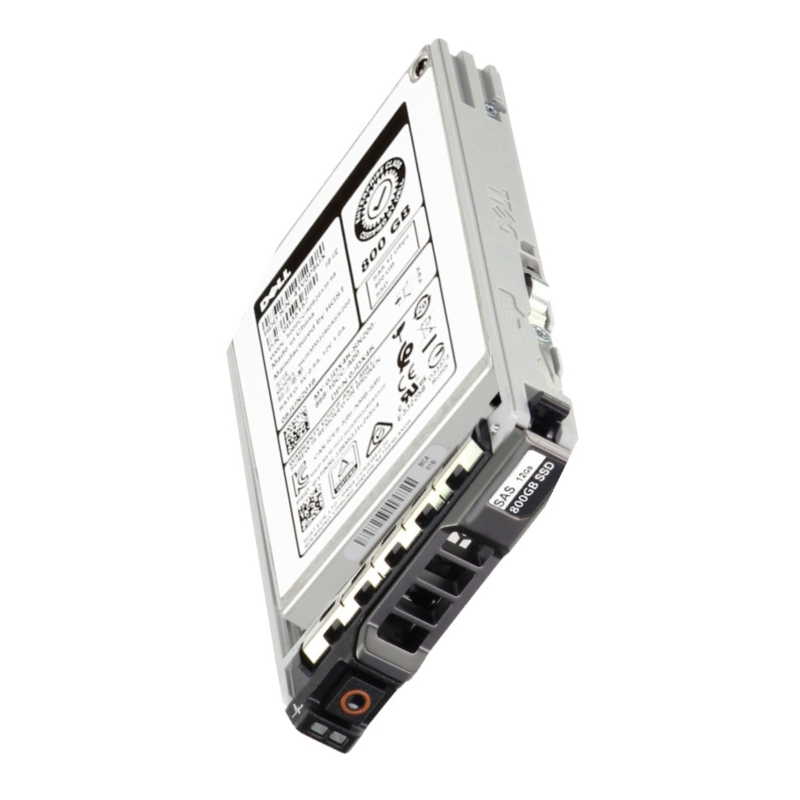
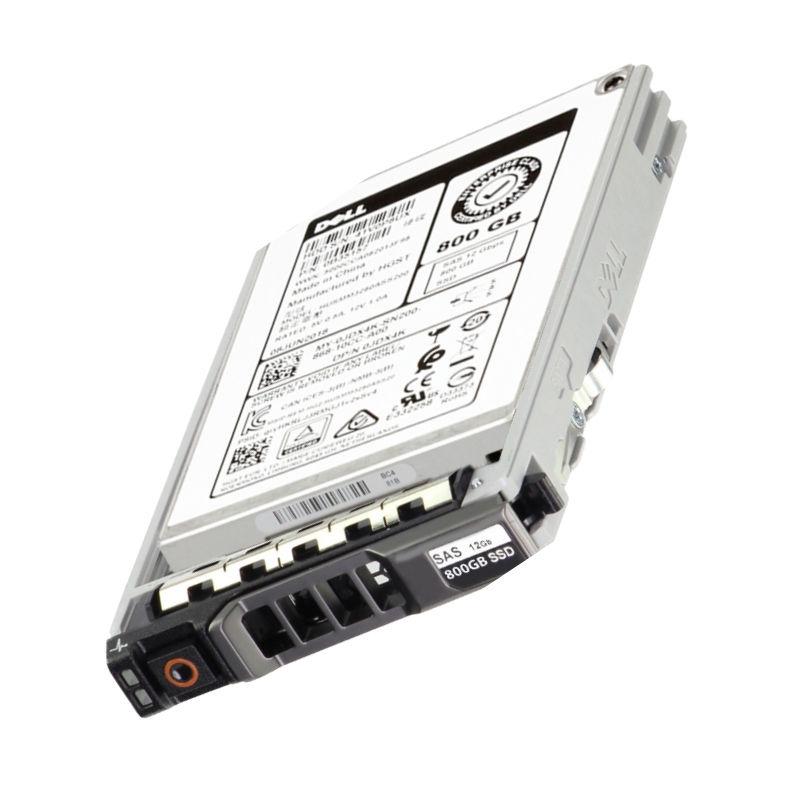
Dell 400-BFCI 800GB SAS 12GBPS Mixed Use 512E 2.5inch Hot Plug SSD. New Sealed in Box (NIB) with 1 Year Warranty
Designed For modern data center demands, the Dell 400-BFCI 800GB SAS 12Gbps Mixed Use 512E 2.5-inch Hot Plug SSD sits at the intersection of performance, endurance, and predictable latency. Optimized For mixed workload environments where read and write activities coexist, this drive is positioned as a versatile building block for tiered storage architectures, hyperconverged infrastructure nodes, database logging, and virtualized host volumes. The drive’s SAS 12Gbps interface and 512e sector emulation combine to deliver consistent throughput while maintaining broad compatibility with enterprise controllers and backplanes.
The 400-BFCI model is an 800GB capacity solid state drive that uses mixed-use flash media engineered for a balance between sustained I/O throughput and write endurance. Operating Over a 12Gbps Serial Attached SCSI (SAS) interface, the device is available in a 2.5-inch 7mm or 15mm form factor intended for hot-plug bays in enterprise servers and storage arrays. The 512e sector emulation ensures compatibility with legacy systems expecting 512-byte logical sectors while native physical sector sizes are aligned for modern flash memory blocks, improving write amplification behavior in many host workloads.
Mixed Use classification implies that the flash media inside the drive is tuned to tolerate frequent writes while still providing high read performance. This makes the drive suitable for workloads such as virtual desktop infrastructure, database application volumes, and mixed transactional workloads in cloud and enterprise settings. The endurance rating typically expressed in drive writes per day (DWPD) or total terabytes written (TBW) is calibrated to meet the lifecycle expectations of production systems; manufacturers test these drives under realistic mixed-read/write ratios to ensure predictable longevity.
The SAS 12Gbps host interface offers several advantages for enterprise deployments. SAS Provides dual-port options for multipath configurations, enabling redundancy and higher availability in clustered systems. The higher link rate reduces protocol overhead and increases available bandwidth per drive compared to older SAS revisions. When deployed on modern controllers and HBAs, the interface supports enterprise features such as zone-based security, port multipliers, and robust error recovery—facets that matter in large-scale storage deployments.
Performance For SSDs is multidimensional: sequential throughput, random IOPS, latency under load, and quality of service (QoS) under mixed workloads all contribute to perceived application performance. The Dell 400-BFCI excels at delivering consistent low-latency responses under mixed-use stress, which is essential for transactional applications and virtualized environments. Sequential Read and Write rates are optimized for large-block I/O such as database backups and streaming, while random IOPS at small block sizes are tuned to support virtual machines and application server working sets.
Consistent Latency under sustained load separates enterprise-class SSDs from consumer-grade devices. The 400-BFCI includes firmware mechanisms such as intelligent garbage collection, background wear-leveling, and thermal throttling thresholds that preserve QoS. These techniques reduce jitter during peak periods and help prevent latency spikes that can affect high-performance applications. In mixed use scenarios, predictable tail latencies are particularly important for maintaining service level agreements.
Enterprise SSDs often implement internal caching layers and write buffering strategies to smooth bursty workloads. The drive’s firmware leverages on-board DRAM (if present) or dynamic mapping tables to accelerate address translation and reduce random write amplification. These optimizations allow the device to present higher effective IOPS to the host while still maintaining endurance budgets.
Compatibility With server models, RAID controllers, and storage enclosures is a central concern for IT teams migrating to or expanding flash tiers. The 512e logical sector format improves interoperability with operating systems and applications that assume 512-byte logical sectors, while the SAS protocol ensures broad support across enterprise controllers. Dell’s validation and OEM firmware tuning often ensures that drive behavior is aligned with system-level expectations for error reporting, SMART attributes, and thermal limits.
When Installed Behind RAID controllers, SSDs behave differently than HDDs: rebuild times, background scrubbing, and write-cache policies must be carefully configured. The 400-BFCI’s mixed-use profile offers advantages in rebuild scenarios because the drive can absorb higher write throughput during data reconstruction while moderating wear through firmware-level rate limiting. For best results, administrators should consult controller vendor guidance to tune stripe sizes, write-back caching, and consistency check schedules.
Operating Systems And file systems that are flash-aware will extract better performance and longevity from enterprise SSDs. Features such as TRIM/discard (where supported in SAS drivers), alignment to physical erase block boundaries, and minimizing unnecessary write amplification on the host side improve endurance. The 512e emulation helps with logical alignment, but administrators should still validate partition alignment and workload characteristics to ensure writes are optimally aligned for NAND erase block sizes.
Mixed Use Drives shine across a spectrum of enterprise workloads. The 400-BFCI is well suited to database application servers hosting OLTP volumes with a combination of small random writes and reads. Virtualized infrastructures with many concurrent VMs benefit from the drive’s predictable IOPS and low latency. In addition, the drive can serve as a high-speed tier for caching and metadata stores in scale-out NAS systems, accelerating metadata-heavy operations that are traditionally constrained by spindle latency.
In Virtual Desktop Infrastructure and hosted desktop scenarios, initial login storms and boot storms create bursty I/O that stresses storage systems. The mixed-use profile equips the drive to handle both read-heavy boot operations and write-heavy user profile updates. As a result, provisioning pools and persistent desktops obtain improved responsiveness and reduced login times when the working set is located on appropriately sized SSD tiers.
Transactional Databases And logging subsystems require sustained random write throughput and low latency for confirming transactions. The 400-BFCI’s endurance and QoS characteristics make it a strong candidate for write-ahead logs (WAL) or transaction logs, where predictable write performance reduces application wait times. When paired with replication and backup strategies, these drives provide a reliable foundation for high-throughput OLTP systems.
Enterprise SSDs undergo specialized validation to measure endurance, failure modes, and wear characteristics under datacenter workloads. The Dell 400-BFCI will typically be specified with a warranty term and an endurance rating expressed in DWPD or TBW that aligns with enterprise lifecycle policies. Administrators should evaluate workload write amplification, provisioning strategies, and spare capacity to model expected drive lifetime and replacement cadence.
To Maintain data integrity over time, the drive’s firmware implements wear-leveling algorithms, error-correcting codes (ECC), and background scrubbing to detect and correct bit errors before they become problematic. Strong ECC capability extends usable NAND life and reduces the probability of uncorrectable errors. End-to-end data protection features, where supported by the platform, help ensure that data is protected from corruption across the host-controller-drive path.
SMART Attributes And vendor-specific telemetry give administrators signals about drive health, including metrics for reallocated sectors, media errors, temperature, and percentage of life used. Integrating these signals into monitoring frameworks enables predictive replacement and reduces the risk of unplanned outages. Regular firmware updates and vendor advisories should be part of lifecycle management to maintain compatibility and mitigate identified issues.
Thermal Behavior Is crucial in dense server environments where drive bays are closely packed. The 2.5-inch hot-plug form factor helps with airflow management, and enterprise firmware includes thermal throttling to prevent overheating. Power Consumption during active and idle states impacts server power budgets; mixed-use drives are tuned to balance performance with energy efficiency. IT teams should consider drive placement, enclosure airflow, and ambient temperature when designing systems that will host these SSDs.
Deploying SSDs at scale requires planning around airflow and heat dissipation. While SSDs generally produce less heat than spinning disks under equivalent throughput, dense blade and rack-scale systems can still create hotspots. Ensuring front-to-back airflow, maintaining recommended rack inlet temperatures, and using manufacturer-specified drive cage architectures will maximize performance and lifespan.
Firmware Plays a central role in enterprise SSD function. The 400-BFCI’s firmware provides not only performance and endurance optimizations but also manageability hooks for remote diagnostics, firmware revision control, and security. Support For secure erase functions, cryptographic erase, and secure firmware update processes allows organizations to meet data sanitization and regulatory requirements.
Security-Capable Drives Offer hardware-based encryption where the drive performs AES encryption of user data without host CPU overhead. This is important for multi-tenant environments and regulated industries where data-at-rest protections are mandated. Secure erase procedures implemented in firmware allow administrators to cryptographically erase keys or perform factory resets that render previously stored data inaccessible.
Updating Drive Firmware Requires careful orchestration. Firmware updates can address performance regressions, security vulnerabilities, or compatibility fixes. Enterprises Should validate updates in staging environments, review vendor release notes, and schedule maintenance windows to minimize disruption. Rolling update strategies and maintaining known-good firmware baselines reduce risk during mass updates across storage fleets.
Within the spectrum of enterprise SSDs, mixed-use drives such as the 400-BFCI fall between read-intensive and high-endurance devices. Read-Intensive SSDs prioritize read throughput with lower endurance, making them ideal for archival flash or caching layers with limited write activity. Conversely, high-endurance drives target write-heavy workloads such as logging or sustained database writes. The mixed-use class is aimed at the broad middle—circuits that must handle both read and write load without excessive cost.
Selection Criteria Should be guided by workload write intensity, capacity planning, and cost constraints. For workloads with very low write rates, read-optimized drives may be economical. For write-heavy analytics pipelines or all-flash databases with intensive daily writes, high-endurance drives justify their cost. Mixed-use drives offer the best compromise when workload characteristics are heterogeneous or variable.
Over-Provisioning SSDs By leaving spare space unallocated on the drive reduces write amplification and extends endurance. Vendors sometimes ship drives with factory over-provisioning; administrators can also configure logical over-provisioning at the host level. Right-sizing capacity involves modeling expected data growth and write patterns to ensure the deployed drives meet performance and endurance goals without unnecessary overspend.
As Storage Architectures Evolve toward hybrid and all-flash arrays, mixed-use SSDs are becoming a keystone technology for optimizing cost and performance across tiers. Innovations in controller algorithms, 3D NAND densities, and firmware-level intelligence continue to improve the value proposition of mixed-use devices. The market trend toward software-defined storage and NVMe under fabrics complements SAS-based solutions by offering alternative architectures for latency-sensitive applications.
When Deploying Dell 400-BFCI 800GB SAS 12Gbps Mixed Use 512E 2.5-inch Hot Plug SSDs, organizations should weigh workload characteristics, endurance requirements, and integration with existing controller and enclosure ecosystems. Properly sized and configured, these drives deliver predictable performance, balanced endurance, and high availability features suited for a wide variety of enterprise applications. Lifecycle practices, firmware management, and monitoring form the operational backbone that converts the drive’s capabilities into sustained production reliability.


 Contact Us
 Information
 Catalog
 Solid State Drives (SSD)
 Network Switches
 Hard Disk Drives
 HBA & Controllers
 PC & Servers
 PC & Server Memory
 CPU & Processors
 Network Routers
 Power Supplies
 Tape Drives & Libraries
 Network Devices
 Computer & Network Cables