(7% discount is applied at checkout)
Cart is empty
Your go-to destination for cutting-edge server products
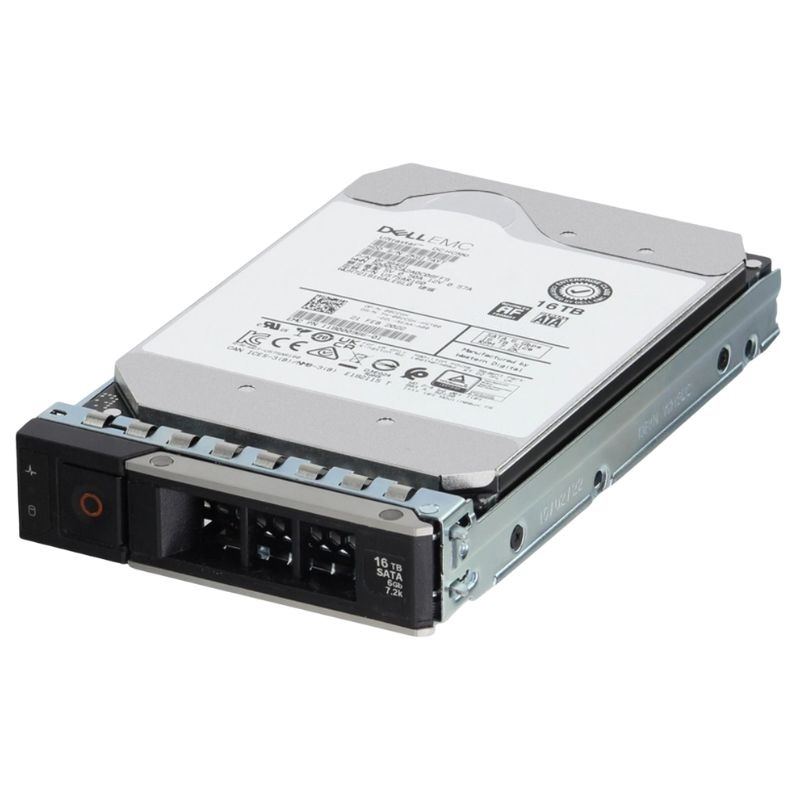


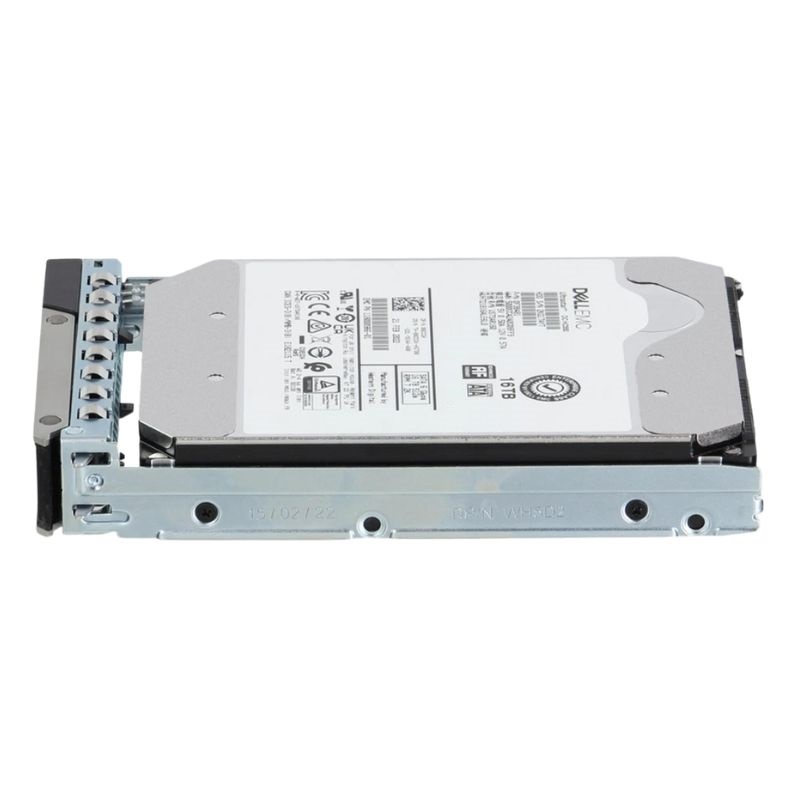
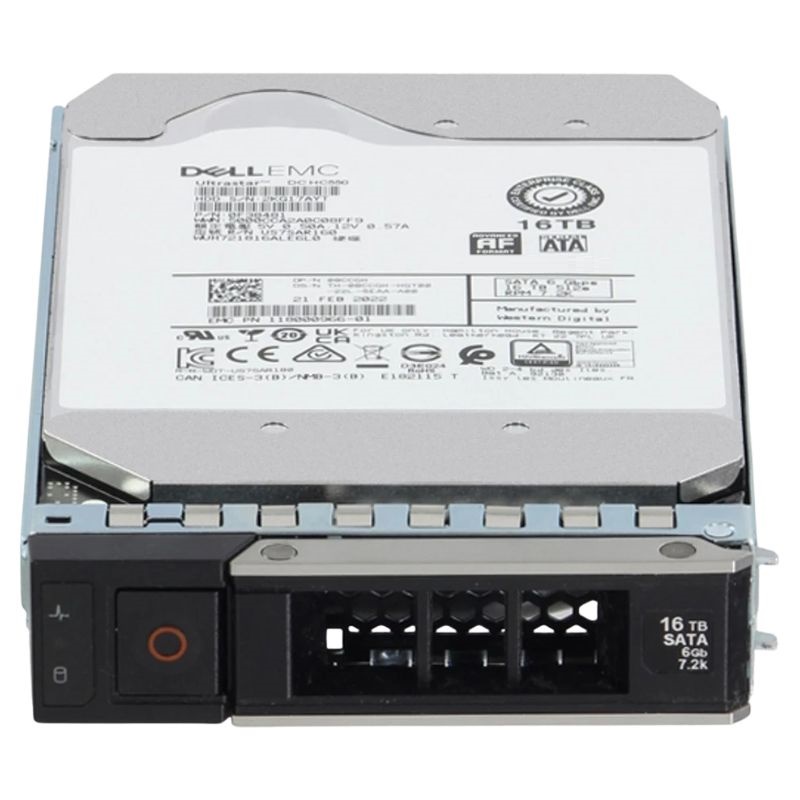
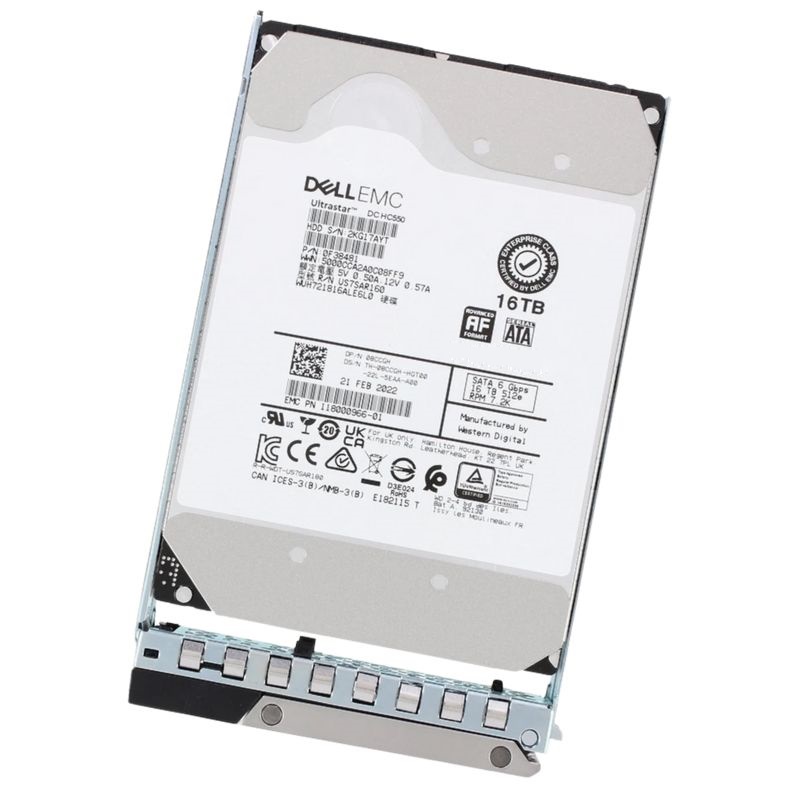
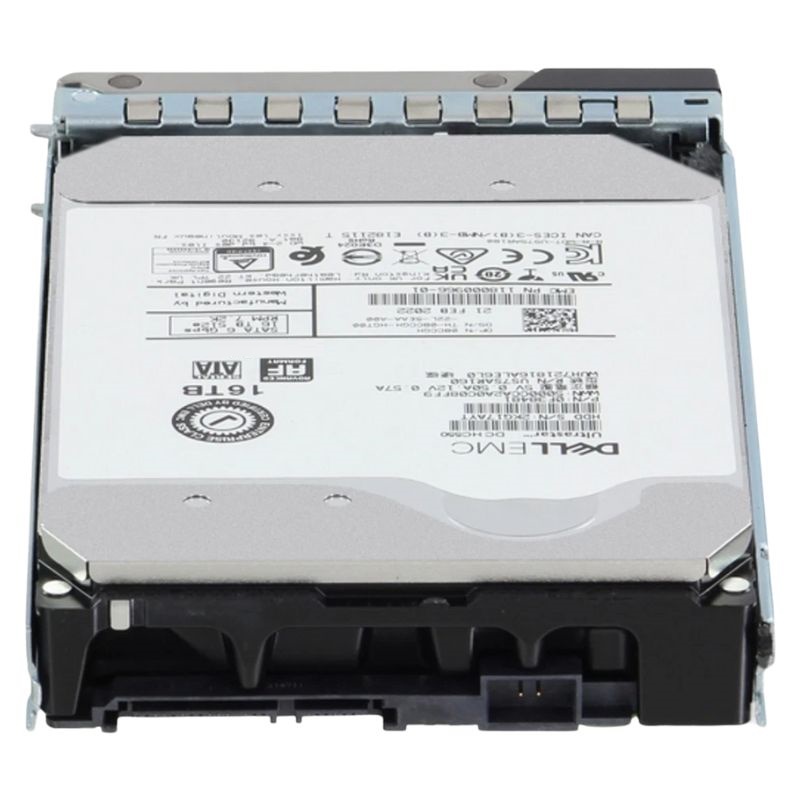
Dell 400-BNXC SATA-6GBPS 16TB 7.2K Hot-Plug LFF Hard Disk Drive. New Sealed in Box (NIB) with 1 Year Warranty
The Dell 400-BNXC 16TB SATA hard drive with tray is engineered to deliver massive storage capacity and dependable performance for modern enterprise workloads. Built for PowerEdge 14G, 15G, and 16G servers, this 3.5-inch LFF (Large Form Factor) drive ensures smooth data management, exceptional scalability, and optimized reliability.
The 400-BNXC Dell SATA-6GBPS 16TB 7.2K Hot-Plug LFF Hard Disk Drive represents a class of enterprise-grade, large-capacity rotating media designed for high-density archive, bulk storage, and mixed-workload server deployments. This product family is characterized by a 3.5" Large Form Factor (LFF) chassis, a 16-terabyte native capacity per unit, a SATA 6 Gbps interface, and a 7,200 RPM spindle speed optimized for consistent throughput rather than the ultra-low-latency needs of 10K–15K RPM drives. Units in this category are sold either as standalone drives or as tray/kit combinations specifically matched to Dell PowerEdge and Power Vault platforms to ensure hot-plug compatibility and firmware validation with server backplanes.
Drives carrying the 400-BNXC part number are generally described with the following headline specifications: 16TB capacity, SATA interface rated at 6 Gbps (SATA III), 7,200 RPM spindle speed, 3.5-inch (LFF) form factor, hot-plug capability, and support for Advanced Format (512e) sectoring. The emphasis for this configuration is on maximizing storage per bay while keeping power, cooling, and acquisition cost favorable for dense arrays and archive tiers. These characteristics make the 400-BNXC well-suited for bulk content hosting, backup targets, media libraries, and other capacity-centric workloads.
The SATA-6Gbps interface provides a widely compatible electrical and logical connection that works with most modern RAID controllers and HBA cards that support SATA and SATA-to-SAS backplanes. When populated into Dell PowerEdge or Power Vault systems, drives are often supplied with an OEM tray and cataloged under Dell part numbers for compatibility tracking with generation-specific servers (14G, 15G, 16G). This reduces the chance of backplane/firmware mismatch and simplifies replacement logistics in production environments. Verified compatibility listings for drives in this family include a broad set of PowerEdge models.
Expect steady sequential throughput typical of high-capacity 7.2K enterprise HDDs: solid sustained reads/writes for large files, good streaming performance for media and backup workloads, and adequate random I/O for light to moderate transactional operations when paired with proper caching or tiering. Because spindle speed is 7,200 RPM, random IOPS are lower than SAS 10K/15K or NVMe SSDs; therefore the 400-BNXC is optimized for capacity-first tiers where throughput per dollar and terabytes per chassis take priority over low-latency operations. For mixed workloads, pairing with an SSD tier (read cache or write-back cache) or using RAID configurations that improve random-read performance is a common practice.
LFF 3.5" form factor drives like the 400-BNXC occupy standard bays in rack and tower servers. Thermal dissipation and power draw should be considered when planning dense population: many enterprise servers support up to 12–24 LFF drives per chassis, multiplying heat and power, which in turn impacts cooling strategy and PSU sizing. Typical enterprise 7.2K drives present nominal startup/operational currents and power consumption under sustained activity; for dense deployments, always calculate aggregate power and confirm airflow patterns in the server spec. Using vendor-provided trays and firmware-matched drives helps maintain predictable thermal and electrical behavior.
One of the practical advantages of OEM Dell drives in this family is the hot-plug capability combined with tray kits that align with Dell PowerEdge backplanes. Hot-plug allows in-service replacement, minimizing downtime during drive failure events. Many sellers ship the drive with the 3.5" carrier preconfigured for specific server generations to guarantee fit and mechanical retention. For mission-critical installations, maintain a small stock of pre-formatted, firmware-matched spares and ensure that drive firmware revisions are current with the host server's compatibility matrix.
Enterprise-class HDDs like those assigned 400-BNXC often include features aimed at data integrity and reliability under heavy duty cycles: error recovery controls, rotational vibration tolerance, SMART telemetry, and compatibility with RAID controllers' TLER/ERASE settings. Look for manufacturer/retailer documentation that references MTBF figures, workload ratings (e.g., 550 TB/year or similar depending on vendor guidance), and how the drive handles error recovery when used in RAID arrays. These drives commonly use 512e Advanced Format, which affects sector emulation and may be relevant for certain legacy systems or advanced deduplication appliances.
S.M.A.R.T. metrics (Self-Monitoring, Analysis, and Reporting Technology) provide early warnings on attributes like reallocated sectors, seek error rates, power cycles, and temperature. In larger deployments, central monitoring via server management (iDRAC for Dell) or observability tools should gather these attributes and convert them into actionable alerts. Integrate S.M.A.R.T. checks into maintenance windows and automate replacement processes when thresholds are exceeded to reduce the risk of data loss. Regular firmware updates (issued by Dell or the drive manufacturer) can improve reliability and should be tested in a staging environment before wide rollout.
When using 16TB drives in RAID arrays, pay close attention to rebuild times and rebuild impact. Larger-capacity HDDs have longer reconstruction windows; choosing RAID levels that balance capacity efficiency and rebuild resiliency is crucial. Popular choices include RAID-6 for dual-parity protection in larger arrays, RAID-60 for additional fault tolerance across multiple RAID sets, or erasure coding in scale-out object storage systems. To reduce rebuild stress, many administrators use hybrid approaches: reserve a portion of the array for spare/reshaping operations, implement background scrubbing, and rely on snapshot/replication strategies for fast restore instead of depending solely on RAID rebuilds. Properly configure controller cache and avoid overloading rebuild operations during business-critical hours.
Larger enterprise HDDs generate measurable heat and audible noise compared to smaller form factors. Follow vendor environmental specifications for operating temperature, humidity, and vibration limits. In dense racks, use blanking panels and directed airflow to avoid hot spots. If acoustics are a concern in a non-data-center environment, choose remote chassis or acoustic insulation, because LFF 3.5" drives running at 7.2K RPM will typically be louder under seek activity than lower-power, nearline-focused alternatives.
When multiplied across racks, power draw of spinning media becomes a significant operational cost. Evaluate spindle idle/power-save features and controller-level advanced power management to reduce energy usage during long idle periods. Consider the overall environmental profile—large-capacity drives reduce the number of devices needed per TB, which can lower overhead for cooling and chassis materials relative to many smaller disks, but still require realistic planning for datacenter PUE and long-term power budgets.
Content blocks and on-page snippets to boost conversion
Useful page modules include an immediate spec snapshot, downloadable compatibility PDF, a short “Is this right for me?” decision tree (capacity vs. IOPS needs), and comparison sliders showing price-per-TB between 16TB HDDs and 8TB/12TB alternatives. Provide a “tech speak” section for architects and a plain-language buying checklist for operations teams. Where relevant, display local shipping and warranty badges, and highlight whether the drive includes the OEM tray or requires a separate adapter kit.
When listing OEM Dell parts, ensure you display accurate MPN/part numbers 400-BNXC and avoid implying Dell-manufactured warranties unless you are an authorized reseller; instead, state seller-provided warranty length clearly. Accuracy in part numbering and firmware disclaimers reduces returns and supports regulatory compliance for enterprise procurement.
For firmware-specific information, long-term reliability figures (workload rating and MTBF), and exact supported server lists, consult the OEM reseller product detail pages and the official Dell product pages or technical support matrices. When buying bulk, request a full manifest of serial numbers and firmware to simplify inventory management and future RMA actions.


 Contact Us
 Information
 Catalog
 Solid State Drives (SSD)
 Network Switches
 Hard Disk Drives
 HBA & Controllers
 PC & Servers
 PC & Server Memory
 CPU & Processors
 Network Routers
 Power Supplies
 Tape Drives & Libraries
 Network Devices
 Computer & Network Cables