(7% discount is applied at checkout)
Cart is empty
Your go-to destination for cutting-edge server products
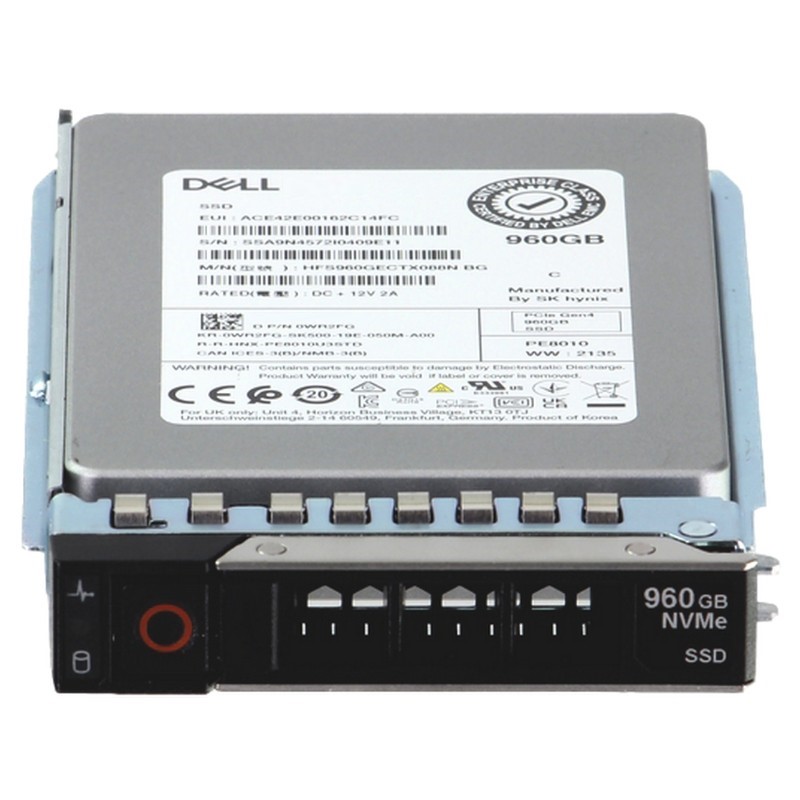


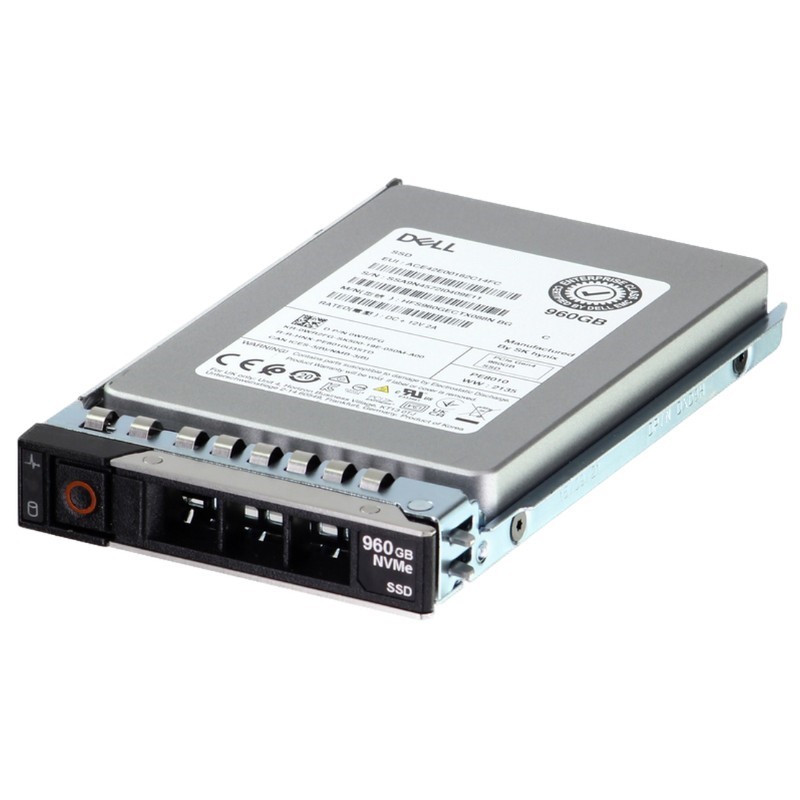
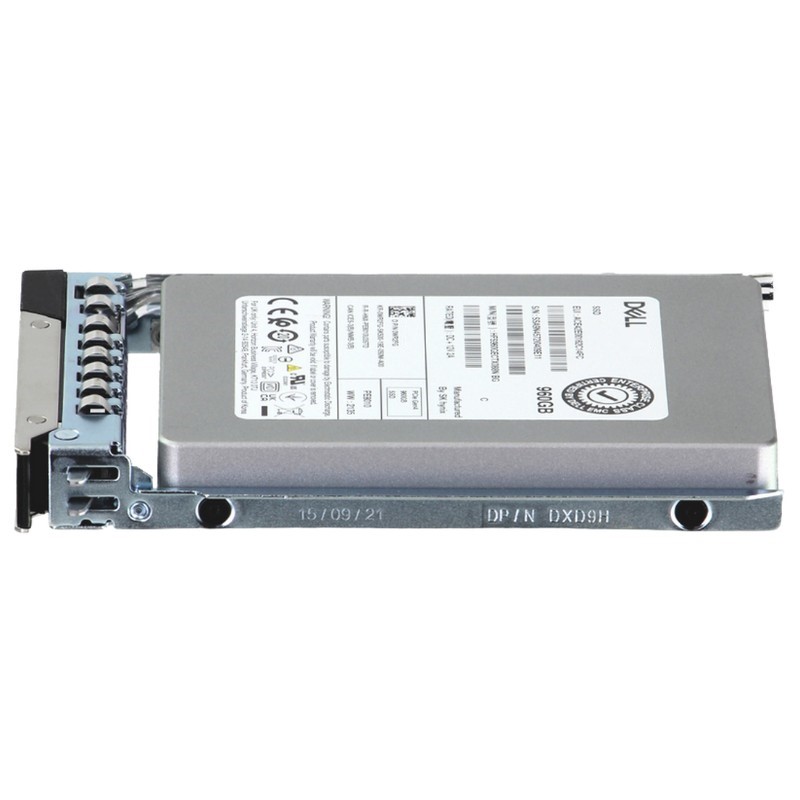
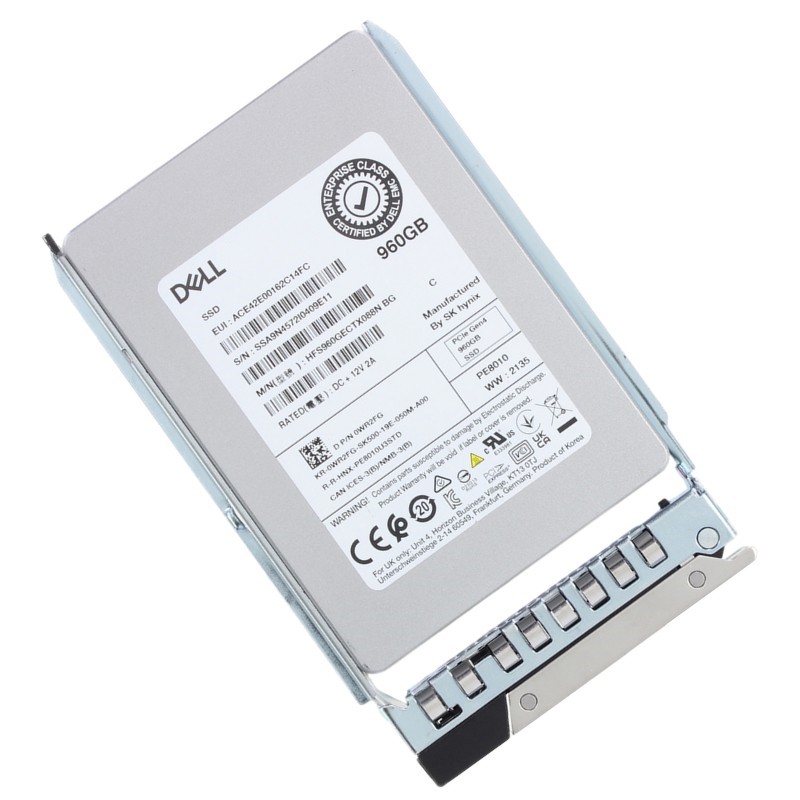
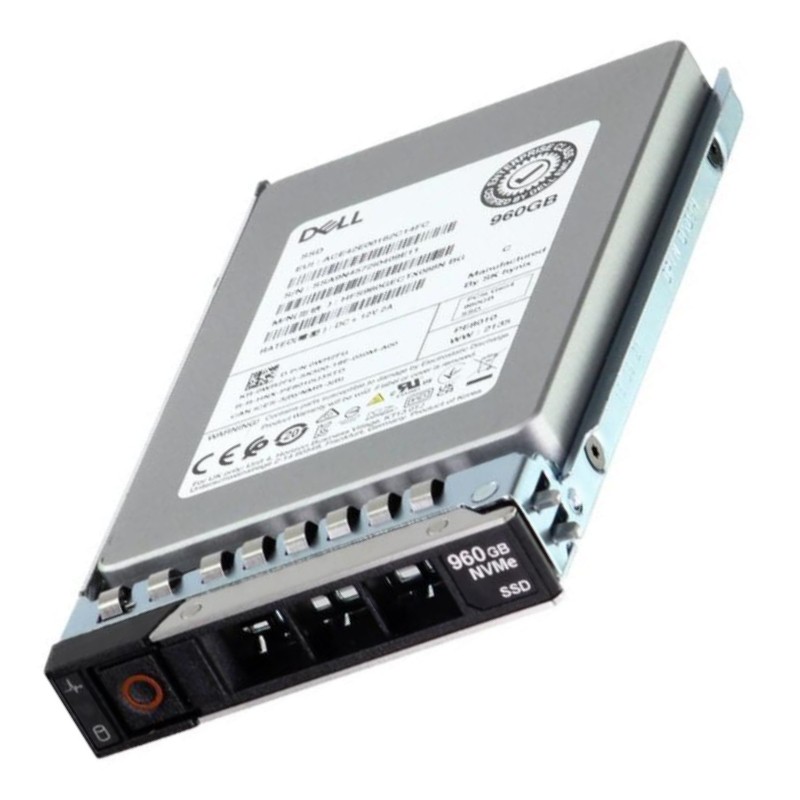
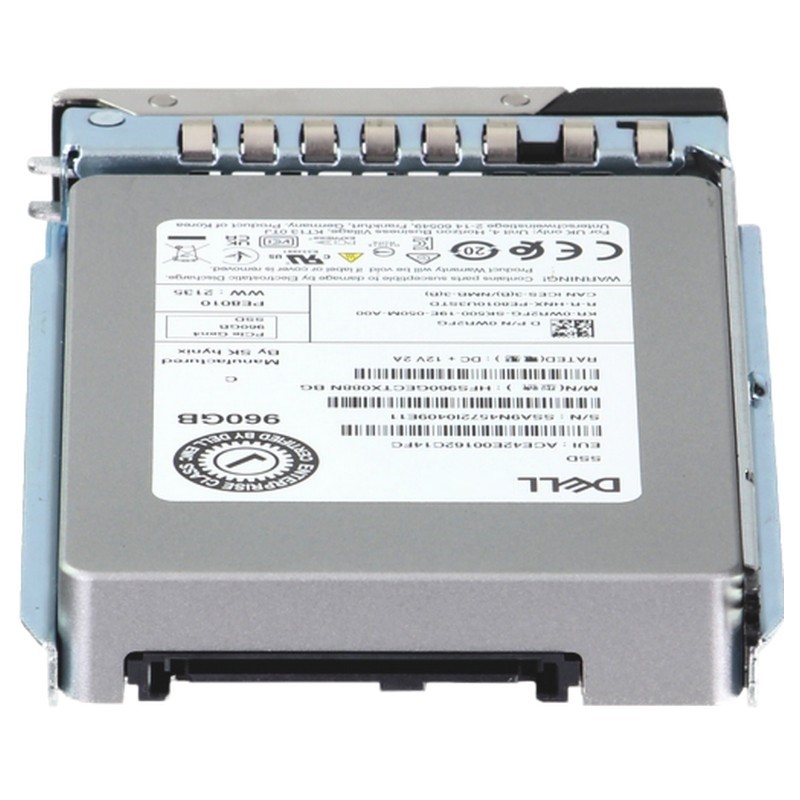
Dell 400-BOLT 960GB PCI-E Gen4 NVMe Data Center Read Intensive U2 SFF Internal Solid State Drive. New Sealed in Box (NIB) with 1 year Warranty
Engineered for data center environments, this internal solid-state drive delivers exceptional performance and reliability for enterprise storage solutions. It is designed to meet the rigorous demands of read-intensive applications.
Originating from Dell's reputable product line, this component is identified by its unique part number for precise ordering and inventory management.
The Dell 400-BOLT 960GB PCIe Gen4 NVMe Data Center Read-Intensive U.2 2.5" Solid State Drive (SSD) with carrier is a purpose-built storage solution engineered for modern enterprise servers — specifically designed to integrate seamlessly into Dell PowerEdge 14G, 15G, 16G, and 17G systems. This category targets data center operators, systems architects, IT procurement professionals, and managed service providers who prioritize sustained read performance, endurance suitable for read-intensive workloads, and robust compatibility across multiple Dell server generations.
This SSD category sits between mainstream client storage and ultra-high-end write-intensive enterprise drives. With PCIe Gen4 x4 NVMe connectivity and a U.2 2.5-inch form factor, these drives bridge the need for higher bandwidth and legacy drive-bay compatibility in rack servers. They’re ideal for read-dominant applications such as content delivery, large-scale caching, database read replicas, analytics query workloads, virtualization read tiers, and boot volumes for dense server clusters. In procurement roadmaps, the 400-BOLT line is often recommended where read latency, predictable I/O, and price-performance balance matter more than maximum sustained write endurance.
The NVMe protocol was designed from the ground up for non-volatile memory media and to fully exploit the parallelism of modern multi-core processors. NVMe reduces command overhead, brings lower latency compared to legacy interfaces, and scales IOPS with host CPU capability. For the 400-BOLT series, NVMe reduces the cost of waiting on I/O and increases server responsiveness for read-heavy workloads, which directly improves application throughput and user experience.
PCIe Gen4 doubles the per-lane throughput of PCIe Gen3, enabling NVMe SSDs to leverage increased bandwidth for higher sequential read/write throughput and improved random I/O performance under high queue depths. In real-world terms, this means faster large-object streaming (useful for media and backup reads) and shorter seek times for random reads (essential for databases and key-value stores). The 960GB capacity of this category is an attractive sweet spot for caching and hot-tier arrays where density, performance, and cost-efficiency intersect.
The U.2 2.5" form factor preserves the mechanical compatibility of enterprise server bays while enabling hot-swap functionality and the mechanical robustness required in data center environments. The included carrier ensures tool-less insertion into Dell PowerEdge sleds and backplanes across multiple generations (14G–17G), minimizing deployment friction. This backward-compatible approach reduces refresh complexity for enterprises managing mixed-generation fleets.
Drives categorized as read-intensive are engineered with firmware and flash management tuned to prioritize read throughput and read latency consistency over absolute write endurance. For typical enterprise scenarios, the 400-BOLT 960GB delivers deterministic read performance under mixed I/O patterns, which is crucial for latency-sensitive applications such as in-memory databases with disk spillover, search indices, or network-attached caching layers.
Expect low single-digit microsecond read latencies for small random reads under ideal conditions, and high IOPS capable of supporting large virtualization host densities or clustered database nodes. The Gen4 interface shifts many performance bottlenecks away from the storage device and back into the host and network stack; therefore, proper system-level tuning (driver versions, CPU allocation, NUMA alignment) is essential to realize the measured throughput of the drives.
Read-intensive drives typically emphasize steady-state performance: stable IOPS and predictable latency even after extended periods of heavy read traffic. This deterministic behavior reduces tail-latency anomalies, which can otherwise cascade across microservices and degrade system-wide SLAs (Service Level Agreements). Proper thermal management and firmware-level garbage collection are part of the design to keep performance consistent over time.
The 960GB capacity point provides a useful balance between per-drive capacity and cost. It’s large enough to host large hot datasets or serve as the upper cache tier in tiered storage architectures, while remaining flexible for RAID configurations and mixed-capacity arrays. When used in RAID, pairing multiple 960GB drives offers an attractive aggregate capacity and performance envelope for high-availability deployments.
Endurance for read-intensive SSDs is typically specified in total bytes written (TBW) or drive writes per day (DWPD). The 400-BOLT line is tuned such that write endurance is sufficient for read-dominant enterprise use cases while keeping costs lower than write-intensive counterparts. For environments that generate periodic bursts of writes, it’s important to size the array and implement write-smoothing strategies to avoid overtaxing the drive’s write budget.
Enterprise-class SSDs commonly incorporate end-to-end data protection features such as ECC (Error Correcting Code), internal parity, and robust flash translation layers (FTL) to maintain data integrity. Additionally, power-loss protection mechanisms (either through supercapacitors or internal firmware safeguards) ensure that critical metadata and in-flight writes are preserved safely. These protections are invaluable in preventing silent data corruption and ensuring safe, predictable drives in power-interrupted data center conditions.
The 400-BOLT series is explicitly marketed for compatibility with Dell PowerEdge 14G–17G server families. This compatibility includes support for the server chassis backplanes, drive carriers, and hot-swap mechanics. IT teams should confirm firmware compatibility with the host’s BIOS/UEFI and any server-specific RAID or HBA firmware. Using manufacturer-recommended firmware combinations ensures greater stability and reduces unexpected behavior during large-scale rollouts.
Keeping drive firmware aligned with server and controller firmware is a best practice for enterprises. Firmware updates often include performance optimizations, bug fixes, and improved compatibility. Staged rollouts, snapshot backups, and test labs are recommended before applying updates to production clusters. Dell and partner firmware release notes should be consulted to match recommended levels for each server generation.
Monitoring the health of SSDs via SMART attributes, vendor-specific telemetry, and server management interfaces (such as iDRAC on Dell systems) allows proactive replacement before failures occur. Many enterprise drives support predictive wear-leveling indicators, temperature telemetry, and end-to-end metrics which can be polled and integrated into data center asset management systems for automated alerts.
The 400-BOLT 960GB read-intensive NVMe SSD is an excellent candidate for edge caching nodes in content delivery networks (CDNs), and for local caches in distributed storage systems. Its speed and low read latency accelerate content delivery for frequently accessed objects, images, and compressed assets—reducing network fetch times and easing load on origin stores.
Deploying these drives as the storage medium for read replicas or analytical slices improves query times and concurrency. Analytical engines that rely on high-throughput sequential reads can leverage the Gen4 bandwidth to scan large datasets quickly, while low-latency random read capability assists OLAP and interactive analytics queries.
For VDI deployments where boot storms and read-heavy profile loads occur, read-optimized NVMe SSDs mitigate slowdowns during peak logins. Placing VDI boot volumes on these drives reduces user wait times and improves perceived desktop responsiveness, especially for large pools of stateless desktops.
Microservice architectures benefit from consistent read latencies when services make frequent reads to local storage. The 400-BOLT class of SSDs provides predictable performance for containers and virtualized microservices, improving tail-latency characteristics across distributed systems.
High-performance NVMe drives generate meaningful heat, especially under sustained workloads. Proper airflow planning, heat-sink enabled carriers, and rack-level thermal zoning are essential to avoid thermal throttling. Monitoring drive temperature through platform management allows for dynamic adjustments and alerts before thermal conditions impact performance.
While RAID remains a pillar of redundancy, modern distributed file systems and erasure coding schemes are increasingly common. When using RAID with NVMe U.2 drives, consider controller capabilities and rebuild times; NVMe devices can significantly reduce rebuild duration compared to traditional spinning media, yet rebuilds still stress the array. Choose RAID levels and rebuild throttling settings that balance availability and performance during degraded operations.
NVMe performance scales with parallelism and queue depths. Properly configuring NVMe driver settings, interrupt coalescing, and CPU affinity can unlock peak drive performance. Host tuning should be performed with representative workloads, as synthetic benchmarks often overstate real-world gains if system-level bottlenecks are present.
Implement a lifecycle policy that includes regular health checks, firmware review cycles, and end-of-life (EOL) replacement plans. A two-tiered approach — active monitoring for immediate failures and periodic audits for wear indicators — extends fleet uptime and minimizes unplanned maintenance windows.
Many enterprise SSD families offer self-encrypting drive capabilities (SED) as an option. SEDs provide hardware-based encryption with secure key management, enabling compliance with regulations that require data-at-rest protection. Using SEDs within Dell servers simplifies disk-level encryption without significant performance overhead and integrates with host key management solutions.
Properly sanitizing drives before disposal or redeployment is essential. Secure erase commands provided by the drive firmware allow secure cryptographic erasure without physically destroying the device. Maintaining documented decommissioning policies and operational controls ensures compliance with corporate governance and external audits.
In regulated industries, storage choices must align with retention and data protection mandates. The 400-BOLT category supports the technical controls required to meet many industry requirements, but it is the responsibility of the deploying organization to implement higher-level policies, key management, and access controls that reflect regulatory obligations.
For web hosting providers and multi-tenant platforms, the 400-BOLT 960GB offers quick access to frequently-read assets, improving content rendering and dynamic page responses. Predictable read latency helps ensure fair resource distribution across tenants during traffic spikes.
In big data clusters, compute nodes often require swift access to segments of datasets. Provisioning read-optimized NVMe storage on analytical leaf nodes accelerates data locality access and reduces network back-and-forth for repeated scans, improving overall cluster job throughput and efficiency.
Backup systems and deduplication engines rely heavily on small random reads of catalogs and indexes. Placing these metadata stores on high-performance read-oriented NVMe drives lowers lookup times, speeds backup verifications, and reduces the time required for restores.
Combining the 400-BOLT read-optimized SSDs with higher-capacity HDD tiers and ultra-high-end NVMe write-optimized devices creates a cost-effective tiered storage architecture. Hot data resides on 400-BOLT drives for low-latency access, warm data migrates to larger NVMe or SATA SSDs, and cold data is archived on high-density HDDs or object storage—maximizing performance where it matters and minimizing cost where it doesn’t.
For organizations adopting hybrid cloud models, the 400-BOLT SSDs can be used on-premise to achieve latency and data sovereignty goals while offloading archival workloads to cloud object storage. Map application data flows to determine which datasets must remain on low-latency on-prem storage and which are suitable for cloud-tiering to maintain cost efficiency.
The 400-BOLT 960GB offers a carefully balanced set of characteristics — modern PCIe Gen4 bandwidth, NVMe protocol efficiency, U.2 mechanical compatibility, and read-optimized firmware tuning. For enterprises seeking to accelerate read-dominant services without paying a premium for write-heavy endurance, this drive category provides predictable, enterprise-grade results.
The value of a drive that’s confirmed to work across Dell PowerEdge 14G through 17G generations cannot be overstated. Reduced integration risk, vendor-aligned firmware paths, and mechanical compatibility streamline procurement and maintenance for organizations heavily invested in Dell infrastructure.
Operational efficiencies come from improved application performance, faster maintenance windows, and lower latency-induced overhead across distributed systems. Cost rationalization stems from the drive’s positioning: delivering high read performance at a mid-tier price, enabling organizations to achieve required SLAs without overspending on write-optimized, higher-cost options.


 Contact Us
 Information
 Catalog
 Solid State Drives (SSD)
 Network Switches
 Hard Disk Drives
 HBA & Controllers
 PC & Servers
 PC & Server Memory
 CPU & Processors
 Network Routers
 Power Supplies
 Tape Drives & Libraries
 Network Devices
 Computer & Network Cables