(7% discount is applied at checkout)
Cart is empty
Your go-to destination for cutting-edge server products
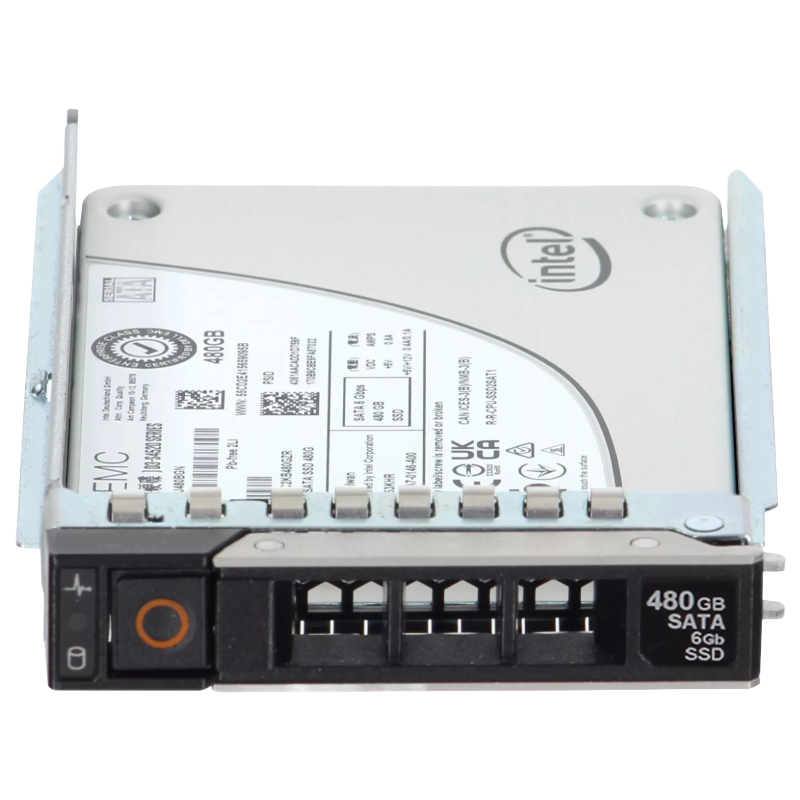


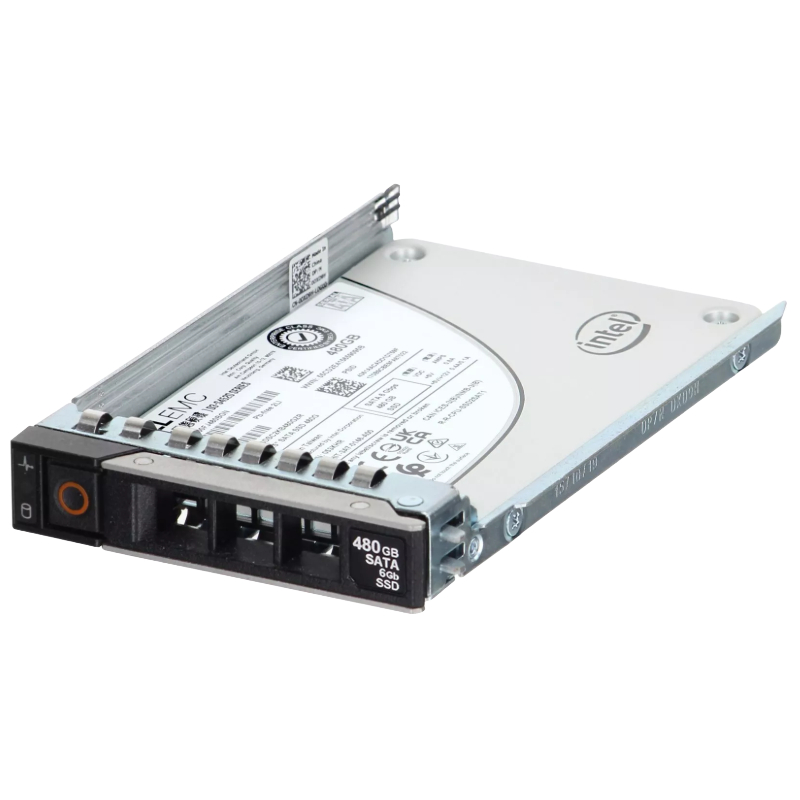
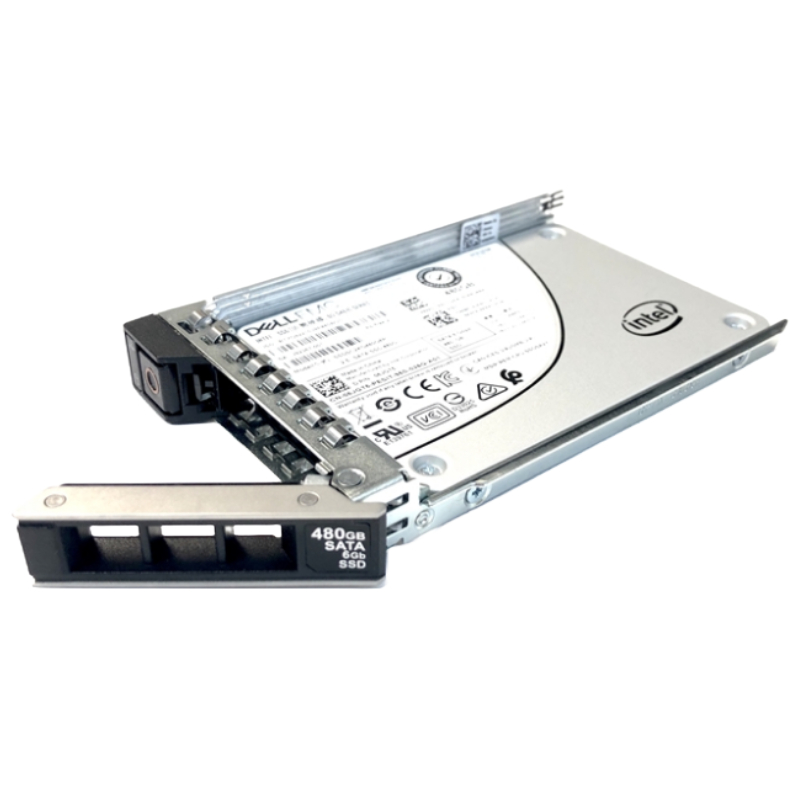
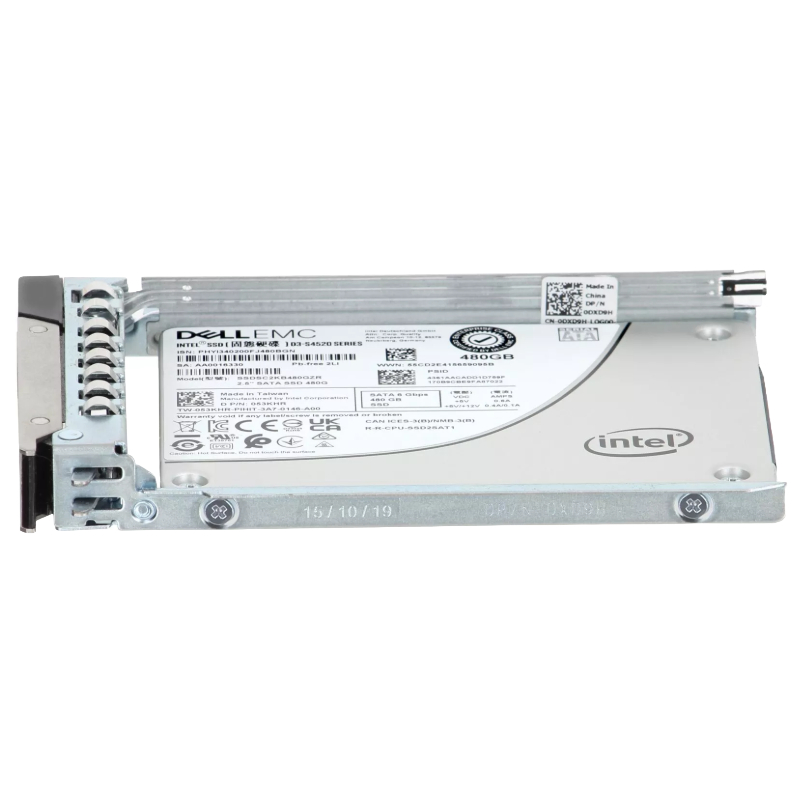
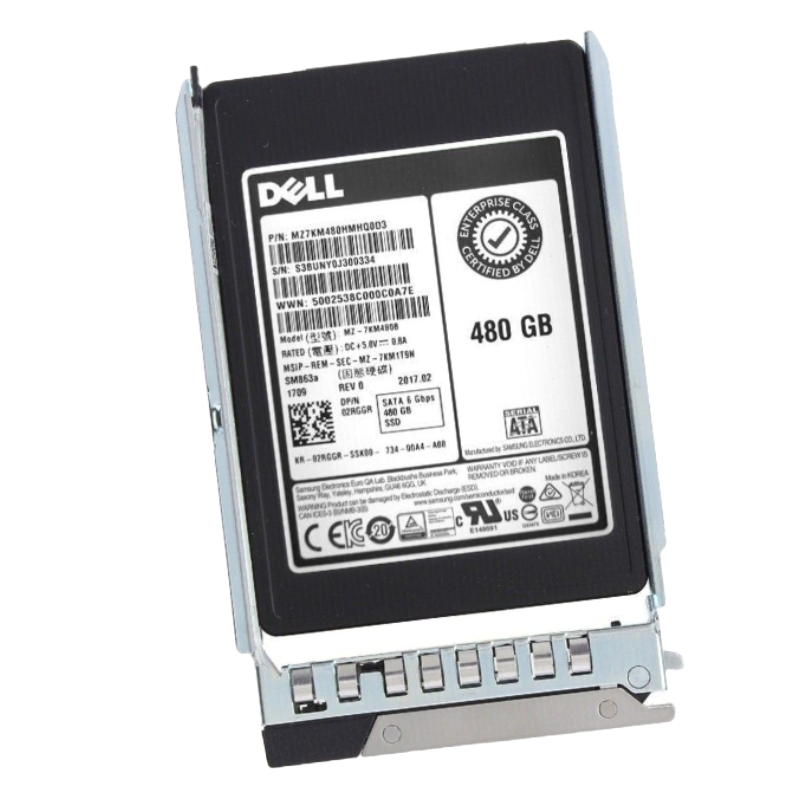
Dell 02RGGR 480GB SATA 6GBPS 2.5inch Mixed Use MLC Hot Plug Solid State Drive. New Sealed in Box (NIB) with 1 year Warranty
| SKU/MPN | Warranty | Price | Condition | You save |
|---|---|---|---|---|
| 02RGGR | 1 Year Warranty | $655.00 | New Sealed in Box (NIB). | You save: $229.25 (26%) |
| 02RGGR | 1 Year Warranty | $275.00 | Excellent Refurbished | You save: $96.25 (26%) |
The Dell 2RGGR 480GB Mixed-Use MLC SATA 6Gbps 2.5-Inch Hot-Plug Solid State Drive is engineered for high-performance enterprise applications. Designed to seamlessly integrate with Dell PowerEdge servers, this SSD delivers consistent speed, durability, and reliability in mission-critical environments.
Dell 02RGGR 480GB SATA 6Gbps 2.5inch Mixed Use MLC Hot Plug Solid State Drive represents a focused category of enterprise-class SATA SSDs designed for mixed-use workloads where balance between endurance, performance, and cost-efficiency is essential. This category centers on 2.5-inch form factor drives using Multi-Level Cell (MLC) flash memory, a SATA III interface running at 6Gbps, and hot-plug capabilities that simplify maintenance and replacement in live server environments. Buyers exploring this category are typically looking for durable storage that can reliably support virtualization, caching, mid-tier database operations, and mixed read/write application patterns without incurring the premium costs of high-end NVMe or single-level cell (SLC) solutions.
At the heart of the Dell 02RGGR 480GB SSD category is an architecture that blends established SATA technology with enterprise firmware optimizations. These drives are built on MLC NAND flash, which stores two bits per cell and provides a pragmatic compromise between write endurance and cost per gigabyte. The SATA III interface provides universal compatibility with legacy server and storage platforms, delivering up to 6 gigabits per second link speed while relying on mature driver stacks and broad platform support. The 2.5-inch 7mm or 9.5mm form factor fits standard server bays and many storage enclosures, enabling straightforward integration into blade servers, rack servers, and hybrid storage arrays. Hot-plug capability is a defining attribute for datacenter use, enabling administrators to replace or upgrade drives while systems remain online, minimizing downtime for critical services.
Controller design and firmware are decisive factors in drive performance and longevity within this category. Controllers used in Dell 02RGGR series drives typically include integrated error correction algorithms, wear-leveling strategies, and garbage collection routines tuned for mixed-use workloads. Firmware optimizations may also prioritize consistent I/O response under sustained mixed read/write patterns, reducing latency spikes that can degrade application performance. Enterprise firmware often includes power-loss protection mechanisms and telemetry features that feed SMART attributes and detailed health metrics to management consoles, enabling predictive maintenance and smoother lifecycle management for storage assets.
Multi-Level Cell (MLC) NAND used in these drives provides higher density at a lower cost per gigabyte compared to SLC, while offering noticeably better endurance than TLC in certain workload profiles. In a mixed-use environment where write intensity is moderate and reads are frequent, MLC strikes an effective balance by delivering acceptable program/erase cycle counts and stable performance over the expected service life. The tradeoff to consider is that MLC has lower maximum endurance than SLC and generally higher endurance than TLC, meaning capacity planning and write amplification mitigation are essential to meet enterprise service-level objectives. For many deployments, MLC-based Dell 02RGGR drives provide the best equilibrium of price, performance, and reliability.
Performance metrics for the Dell 02RGGR 480GB SATA SSD category are tuned around mixed read/write workloads typical of virtualization, transactional databases, and I/O-heavy application servers. Sequential throughput for SATA III drives can approach the interface ceiling for large contiguous transfers, while random IOPS depend heavily on controller design, queue depth, and the drive’s internal parallelism. In mixed-use scenarios, these drives are engineered to maintain consistent response times by prioritizing small block random I/O handling and minimizing latency variance. Administrators should expect strong read performance and commendable mixed-write endurance, with latency figures that are optimized for user-facing applications and multi-tenant virtual machine hosts.
For enterprise applications, consistent latency is often more important than peak bandwidth. Drives in this category are therefore designed to reduce write stalls and background management-induced latency spikes. Quality-of-service (QoS) stability is achieved through firmware techniques that manage background garbage collection and ensure that foreground I/O has priority. This results in more predictable behavior under sustained load and helps maintain application responsiveness even as the drive approaches full capacity. When deployed in clustered or hyperconverged environments, predictable SSD behavior reduces tail-latency effects that can cascade into application-level performance degradation.
Endurance metrics for mixed-use MLC SSDs are often represented in drive writes per day (DWPD) or total terabytes written (TBW) across warranty periods. Dell 02RGGR media typically offers endurance ratings tailored for enterprise duty cycles that include a mix of read-heavy and write-modest activities. Endurance planning is a critical step when selecting drives from this category: organizations must forecast their write amplification and average daily writes to ensure the chosen SSD meets or exceeds the required service life. Proper provisioning, over-provisioning settings, and firmware-level wear-leveling significantly extend usable life and provide predictable replacement timelines for storage assets.
When deploying Dell 02RGGR drives in a production fleet, physical integration details such as drive trays, backplane compatibility, and hot-swap mechanisms must be confirmed. Many Dell servers use standardized drive carriers that include cushioning, locking mechanisms, and LED indicators for activity and health. Ensuring that the drive’s thickness and connector alignment match the target chassis prevents mechanical fit issues. Hot-swap compatibility also requires that the platform’s firmware and storage controller drivers handle SATA hot-plug events gracefully, and that operation policies are in place to avoid data corruption during replacements. Administrators should validate these aspects during pre-deployment testing to minimize field surprises.
Firmware maintenance is an ongoing operational concern for enterprise SSD deployments. Dell 02RGGR category drives will periodically receive firmware updates to address performance improvements, resolve firmware-level bugs, or enhance compatibility with newer server platforms. Effective lifecycle management includes scheduling non-disruptive firmware updates, monitoring SMART attributes through centralized management systems, and planning for drive replacements as end-of-life approaches. Comprehensive change-control processes and test environments ensure updates do not introduce regressions and that end-to-end validation is performed before broad rollouts across production clusters.
The Dell 02RGGR 480GB SATA mixed-use SSD is ideally suited for a spectrum of enterprise deployments where a balance of endurance, capacity, and cost is desired. Common scenarios include boot and OS volumes for dense virtualization hosts, caching layers in hybrid storage architectures, database log and index partitions that require high random IOPS, and application servers with moderate write intensity. Best practices for deployment emphasize capacity headroom through over-provisioning, alignment of partitioning to avoid unnecessary write amplification, and configuration of RAID or erasure coding strategies that complement the drive’s endurance characteristics. Thoughtful placement of these SSDs within storage tiers maximizes both performance and cost-efficiency.
In virtualization environments, the predictable latency and strong mixed I/O performance of this SSD category make it a reliable choice for powering numerous guest operating systems on a single host. These drives can serve as primary storage for smaller VMs, or they can function as caching or metadata accelerators in hyperconverged stacks. Administrators should consider I/O patterns of guest workloads, host-level caching strategies, and the underlying hypervisor’s storage optimization capabilities when sizing and allocating these SSDs. Ensuring adequate write endurance for the expected VM churn and snapshot behavior is crucial to avoid premature wear.
For database applications, separating transaction logs from data files and placing logs on drives optimized for mixed write patterns can significantly improve transaction throughput and recovery characteristics. The Dell 02RGGR family, with its enterprise-grade firmware, is well-suited for transaction log volumes, small-index files, and metadata partitions. Database architects should calibrate the storage layout to leverage the drive’s strengths while enabling backups, redundancy, and failover strategies that protect data integrity. Regular monitoring of write rates and scheduled maintenance windows will help maintain optimal database performance and SSD health.
Security features in enterprise SSDs are increasingly important for regulated industries and organizations with strict data protection requirements. Drives in this category may include hardware-level encryption, secure erase capabilities, and support for industry-standard secure protocols that facilitate data sanitization and compliance. Reliability features such as enhanced error correction, parity protection within controller operations, and stable power-loss protection options further reduce the risk of data corruption. Incorporating secure lifecycle policies—ranging from secure decommissioning to certified data destruction—ensures drives leaving the organization do not expose sensitive information.
Hardware-based encryption capabilities aid organizations in meeting regulatory mandates and internal security policies. When available, self-encrypting drive (SED) features in the Dell 02RGGR category simplify encryption management by offloading cryptographic operations to the drive controller, reducing CPU overhead and providing robust encryption key management options. Compliance with standards such as FIPS or other regional regulatory frameworks should be validated based on the specific drive revision and firmware version. Integrating SED functionality into backup, decommission, and disaster recovery plans ensures encrypted data remains protected across the drive lifecycle.


 Contact Us
 Information
 Catalog
 Solid State Drives (SSD)
 Network Switches
 Hard Disk Drives
 HBA & Controllers
 PC & Servers
 PC & Server Memory
 CPU & Processors
 Network Routers
 Power Supplies
 Tape Drives & Libraries
 Network Devices
 Computer & Network Cables