(7% discount is applied at checkout)
Cart is empty
Your go-to destination for cutting-edge server products
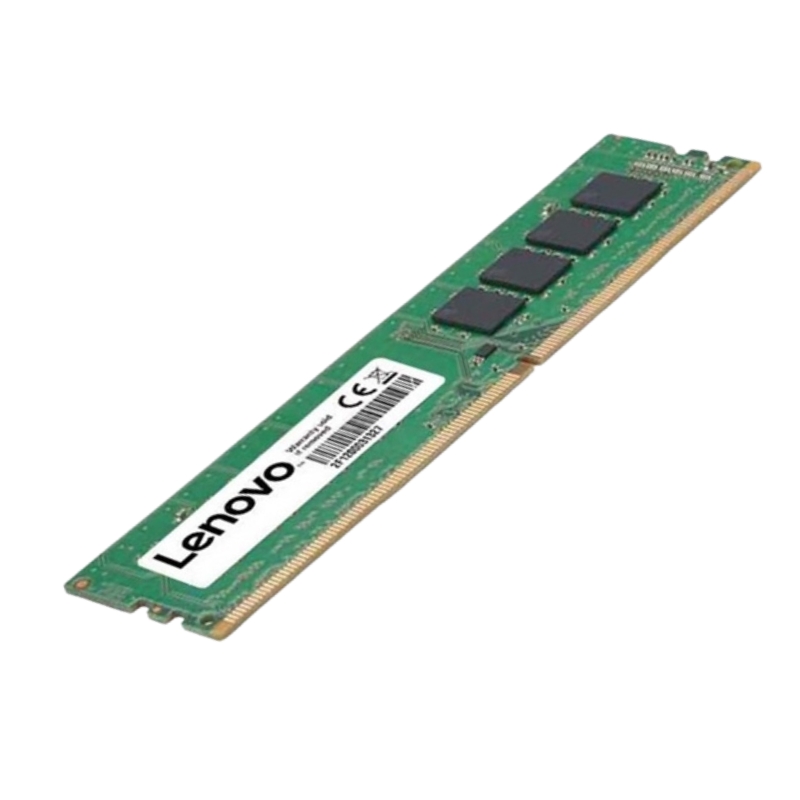


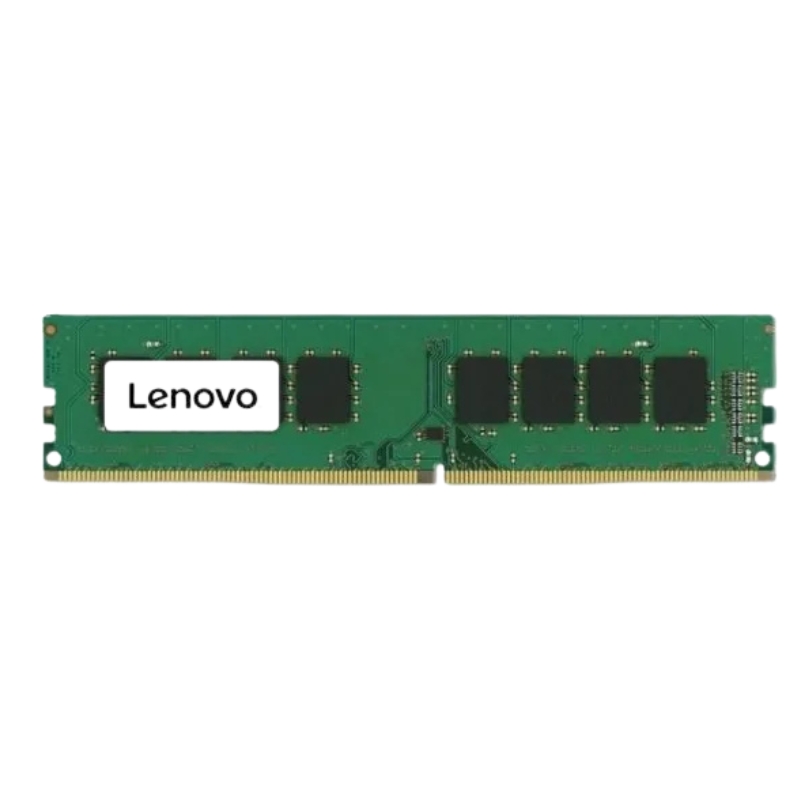
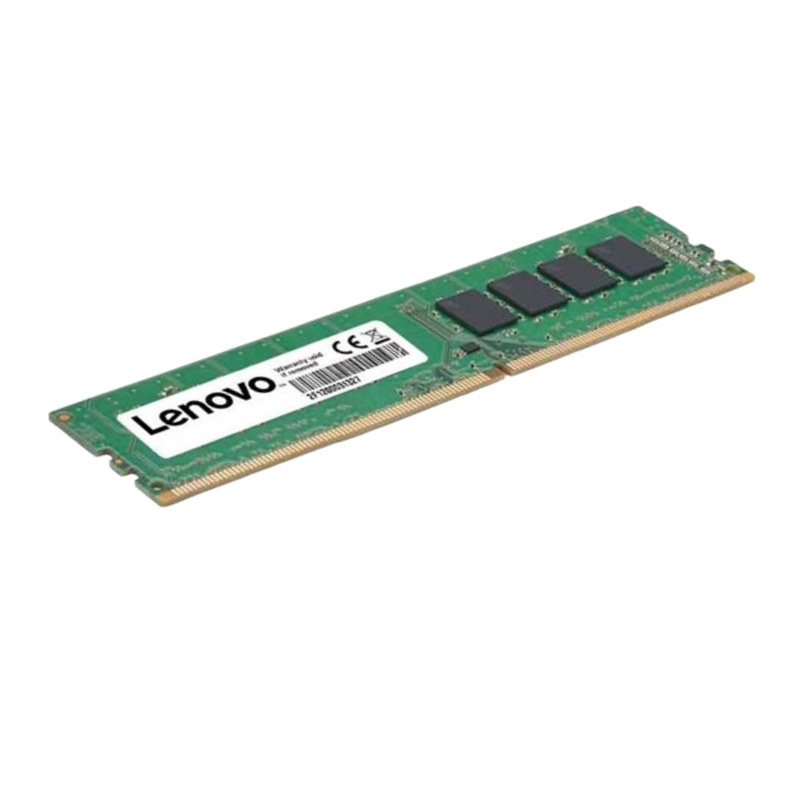
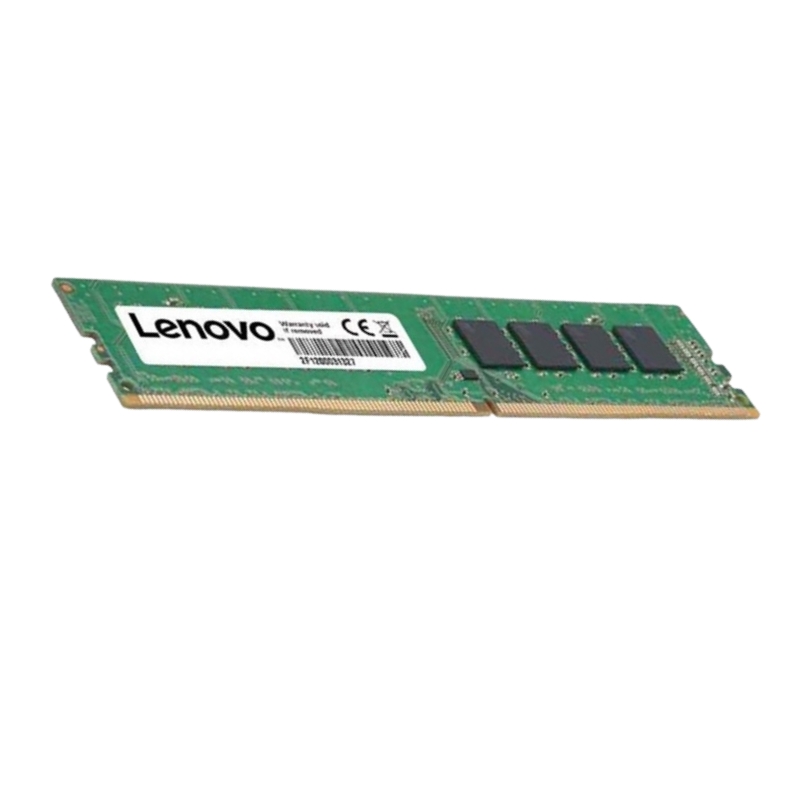
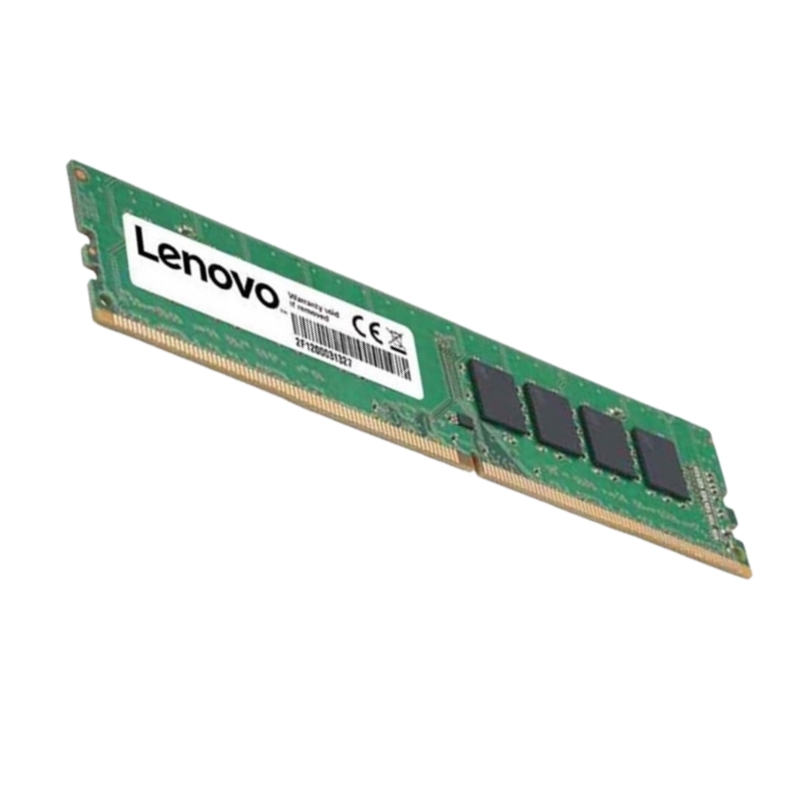
Lenovo 4X77A77031 32GB 4800MHz PC5-38400 DDR5 SDRAM 288-pin Cl40 Ecc Registered RDIMM Memory For Thinksystem Server. New Sealed in Box (NIB) with 3 Year Warranty - Samsung Version
| SKU/MPN | Warranty | Price | Condition | You save |
|---|---|---|---|---|
| 4X77A77031 | 1 Year Warranty | $1,243.00 | New (System) Pull | You save: $435.05 (26%) |
| 4X77A77031 | 1 Year Warranty | $1,704.00 | New Sealed in Box (NIB) | You save: $596.40 (26%) |
Discover high-performance server memory engineered for reliability and sustained throughput. The Lenovo 4X77A77031 is a 32GB DDR5 Registered DIMM (RDIMM) module running at 4800MHz (PC5-38400) with ECC support — ideal for enterprise servers, workstations, and virtualization hosts that demand stable, error-checked memory.
This Lenovo RDIMM is designed for demanding environments where uptime and data integrity matter. Typical deployments include:
Server memory represents a critical component in modern computing infrastructure, and the Lenovo 4X77A77031 32GB DDR5 module exemplifies the latest advancements in memory technology. Designed specifically for enterprise environments, data centers, and high-performance computing applications, this memory module delivers enhanced reliability, performance, and efficiency compared to previous generations.
The Lenovo 4X77A77031 is engineered with precise technical characteristics that define its performance capabilities and compatibility. Understanding these specifications is crucial for proper system integration and optimal performance.
With a substantial 32GB capacity, this module provides significant memory resources for demanding server workloads. This capacity strikes an ideal balance for modern server applications, allowing systems to handle virtualization, database management, and high-traffic web services efficiently without the physical space constraints of lower-capacity modules.
The 32GB capacity is achieved through advanced memory chip packaging and organization. This module utilizes high-density memory chips arranged in a specific rank configuration that optimizes signal integrity and access patterns. The rank organization affects how the memory controller interacts with the module, influencing overall system performance in multi-module configurations.
Operating at 4800MHz (PC5-38400), this DDR5 module delivers substantial bandwidth improvements over previous DDR4 generations. The increased data rate enables faster processing of memory-intensive applications and reduces potential bottlenecks in data-heavy workloads.
The CAS Latency (CL40) specification represents the number of clock cycles between a read command and data availability. While higher than some DDR4 timings, this latency is optimized for the increased clock speeds of DDR5 technology, resulting in superior overall performance despite the higher latency number. The complete timing parameters work in concert to deliver efficient data access patterns.
The transition to DDR5 architecture represents a significant leap in memory technology, introducing several key innovations that enhance performance, power efficiency, and reliability compared to DDR4 predecessors.
DDR5 implements a dual sub-channel architecture that improves memory access efficiency. This design allows for more concurrent operations and better utilization of the memory bus, resulting in higher effective bandwidth for supported workloads. The 288-pin DIMM interface has been redesigned to support these advanced features while maintaining physical compatibility with DDR5 slots.
A revolutionary change in DDR5 is the integration of voltage regulation directly on the memory module. The Power Management IC (PMIC) distributes power more efficiently across the DIMM, reducing noise and improving signal integrity. This onboard regulation enables more stable operation and better power delivery compared to motherboard-based regulation in previous generations.
With data rates starting at 4800MHz and beyond, DDR5 provides nearly double the bandwidth of standard DDR4 modules. The increased burst length and bank group structure further enhance data transfer efficiency, making DDR5 particularly well-suited for data center applications where memory bandwidth is often a critical performance factor.
The combination of Error Correcting Code (ECC) and Registered memory technologies provides enterprise-level reliability and stability essential for critical computing environments.
ECC technology detects and corrects single-bit memory errors in real-time, preventing data corruption and system crashes. This capability is crucial for servers running continuous operations where data integrity is paramount. The ECC implementation in this Lenovo module includes advanced error logging features that help system administrators monitor memory health and predict potential failures.
Beyond single-bit error correction, modern ECC implementations can detect multi-bit errors, allowing systems to gracefully handle more severe memory issues. This comprehensive error management ensures maximum system uptime and data protection in mission-critical applications.
RDIMMs incorporate memory buffers (registers) that sit between the memory controller and DRAM chips. These buffers reduce electrical load on the memory controller, enabling support for higher module densities and more DIMMs per channel while maintaining signal integrity.
The registered buffer improves signal quality by reducing electrical loading on the memory controller. This enhancement allows for more stable operation at higher speeds and with more modules installed, making RDIMMs the preferred choice for multi-socket servers and memory-intensive configurations where maximum capacity and reliability are required.
The specific characteristics of the Lenovo 4X77A77031 make it suitable for various demanding computing environments where reliability, capacity, and performance are equally important.
In enterprise environments, this memory supports critical applications including database servers, ERP systems, and large-scale virtualization platforms. The ECC protection ensures data integrity for financial transactions, customer records, and other business-critical information, while the registered architecture maintains stability in fully-populated memory configurations.
The 32GB capacity per module provides excellent virtualization density, allowing more virtual machines to run on a single physical host without memory contention. The high bandwidth supports memory-intensive virtualized applications, while ECC protection maintains stability across multiple guest operating systems.
For technical and scientific computing, the combination of high bandwidth and large capacity enables faster processing of complex simulations, data analysis, and research computations. The reliability features ensure extended computations complete without memory-related errors that could compromise results or waste computational resources.
Understanding how this memory compares to other available technologies helps in making informed purchasing and configuration decisions.
The transition from DDR4 to DDR5 brings substantial improvements in bandwidth, power efficiency, and capacity support. While DDR4 typically operates at 3200MHz for server applications, DDR5 starts at 4800MHz, providing approximately 50% greater bandwidth. The architectural improvements further enhance real-world performance for memory-intensive workloads.
Despite higher performance levels, DDR5 operates at a lower voltage (1.1V) compared to DDR4 (1.2V), contributing to improved power efficiency in data center environments where energy consumption directly impacts operational costs. The integrated PMIC further optimizes power delivery, reducing wasted energy.
Compared to Unbuffered DIMMs (UDIMMs), RDIMMs offer greater capacity support and better signal integrity at the cost of slightly higher latency. Load Reduced DIMMs (LRDIMMs) provide even higher capacity capabilities but at increased cost and power consumption. The RDIMM approach represents an optimal balance for most enterprise applications.


 Contact Us
 Information
 Catalog
 Solid State Drives (SSD)
 Network Switches
 Hard Disk Drives
 HBA & Controllers
 PC & Servers
 PC & Server Memory
 CPU & Processors
 Network Routers
 Power Supplies
 Tape Drives & Libraries
 Network Devices
 Computer & Network Cables