(7% discount is applied at checkout)
Cart is empty
Your go-to destination for cutting-edge server products


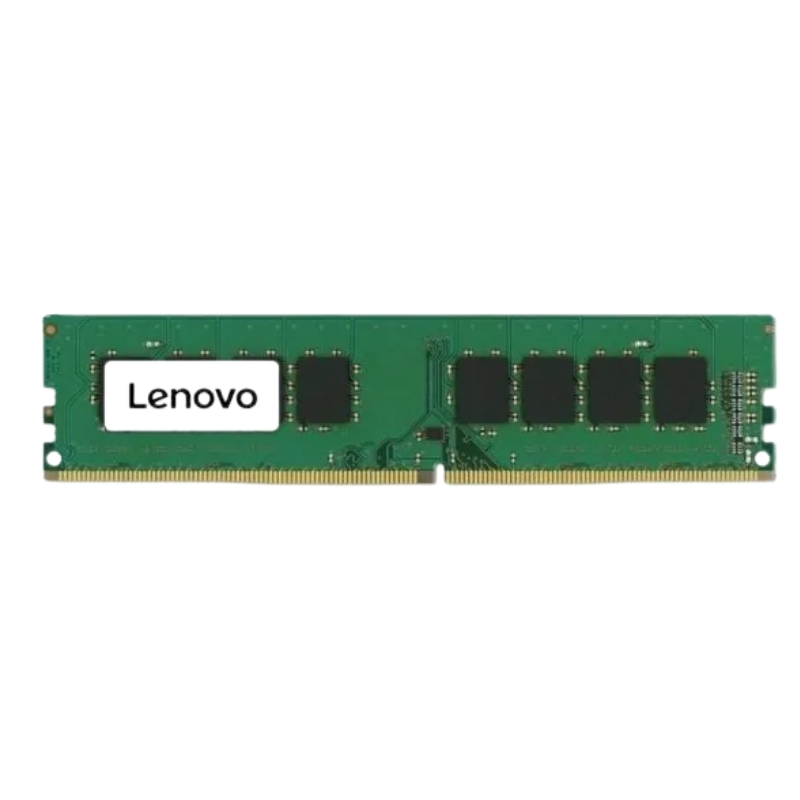
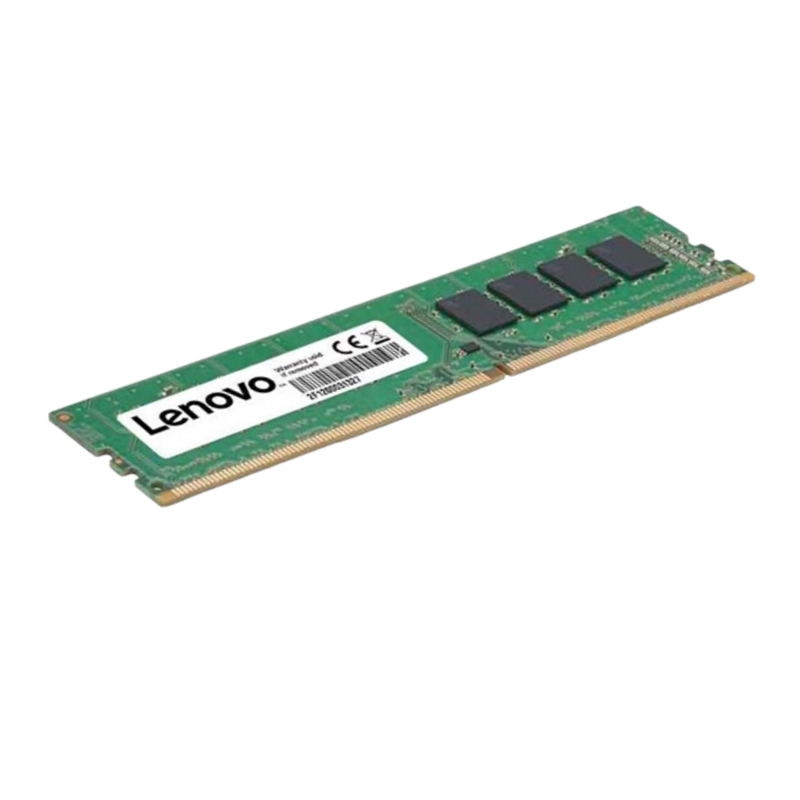
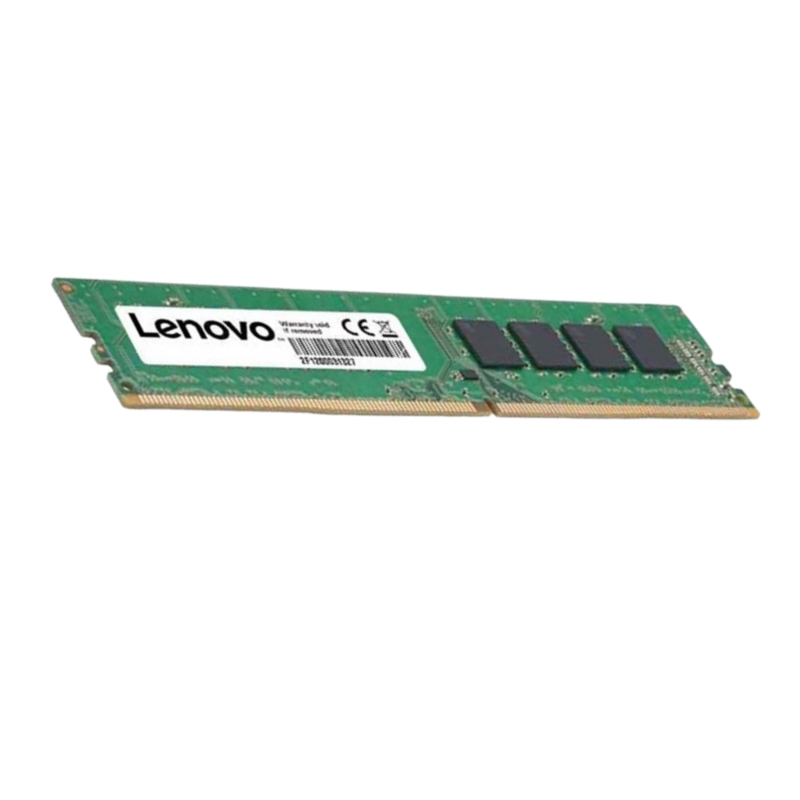
Lenovo 4X77A77033 64GB 4800MHz PC5-38400 Ecc Registered 2rx4 1.1v Cl40 DDR5 SDRAM RDIMM Memory Module For Server. New (System) Pull with 1 year replacement warranty
The Lenovo 4X77A77033 64GB DDR5 RDIMM module offers high-grade performance, exceptional data reliability, and advanced memory architecture designed for enterprise environments. This premium ECC registered memory enhances multitasking and boosts server workloads with superior stability.
The dual-rank 2Rx4 layout delivers improved throughput while minimizing risks of system interruptions. This structure is ideal for mission-critical applications that require dependable memory flow.
DDR5 represents a quantum leap in memory technology, delivering substantial improvements over previous DDR4 generations. The Lenovo 4X77A77033 64GB module operates at 4800MHz, providing significantly higher data transfer rates compared to DDR4's maximum 3200MHz. This increased bandwidth is crucial for data-intensive applications, scientific computing, and virtualization environments where memory speed directly impacts overall system performance and user productivity.
DDR5 introduces revolutionary architectural changes including the separation of the data buffer from the memory array and the implementation of two independent 40-bit sub-channels (32 data bits with 8 ECC bits each). This dual sub-channel architecture allows for more efficient data access patterns and reduces latency by enabling simultaneous operations. The 2Rx4 (2 rank, 4 bank groups) configuration further optimizes memory access by organizing memory cells into logical groups that can be accessed independently.
The Lenovo 4X77A77033 operates at an industry-leading 1.1V, representing a significant reduction from DDR4's 1.2V operating voltage. This power efficiency is achieved through sophisticated power management integrated circuits (PMICs) that are built directly onto the memory module. The on-module PMIC distributes power more efficiently, reduces signal noise, and provides better voltage regulation than motherboard-based power delivery systems used in previous memory generations.
Error Correcting Code (ECC) technology is a critical feature for enterprise environments where data corruption cannot be tolerated. The Lenovo 4X77A77033 implements advanced ECC algorithms that can detect and correct single-bit errors automatically, while also detecting multi-bit errors. This proactive error correction occurs in real-time without impacting system performance or requiring user intervention. For businesses handling financial transactions, healthcare records, or scientific data, ECC provides essential protection against silent data corruption that could lead to catastrophic system failures or data loss.
The Registered (RDIMM) design incorporates a register between the memory controller and DRAM chips, serving as a buffer for command and address signals. This architecture reduces the electrical load on the memory controller, enabling support for higher memory capacities and more DIMMs per channel. The Lenovo 4X77A77033 RDIMM is specifically engineered for servers and workstations that require large memory configurations, providing superior signal integrity and system stability compared to unbuffered modules, especially in multi-processor systems with extensive memory requirements.
Registered DIMMs (RDIMMs) strike an optimal balance between performance, capacity, and cost for enterprise applications. Unlike Unbuffered DIMMs (UDIMMs) that place direct electrical load on the memory controller, RDIMMs use registers to reduce this load, supporting higher memory densities. Load Reduced DIMMs (LRDIMMs) take this further with additional buffering but introduce slightly higher latency. The Lenovo 4X77A77033 RDIMM provides the ideal solution for most enterprise scenarios, offering excellent performance characteristics while supporting substantial memory configurations without the premium cost of LRDIMM technology.
The Lenovo 4X77A77033 operates with CAS Latency (CL) of 40 cycles at 4800MHz, representing the optimal balance between speed and responsiveness for server workloads. The PC5-38400 designation indicates a peak transfer rate of 38,400 MB/s per module, effectively doubling the bandwidth available from high-performance DDR4 modules. These timing parameters are carefully engineered to ensure compatibility with Intel Xeon Scalable processors and AMD EPYC platforms that leverage DDR5 technology for next-generation computing performance.
This 288-pin RDIMM module conforms to JEDEC standard DDR5 specifications with a module height of approximately 31.25mm. The 64GB capacity is achieved using high-density DRAM components organized in a dual-rank configuration. Operating within a temperature range of 0°C to 85°C, the module includes thermal sensors that monitor junction temperature and can communicate with the system's baseboard management controller (BMC) to trigger thermal throttling if necessary, ensuring reliable operation even in demanding environmental conditions.
The Lenovo 4X77A77033 is rigorously tested and certified for compatibility with Lenovo ThinkSystem servers including the SR650, SR850, and SR860 models. Each module undergoes extensive validation testing to ensure seamless operation within specified parameters and full interoperability with other components. This manufacturer certification eliminates compatibility concerns and ensures optimal performance in supported systems, providing peace of mind for IT administrators deploying mission-critical infrastructure.
In virtualized environments, memory capacity and bandwidth directly determine virtual machine density and performance. The Lenovo 4X77A77033 64GB modules enable organizations to maximize their virtualization ROI by supporting higher VM densities per physical host. The 4800MHz speed ensures responsive performance across multiple concurrent virtual machines, while ECC protection maintains data integrity across diverse workloads. For hyper-converged infrastructure and software-defined data centers, these DDR5 RDIMMs provide the foundation for scalable, reliable compute resources.
Database management systems like Oracle, SQL Server, and MySQL benefit significantly from the high bandwidth and large capacity of DDR5 memory. The Lenovo 4X77A77033 enables larger in-memory databases, reducing disk I/O and accelerating query performance. For online transaction processing (OLTP) systems, the low latency and high throughput ensure rapid transaction completion times, while ECC technology protects against data corruption that could compromise financial records or customer information.
In scientific computing, research institutions, and engineering simulations, memory bandwidth often represents the primary bottleneck for application performance. The Lenovo 4X77A77033's 4800MHz operating frequency and efficient architecture accelerate complex computational workloads including finite element analysis, computational fluid dynamics, and genomic sequencing. The 64GB capacity per module enables researchers to work with larger datasets in memory, reducing computation times and accelerating time-to-discovery for scientific breakthroughs.
AI training workloads place extraordinary demands on memory subsystems, requiring both high capacity and bandwidth. The Lenovo 4X77A77033 supports large model training by enabling extensive memory configurations that can cache training datasets and model parameters. The DDR5 architecture's efficiency benefits distributed learning frameworks and inference engines, while ECC protection ensures the integrity of trained models and prevents corruption during extended training sessions that might last for days or weeks.
The DDR5 specification includes a roadmap for continued performance improvements beyond the 4800MHz offered by the Lenovo 4X77A77033. Future speed grades will increase to 5600MHz, 6400MHz, and potentially beyond, while maintaining backward compatibility with existing DDR5 infrastructure. These speed improvements will be accompanied by refinements in power efficiency and latency optimization, ensuring that current investments in DDR5 platforms provide a migration path to future performance enhancements without requiring complete system replacement.
While DDR5 represents the current state of the art for server main memory, emerging technologies including CXL (Compute Express Link) and persistent memory will complement rather than replace DDR5 in the foreseeable future. The Lenovo 4X77A77033 is designed to work alongside these technologies in heterogeneous memory architectures, where DDR5 provides the primary working memory while specialized memory classes address specific workload requirements. This architectural approach ensures that investments in DDR5 technology remain relevant as new memory classes emerge and mature.
Enterprise adoption of DDR5 technology follows established patterns for previous memory transitions, with early adoption in performance-critical applications followed by broader deployment as ecosystems mature and costs optimize. The Lenovo 4X77A77033 positions organizations at the forefront of this transition, providing immediate performance benefits while establishing a foundation for future memory expansion. Industry analysts project rapid DDR5 adoption in server segments through 2024-2025, eventually surpassing DDR4 as the dominant server memory technology as platform support expands and price premiums diminish.


 Contact Us
 Information
 Catalog
 Solid State Drives (SSD)
 Network Switches
 Hard Disk Drives
 HBA & Controllers
 PC & Servers
 PC & Server Memory
 CPU & Processors
 Network Routers
 Power Supplies
 Tape Drives & Libraries
 Network Devices
 Computer & Network Cables