(7% discount is applied at checkout)
Cart is empty
Your go-to destination for cutting-edge server products
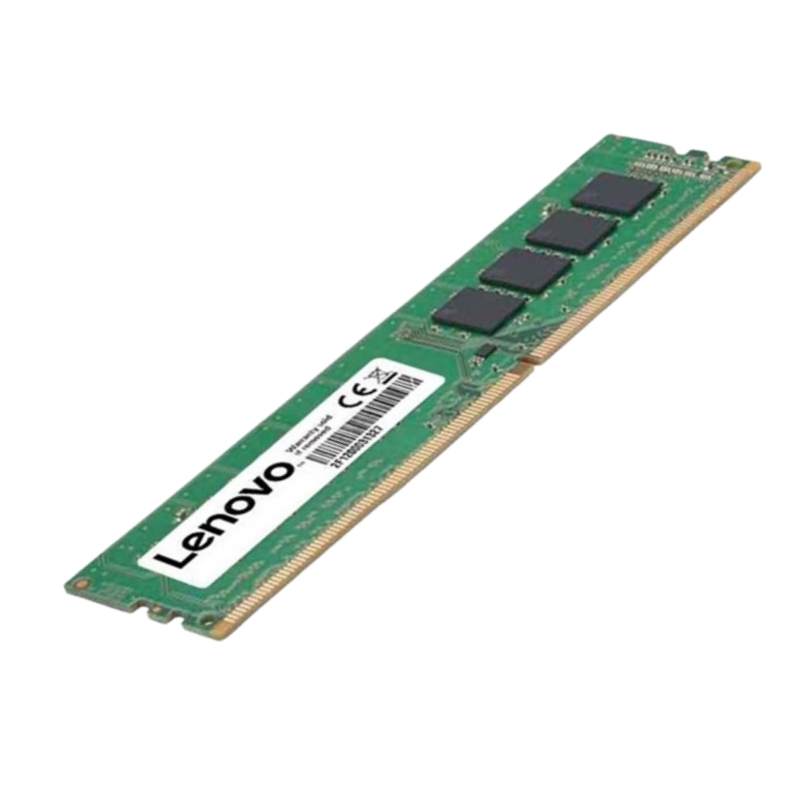


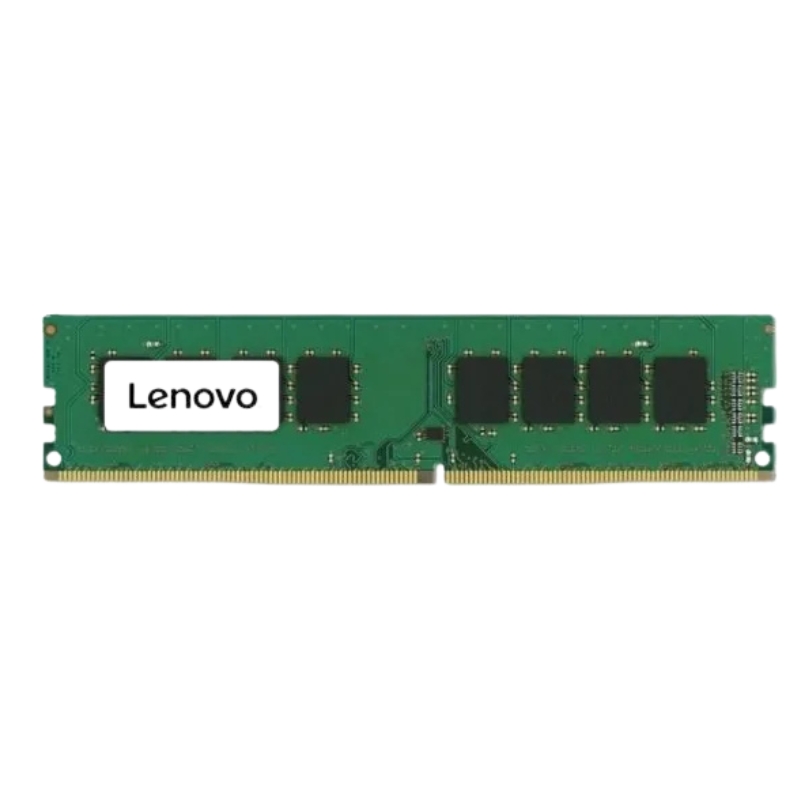
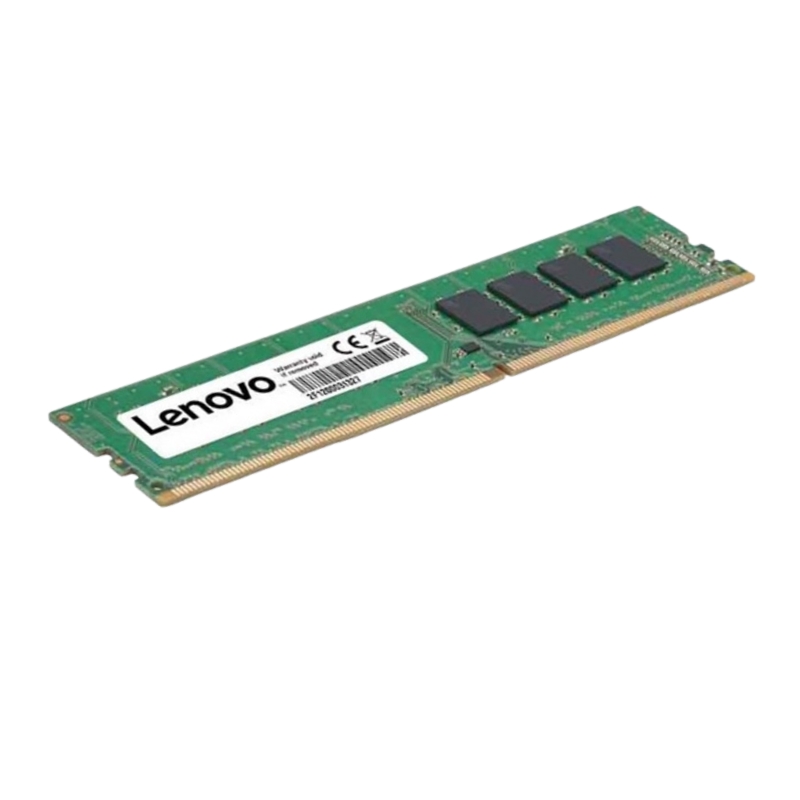
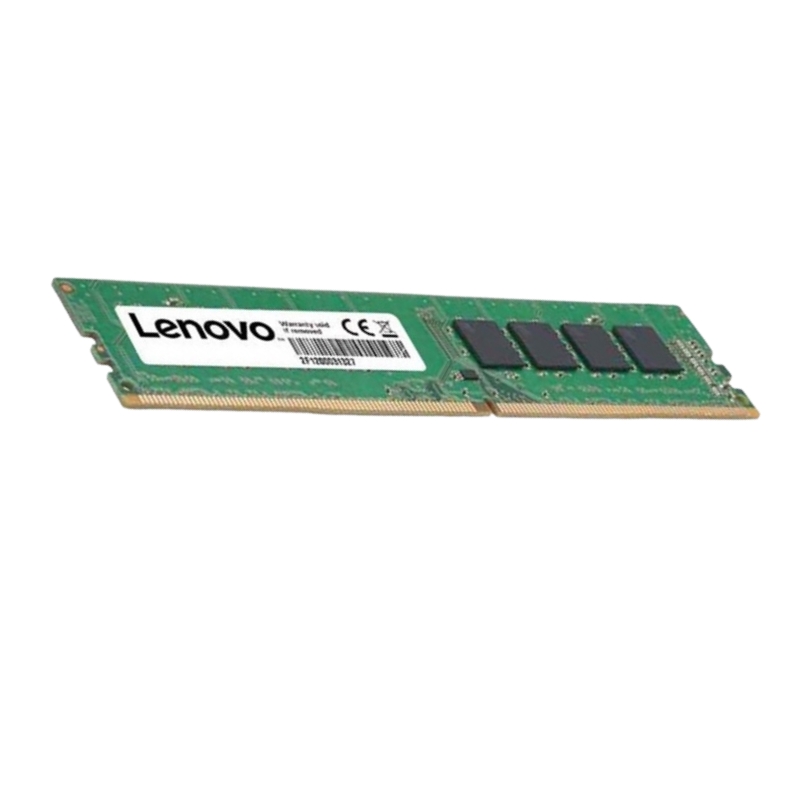
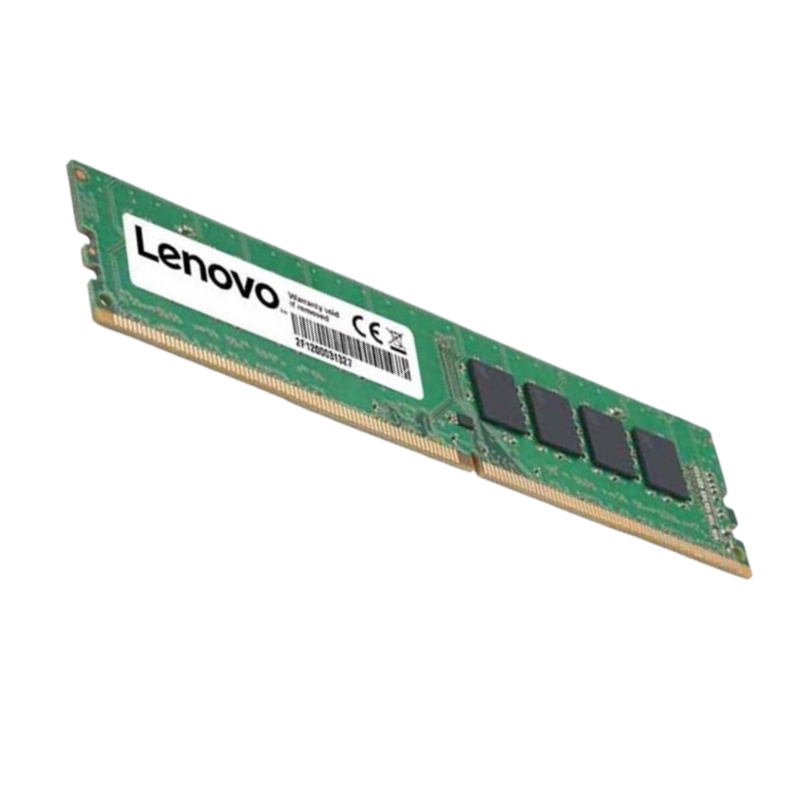
Lenovo 4X77A81448 96GB DDR5 4800MHz PC5-38400 Dual Rank X4 Ecc Registered 1.1v Tru 288-pin DIMM Server Memory Module. New Sealed in Box (NIB) - Samsung Version
High-capacity Lenovo server memory engineered for enterprise workloads — a 96GB TruDDR5 SDRAM DIMM designed for stability, speed and dependable performance in data center systems.
Validated for use with Lenovo ThinkSystem platforms — ideal when upgrading or scaling memory in certified systems.
In the realm of enterprise computing and data center operations, server memory is not merely a component; it is the critical backbone that determines system stability, data integrity, and overall performance. The category of server memory modules, specifically DDR5 ECC Registered DIMMs (RDIMMs), represents a significant evolution from consumer-grade memory. These modules are engineered for relentless operation, demanding workloads, and mission-critical data protection. The Lenovo 4X77A81448 96GB DDR5 module is a prime example of this category, embodying the advanced specifications required by modern servers to handle virtualization, large-scale databases, in-memory computing, and high-performance computing (HPC) applications.
Unlike standard desktop memory, server memory is built with features that prioritize accuracy and reliability over raw, unchecked speed. The core differentiators—Error Correcting Code (ECC) and Registered (buffered) design—work in tandem to ensure that the vast amounts of data flowing through the server's memory subsystem are protected from corruption and that the electrical load on the memory controller is managed effectively. This makes modules like the Lenovo 4X77A81448 not just an upgrade but a necessity for any business that depends on the continuous and correct operation of its server infrastructure.
The architecture of DDR5 memory is fundamentally redesigned to overcome the limitations of DDR4. Two of the most significant changes are the lowered operating voltage and the redesigned channel architecture.
The Lenovo 4X77A81448 operates at a nominal voltage of 1.1V, a reduction from DDR4's typical 1.2V. This lower voltage is critical in a server environment where power consumption and heat generation are major operational cost factors. By reducing the voltage, DDR5 modules consume less power for the same or higher performance levels, leading to a lower Total Cost of Ownership (TCO) and a reduced thermal footprint, which in turn allows for denser server configurations without compromising cooling systems.
While a DDR4 DIMM featured a single 72-bit data channel (64-bit data + 8-bit ECC), a DDR5 DIMM splits this into two independent 40-bit sub-channels (32-bit data + 8-bit ECC each). This dual sub-channel design allows the memory controller to perform two simultaneous 32-byte data accesses per channel, dramatically improving memory access efficiency for many server workloads. This is particularly beneficial for multi-threaded applications and virtualized environments where multiple processes are competing for memory resources simultaneously.
To fully appreciate the capabilities of a server memory module, one must understand its part number and the specifications it represents. The Lenovo 4X77A81448 96GB DDR5-4800MHz PC5-38400 module's name is a concise summary of its key features. Let's break down each element to understand what this module offers.
With a massive capacity of 96 gigabytes (GB), this module is designed for memory-intensive applications. In today's data-driven world, applications such as SAP HANA, Oracle Exadata, Microsoft SQL Server data warehouses, and large VMware vSphere or Microsoft Hyper-V host servers require enormous memory pools. A high capacity per module allows server architects to maximize the total memory of a system without consuming all the available DIMM slots. For example, a dual-processor server with 16 memory slots could support up to 1.5 terabytes of RAM using these 96GB modules, enabling it to host a significantly larger number of virtual machines or process immense datasets entirely in memory for lightning-fast results.
The "4800MHz" refers to the module's data rate, meaning it can perform 4.8 billion data transfers per second. The "PC5-38400" designation is the module's theoretical peak bandwidth in megabytes per second (MB/s). To calculate this: 4,800 MT/s * 8 bytes (64-bit) = 38,400 MB/s. This high bandwidth is essential for feeding data-hungry processors, reducing bottlenecks, and ensuring that CPUs spend less time waiting for data and more time processing it. This translates directly into faster application response times, quicker report generation, and more efficient transaction processing.
The "Dual Rank" and "x4" specifications are often overlooked but are critical for system configuration and performance.
A memory rank is a set of DRAM chips that are accessed simultaneously by the memory controller. A Dual Rank (DR) module has two of these sets. From the memory controller's perspective, a dual rank DIMM behaves like two separate DIMMs. This allows the controller to interleave operations between the two ranks, hiding latency and improving overall memory throughput. In many server workloads, dual rank modules offer a performance advantage over single rank modules at the same speed.
The "x4" refers to the organization of the individual DRAM chips on the module, specifically that each chip has a 4-bit wide data interface. The x4 configuration is a prerequisite for supporting advanced reliability features like SDDC (Single Device Data Correction), also known as Chipkill. SDDC can correct a multi-bit error that occurs within a single DRAM chip, a common type of failure. This provides a far greater level of protection than standard ECC, which typically only corrects a single-bit error anywhere in the data word. For mission-critical servers, this extra layer of protection is non-negotiable.
The core features that distinguish server memory from desktop memory are Error Correcting Code (ECC) and the Registered (buffered) design. These are not mere "nice-to-haves"; they are foundational technologies for ensuring data integrity and system stability in a 24/7/365 environment.
Cosmic rays, alpha particle emissions, and electrical interference can cause bits in memory to spontaneously "flip" from a 1 to a 0 or vice versa. These are called soft errors. In a desktop, a single-bit error might cause a crashed application. In a server, it could corrupt a financial transaction, alter a database record, or compromise scientific calculations. ECC memory includes extra bits (e.g., 8 bits for every 64 bits of data) to store an encrypted code. When data is read from memory, the memory controller recalculates the code and compares it to the stored one. If a single-bit error is detected, it is instantly corrected on the fly without any interruption to the system. This proactive correction prevents data corruption and silent data errors from propagating through the system.
As memory densities increase, the potential for multi-bit errors also grows. Advanced ECC implementations, such as the one enabled by the x4 chip configuration on the Lenovo 4X77A81448, provide Chipkill protection. Chipkill is a form of SDDC that can correct the failure of an entire DRAM chip, which would otherwise result in a catastrophic, uncorrectable multi-bit error. This technology, originally developed by IBM, is now a standard feature in high-reliability servers and is a key reason why specific memory modules like this one are qualified for use in Lenovo systems.
In a server, the memory controller must drive signals to every DRAM chip on every memory module. As you add more modules and increase memory capacity, the electrical load on the controller becomes immense, leading to signal degradation and timing issues. This limits the speed and number of DIMMs you can install per channel.
A Registered DIMM (RDIMM) solves this problem by placing a register, or buffer, between the memory controller and the DRAM chips. This register handles the electrical load, refreshing the command and address signals before sending them to the chips. This reduces the electrical strain on the memory controller, allowing servers to support higher memory capacities, more DIMMs per channel, and maintain stable operation at higher data rates. While the register adds a minimal amount of latency (typically one clock cycle), the benefits in terms of system stability and capacity scaling are overwhelming for server applications.
UDIMM (Unbuffered DIMM): Common in desktops and laptops. Has no register or buffer. Offers the lowest latency but severely limits the number of DIMMs that can be installed stably. Not suitable for large-scale servers.
LRDIMM (Load Reduced DIMM): Uses a memory buffer (iMB) that buffers both the command/address signals and the data signals. This further reduces the electrical load compared to RDIMMs, enabling the very highest capacity memory configurations (e.g., 512GB+ per module). LRDIMMs are typically used in the most memory-dense systems.
The combination of high capacity, DDR5 speed, and robust ECC protection makes this module ideal for a wide array of demanding enterprise workloads.
Platforms like SAP HANA, Oracle Database In-Memory, and SAS Viya store entire datasets in RAM to eliminate disk I/O bottlenecks. The 96GB capacity of this module allows for massive in-memory data sets, enabling real-time analytics and transactional processing at unprecedented speeds.
High-density virtualization hosts, whether using VMware vSphere, Microsoft Hyper-V, or KVM, are constrained by memory more than any other resource. Populating a server with these 96GB modules allows an IT department to host hundreds of virtual machines on a single physical host, improving consolidation ratios and reducing hardware, power, and cooling costs.
Scientific simulations, financial modeling, genomic sequencing, and AI training workloads often involve processing enormous datasets that must be held in memory. The high bandwidth of DDR5-4800 and the large per-module capacity are critical for minimizing compute cycles spent waiting for data, thus accelerating time-to-results.


 Contact Us
 Information
 Catalog
 Solid State Drives (SSD)
 Network Switches
 Hard Disk Drives
 HBA & Controllers
 PC & Servers
 PC & Server Memory
 CPU & Processors
 Network Routers
 Power Supplies
 Tape Drives & Libraries
 Network Devices
 Computer & Network Cables