(7% discount is applied at checkout)
Cart is empty
Your go-to destination for cutting-edge server products
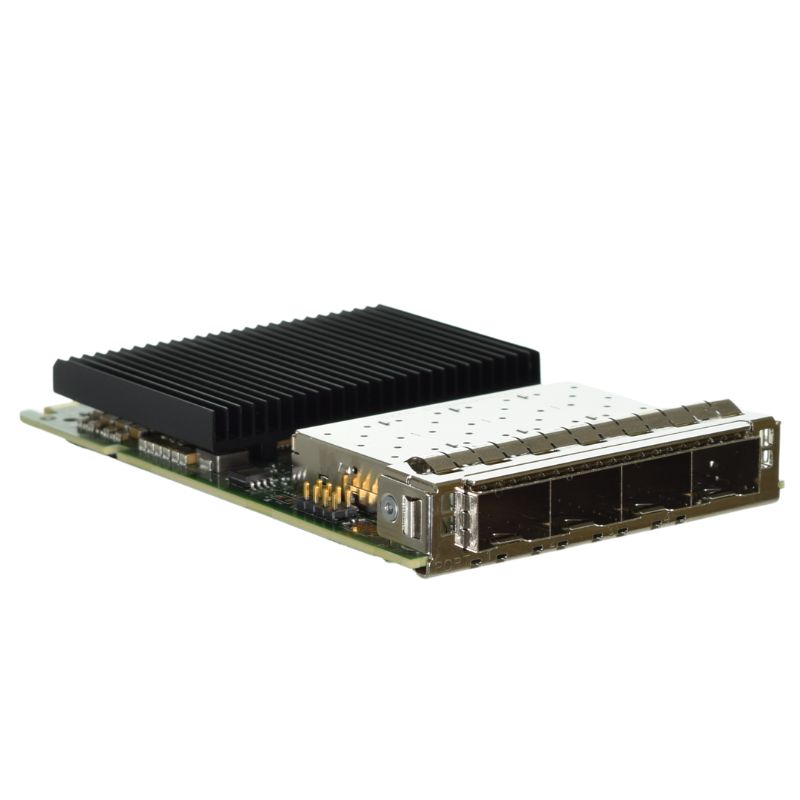


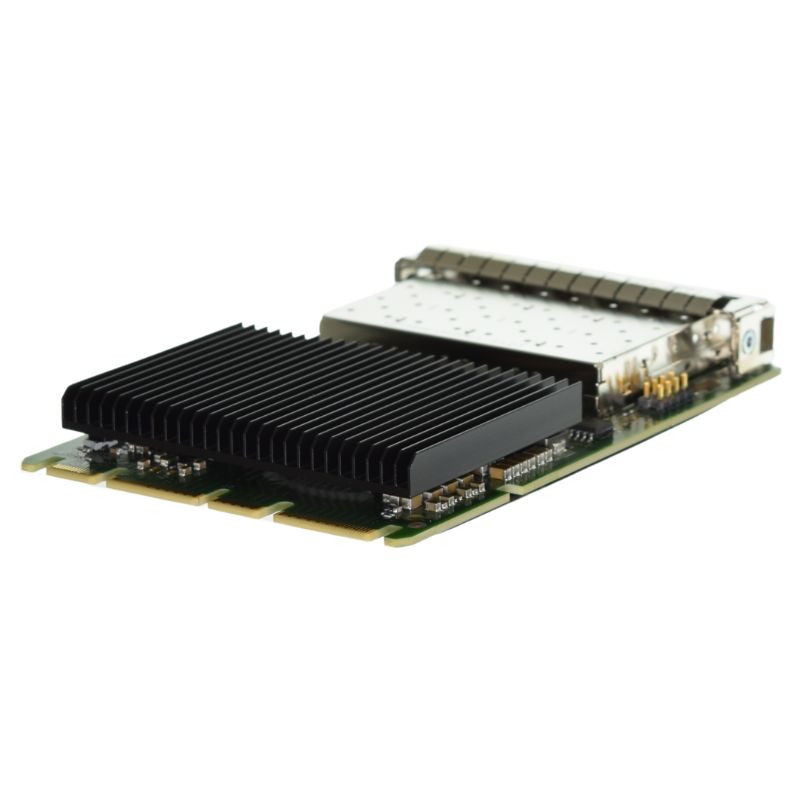
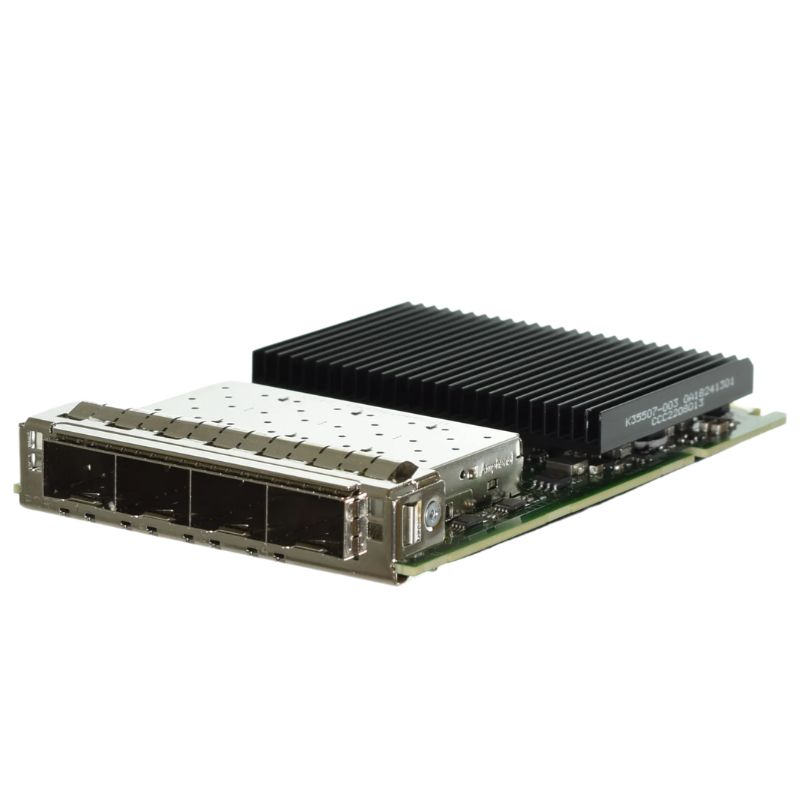
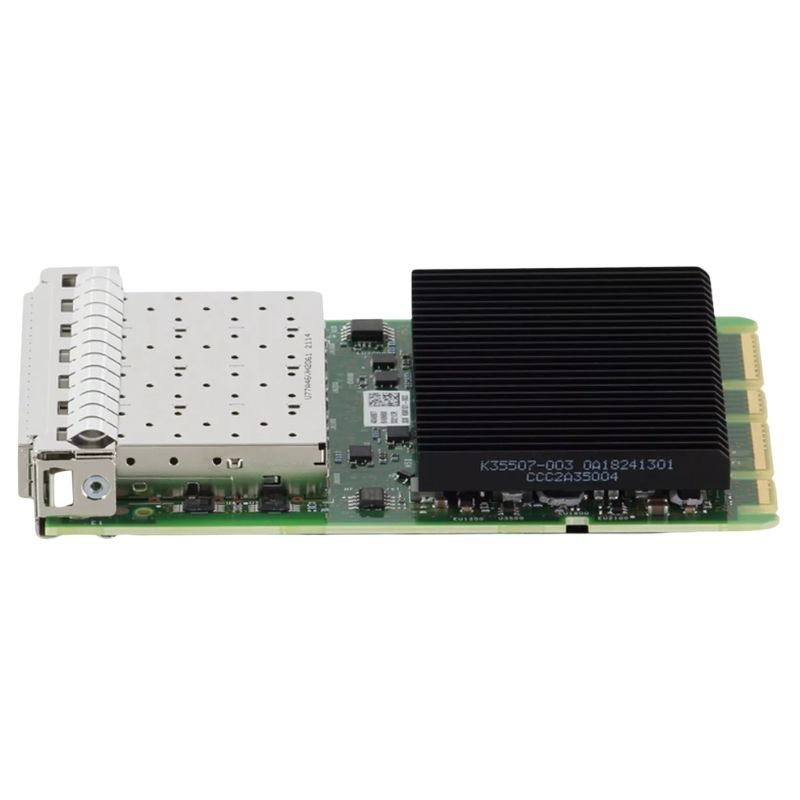
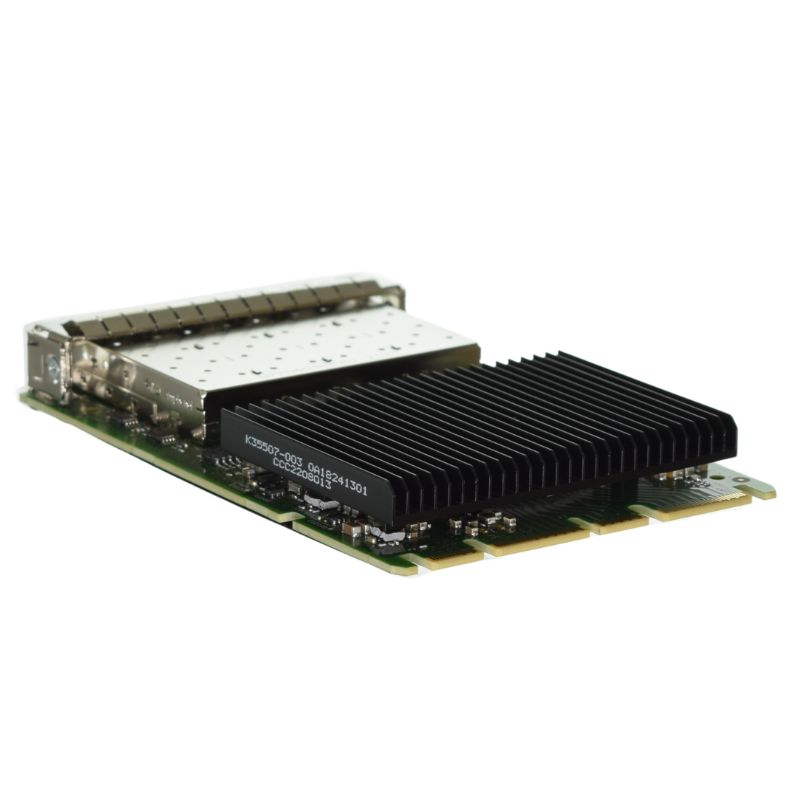
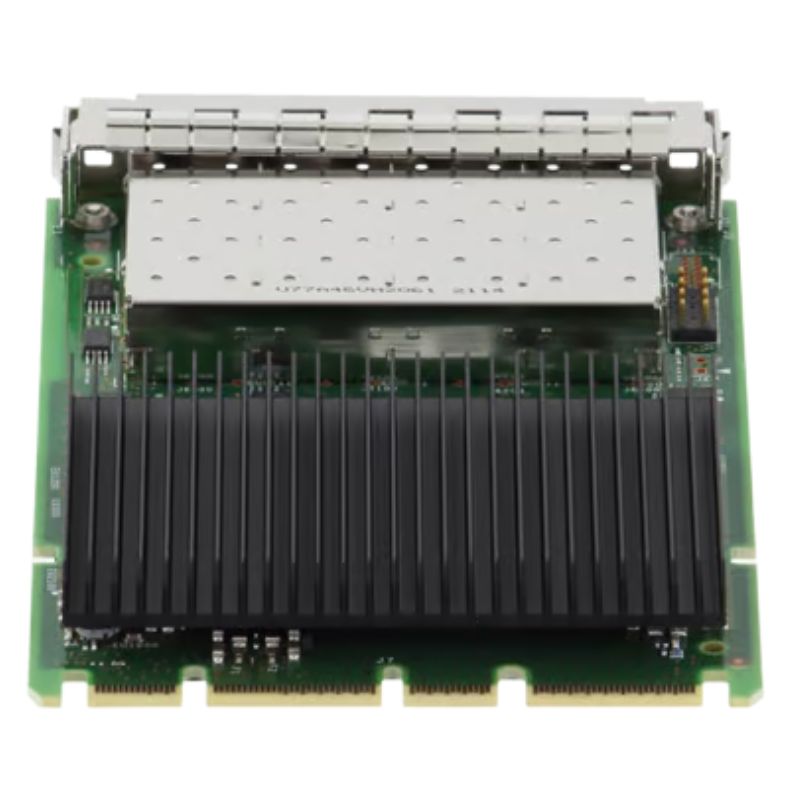
Dell 540-BCYM Intel E810-XXVDA4 25GbE OCP SFP28 4 Ports Network Adapter. New Sealed in Box (NIB) with 1 Year Replacement Warranty
The Dell 540-BCYM Intel E810 Quad-Port 25GbE SFP28 OCP NIC 3.0 is a powerful enterprise-grade network adapter designed for high-speed connectivity. With four SFP28 ports and OCP 3.0 compatibility, this card delivers reliable throughput, scalability, and efficiency for modern data centers, virtualization, and cloud infrastructures.
The Dell 540-BCYM Intel E810-XXVDA4 25GbE OCP SFP28 4 Ports Network Adapter represents a next-generation enterprise-grade networking solution engineered for modern data center workloads requiring high bandwidth, low latency, and exceptional scalability. Designed under the Open Compute Project (OCP) standard, this advanced network interface card integrates Intel’s E810 Ethernet controller architecture to deliver robust 25 Gigabit Ethernet (25GbE) performance across four high-speed SFP28 ports. It is optimized for cloud-scale infrastructures, virtualization environments, high-performance computing clusters, and storage-intensive applications where predictable throughput and deterministic latency are essential for operational efficiency.
At the core of the Dell 540-BCYM adapter lies Intel’s E810-XXVDA4 silicon, a highly optimized Ethernet controller designed to support multi-lane high-speed networking with hardware offloading capabilities. The architecture is built to minimize CPU overhead while maximizing packet processing efficiency through intelligent load balancing and offload engines. This ensures that network traffic is processed with minimal latency even under heavy multi-tenant workloads. The integration of four SFP28 interfaces enables parallel data transmission streams, significantly increasing aggregate throughput capacity while maintaining stable and consistent packet delivery performance across enterprise environments.
The Intel E810 controller used in this adapter is specifically engineered for scalability and performance consistency in modern distributed systems. It supports advanced packet classification, dynamic queue management, and adaptive interrupt moderation, all of which contribute to reducing bottlenecks in high-density server deployments. The controller architecture is also optimized for virtualization offloads, allowing multiple virtual machines to share the same physical network interface with minimal contention and reduced latency spikes.
Hardware acceleration features embedded within the Dell 540-BCYM adapter enable efficient handling of network-intensive workloads such as encryption, packet filtering, and segmentation. By shifting these tasks away from the CPU, system resources are freed to focus on application-level processing. This results in improved system responsiveness, reduced processing delays, and enhanced workload density per server node.
The adoption of 25GbE networking technology in the Dell 540-BCYM adapter ensures a significant leap in bandwidth capacity compared to traditional 10GbE solutions. Each of the four SFP28 ports operates independently, delivering high-throughput connectivity for east-west and north-south traffic flows within distributed computing environments. This is particularly beneficial for hyperscale data centers where microservices architectures generate massive internal communication overhead.
The multi-port configuration allows for effective bandwidth aggregation strategies that improve overall network utilization efficiency. Traffic can be distributed dynamically across all four ports, reducing congestion and ensuring consistent throughput levels. This design is especially beneficial for clustered applications and distributed storage systems that require predictable network performance under variable loads.
One of the key strengths of the 25GbE architecture is its ability to maintain extremely low latency even under sustained high traffic conditions. The Dell 540-BCYM adapter minimizes packet processing delays through optimized queue structures and streamlined interrupt handling mechanisms. This is essential for latency-sensitive applications such as financial trading systems, real-time analytics, and high-frequency data replication environments.
The Open Compute Project (OCP) form factor used in the Dell 540-BCYM adapter provides significant advantages in terms of modularity, airflow optimization, and system integration flexibility. Unlike traditional PCIe network adapters, OCP NICs are designed for high-density server architectures where thermal efficiency and serviceability are critical. This ensures improved cooling performance and reduced energy consumption across large-scale deployments.
The OCP design promotes optimized airflow within server chassis, reducing thermal hotspots and improving overall system stability. This is particularly important in dense rack environments where multiple high-performance servers operate simultaneously under heavy workloads. The improved thermal characteristics contribute to extended hardware lifespan and reduced maintenance overhead.
The modular nature of OCP network adapters allows for easier maintenance and replacement without significant system downtime. The Dell 540-BCYM adapter can be integrated seamlessly into compatible Dell server platforms, ensuring quick deployment and simplified lifecycle management in enterprise IT environments.
The SFP28 interface standard used in this adapter supports both optical fiber transceivers and direct attach copper cables, providing flexibility in network infrastructure design. This adaptability enables organizations to tailor their connectivity solutions based on distance requirements, bandwidth needs, and cost considerations.
With SFP28 support, network architects can implement diverse topologies ranging from short-reach intra-rack connections to long-distance inter-data center links. This flexibility makes the Dell 540-BCYM adapter suitable for a wide range of deployment scenarios including enterprise campuses, cloud data centers, and hybrid cloud infrastructures.
The adapter ensures high signal integrity through advanced encoding and error correction mechanisms. This results in reduced packet loss, improved transmission accuracy, and stable long-duration network sessions, which are essential for mission-critical applications.
The Dell 540-BCYM Intel E810-XXVDA4 adapter is designed for a wide range of enterprise and hyperscale workloads. Its high bandwidth and low latency characteristics make it suitable for cloud service providers, large enterprise data centers, telecommunications infrastructure, and research computing clusters.
In cloud environments, the adapter supports rapid provisioning of virtual machines and containerized workloads by ensuring efficient network virtualization and isolation. This is critical for maintaining service-level agreements in multi-tenant environments where network performance must remain consistent across diverse workloads.
Big data processing frameworks benefit significantly from high-speed networking, and the Dell 540-BCYM adapter provides the required throughput for distributed computing tasks. Data ingestion, transformation, and replication processes are accelerated, reducing overall processing time and improving analytics responsiveness.
In HPC clusters, the adapter ensures synchronized data exchange between compute nodes. This is essential for scientific simulations, machine learning training models, and computational fluid dynamics workloads where inter-node communication speed directly impacts overall performance efficiency.
The adapter is optimized for virtualization platforms that require efficient network segmentation and resource allocation. It supports advanced virtualization offloads that reduce hypervisor overhead and improve VM density per physical host. This results in better resource utilization and lower operational costs.
Single Root I/O Virtualization (SR-IOV) capabilities allow the physical network interface to be divided into multiple virtual functions, enabling direct assignment to virtual machines. This enhances network performance by bypassing the hypervisor for data path operations.
The adapter integrates seamlessly with SDN architectures, enabling programmable network configurations and dynamic traffic management. This allows administrators to implement automated network policies that adapt to changing workload demands in real time.
Security is a critical component of enterprise networking, and the Dell 540-BCYM adapter incorporates multiple layers of protection to ensure data integrity and secure transmission. Hardware-based encryption support and secure boot mechanisms help safeguard network communications from unauthorized access and tampering.
By offloading encryption tasks to dedicated hardware components, the adapter ensures that secure communications do not negatively impact system performance. This is particularly important for environments handling sensitive data or regulated workloads.
Advanced segmentation capabilities allow administrators to isolate network traffic across different tenants or applications. This reduces the risk of data leakage and improves overall network security posture in multi-user environments.
The Dell 540-BCYM adapter is specifically designed for integration with Dell server platforms that support OCP NIC architecture. This ensures seamless hardware compatibility, firmware alignment, and driver support across enterprise deployments. It is commonly used in rack-mounted servers designed for high-density computing workloads.
Dell provides optimized firmware and driver packages that ensure maximum performance and stability. Regular updates enhance compatibility with evolving network standards and improve system resilience under heavy workloads.
Proper deployment of the Dell 540-BCYM adapter requires consideration of airflow, rack density, and network topology design. Its OCP form factor simplifies installation in compatible systems, allowing for tool-less integration in many cases. Proper configuration ensures optimal performance and long-term reliability in production environments.
Network administrators can fine-tune performance parameters such as buffer allocation, queue depth, and interrupt moderation to align with specific workload requirements. This ensures that the adapter performs efficiently under both steady-state and burst traffic conditions.
To achieve maximum performance, enterprises often implement tuning strategies that align hardware capabilities with application requirements. The Dell 540-BCYM adapter supports extensive configuration options that allow optimization for latency-sensitive or throughput-intensive workloads.
Quality of Service configurations enable prioritization of critical traffic streams, ensuring that mission-critical applications receive necessary bandwidth even during peak usage periods. This is essential in environments with mixed workload types.
The Dell 540-BCYM Intel E810-XXVDA4 adapter is designed with scalability in mind, supporting the evolving needs of modern IT infrastructures. As organizations transition toward higher bandwidth requirements and distributed architectures, this adapter provides a future-ready solution capable of supporting next-generation workloads.
The architecture is designed to accommodate emerging networking standards and protocols, ensuring long-term usability in rapidly changing technology environments. This reduces the need for frequent hardware replacement cycles.


 Contact Us
 Information
 Catalog
 Solid State Drives (SSD)
 Network Switches
 Hard Disk Drives
 HBA & Controllers
 PC & Servers
 PC & Server Memory
 CPU & Processors
 Network Routers
 Power Supplies
 Tape Drives & Libraries
 Network Devices
 Computer & Network Cables