(7% discount is applied at checkout)
Cart is empty
Your go-to destination for cutting-edge server products
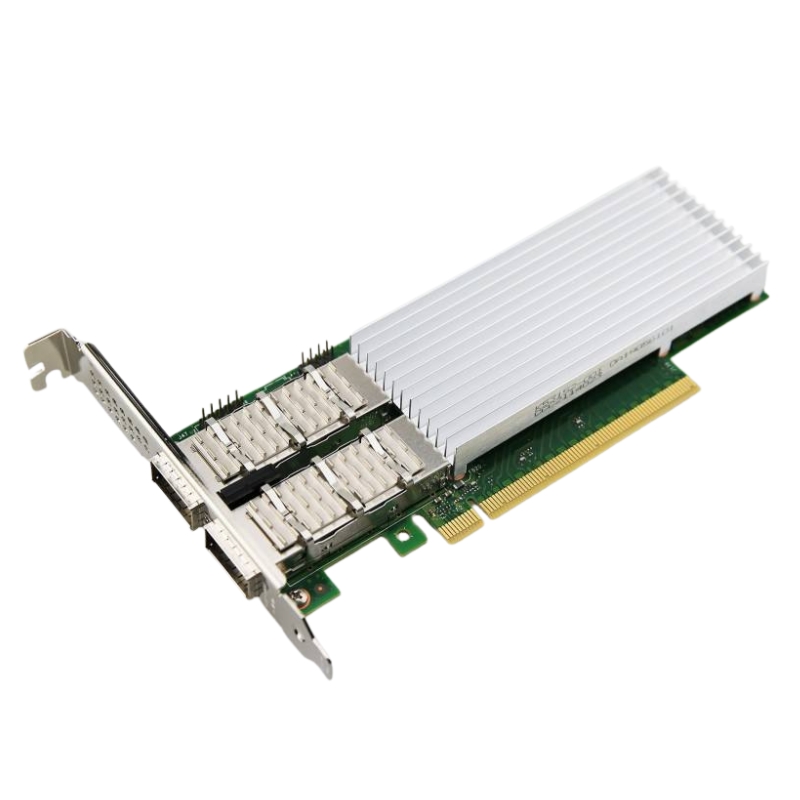


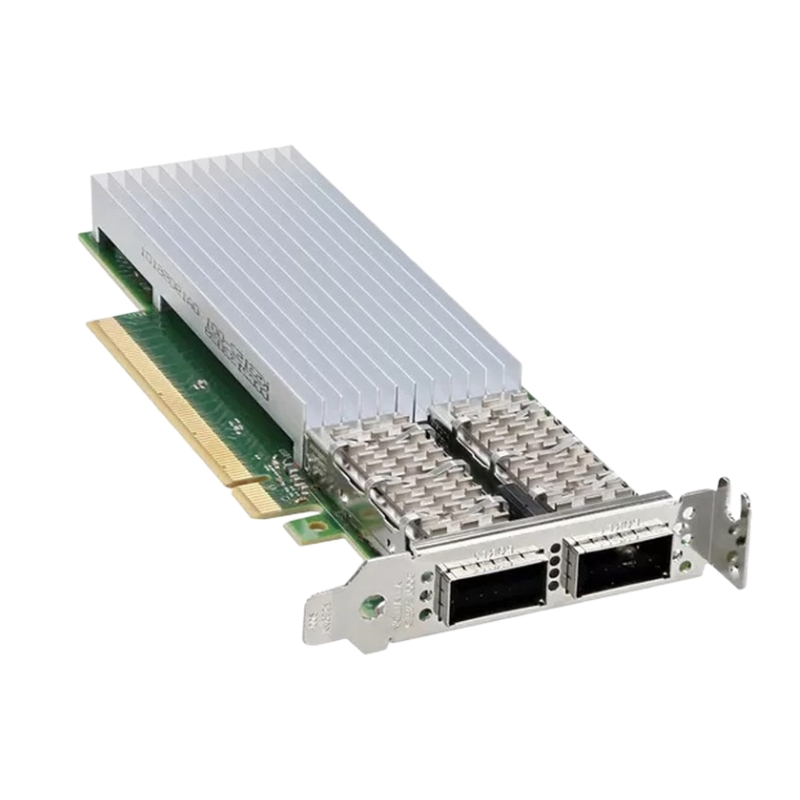
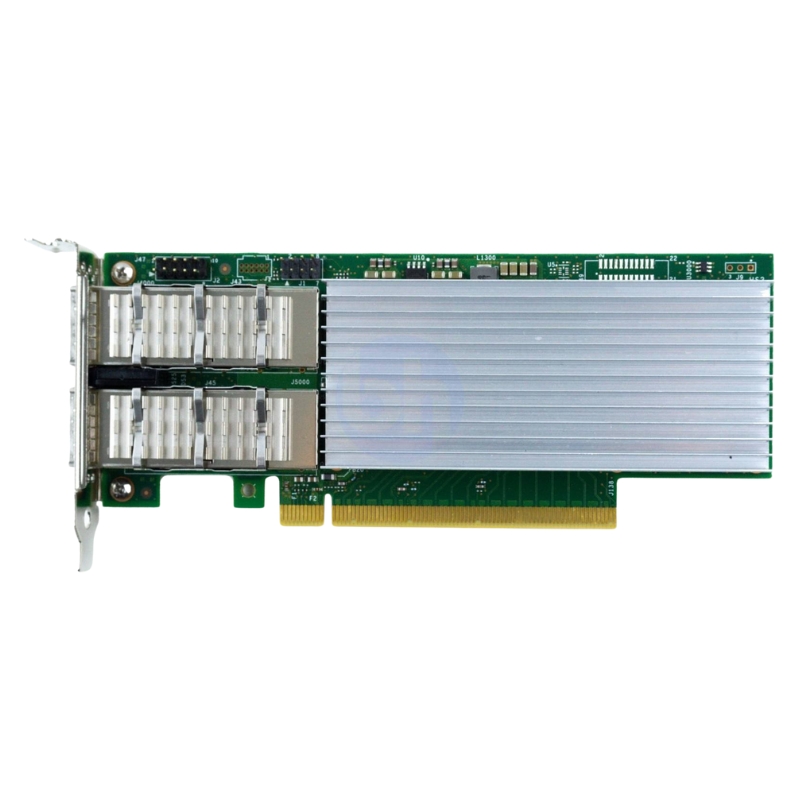
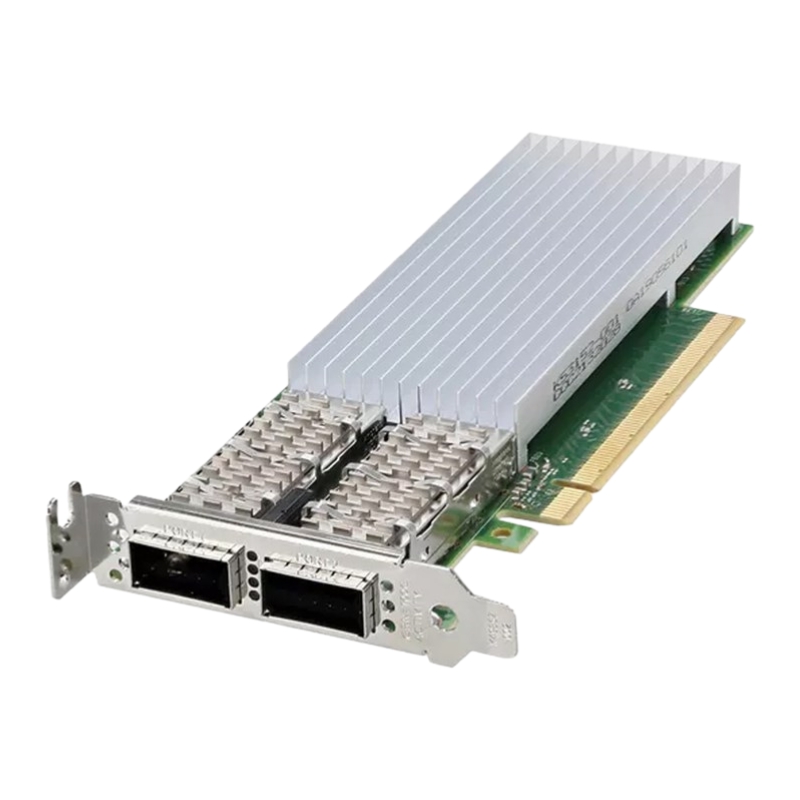
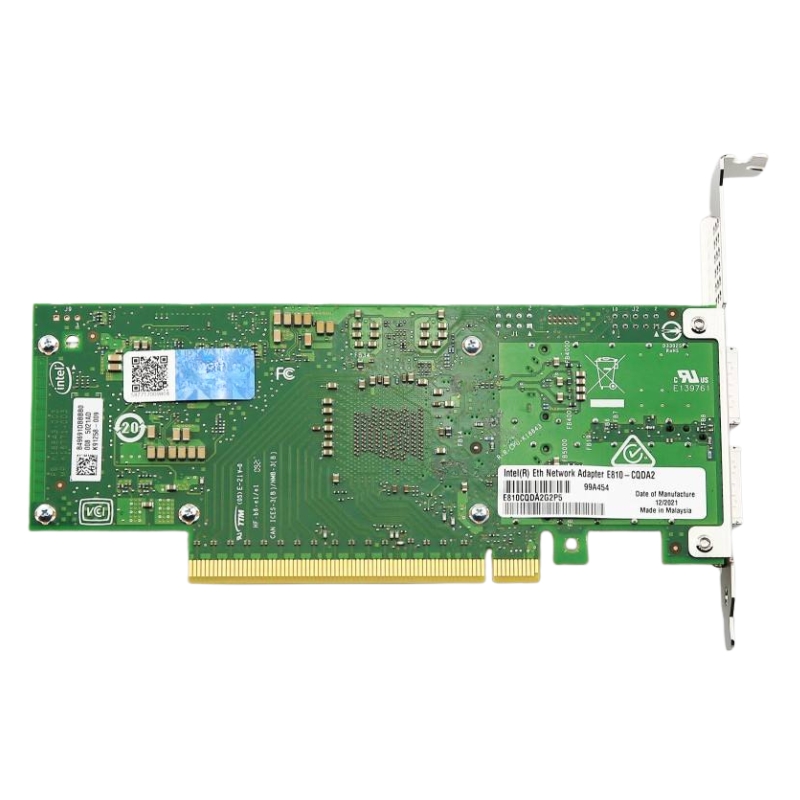
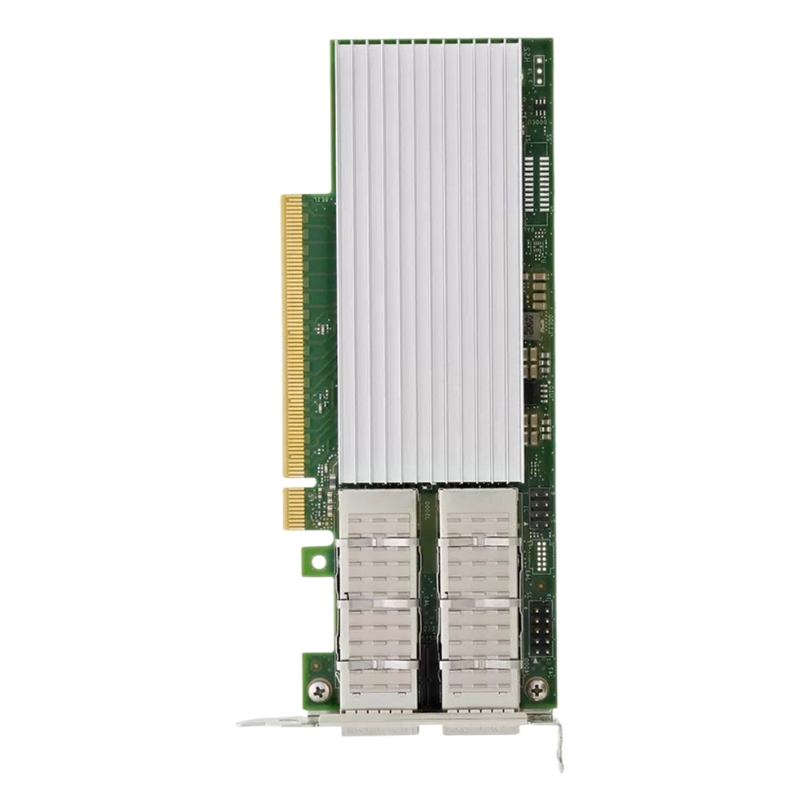
Dell 540-BCZI Intel E810 Dual Port 100GBE QSFP28 PCI-E Low Profile Network Adapter. New Sealed in Box (NIB) with 1 Year Warranty - Intel Version
The Dell 540-BCZI Intel E810 Dual-Port 100GbE QSFP28 PCIe Low Profile Adapter is a high-performance enterprise networking solution engineered for ultra-fast connectivity. With PCI Express 4.0 support and QSFP28 ports, this adapter ensures reliable throughput, scalability, and efficiency for modern data centers, virtualization, and cloud infrastructures.
The Dell 540-BCZI Intel E810 Dual Port 100GbE QSFP28 PCI-E Low Profile Network Adapter represents a high-end enterprise networking solution engineered for demanding data center environments, cloud infrastructures, virtualization platforms, and high throughput computing workloads. Built on the Intel Ethernet E810 controller architecture, this adapter is designed to deliver ultra-low latency, exceptional bandwidth scalability, and advanced network virtualization capabilities. Its dual-port 100 Gigabit Ethernet configuration enables organizations to achieve massive data movement efficiency while maintaining stability, reliability, and deterministic network performance under heavy workloads.
As data-driven ecosystems continue to evolve, enterprises require network interfaces capable of supporting artificial intelligence workloads, real-time analytics, distributed storage systems, and high-frequency trading platforms. This adapter is designed specifically to address such requirements by combining PCI Express Gen4 architecture with QSFP28 optical connectivity, ensuring that bottlenecks are minimized while throughput is maximized across complex network topologies.
At the heart of the Dell 540-BCZI network adapter lies the Intel Ethernet E810 controller, which introduces a significant leap in network interface performance. This controller is optimized for high packet processing rates, advanced traffic management, and hardware-based acceleration features that offload CPU overhead. The architecture is specifically designed to handle modern cloud-native workloads that require consistent packet delivery and reduced jitter across distributed systems.
The E810 controller integrates advanced packet scheduling mechanisms that improve efficiency in multi-queue environments. This ensures that workloads such as virtualization clusters, containerized applications, and storage replication systems receive balanced network resource allocation. The hardware acceleration engine significantly reduces CPU utilization by handling checksum offloading, segmentation offloading, and encryption processing directly at the adapter level.
Virtualized infrastructures benefit greatly from the Intel E810 architecture as it supports SR-IOV technology, allowing multiple virtual machines to share a single physical network adapter while maintaining isolated performance channels. This ensures predictable latency and high bandwidth availability for each virtual instance, making it ideal for enterprise cloud deployments and hybrid infrastructure models.
The dual port 100GbE QSFP28 interface enables simultaneous high-speed data transmission across two independent channels, effectively doubling network efficiency in compatible infrastructures. This level of throughput is essential for data-intensive operations such as real-time analytics, machine learning model training, and large-scale storage replication systems. Each QSFP28 port is capable of handling extremely large packet volumes without degradation in performance.
The QSFP28 interface supports both optical fiber transceivers and direct attach copper cables, providing flexibility in deployment scenarios. This adaptability allows organizations to scale network infrastructures according to distance requirements, rack density, and environmental constraints. Whether deployed in short-range data center racks or long-distance backbone interconnects, the adapter maintains consistent performance levels.
Latency-sensitive applications require optimized data paths that minimize processing delays. The Dell 540-BCZI adapter is engineered with cut-through processing and hardware-level queue management, ensuring that packets are transmitted with minimal delay. This is particularly beneficial for financial trading systems, high-performance computing clusters, and distributed AI inference engines where microsecond-level latency differences are critical.
The PCI Express Gen4 x16 interface provides a high-bandwidth communication channel between the network adapter and the host system. This ensures that the full 100GbE capacity of each port can be utilized without PCIe bottlenecks. The increased lane speed of Gen4 architecture significantly enhances data transfer efficiency compared to previous generations, supporting modern server workloads with ease.
Designed for Dell enterprise servers, the adapter integrates seamlessly with supported hardware platforms, ensuring plug-and-play compatibility in most configurations. The low-profile form factor allows installation in dense rack-mounted servers where space optimization is essential. This makes it suitable for hyperscale data centers where maximizing compute density per rack unit is a primary objective.
Efficient thermal design is a critical factor in maintaining sustained performance in high-density server environments. The adapter incorporates intelligent power management features that dynamically adjust energy consumption based on workload intensity. This ensures reduced operational costs while maintaining stable thermal thresholds even under continuous high throughput conditions.
Single Root I/O Virtualization enables the adapter to partition physical network resources into multiple virtual functions. This allows independent virtual machines or containers to access dedicated network resources without interference. Such isolation improves performance consistency and enhances security in multi-tenant cloud environments.
By offloading network processing tasks from the CPU to the adapter hardware, system efficiency is significantly improved. Tasks such as packet filtering, routing decisions, and encapsulation are handled directly by the controller. This allows server CPUs to focus on application-level workloads rather than network processing overhead.
Modern cloud infrastructures require flexible and programmable networking solutions. The Intel E810-based architecture supports advanced APIs and programmable data planes that integrate seamlessly with cloud orchestration platforms. This ensures compatibility with Kubernetes-based deployments and distributed microservices architectures.
Storage environments such as SAN and NVMe over Fabrics benefit significantly from the 100GbE bandwidth capabilities of this adapter. Large-scale data replication, backup operations, and distributed storage clustering can be executed with minimal latency and maximum throughput efficiency.
In enterprise disaster recovery setups, rapid data replication is essential. The adapter ensures that large datasets can be synchronized across geographically distributed locations without significant performance degradation. This improves recovery time objectives and enhances business continuity strategies.
Distributed file systems rely heavily on consistent network performance. The Dell 540-BCZI adapter ensures stable throughput and reduced packet loss, enabling file systems to maintain integrity across multiple nodes. This is particularly important in big data environments where large-scale file access is continuous and concurrent.
Security processing is increasingly important in modern networking environments. The Intel E810 controller includes hardware acceleration for encryption and decryption tasks, enabling secure data transmission without compromising performance. This is essential for encrypted storage traffic and secure cloud communication channels.
Virtual network isolation ensures that workloads operating in shared environments remain secure from cross-tenant interference. The adapter enforces strict separation of virtual functions, maintaining data integrity and access control across all network layers.
Integrated filtering capabilities allow for intelligent packet inspection at the hardware level. This reduces exposure to malicious traffic and enhances the overall security posture of enterprise networks. By processing filtering rules at the adapter level, system overhead is reduced and response times are improved.
The dual port configuration enables intelligent load distribution across multiple network channels. This ensures that no single port becomes a bottleneck during peak traffic conditions. Workloads can be distributed dynamically based on network demand, improving overall system efficiency.
Hyperscale environments require networking solutions that scale horizontally without degradation in performance. The Dell 540-BCZI adapter supports large-scale deployments where thousands of nodes communicate simultaneously, maintaining consistent performance metrics across the entire infrastructure.
Redundancy is a critical component of enterprise networking design. The dual port architecture allows failover configurations that ensure continuous connectivity even in the event of port or link failure. This enhances system resilience and uptime reliability.
The low profile design of the adapter allows it to be installed in compact server chassis where space constraints are significant. This is particularly useful in blade servers and high-density rack configurations where maximizing compute per rack unit is essential.
Compact hardware design contributes to better airflow management within server enclosures. This helps maintain optimal thermal conditions, reducing the risk of overheating and ensuring sustained high performance during continuous workloads.
Data centers benefit from hardware that supports efficient rack utilization. By minimizing physical footprint while maximizing performance output, this adapter contributes to improved infrastructure planning and reduced operational complexity.
AI and machine learning workloads require massive data movement between compute nodes and storage systems. The high bandwidth capabilities of this adapter make it suitable for distributed training environments where large datasets must be transferred continuously and efficiently.
Financial systems depend on ultra-low latency networking to execute trades in microseconds. The optimized packet processing architecture ensures that latency is minimized, improving transaction speed and market responsiveness.
Cloud providers rely on scalable and efficient networking solutions to serve thousands of customers simultaneously. The adapter’s virtualization capabilities and high throughput performance make it ideal for multi-tenant cloud environments.
Big data frameworks require high-speed interconnects for distributed processing. This adapter ensures that data pipelines remain efficient, reducing processing time and improving analytical accuracy across large datasets.


 Contact Us
 Information
 Catalog
 Solid State Drives (SSD)
 Network Switches
 Hard Disk Drives
 HBA & Controllers
 PC & Servers
 PC & Server Memory
 CPU & Processors
 Network Routers
 Power Supplies
 Tape Drives & Libraries
 Network Devices
 Computer & Network Cables