(7% discount is applied at checkout)
Cart is empty
Your go-to destination for cutting-edge server products
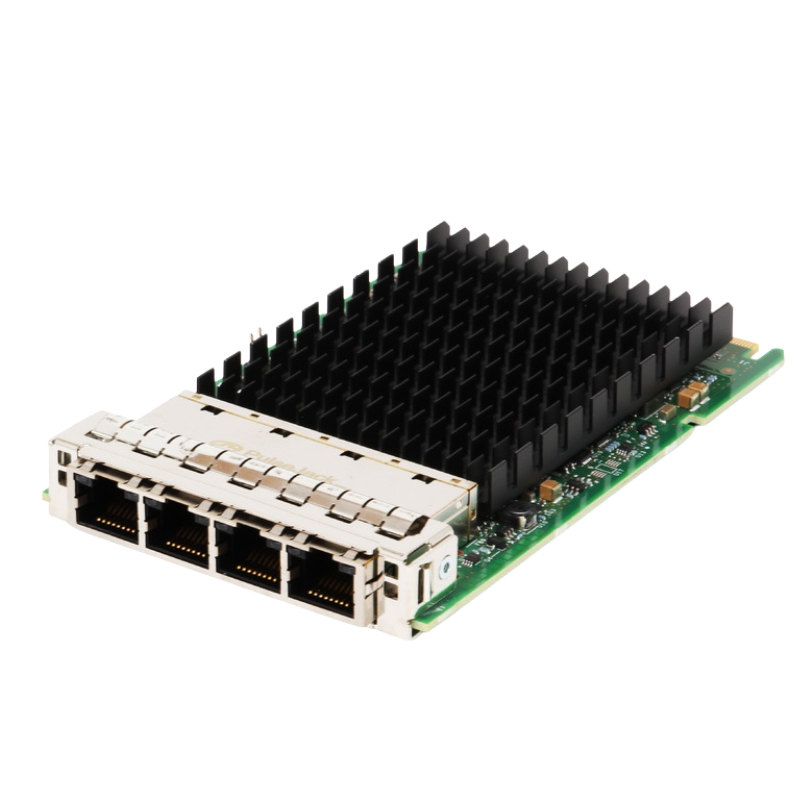


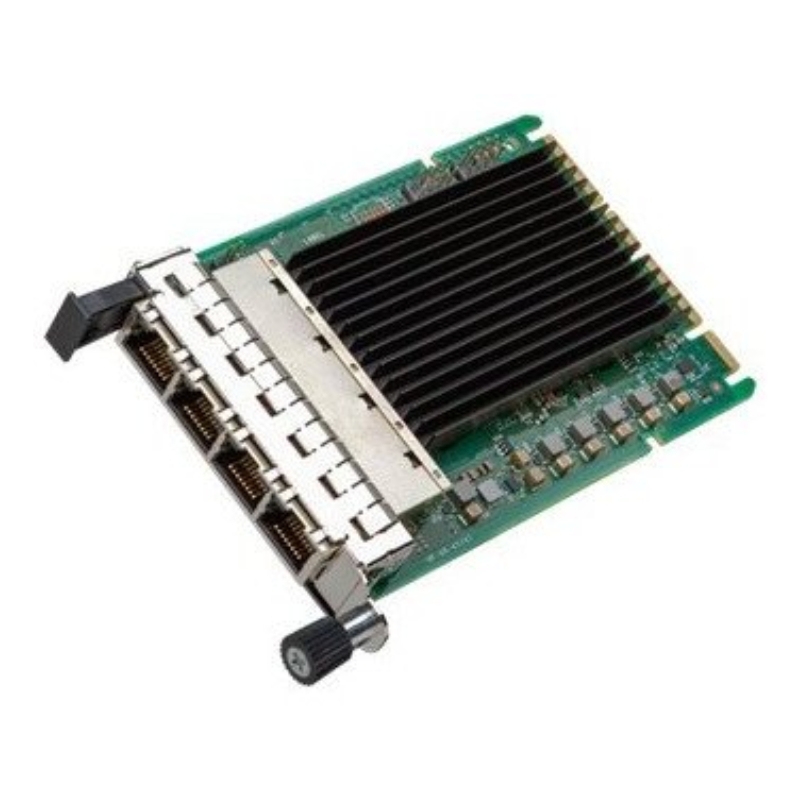
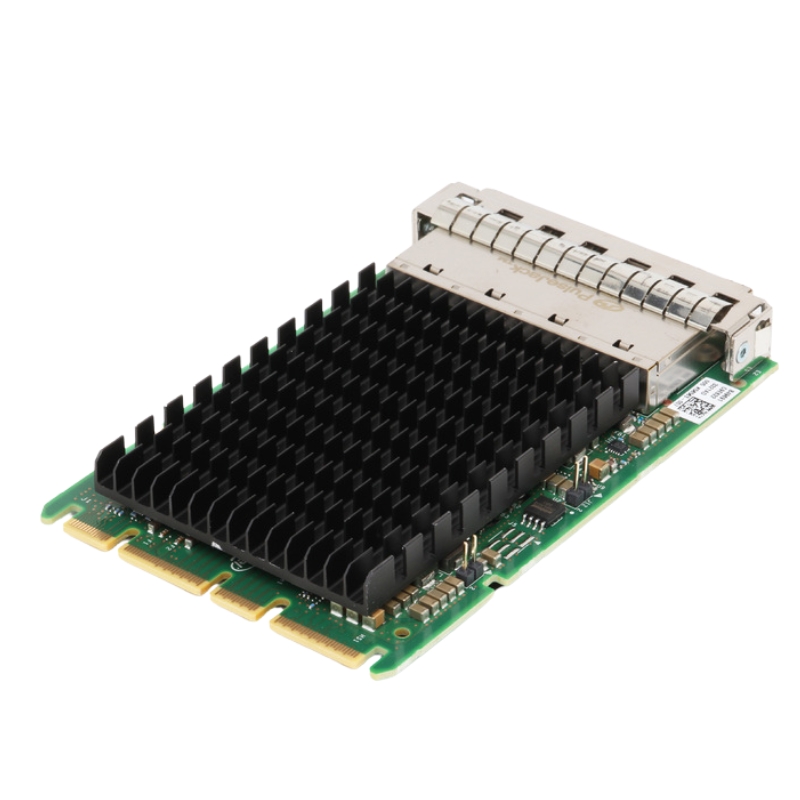
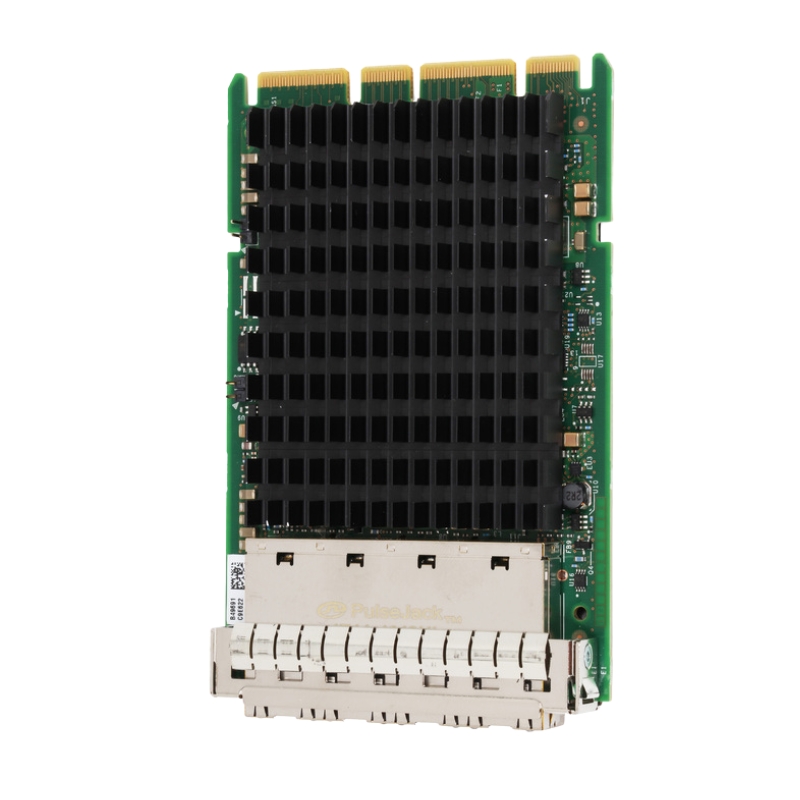
Dell 540-BFDQ Intel X710T4LOCPV3 10 Gigabit Ethernet PCI-E Network Adapters with 4 Ports. Excellent Refurbished with 1 year replacement warranty
The Dell 540-BFDQ Intel X710-T4L OCP 3.0 network adapter is a high-performance quad-port Ethernet solution designed for enterprise servers requiring reliable, scalable, and multi-gigabit connectivity. Built for modern data centers, virtualization environments, and cloud infrastructure, this 10 Gigabit Ethernet adapter delivers stable copper-based networking with flexible speed negotiation and optimized throughput for demanding workloads.
The Dell 540-BFDQ Intel X710T4LOCPV3 10 Gigabit Ethernet PCI-Express Network Adapter represents a high-performance, enterprise-grade networking solution engineered for modern data center environments that demand high throughput, low latency, and exceptional scalability. Designed with four independent 10 Gigabit Ethernet ports, this adapter delivers dense connectivity for server virtualization, cloud computing infrastructures, storage networking, and high-speed application delivery systems. It is built to integrate seamlessly into Dell PowerEdge server ecosystems while leveraging Intel’s advanced Ethernet controller technology to optimize packet processing efficiency and minimize CPU overhead in mission-critical workloads.
As organizations transition toward software-defined data centers and hybrid cloud architectures, the demand for reliable, multi-port 10GbE adapters has increased significantly. The Dell 540-BFDQ Intel X710T4LOCPV3 addresses this need by offering a balanced combination of performance, energy efficiency, and advanced networking features that support both traditional enterprise workloads and next-generation cloud-native applications.
At the core of this network adapter lies the Intel X710 Ethernet controller, a highly optimized silicon architecture designed for high-speed packet processing and advanced network offloading capabilities. The X710 controller is widely recognized in enterprise networking environments for its ability to support multiple 10GbE ports with consistent performance under heavy traffic conditions. It enhances system efficiency by reducing CPU utilization through intelligent offloading of networking tasks such as checksum calculation, segmentation, and interrupt moderation.
The integration of Intel X710 technology ensures that the Dell 540-BFDQ adapter can handle complex networking workloads while maintaining stable throughput across all four ports simultaneously. This makes it particularly suitable for environments where network traffic is highly parallelized, such as virtualization clusters and distributed storage systems.
The PCI Express interface of the Dell 540-BFDQ Intel X710T4LOCPV3 network adapter is engineered to provide high bandwidth connectivity between the server motherboard and the network interface hardware. Utilizing a PCIe architecture, the adapter ensures low latency communication and efficient data transfer, which is essential for maintaining consistent network performance in enterprise workloads.
The PCIe design also enables scalable throughput capabilities that align with multi-core processor systems commonly found in modern servers. By distributing network processing tasks effectively across system resources, the adapter reduces bottlenecks and ensures that network-intensive applications maintain stable performance even under peak load conditions.
The Dell 540-BFDQ Intel X710T4LOCPV3 features a four-port 10 Gigabit Ethernet configuration utilizing 10GBASE-T copper connectivity. This design enables flexible and cost-effective deployment in existing Ethernet infrastructures, as it supports standard twisted-pair copper cabling commonly used in enterprise environments. The four-port architecture allows a single adapter to replace multiple lower-speed network cards, thereby reducing server slot utilization and improving overall system efficiency.
Each port operates independently, enabling advanced network segmentation, traffic balancing, and redundancy configurations. This is particularly beneficial in virtualized environments where multiple virtual machines require dedicated or shared high-speed network access without compromising performance or stability.
The 10GBASE-T implementation of the Dell 540-BFDQ adapter supports advanced structured cabling systems designed for high-speed Ethernet transmission. It is compatible with high-quality Cat6a and Cat7 copper cabling, which ensures optimal signal integrity and reduced interference across longer distances within data center racks and enterprise office environments.
This compatibility allows organizations to upgrade to 10 Gigabit Ethernet speeds without the immediate need to replace existing fiber-based infrastructure in all scenarios, making it a cost-efficient solution for gradual network modernization strategies. The copper-based interface also simplifies installation and maintenance while reducing deployment complexity in large-scale server environments.
The Dell 540-BFDQ Intel X710T4LOCPV3 network adapter is designed with advanced offloading technologies that significantly reduce the processing burden on host CPUs. These offloading mechanisms handle compute-intensive networking tasks directly on the adapter hardware, allowing server processors to focus on application-level workloads instead of packet-level processing.
This includes support for TCP/IP segmentation offload, large send offload, and checksum offloading, all of which contribute to improved system efficiency and reduced latency in high-throughput environments. By minimizing CPU intervention in network traffic handling, the adapter ensures more predictable performance under heavy data loads.
Single Root I/O Virtualization support enables the Dell 540-BFDQ adapter to allocate virtualized network interfaces directly to virtual machines. This capability allows multiple virtual machines to share the same physical network adapter while maintaining near-native performance levels. SR-IOV technology reduces overhead caused by hypervisor-based switching and improves overall network throughput in virtualized infrastructures.
In cloud computing environments, SR-IOV is particularly valuable because it enhances isolation between virtual machines while ensuring efficient bandwidth utilization. This results in improved scalability and better resource allocation in multi-tenant data center architectures.
The adapter is compatible with Data Plane Development Kit frameworks, enabling user-space packet processing for applications that require ultra-low latency networking. DPDK support allows network packets to bypass traditional kernel stacks, significantly improving packet processing speed and reducing jitter in high-performance computing environments.
This makes the Dell 540-BFDQ Intel X710T4LOCPV3 suitable for use cases such as financial trading systems, real-time analytics platforms, and high-frequency transaction processing systems where microsecond-level latency can impact operational outcomes.
The Dell 540-BFDQ 10 Gigabit Ethernet adapter is widely deployed in virtualization environments that rely on hypervisors such as VMware, Microsoft Hyper-V, and KVM. Its four-port architecture allows efficient distribution of network traffic across multiple virtual machines, improving bandwidth allocation and reducing network contention.
In multi-tenant cloud infrastructures, the adapter supports secure and isolated traffic flows between tenants while maintaining high throughput and low latency. This makes it ideal for Infrastructure-as-a-Service platforms, private cloud deployments, and hybrid cloud connectivity solutions.
Storage area networks and software-defined storage platforms benefit significantly from the high-speed capabilities of the Dell 540-BFDQ Intel X710T4LOCPV3 network adapter. It supports high-bandwidth data transfer between compute nodes and storage arrays, improving performance for distributed file systems and database applications.
The adapter’s ability to handle simultaneous multi-port traffic ensures consistent performance during large-scale backup operations, data replication processes, and real-time storage synchronization tasks.
In enterprise environments where uptime is critical, the four-port design enables advanced redundancy configurations that ensure continuous network availability. Network administrators can configure link aggregation and failover mechanisms to maintain uninterrupted service in the event of a port or cable failure.
This redundancy capability enhances system resilience and ensures that mission-critical applications remain operational even under adverse network conditions or hardware failures.
The Dell 540-BFDQ Intel X710T4LOCPV3 network adapter is specifically designed for compatibility with Dell PowerEdge server platforms, ensuring seamless integration with server firmware, management tools, and hardware architectures. This tight integration allows system administrators to deploy the adapter with minimal configuration effort while maintaining full compatibility with Dell enterprise support frameworks.
Its optimized firmware and driver support ensure stable operation across multiple generations of PowerEdge servers, making it a reliable choice for enterprise IT infrastructures that require long-term hardware consistency.
The adapter supports a wide range of enterprise operating systems and virtualization platforms, enabling flexible deployment across heterogeneous IT environments. This includes support for major Linux distributions, Windows Server editions, and virtualization hypervisors commonly used in enterprise data centers.
Such broad compatibility ensures that organizations can standardize their network infrastructure without being constrained by software limitations or integration challenges.
The Dell 540-BFDQ Intel X710T4LOCPV3 incorporates hardware-level security features designed to protect network traffic and reduce exposure to vulnerabilities. These features include secure packet processing, trusted firmware execution, and hardware-assisted traffic isolation capabilities.
By offloading security-related processing tasks to dedicated hardware components, the adapter reduces the risk of software-based bottlenecks while maintaining consistent protection for sensitive data flows across enterprise networks.
Designed for continuous operation in high-density server environments, the adapter features optimized thermal management characteristics that ensure stable performance under sustained workloads. Efficient power utilization and heat dissipation design contribute to improved hardware longevity and reduced operational costs in large-scale deployments.
In cloud data centers, the Dell 540-BFDQ Intel X710T4LOCPV3 plays a crucial role in supporting scalable network infrastructure capable of handling dynamic workloads and fluctuating traffic patterns. Its multi-port architecture enables efficient load balancing and resource allocation across virtualized environments.
High-performance computing clusters benefit from the adapter’s ability to deliver consistent 10 Gigabit Ethernet connectivity across multiple nodes. This ensures rapid data exchange between compute units, which is essential for scientific simulations, big data analytics, and machine learning workloads.


 Contact Us
 Information
 Catalog
 Solid State Drives (SSD)
 Network Switches
 Hard Disk Drives
 HBA & Controllers
 PC & Servers
 PC & Server Memory
 CPU & Processors
 Network Routers
 Power Supplies
 Tape Drives & Libraries
 Network Devices
 Computer & Network Cables