
(7% discount is applied at checkout)
Cart is empty
Your go-to destination for cutting-edge server products
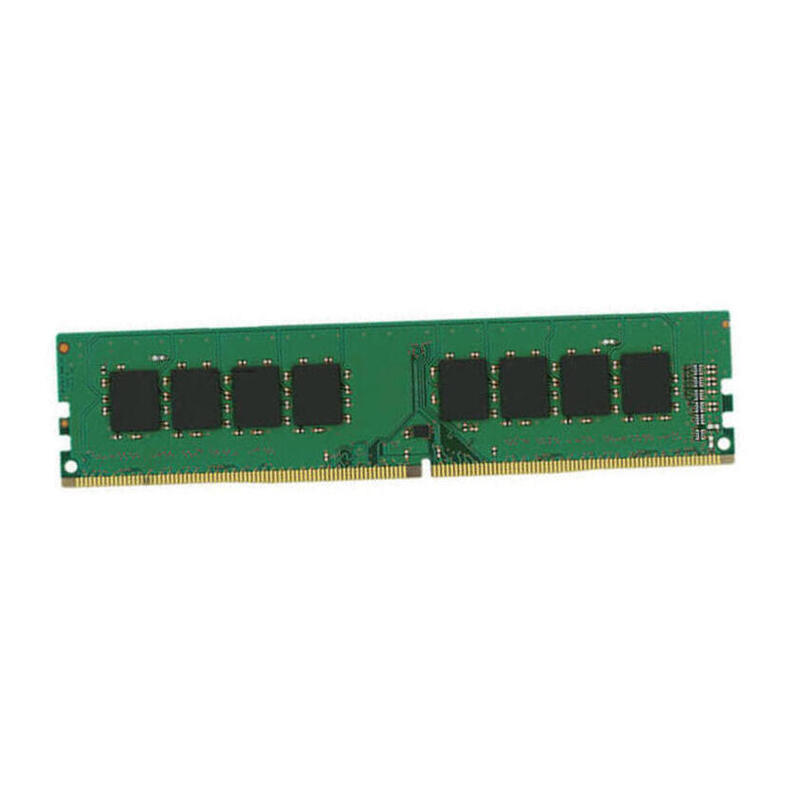
Supermicro MEM-DR464L-SL01-ER29 64GB 2933MHz Pc4-23400 Cl21 Ecc Registered Dual Rank X4 1.2v DDR4 SDRAM 288-Pin Rdimm Memory. New (System) Pull with 1 year replacement warranty - Samsung Version
| SKU/MPN | Warranty | Price | Condition | You save |
|---|---|---|---|---|
| MEM-DR464L-SL01-ER29 | 1 Year Warranty | $950.00 | New (System) Pull | You save: $332.50 (26%) |
| MEM-DR464L-SL01-ER29 | 1 Year Warranty | $1,099.00 | Factory-Sealed New in Original Box (FSB) | You save: $384.65 (26%) |
Supermicro MEM-DR464L-SL01-ER29 DDR4 Registered DIMMs (RDIMMs) provide exceptional performance and reliability tailored for a variety of computing environments. Engineered by Supermicro, these memory modules are part of the DDR4 SDRAM (Double Data Rate Fourth Generation Synchronous Dynamic Random-Access Memory) family, showcasing substantial improvements in speed and energy efficiency over older memory generations.
The Supermicro MEM-DR464L-SL01-ER29 64GB DDR4 RDIMM belongs to the enterprise-grade server memory category, a segment specifically engineered for reliability, scalability, and sustained performance in professional computing environments. This category encompasses DDR4 SDRAM Registered DIMM modules that are designed to support modern server processors and chipsets, enabling stable operation under continuous workloads. Enterprise DDR4 RDIMM memory plays a foundational role in data centers, private cloud infrastructures, virtualization platforms, and mission-critical enterprise systems where memory stability directly impacts application availability and data integrity.Registered memory differs fundamentally from unbuffered memory by introducing a register between the memory controller and the DRAM components. This design allows servers to support higher memory capacities while maintaining signal integrity, making RDIMM memory essential for multi-socket and high-density server architectures. The Supermicro 64GB 2933MHz RDIMM is positioned within this category as a balanced solution that prioritizes compatibility, efficiency, and reliability.
DDR4 SDRAM represents a significant advancement in memory technology for enterprise systems. Compared to earlier generations, DDR4 offers higher data transfer rates, increased module densities, and improved power efficiency. The PC4-23400 classification of this memory category indicates a theoretical bandwidth of up to 23.4GB per second, supporting faster data movement between processors and memory subsystems.In enterprise environments, these improvements translate into better application responsiveness, reduced latency bottlenecks, and enhanced overall system throughput. DDR4 memory has become the standard for modern server platforms, providing the performance headroom required for increasingly data-intensive workloads.
Error Correcting Code Registered memory defines a critical subcategory within the enterprise memory landscape. ECC functionality ensures that memory errors are detected and corrected automatically, preventing data corruption and system instability. This capability is particularly important in servers handling sensitive data, financial transactions, virtualization workloads, and large-scale databases.The ECC Registered design of the Supermicro MEM-DR464L-SL01-ER29 memory module enhances system reliability by combining error correction with registered buffering. This dual-layer protection minimizes the risk of undetected memory errors and supports consistent operation in environments where uptime and data accuracy are essential.
Registered buffering reduces the electrical load on the memory controller by buffering address and command signals. This allows servers to populate more memory slots without compromising signal quality. In enterprise systems with multiple DIMM slots per channel, registered memory is crucial for maintaining stable operation at higher capacities.The buffering mechanism also contributes to improved timing consistency, which is vital for multi-channel memory configurations commonly found in dual-socket and quad-socket servers.
The 64GB capacity classification places this Supermicro DDR4 RDIMM within the high-density memory category. High-capacity modules enable servers to achieve large memory configurations using fewer DIMMs, which can simplify system design and improve airflow within server chassis. This approach is particularly beneficial in dense rack-mounted environments where thermal efficiency and power consumption are key considerations.High-density memory modules support memory-intensive applications such as virtualization, in-memory databases, analytics platforms, and enterprise resource planning systems. By providing ample memory headroom, these modules help ensure that applications can scale without frequent hardware upgrades.
Using high-capacity RDIMM modules reduces the total number of DIMMs required to reach a target memory configuration. This can improve signal integrity, reduce power consumption, and simplify memory management. It also leaves additional DIMM slots available for future expansion, enhancing system flexibility.From an operational perspective, fewer DIMMs can mean easier maintenance and reduced potential points of failure, contributing to overall system reliability.
Dual Rank memory architecture is an important performance characteristic within this memory category. A dual rank RDIMM presents two independent ranks of memory to the memory controller, allowing better utilization of the memory bus. This design can improve effective memory bandwidth and optimize access patterns, particularly in workloads that benefit from interleaved memory access.The x4 organization of this module refers to the width of the individual DRAM chips, which is a common configuration in ECC RDIMM memory. This structure enhances error correction capabilities and supports higher reliability compared to wider x8 configurations.
Dual rank memory modules often deliver better real-world performance than single-rank modules in server environments. The ability to alternate access between ranks can help hide memory latency and improve throughput. This characteristic is especially valuable in multi-core processors where simultaneous memory requests are common.In enterprise workloads, the dual rank design contributes to smoother performance under load and more predictable system behavior.
Operating at 2933MHz, this DDR4 RDIMM falls within a performance-oriented speed category that balances frequency and compatibility. DDR4 2933MHz memory is widely supported by enterprise server processors and chipsets, making it a versatile choice for a broad range of server platforms.The PC4-23400 bandwidth rating reflects the module’s ability to deliver high data transfer rates, supporting applications that require fast memory access without pushing the limits of platform compatibility.
While higher-frequency memory can offer increased bandwidth, it may not be supported by all server platforms or may require specific configurations. DDR4 2933MHz memory strikes a balance by offering strong performance while maintaining broad compatibility across different generations of enterprise processors.This balance makes the 2933MHz category a popular choice for organizations seeking reliable performance without sacrificing flexibility.
CAS latency is a critical factor in memory performance, particularly in enterprise systems where consistent response times are important. The CL21 latency of this DDR4 RDIMM category is optimized for stable operation at 2933MHz, providing a predictable performance profile suitable for a wide range of workloads.Rather than focusing on minimal latency, enterprise memory prioritizes timing stability and compatibility, ensuring reliable operation under sustained loads.
In many enterprise applications, memory latency has a less pronounced impact than overall system stability and throughput. Databases, virtualization platforms, and analytics workloads benefit from consistent memory behavior that avoids unpredictable performance fluctuations.The CL21 timing of this memory category supports these requirements by delivering dependable performance across diverse usage scenarios.
DDR4 memory operates at a reduced voltage of 1.2V, representing a significant improvement in power efficiency compared to earlier DDR3 modules. This lower voltage reduces overall power consumption and heat generation, which is critical in data center environments with high server density.The Supermicro MEM-DR464L-SL01-ER29 module leverages this low-voltage operation to deliver energy-efficient performance without compromising reliability or speed.
Lower power consumption directly translates into reduced heat output, easing the burden on cooling systems. In dense server racks, effective thermal management is essential for maintaining stable operation and preventing component degradation.Energy-efficient memory modules contribute to lower operating costs and support sustainability initiatives by reducing overall energy usage.
The 288-pin RDIMM form factor defines the physical interface of this DDR4 memory category. This standardized design ensures compatibility with modern server motherboards and simplifies installation and replacement. The pin configuration and module dimensions are optimized for signal integrity and mechanical stability.Server-oriented memory modules are built to withstand the physical and thermal stresses associated with continuous operation, making the RDIMM form factor a reliable choice for enterprise systems.
Enterprise memory modules feature robust PCB designs and high-quality components to ensure long-term durability. The layout of traces and placement of components are carefully engineered to minimize signal interference and support stable high-speed operation.This attention to physical design contributes to the overall reliability of the memory category and supports consistent performance over extended service lifetimes.
This DDR4 ECC Registered memory category is designed for compatibility with a wide range of enterprise server platforms. It supports server processors and chipsets that require registered memory, including many configurations based on Intel Xeon and AMD EPYC architectures.Compatibility validation ensures that the memory operates reliably within supported systems, reducing deployment risks and simplifying system integration.
JEDEC compliance is a key attribute of enterprise memory modules, ensuring adherence to industry standards for voltage, timing, and signaling. This compliance enables interoperability across different server platforms and manufacturers.Standardized specifications allow IT teams to plan upgrades and expansions with confidence, knowing that compatible components will integrate seamlessly.
Enterprise memory categories are defined by their focus on reliability and long-term stability. The combination of ECC error correction, registered buffering, and rigorous validation processes ensures that these modules can operate continuously under demanding conditions.Supermicro memory modules undergo extensive testing to verify compatibility, performance consistency, and durability. These validation processes are critical for maintaining system integrity in enterprise environments where downtime is costly.
Many enterprise systems are required to operate 24 hours a day, seven days a week. Memory components in these systems must maintain stable performance over long periods without degradation. ECC RDIMM memory is specifically designed to meet these requirements, supporting mission-critical applications across various industries.Long-term stability is a key differentiator of enterprise memory categories compared to consumer-grade alternatives.
Scalability is a core advantage of the DDR4 RDIMM memory category. High-capacity modules such as the 64GB Supermicro MEM-DR464L-SL01-ER29 enable organizations to build systems that can scale with evolving workload demands. By supporting large memory configurations, this category helps extend the useful life of server infrastructure.As data volumes and application complexity continue to grow, scalable memory solutions remain essential for maintaining performance and cost efficiency.
Effective memory planning involves selecting modules that balance capacity, speed, and compatibility. High-density DDR4 RDIMM modules simplify expansion strategies by reducing the number of DIMMs required for large configurations. This approach enhances manageability and reduces the likelihood of compatibility issues.Strategic use of scalable memory solutions allows organizations to adapt to changing requirements without frequent hardware replacements.


 Contact Us
 Information
 Catalog
 Solid State Drives (SSD)
 Network Switches
 Hard Disk Drives
 HBA & Controllers
 PC & Servers
 PC & Server Memory
 CPU & Processors
 Network Routers
 Power Supplies
 Tape Drives & Libraries
 Network Devices
 Computer & Network Cables