
(7% discount is applied at checkout)
Cart is empty
Your go-to destination for cutting-edge server products
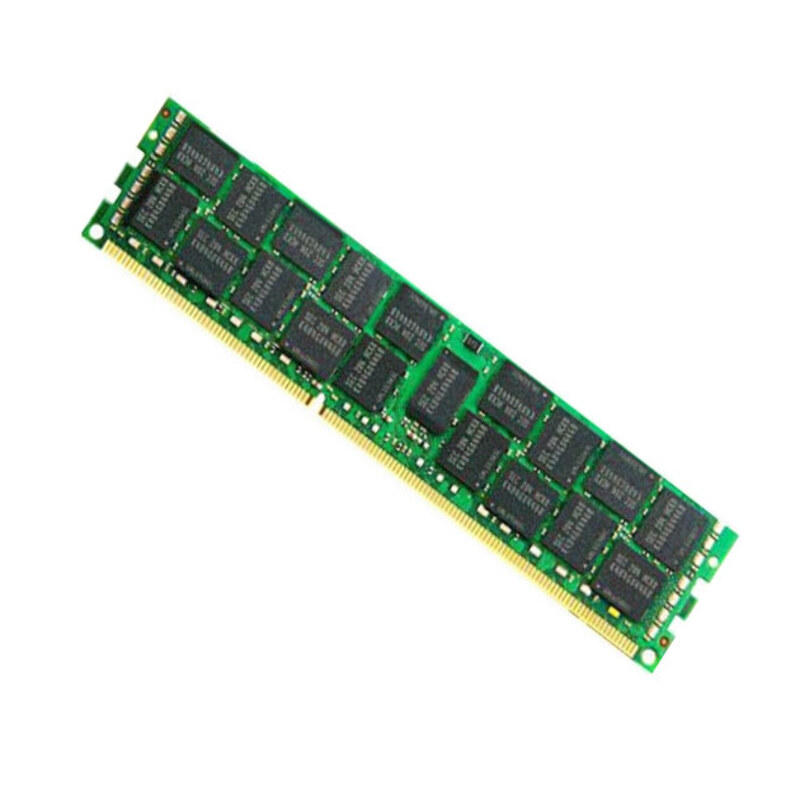
Supermicro MEM-DR464L-SL01-ER32 64GB 3200Mhz Pc4-25600 Cl24 Ecc Registered Dual Rank X4 1.2v DDR4 SDRAM 288-Pin Rdimm Memory. New (System) Pull with 1 year replacement warranty - Samsung Version
| SKU/MPN | Warranty | Price | Condition | You save |
|---|---|---|---|---|
| MEM-DR464L-SL01-ER32 | 1 Year Warranty | $1,199.00 | New (System) Pull | You save: $419.65 (26%) |
| MEM-DR464L-SL01-ER32 | 1 Year Warranty | $1,536.00 | New Sealed in Box (NIB) | You save: $537.60 (26%) |
The Supermicro MEM-DR464L-SL01-ER32 DDR4 Registered DIMMs (RDIMMs) set the standard for high-performance memory solutions, designed to cater to a broad spectrum of computing environments. These memory modules, engineered by Supermicro, represent the pinnacle of the DDR4 SDRAM family, significantly improving upon earlier iterations in both efficiency and processing power.
The Supermicro MEM-DR464L-SL01-ER32 64GB DDR4 RDIMM memory module belongs to the enterprise-class DDR4 ECC Registered memory category, engineered for professional server environments where reliability, scalability, and sustained performance are critical. This category is specifically designed to support modern data center workloads, including virtualization, cloud computing, enterprise databases, analytics platforms, and high-performance computing systems. Unlike consumer-grade memory, DDR4 ECC RDIMM modules are purpose-built to operate continuously under heavy load while maintaining strict data integrity standards.
Registered DIMM memory introduces a register between the memory controller and DRAM chips, reducing electrical load and improving signal stability. This design allows enterprise servers to support higher memory capacities and more populated DIMM slots without compromising performance or reliability. The Supermicro 64GB DDR4 RDIMM memory category reflects this architectural approach, delivering dependable memory performance in single-socket and multi-socket server platforms.
DDR4 memory technology represents a significant advancement in server memory architecture, offering higher data transfer rates, improved energy efficiency, and greater density compared to previous generations. DDR4 RDIMM memory is widely adopted across enterprise platforms due to its ability to balance performance and stability. Operating at 3200MHz, this memory category aligns with high-performance server CPUs that rely on fast and consistent memory access to maximize computational throughput.
As server processors continue to increase core counts, memory bandwidth and capacity become essential performance factors. DDR4 ECC Registered memory ensures that memory subsystems keep pace with processor advancements, enabling balanced and efficient system operation.
Error Correcting Code memory is a defining feature of enterprise server memory categories. ECC functionality continuously monitors data written to and read from memory, detecting and correcting single-bit errors in real time. This capability significantly reduces the risk of data corruption, system crashes, and silent memory errors that could compromise application accuracy or system stability.
When combined with registered buffering, ECC memory delivers a robust and resilient memory subsystem. Registered buffering stabilizes command and address signals, enabling servers to support higher memory densities while maintaining signal integrity. The Supermicro MEM-DR464L-SL01-ER32 module exemplifies this ECC Registered architecture, making it suitable for mission-critical computing environments.
Enterprise workloads often involve large datasets, complex transactions, and continuous processing. In such environments, even a single memory error can have cascading effects across applications and virtual machines. ECC memory mitigates these risks by correcting errors before they impact system operations.
Industries such as finance, healthcare, telecommunications, and scientific research rely heavily on ECC memory to ensure data accuracy and regulatory compliance. The ECC Registered memory category is therefore a foundational component of enterprise IT infrastructure.
The 64GB capacity classification places this Supermicro DDR4 RDIMM module in the high-density memory segment, designed for systems that require substantial memory resources. High-capacity memory modules are essential for memory-intensive applications such as virtualization clusters, in-memory databases, large-scale analytics, and enterprise resource planning platforms.
High-density RDIMM memory allows organizations to achieve large memory configurations using fewer DIMM slots. This approach simplifies system design, improves airflow, and reduces overall power consumption, contributing to more efficient and manageable server deployments.
Scalability is a core requirement in enterprise environments. High-capacity memory modules provide the flexibility to scale memory resources as workloads grow. By using 64GB RDIMM modules, IT teams can expand system memory without replacing existing infrastructure, extending the useful life of server investments.
Memory density also plays a critical role in virtualized and cloud environments, where multiple workloads share the same physical hardware. Adequate memory capacity ensures consistent performance and prevents resource contention.
Operating at 3200MHz, this DDR4 memory module belongs to a high-performance tier optimized for modern enterprise servers. DDR4-3200 provides increased memory bandwidth, supporting data-intensive workloads and multi-core processors that generate high levels of memory traffic.
The PC4-25600 bandwidth rating reflects the module’s ability to deliver up to 25.6GB/s of theoretical throughput. This level of performance helps reduce memory bottlenecks and ensures that processors can access data efficiently, even under heavy computational loads.
Modern enterprise applications often rely on parallel processing and simultaneous memory access. High memory bandwidth is essential for maintaining performance consistency across multiple threads and processes. DDR4-3200 memory supports these requirements by delivering faster data transfer rates and improved memory subsystem responsiveness.
This performance tier is particularly beneficial in environments running high-throughput databases, real-time analytics engines, and large-scale virtualization platforms.
CAS latency is a key factor in memory responsiveness, representing the delay between a memory request and data availability. The CL24 latency rating of this DDR4 RDIMM module reflects a timing profile optimized for enterprise stability and compatibility. While lower latency can improve responsiveness, enterprise environments prioritize predictable and consistent timing behavior.
CL24 latency ensures reliable operation across diverse server platforms and memory configurations, supporting stable performance in long-running workloads and multi-socket systems.
Enterprise systems often run workloads that require consistent performance rather than peak responsiveness. Balanced latency characteristics help maintain uniform application behavior, reducing performance variability and simplifying capacity planning.
Optimized latency also supports efficient memory interleaving and balanced access across memory channels, enhancing overall system performance.
Dual Rank memory architecture presents multiple ranks of memory to the memory controller, allowing improved interleaving and better utilization of the memory bus. Each rank functions as an independent memory array, enabling the controller to access data more efficiently.
The x4 DRAM configuration further enhances reliability by distributing data across more memory chips. This design improves error correction effectiveness and signal integrity, making it a preferred choice for enterprise-grade memory modules.
Dual Rank RDIMM modules often deliver higher effective throughput compared to single-rank alternatives, particularly in systems with multiple populated DIMM slots. Improved rank interleaving allows better scheduling of memory operations, reducing idle cycles on the memory bus.
This architecture supports both performance optimization and reliability, aligning with the demands of enterprise server workloads.
Operating at 1.2 volts, DDR4 memory offers improved power efficiency compared to earlier generations. Lower operating voltage reduces overall power consumption, which is a critical consideration in data centers where energy efficiency directly impacts operational costs.
Power-efficient memory also generates less heat, contributing to improved thermal stability and reducing the load on cooling infrastructure.
Enterprise servers are designed to operate continuously, often under sustained workloads. Reduced power consumption helps maintain stable operating temperatures, improving component longevity and system reliability.
Effective thermal management is essential in dense server deployments, where efficient heat dissipation supports higher system density and improved data center utilization.
The 288-pin RDIMM form factor is the standard physical design for DDR4 registered server memory. This standardized layout ensures compatibility with modern server motherboards and simplifies installation, maintenance, and upgrades.
The physical construction of RDIMM modules is optimized for signal integrity, durability, and thermal performance, supporting stable operation in high-density configurations.
Enterprise memory modules are engineered using high-quality printed circuit boards and carefully selected components. The 288-pin design supports higher data rates while maintaining reliable electrical connections across memory channels.
Mechanical robustness ensures secure seating within DIMM slots, reducing the risk of connection issues during extended operation.
This DDR4 ECC Registered memory category is designed for compatibility with enterprise server platforms that support RDIMM memory. It is commonly deployed in systems based on modern Intel Xeon and AMD EPYC processors, which are optimized for high memory capacities and multi-channel configurations.
Broad compatibility simplifies system integration and allows IT teams to deploy memory upgrades confidently across heterogeneous server environments.
Enterprise memory modules undergo extensive validation to ensure compatibility with supported chipsets, motherboards, and BIOS configurations. This validation reduces the risk of system instability and ensures predictable performance.
Using validated memory components helps maintain vendor support agreements and simplifies troubleshooting in enterprise deployments.
Virtualization platforms rely heavily on memory capacity and reliability. High-capacity DDR4 RDIMM memory enables hypervisors to allocate sufficient resources to virtual machines, ensuring consistent performance even during peak usage.
In cloud computing environments, scalable memory configurations support dynamic workload allocation and efficient resource pooling across multiple tenants.
High-density memory modules are essential for multi-tenant environments, where multiple users and applications share the same physical hardware. ECC functionality ensures that memory errors do not compromise service availability or data integrity.
Reliable memory performance supports service-level agreements and enhances user experience in cloud platforms.
Enterprise databases and analytics platforms depend on large memory pools to cache frequently accessed data and accelerate query processing. DDR4 RDIMM memory supports high throughput and low latency requirements, improving application responsiveness.
High-capacity memory enables in-memory computing frameworks that process large datasets directly in RAM, reducing reliance on slower storage tiers.
In-memory computing delivers significant performance advantages by keeping data resident in memory. High-density DDR4 RDIMM modules make it possible to store entire datasets in RAM, enabling real-time analytics and faster decision-making.
ECC memory ensures that in-memory data remains accurate and reliable, which is essential for analytics and transactional applications.
Reliability is a defining characteristic of enterprise memory categories. DDR4 ECC Registered memory is designed to operate continuously under demanding conditions. Extensive testing and validation ensure that each module meets strict performance and reliability standards.
Enterprise-grade memory solutions support critical applications where downtime can result in significant operational and financial impact.
Memory modules undergo rigorous stress testing to verify stability under heavy workloads and varying environmental conditions. Quality assurance processes include thermal testing, signal integrity analysis, and long-term reliability assessments.
These measures ensure consistent performance throughout the operational lifespan of the memory module.
Scalability is a key advantage of DDR4 RDIMM memory categories. High-capacity modules like the 64GB Supermicro MEM-DR464L-SL01-ER32 enable organizations to scale memory resources as workloads evolve without replacing entire systems.
This scalability supports long-term infrastructure planning and helps reduce total cost of ownership.
By deploying high-density, high-performance memory modules, organizations can extend the useful life of server infrastructure. Memory upgrades often deliver significant performance improvements without the need for complete system replacement.
Strategic memory investment supports future workload growth and evolving application requirements.
Modern data centers prioritize efficiency, reliability, and scalability. DDR4 ECC Registered memory aligns with these priorities by delivering high performance, low power consumption, and robust error correction.
This memory category supports dense server deployments, efficient resource utilization, and consistent application performance.
Always-on operations require memory solutions that can sustain continuous workloads without failure. ECC Registered memory provides the reliability needed to support critical business services around the clock.
Consistent memory behavior ensures predictable system performance and operational stability.
JEDEC compliance ensures that DDR4 RDIMM memory adheres to industry standards for electrical characteristics, timing, and physical design. Compliance promotes interoperability across platforms and simplifies system integration.
Standardized specifications reduce deployment risks and support long-term compatibility across server generations.
JEDEC-compliant memory modules can be deployed across a wide range of enterprise platforms without compatibility concerns. This interoperability is essential for organizations operating diverse IT environments.
Standardization also simplifies procurement, inventory management, and lifecycle planning.


 Contact Us
 Information
 Catalog
 Solid State Drives (SSD)
 Network Switches
 Hard Disk Drives
 HBA & Controllers
 PC & Servers
 PC & Server Memory
 CPU & Processors
 Network Routers
 Power Supplies
 Tape Drives & Libraries
 Network Devices
 Computer & Network Cables