(7% discount is applied at checkout)
Cart is empty
Your go-to destination for cutting-edge server products
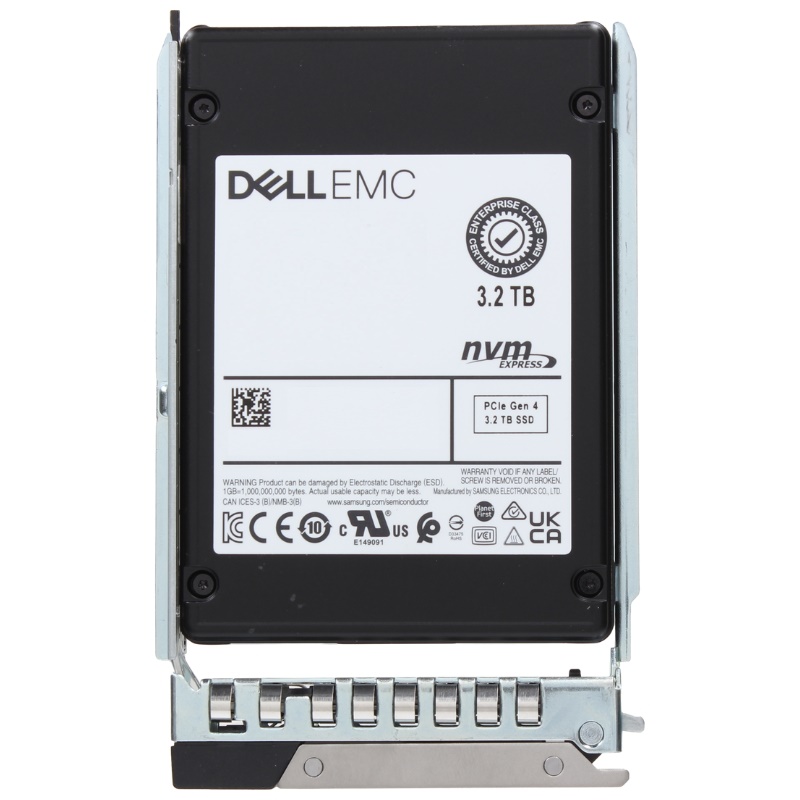


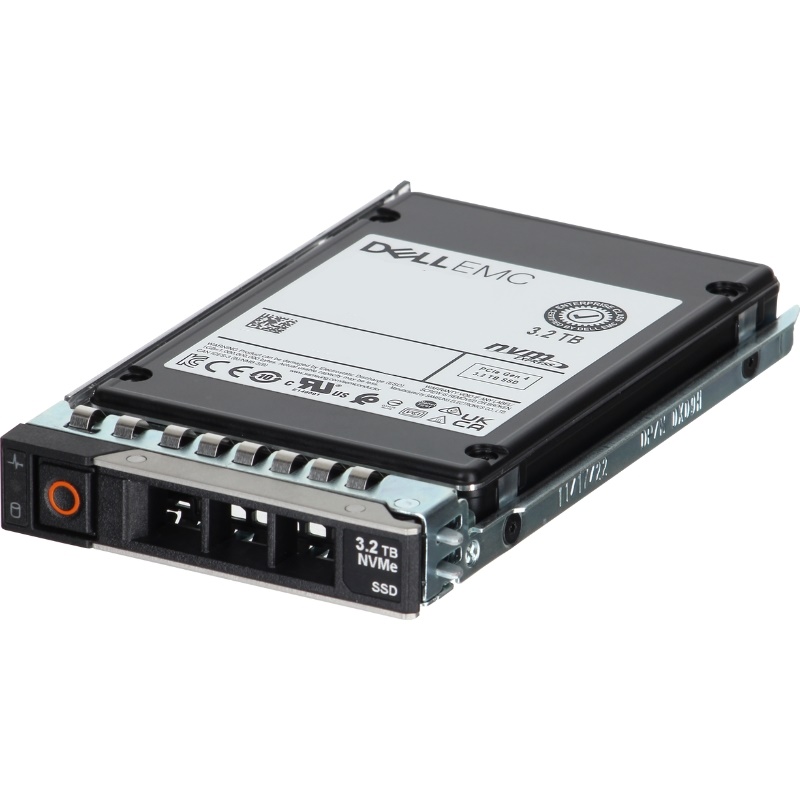
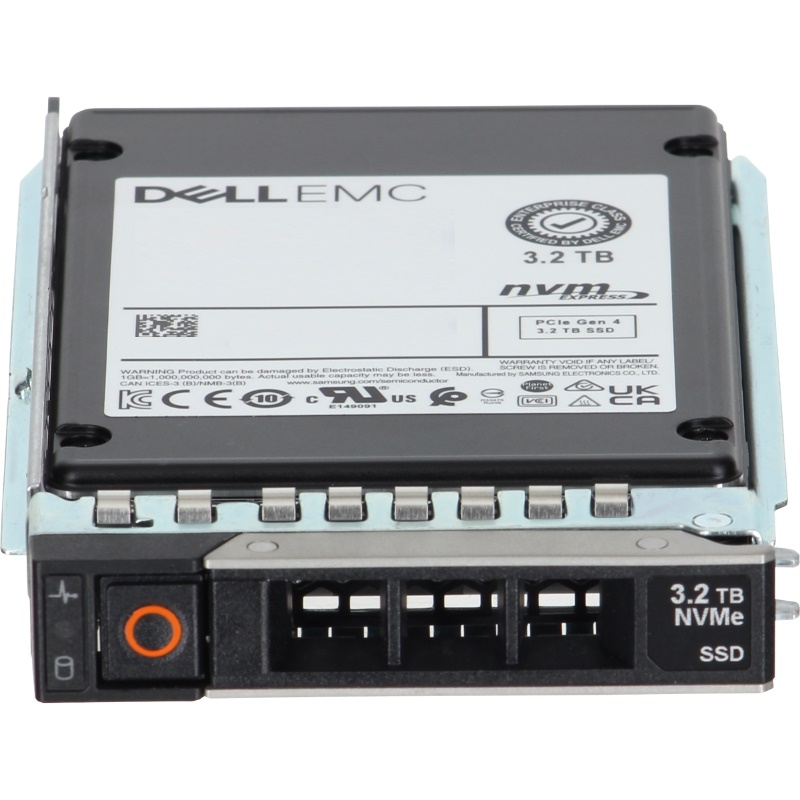
Dell 6698X 3.2TB Enterprise Nvme Mixed Use U.2 Gen4 2.5in SSD With Carrier For 14g, 15g, 16g And 17g Poweredge Server. Excellent Refurbished with 1 year replacement warranty
The Dell 6698X is a high-performance enterprise-class solid state drive designed to handle demanding workloads in modern data centers. With its robust architecture and advanced NVMe protocol, it provides a reliable storage solution for mission-critical applications.
Designed for intensive and mixed workloads, this drive ensures:
The Dell 6698X SSD integrates seamlessly with a broad lineup of Dell PowerEdge servers, ensuring smooth deployment and optimal functionality.
The endurance type is tailored for both read-intensive and write-intensive tasks, making it ideal for diverse enterprise applications.
The PCIe 4.0 interface boosts data transfer speeds compared to previous generations, enabling faster access to large datasets and applications.
Engineered for business-critical environments, this SSD delivers dependable performance with enhanced error correction and secure data handling.
The 6698X Dell 3.2TB Enterprise NVMe SSD is engineered for high-performance data center environments requiring consistent throughput, low latency, and robust endurance. Designed in the U.2 2.5-inch form factor and leveraging PCIe Gen4 technology, this drive delivers exceptional IOPS and bandwidth for mixed-use workloads. With a capacity of 3.2TB, it strikes a balance between storage density and performance, making it ideal for virtualization, OLTP databases, and high-frequency transactional systems.
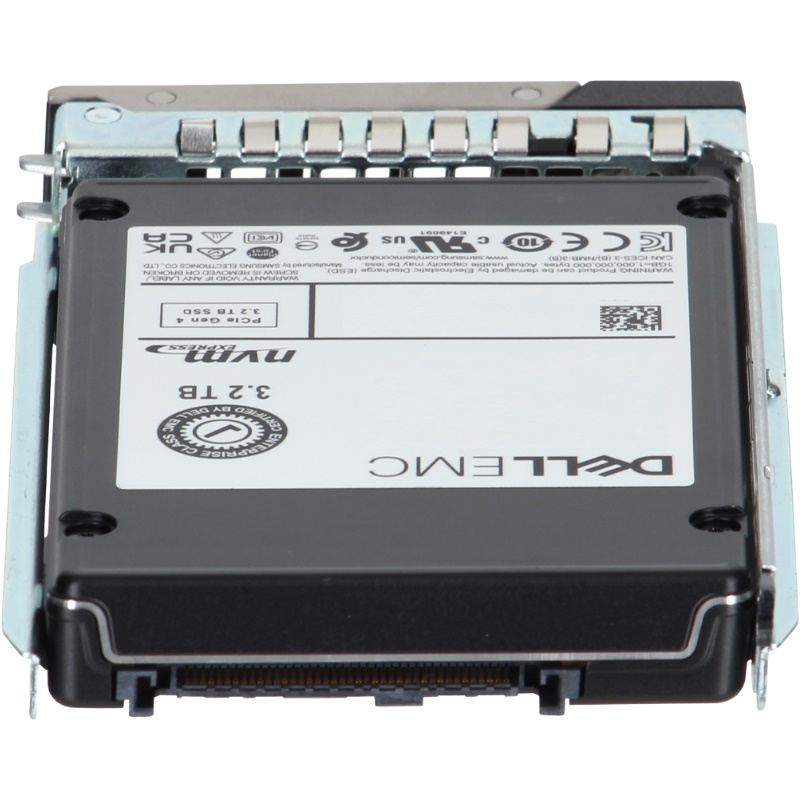
The U.2 interface offers hot-swap capability and compatibility with existing enterprise infrastructure, while PCIe Gen4 ensures double the bandwidth compared to Gen3. This SSD integrates seamlessly into Dell PowerEdge servers and other enterprise-grade platforms, supporting scalable deployments with minimal latency overhead.
Unlike M.2 drives, which are typically used in client systems or edge devices, U.2 NVMe SSDs like the 6698X are optimized for sustained workloads and thermal efficiency. Compared to EDSFF (Enterprise and Data Center SSD Form Factor), U.2 remains widely adopted due to its backward compatibility and robust carrier integration, especially in legacy and transitional server environments.
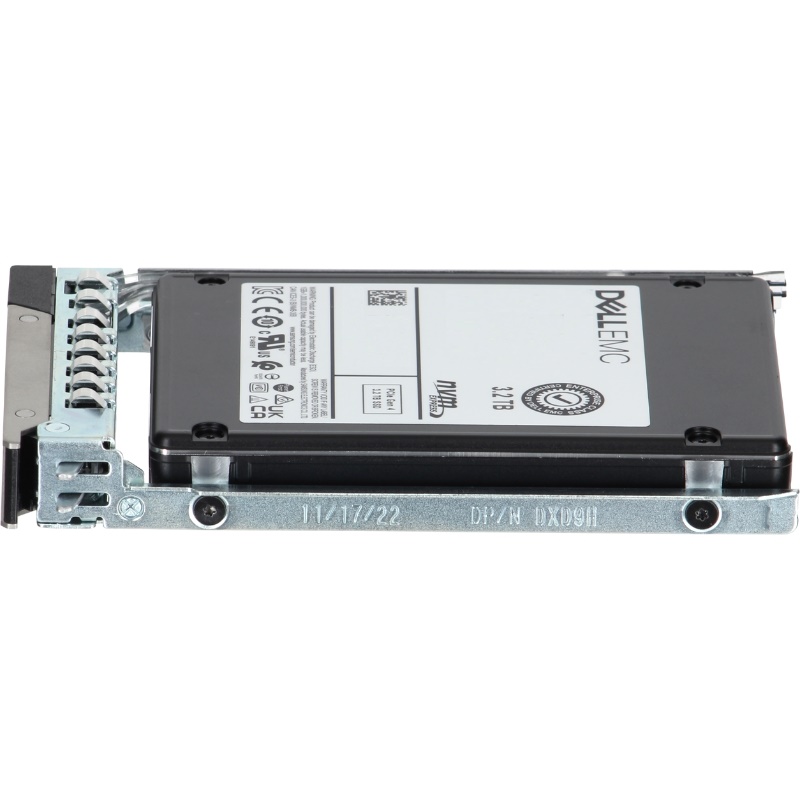
The included carrier ensures tool-less installation and secure mounting within Dell servers. This feature simplifies maintenance cycles and reduces downtime during drive swaps or upgrades. It also guarantees optimal airflow and thermal dissipation, which are critical in high-density rack configurations.
The 6698X SSD is classified as a mixed-use drive, supporting a balanced read/write ratio ideal for enterprise applications that require both high throughput and moderate endurance. With sequential read speeds exceeding 6,800 MB/s and write speeds up to 4,800 MB/s, it supports latency-sensitive operations without compromising reliability.
Delivering up to 1 million IOPS for random reads and 180K IOPS for random writes, this drive ensures rapid access to data across virtual machines, containers, and transactional databases. Latency remains under 100 microseconds, even under sustained workloads, enabling real-time analytics and responsive application performance.
With a durability rating of 3 DWPD (Drive Writes Per Day) over a 5-year warranty period, the 6698X supports approximately 17.5PB of total bytes written. This endurance profile is tailored for mixed-use scenarios, including ERP systems, CRM platforms, and hybrid cloud environments where write cycles are frequent but not extreme.
Operating at a typical active power draw of 12W, the SSD incorporates advanced power management features such as Autonomous Power State Transition (APST) and thermal throttling. These mechanisms ensure consistent performance while minimizing heat generation, which is essential for maintaining server reliability and reducing cooling costs.
The 6698X NVMe SSD is validated for use across multiple Dell PowerEdge server generations, including R650, R750, R7525, and MX740c platforms. Its U.2 interface and carrier design align with Dell’s hot-swap bays and NVMe backplanes, ensuring plug-and-play deployment without BIOS or firmware conflicts.
Featuring enterprise-grade firmware optimized for Dell’s iDRAC and OpenManage systems, the SSD supports SMART diagnostics, predictive failure alerts, and secure erase functions. The onboard controller utilizes multi-core architecture to manage wear leveling, garbage collection, and error correction with minimal latency impact.
The drive supports AES 256-bit hardware encryption and TCG Opal 2.0 compliance, ensuring data-at-rest protection for regulated industries. Secure erase commands are NIST 800-88 compliant, enabling safe decommissioning or repurposing of drives without residual data exposure.
Hot-swap capability allows IT administrators to replace failed drives without powering down the server, preserving uptime and service continuity. When deployed in RAID configurations, the 6698X enhances fault tolerance and data redundancy, supporting mission-critical applications with zero-downtime expectations.
Built with 3D TLC NAND, the 6698X balances performance, endurance, and cost-efficiency. The NAND architecture supports high-density storage while maintaining consistent write amplification and cell longevity. Error correction is handled via LDPC (Low-Density Parity Check) algorithms, ensuring data integrity across billions of read/write cycles.
Dynamic and static wear leveling algorithms distribute write operations evenly across NAND cells, preventing premature failure of specific blocks. ECC (Error Correction Code) mechanisms detect and correct bit errors in real time, reducing the risk of data corruption and improving overall drive reliability.
SMART attributes such as temperature, reallocated sectors, and power-on hours are continuously monitored and reported via Dell’s management suite. Predictive analytics enable proactive maintenance, allowing administrators to replace drives before failure occurs, minimizing unplanned outages.
With a Mean Time Between Failures (MTBF) exceeding 2 million hours and an Unrecoverable Bit Error Rate (UBER) of less than 1 in 1017, the 6698X meets stringent enterprise reliability standards. These metrics are critical for applications requiring 24/7 uptime and zero tolerance for data loss.
The 6698X Dell NVMe SSD is ideal for a wide range of enterprise applications, including virtual desktop infrastructure (VDI), high-performance computing (HPC), and software-defined storage (SDS). Its mixed-use profile makes it suitable for environments with fluctuating read/write demands and moderate endurance requirements.
In virtualized environments, the SSD supports rapid provisioning and migration of virtual machines, reducing boot times and improving responsiveness. Containerized workloads benefit from low-latency access and consistent throughput, enabling microservices to scale efficiently.
For online transaction processing (OLTP) systems, the 6698X delivers the IOPS and latency required for real-time data access. It supports high-frequency queries and concurrent transactions without bottlenecks, improving application performance and user experience.
In hybrid cloud architectures, the SSD provides fast local caching and tiered storage capabilities. Its rugged design and thermal resilience also make it suitable for edge deployments where environmental conditions may vary and downtime is unacceptable.


 Contact Us
 Information
 Catalog
 Solid State Drives (SSD)
 Network Switches
 Hard Disk Drives
 HBA & Controllers
 PC & Servers
 PC & Server Memory
 CPU & Processors
 Network Routers
 Power Supplies
 Tape Drives & Libraries
 Network Devices
 Computer & Network Cables