(7% discount is applied at checkout)
Cart is empty
Your go-to destination for cutting-edge server products


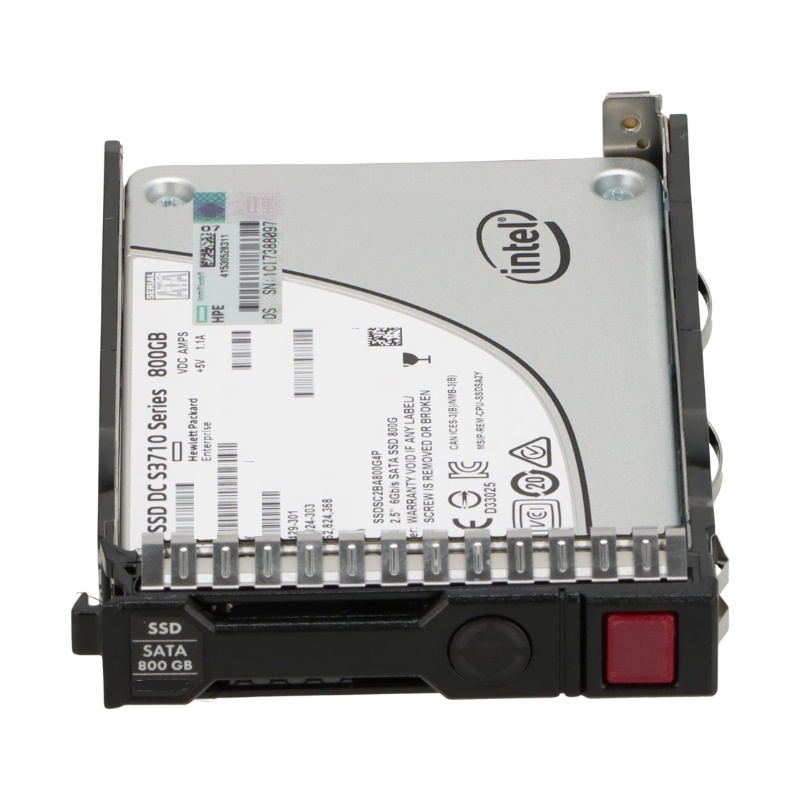
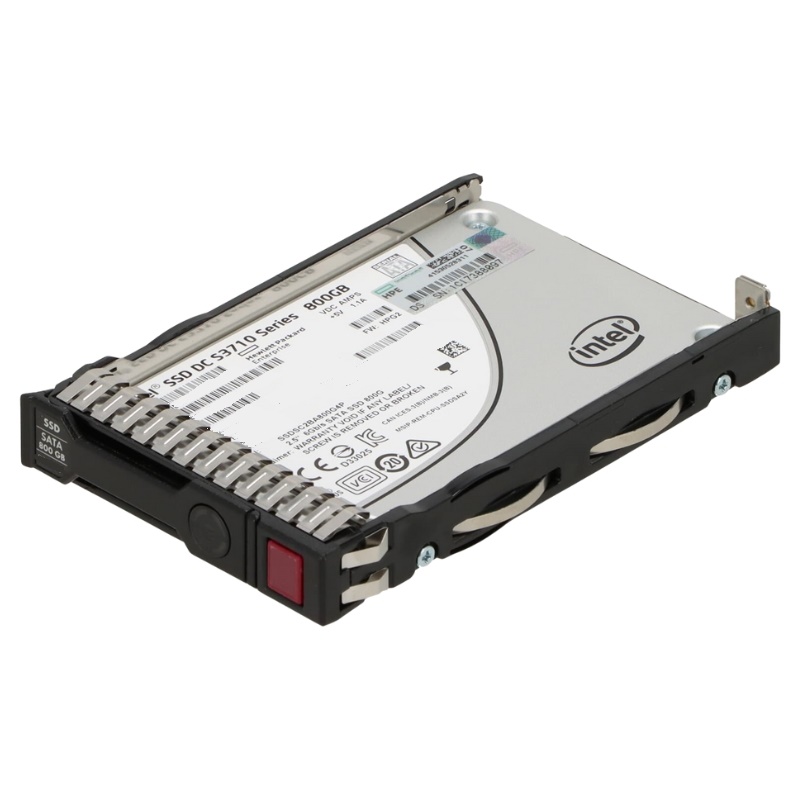
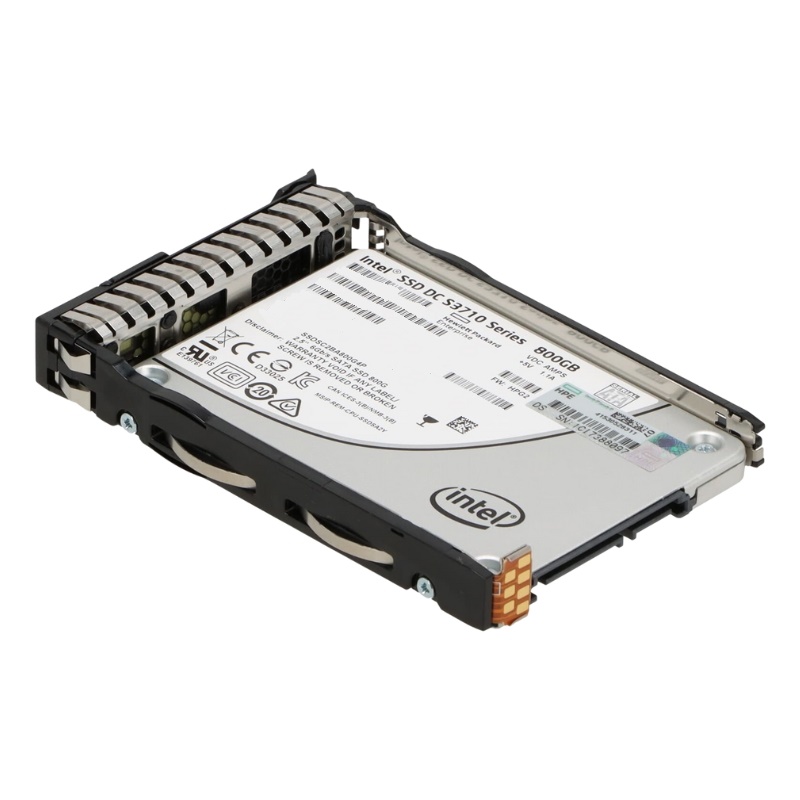
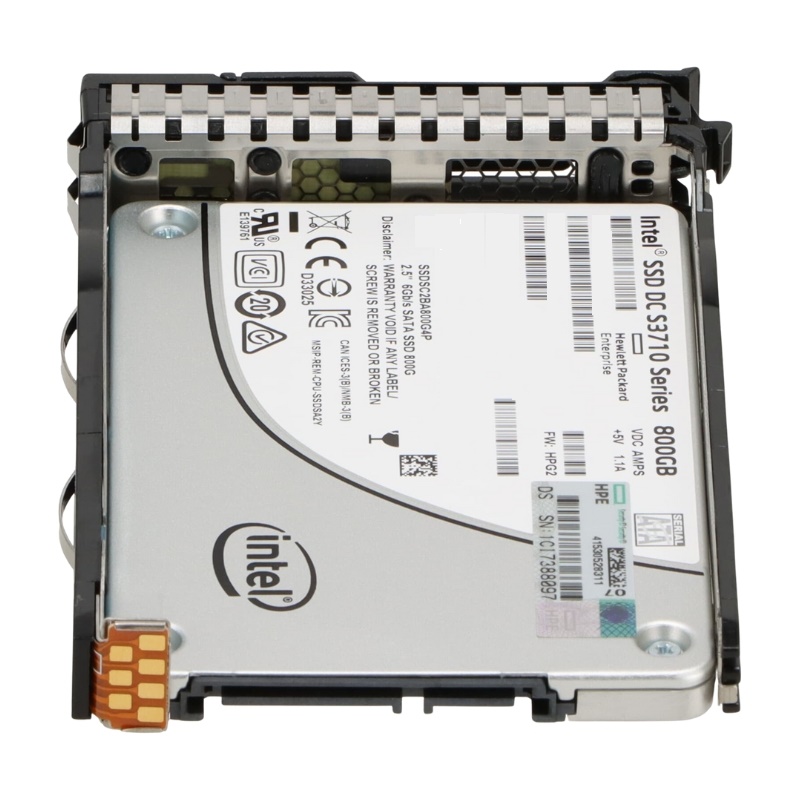
HPE 752668-001 800GB Multi-Level Cell SATA 6GBPS 2.5 Inch Solid State Drive. Excellent Refurbished with 1 year replacement warranty
The HPE 752668-001 solid state drive redefines enterprise storage with its powerful combination of speed, reliability, and capacity. Crafted for environments that demand consistent write-intensive performance, this drive is a go-to solution for data-centric operations.
The HPE 752668-001 800GB Multi-Level Cell (MLC) SATA 6Gbps 2.5-inch Solid State Drive is engineered for enterprise-grade storage environments requiring consistent performance, reliable data handling, and sustained endurance under mixed workload conditions. Designed to integrate seamlessly within Hewlett Packard Enterprise server infrastructures, this SSD delivers a balanced combination of capacity, speed, and cost efficiency for data center operations, virtualization platforms, and business-critical applications.
As part of the enterprise SATA SSD category, this drive is optimized for compatibility with HPE ProLiant server families and storage arrays that support 2.5-inch hot-plug drive bays. The SATA 6Gbps interface ensures wide compatibility while maintaining stable throughput for read-intensive and mixed-use workloads, making it suitable for organizations transitioning from traditional HDD storage to solid-state performance environments.
The 800GB capacity point provides a strong balance between storage density and performance efficiency, allowing system architects to optimize server rack utilization while maintaining predictable latency behavior. With MLC NAND technology at its core, this SSD is designed to support sustained write cycles and long-term operational reliability in enterprise environments.
The SATA 6Gbps interface integrated into the HPE 752668-001 SSD ensures a stable and standardized connection layer for enterprise servers. SATA III architecture provides up to 6 gigabits per second theoretical bandwidth, enabling efficient data transfer between storage and host systems. While not as fast as NVMe-based PCIe solutions, SATA SSDs remain widely deployed in enterprise environments due to their compatibility, affordability, and reliability in legacy infrastructures.
This drive leverages optimized firmware and controller-level enhancements to reduce latency overhead commonly associated with SATA communication. The result is a consistent input/output response profile suitable for transactional workloads, boot operations, and virtual machine storage layers.
The 2.5-inch small form factor design enables dense storage configurations in rack-mounted servers. This physical format is widely adopted in enterprise systems due to its balance between thermal efficiency and storage density. The HPE 752668-001 SSD fits into standard hot-swap drive bays, allowing for simplified maintenance and reduced system downtime during replacement or upgrade procedures.
The compact design also improves airflow management within server chassis, contributing to more efficient thermal dissipation compared to larger mechanical storage devices. This makes it particularly suitable for high-density data center environments where cooling efficiency is critical.
The use of Multi-Level Cell NAND flash memory in the HPE 752668-001 SSD provides a strong equilibrium between endurance, performance, and cost efficiency. MLC architecture stores multiple bits per cell, allowing higher data density compared to single-level cell (SLC) technology while maintaining better endurance than consumer-grade TLC solutions.
This balance makes the drive particularly suitable for enterprise workloads that require consistent write cycles without excessive wear degradation. MLC-based SSDs are commonly used in environments where sustained I/O performance and predictable lifespan are critical requirements.
The endurance profile of MLC NAND is enhanced through advanced controller algorithms, including wear leveling and block management strategies. These mechanisms distribute write and erase cycles evenly across the NAND flash memory, reducing the risk of premature cell degradation and extending operational lifespan.
Write performance remains stable under mixed workloads due to intelligent caching and buffer management techniques embedded within the drive firmware. This ensures that burst workloads, such as database logging or virtualization snapshots, do not cause performance bottlenecks.
Wear leveling ensures that all memory cells are utilized evenly, preventing localized stress on specific NAND blocks. Garbage collection processes operate in the background to reclaim unused or stale data blocks, optimizing available space without interrupting active workloads. These enterprise-level firmware features are essential for maintaining long-term SSD reliability in continuously operating server environments.
The HPE 752668-001 SSD is specifically designed for integration within HPE ProLiant server architectures. These systems are widely deployed in enterprise data centers for virtualization, cloud computing, and application hosting. The drive’s firmware alignment with HPE Smart Array controllers ensures seamless recognition and optimized performance tuning within supported systems.
Compatibility with hot-plug drive bays allows IT administrators to perform maintenance and upgrades without shutting down critical systems. This enhances operational uptime and reduces service interruptions in mission-critical environments.
In many enterprise configurations, the SSD is deployed as a boot drive to accelerate operating system initialization and server readiness. Compared to traditional hard drives, the SSD significantly reduces boot times and improves system responsiveness during startup operations.
Additionally, it is frequently used for caching layers, where frequently accessed data is stored on the SSD to reduce latency and improve overall system throughput. This hybrid storage architecture enhances the efficiency of larger HDD-based storage arrays.
The HPE 752668-001 SSD delivers strong IOPS performance compared to mechanical storage solutions, enabling rapid handling of small-block random read and write operations. This is particularly beneficial in database environments, virtualization workloads, and transactional systems where data access patterns are highly random.
The SSD architecture minimizes seek time and rotational latency entirely, resulting in near-instant data retrieval and improved application responsiveness across enterprise workloads.
Latency reduction is a key advantage of solid-state storage technology. The HPE 752668-001 SSD provides consistent response times even under sustained workload conditions. This predictability is essential for service-level agreement (SLA) compliance in enterprise IT infrastructures.
Throughput stability is maintained through controller-level optimization that manages data flow efficiently across NAND channels. Even under heavy concurrent access scenarios, the drive maintains consistent performance characteristics without significant degradation.
The SSD incorporates advanced error correction code (ECC) algorithms to detect and correct data inconsistencies at the NAND level. This ensures high data integrity during read and write operations, reducing the risk of silent data corruption in enterprise environments.
Additional firmware-level safeguards help maintain consistent data reliability during power fluctuations and unexpected workload spikes, ensuring that stored information remains protected under varying operational conditions.
The firmware embedded within the HPE 752668-001 SSD is designed for enterprise workloads, offering optimized command queuing, garbage collection timing, and performance balancing. These features help maintain stable performance across long-duration workloads typical in data centers and cloud infrastructures.
Firmware updates provided through HPE management tools ensure that the drive remains aligned with evolving server requirements and performance standards over its lifecycle.
This SSD is highly suitable for virtualization environments where multiple virtual machines operate simultaneously on shared storage resources. Its low latency and high IOPS capabilities ensure smooth VM performance even under high consolidation ratios.
In cloud infrastructure deployments, the drive supports scalable storage provisioning, enabling efficient resource allocation for dynamic workloads and distributed computing environments.
Database applications benefit significantly from the SSD’s ability to handle frequent read/write operations with minimal delay. Relational databases, NoSQL systems, and transactional processing platforms all experience improved responsiveness and reduced query execution times when deployed on this storage medium.
The consistent latency profile ensures predictable database performance, which is critical for financial systems, e-commerce platforms, and enterprise resource planning (ERP) applications.
File servers and storage gateways benefit from the SSD’s rapid access speeds, enabling faster file retrieval and improved user experience in network-attached storage environments. This is especially valuable in collaborative enterprise systems where multiple users access shared datasets simultaneously.


 Contact Us
 Information
 Catalog
 Solid State Drives (SSD)
 Network Switches
 Hard Disk Drives
 HBA & Controllers
 PC & Servers
 PC & Server Memory
 CPU & Processors
 Network Routers
 Power Supplies
 Tape Drives & Libraries
 Network Devices
 Computer & Network Cables