(7% discount is applied at checkout)
Cart is empty
Your go-to destination for cutting-edge server products
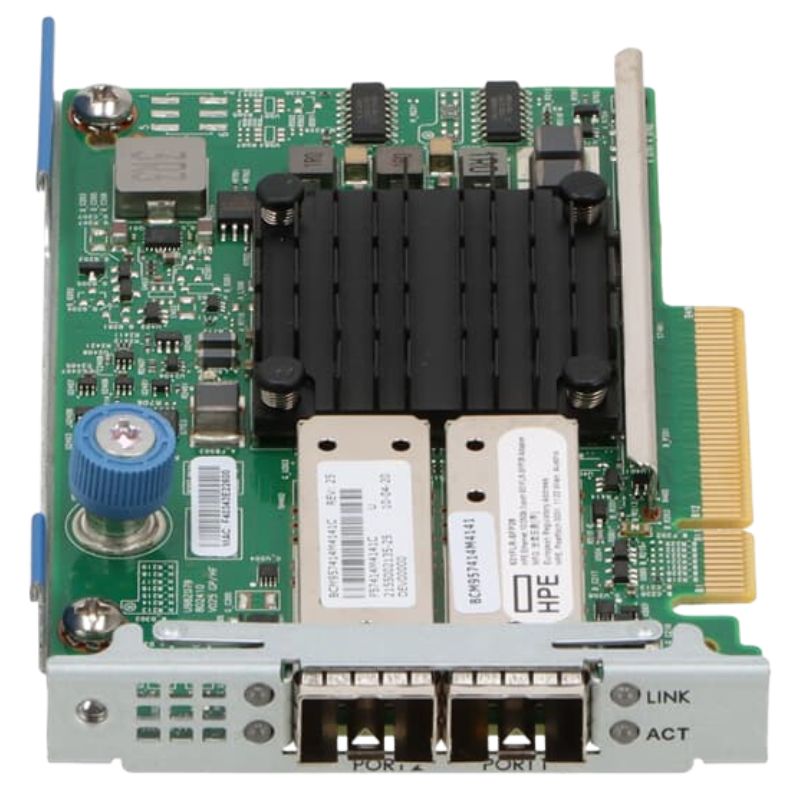


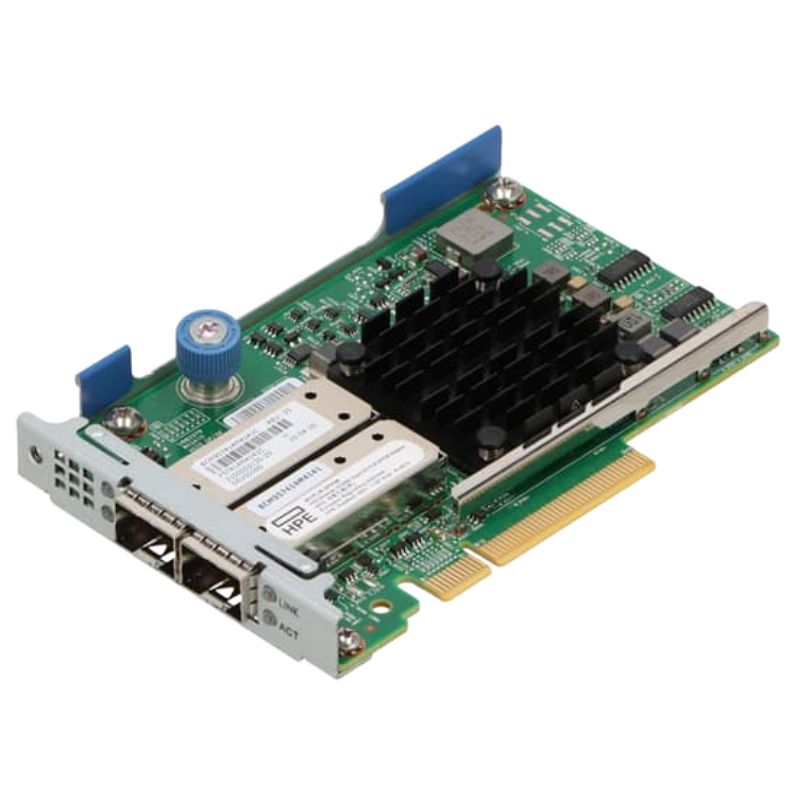
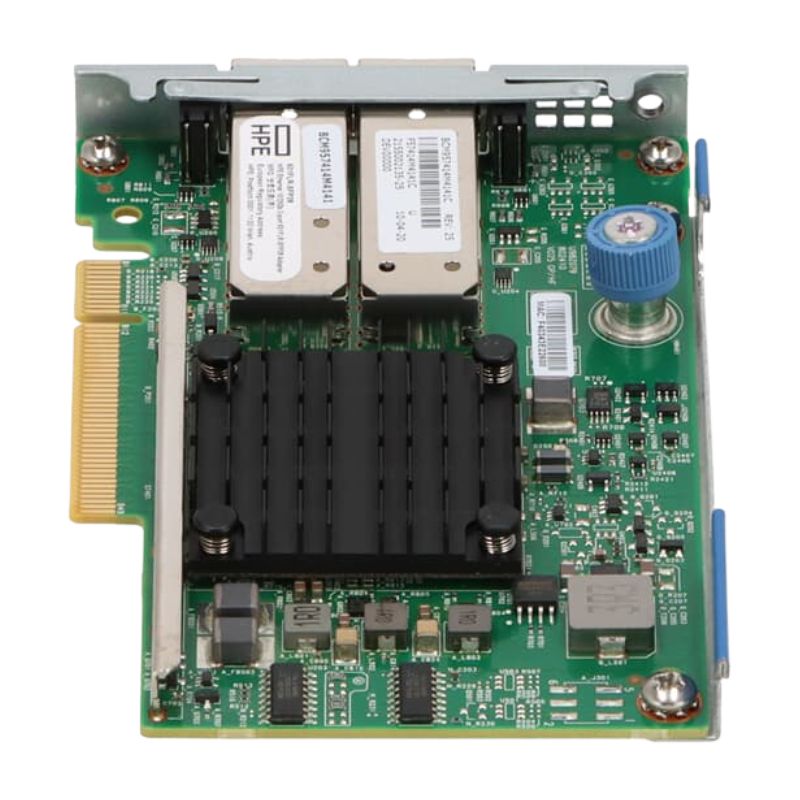
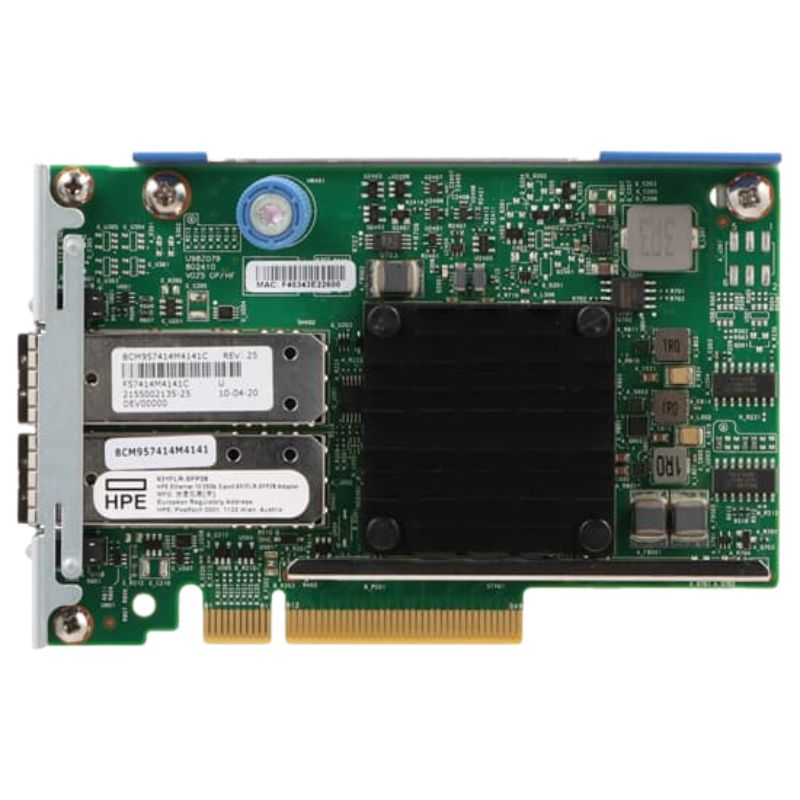
HPE 789004-001 10GB 2 Port 562FLR-SFP PCIe Ethernet Adapter. Excellent Refurbished with 1 year replacement warranty
| SKU/MPN | Warranty | Price | Condition | You save |
|---|---|---|---|---|
| 789004-001 | 1 Year Warranty | $129.00 | New Sealed in Box (NIB) | You save: $45.15 (26%) |
| 789004-001 | 1 Year Warranty | $75.00 | Excellent Refurbished | You save: $26.25 (26%) |
The HPE 789004-001 is a high-performance dual-port network adapter designed to deliver exceptional connectivity for enterprise-grade servers and data centers. This 10 Gigabit Ethernet adapter is engineered to provide faster data throughput, lower latency, and improved efficiency for bandwidth-intensive applications.
HPE 10Gb 2-Port 562FLR-SFP PCIe Ethernet Adapter
The 789004-001 HPE 10Gb 2 Port 562FLR-SFP PCIe Ethernet Adapter is a dual-port SFP+ network interface designed for high-throughput Ethernet connectivity in enterprise servers. Positioned for virtualization, software-defined infrastructure, and demanding storage traffic, this adapter offers two 10-Gigabit SFP+ cages that accommodate fiber or Direct-Attach Copper (DAC) cables to extend reliable bandwidth across top-of-rack or end-of-row architectures. The Flexible LOM/FLR layout integrates neatly with select HPE ProLiant systems, while the PCI Express interface provides a fast pathway to system resources under heavy east-west and north-south traffic. Administrators adopt this card to consolidate links, reduce cabling sprawl, and step up from 1GbE with consistent, low-latency performance for modern workloads.
Enterprises migrating to 10GbE rely on cards that blend performance with control. The 789004-001 562FLR-SFP fulfills that by pairing throughput with refined management features and driver maturity. It supports link aggregation to increase effective bandwidth and failover resilience, integrates with security controls that extend from switch edge to hypervisor, and exposes tuning knobs to optimize small-packet workloads or large sequential transfers depending on the application profile. Dual 10GbE SFP+ interfaces for flexibility with fiber or passive/active DAC cabling. Optimized for virtualization density and multi-tenant isolation through SR-IOV-style virtual functions. Low-latency packet handling appropriate for storage protocols, backup windows, and replication streams. Energy-aware operation and thermal design supporting dense rack layouts. Compatibility with HPE server management tools and firmware update practices within ProLiant fleets.
SFP+ standardization has kept 10GbE cost-effective while offering signal integrity over distance. Compared with copper 10GBase-T, SFP+ delivers lower latency and power draw, and it pairs well with top-of-rack switches that already expose SFP+ ports. The result is straightforward: predictable performance, fewer retransmissions, and simplified cabling decisions in mixed 10GbE and 25/40GbE environments where optics and DACs are commonplace.
The 562FLR-SFP leverages HPE’s Flexible LOM/FLR concept to integrate cleanly into compatible servers. This approach keeps valuable PCIe slots free for GPUs, storage HBAs, or NVMe expanders while still delivering high-speed networking on a dedicated interface plane. It enables consistent airflow patterns and makes field replacement faster because the card aligns with chassis guides and captive screws designed for serviceability. For organizations standardizing across ProLiant platforms, FLR-style adapters promote uniformity across models and generations that support the interface.
The following breakdown summarizes common attributes sought by architects and admins evaluating the 789004-001 562FLR-SFP for enterprise use. Exact capabilities can vary by server generation and installed firmware; still, these characteristics are broadly representative of what teams deploy in real data centers.
The adapter attaches through a PCIe bus connection mapped for high throughput. With multiple lanes available to service DMA transfers, the card sustains line-rate traffic on both ports simultaneously under typical workloads. Efficient DMA engines reduce CPU interrupts by batching descriptors and coalescing events, which is particularly useful on virtualization hosts where vCPUs are busy with tenant workloads.
Security in leaf-spine networks and virtualized clusters depends on the NIC’s ability to respect segmentation and packet integrity. The adapter enforces MAC and VLAN rules per queue, supports filtering to prevent spoofing and broadcasts storms, and works with hypervisor firewalls and switch ACLs. By offloading certain checks, it keeps expensive CPU cycles available for application logic and cryptographic workloads handled at higher layers.
The 789004-001 562FLR-SFP appears in a variety of roles where low-latency 10GbE makes a tangible difference. Whether the environment is a traditional three-tier application stack or a microservices mesh, this adapter brings dependable throughput and a flexible port layout that adapts to evolving designs.
In hypervisor clusters, a dual-port card allows one link for production VM networks and another for storage or live migration. Administrators can trunk multiple VLANs per port or split traffic with NIC teaming. SR-IOV-style virtual functions reduce IO overhead for latency-sensitive guests such as in-memory databases, analytics engines, and low-latency trading microservices.
HCI nodes benefit from dedicated 10GbE for storage replication, metadata updates, and client traffic. With two 10GbE ports, it is practical to isolate cluster backplane operations from client access or to bond both ports for a resilient 20GbE aggregate. The adapter’s offloads improve small-IO behavior typical of distributed storage, helping maintain consistent IOPS under contention.
Transactional and analytical engines push significant volumes across network fabrics, especially when sharding, replicating, or querying distributed datasets. By reducing CPU overhead per packet and sustaining large frames, the adapter keeps throughput predictable and avoids jitter that can affect query planners and replication lag windows.
789004-001 the adapter implements SFP+, network designers can right-size cabling to each rack. Short-reach DAC cables are inexpensive and easy to manage for links under a few meters, while multimode SR optics cover longer aisle-to-switch paths. Single-mode LR optics extend to inter-row or small inter-building spans. This modularity lowers total cost of ownership by allowing you to mix cable types per port as topology changes.
Segmenting traffic types keeps broadcast domains tight and simplifies troubleshooting. Trunk VLANs from the adapter to top-of-rack switches and tag for management, storage, and production. Adopt uniform VLAN IDs across racks to allow VM mobility and simplified ACL management on the spine layer.
The 789004-001 spare part number maps to the 562FLR-SFP model used in select ProLiant servers that accept Flexible LOM/FLR adapters. Firmware alignment with the server’s Service Pack for ProLiant (SPP) is recommended to ensure driver parity and predictable behavior. Consult server Quick Specs for slot compatibility and supported transceiver types; while the adapter is versatile, platform-specific details may influence thermal envelopes, bandwidth per slot, and management tooling.
Because driver stacks evolve, pair your adapter firmware with the OS/hypervisor version referenced in HPE documentation. This prevents unexpected link negotiation issues, queue misconfiguration, or performance regressions after upgrades.
Enterprises gravitate to adapters with predictable lifecycle support and easy field replacement. The 562FLR-SFP—identified by spare part 789004-001—slots into existing HPE service models, making spares management and RMA handling straightforward. Firmware can be updated during maintenance windows through HPE’s standard tooling, and diagnostics tie into server logs to speed triage.
Micro-segmentation at the hypervisor layer benefits from stable NIC latency and queue discipline. This adapter’s traffic shaping and queue allocation help keep enforcement consistent even during bursts. Integrate with hypervisor firewalls to define per-VM rules while sustaining high packet rates without adding meaningfully to CPU load.
Auditors often request configuration baselines that include NIC firmware versions, driver hashes, and queue settings. Standardizing on the 789004-001 variant across similar host roles simplifies this reporting and shortens the path to evidence collection during assessments. Pair the adapter with configuration management that captures firmware and driver versions as first-class inventory attributes.
For capacity planning, teams frequently purchase a blend of production units and spares carrying the same spare part number. The 789004-001 designation provides a consistent identifier to avoid mix-ups with different transceiver requirements or incompatible form factors. Label each unit during intake with an asset tag, firmware revision at receipt, and intended rack location to streamline staging and minimize racking day confusion.
Shifting from multiple 1GbE links to a compact dual-port 10GbE card can reduce switch port consumption, cabling clutter, and NIC count per host. SFP+ optics or DACs typically offer predictable lifetime and clear power profiles. Consider the long-term savings on power and cooling from lower port counts and fewer transceivers overall when compared to multiple legacy NICs.
NIC longevity commonly spans multiple server refreshes when staying within the same vendor ecosystem. Evaluate keeping spare 562FLR-SFP adapters on hand for interim expansions, then align higher-speed interconnect decisions—25GbE or 100GbE uplinks—with the next major fabric overhaul. This staged approach spreads cost while protecting service levels.
Teams typically follow several repeatable blueprints when implementing the 562FLR-SFP in production. These patterns provide a starting point that can be adapted to organizational standards and security constraints.
Assign Port A to storage VLANs and Port B to tenant/compute VLANs. Use QoS on both links to prioritize storage acknowledgments and critical management traffic. Apply ACLs at the switch to restrict cross-VLAN chatter and keep lateral movement tight.
Bundle both ports with LACP into a single logical uplink spread across two top-of-rack switches configured for multi-chassis link aggregation. This model offers aggregated bandwidth and seamless port failover. Ensure hashing policies suit the traffic profile; flows dominated by a single session might require application-level to fully exploit both links.
Allocate virtual functions to specific tenants or performance-critical VMs. Reserve queues and pin interrupts to keep noisy neighbor effects under control. Maintain a mapping document that ties VF identifiers to VM instance IDs for auditability and incident response.
Efficient troubleshooting starts with a known-good baseline. Capture adapter firmware, driver versions, queue counts, and MTU settings immediately after build. Record switch port profiles and optic part numbers per link. With this data in your CMDB, variances during an incident are easier to spot.
Power draw for dual-port 10GbE adapters depends on transceiver selection. DAC links are typically the most power-efficient choice, while optical modules add a small, predictable increment. In aggregate across hundreds of hosts, choosing the right mix can translate to measurable savings on rack power budgets. Thermal design of the 562FLR-SFP supports contiguous deployments in hot aisles, provided intake temperatures remain within server guidelines and airflow is unobstructed.
Organizations running many 1GbE links per host often decide to consolidate into dual 10GbE. The move significantly simplifies cabling and reduces the number of switch ports needed per rack. With the 789004-001 562FLR-SFP, migration is straightforward: trunk existing VLANs onto fewer, faster links; update QoS to reflect new bandwidth; and gradually decommission legacy 1GbE NICs. Testing under live traffic while keeping a rollback plan yields safe, measurable improvements in latency and throughput.
Clear documentation eliminates guesswork and shortens incident duration. For each deployment of the 562FLR-SFP, maintain a runbook entry detailing link roles, VLAN IDs, MTU values, teaming configuration, driver/firmware versions, and optic part numbers. Include a diagram that shows cable paths to the top-of-rack switches and port numbering to prevent accidental swaps during maintenance.
While 25GbE and 100GbE dominate cutting-edge fabrics, 10GbE remains a sweet spot for many workloads thanks to cost efficiency and broad interoperability. The 562FLR-SFP allows environments to standardize on stable 10GbE while keeping the door open for later upgrades. Use dual-port designs today to simplify VLAN layouts and provide redundancy; plan a future uplift by choosing switches that expose both SFP+ and higher-speed ports. This layered approach prevents stranded investments and eases migration timing pressures.
At the edge, space and power are constrained. The adapter’s dual-port footprint achieves necessary bandwidth with minimal hardware footprint. Run DACs in compact racks or short SR fiber where switches are a few racks away. Standardize your imaging process so that remote hands can install and validate the NIC without expert presence on-site.
Express NIC settings—MTU, VLANs, SR-IOV parameters, and queue counts—in automation manifests. Whether using vendor tools, Ansible, PowerShell DSC, or other frameworks, codifying configurations ensures repeatability across hundreds of hosts. Include post-provisioning tests that saturate each link briefly and validate error-free operation before moving to production workloads.
Modern storage protocols thrive with steady latency and minimal jitter. The adapter’s efficient DMA and queue design, together with jumbo frames and RSS, support streaming rebuilds, replication, and snapshot transfers. For backup servers, spreading streams across both ports keeps windows short and avoids contention with front-end traffic. For object storage gateways or NFS/SMB heads, per-VLAN segmentation improves security and operational clarity while leveraging the same physical adapter.
Replication pipelines often run continuously and must not interrupt primary workloads. Assign a dedicated port to replication VLANs with QoS that guarantees minimum bandwidth. Use LACP hashing at the switch to spread flows across uplinks and monitor the path for packet loss using active probes. During DR tests, record latency and throughput to validate that SLAs hold under simulated site failovers.
Clean cabling reduces errors and speeds incident response. Color-code DACs by purpose—storage, management, and compute—and label both ends with port and switch identifiers. Maintain a cabinet-level diagram that reflects the adapter port orientation to avoid accidental cross-plugs, especially in mirrored racks where left/right orientation flips.
Stock a modest number of 789004-001 units per site. Keep associated SFP+ optics and DACs in the same bin, pre-labeled with intended VLAN roles. During quarterly audits, test spares in a known-good host to verify firmware levels and physical integrity, then reseal with the test date for traceability.
A disciplined burn-in process catches misconfigurations and marginal components. Use synthetic load generators to saturate each port, measure latency under mixed packet sizes, and validate that RSS distributes flows evenly. Include negative tests: intentionally mismatched MTU to ensure alarms fire; temporarily disable LACP on one side to confirm failover; and swap optics to confirm link renegotiation behavior is deterministic and quick.
Create a golden host profile for systems with the 562FLR-SFP. Bake in driver versions, firmware levels, MTU, VLAN membership, queue allocations, and coalescing defaults. Use this baseline to seed new hosts and as the reference point during incident triage. Deviations from the baseline are often the fastest clue to hidden issues.
When servers reach end of life, these adapters can be redeployed to lab environments or secondary roles if still supported by the platform. Wipe configuration states, update firmware to a lab-standard baseline, and track reuse to maximize asset value while delaying recycling until components are fully exhausted.
System administrators appreciate adapters that stay out of the way: they link, they perform, and they surface clear metrics when something deviates. The 562FLR-SFP fits that mold, offering mature drivers, transparent counters, and a clean service story under the 789004-001 spare part umbrella. That combination shortens maintenance windows and keeps attention on applications, not network plumbing.
Architects seek standard building blocks that scale horizontally. With SFP+ ports, a balanced PCIe interface, and virtualization-aligned features, this adapter serves as a reliable foundation for patterns that repeat from rack to rack and site to site. Whether you isolate traffic per port or aggregate for resilience, the card adapts without rewriting your network design principles.
789004-001 To translate the adapter’s capabilities into day-to-day operations, HPE adopt a concise playbook. Start with a baseline template that sets MTU, VLAN membership, queue counts, and coalescing per host role. During provisioning, run a deterministic test plan that validates both ports independently and together under LACP. After deployment, monitor counters and latency SLIs and set thresholds that trigger early review. When changes occur—new hypervisor versions, new switch firmware—re-run your test plan and compare results to the golden baseline.


 Contact Us
 Information
 Catalog
 Solid State Drives (SSD)
 Network Switches
 Hard Disk Drives
 HBA & Controllers
 PC & Servers
 PC & Server Memory
 CPU & Processors
 Network Routers
 Power Supplies
 Tape Drives & Libraries
 Network Devices
 Computer & Network Cables