(7% discount is applied at checkout)
Cart is empty
Your go-to destination for cutting-edge server products
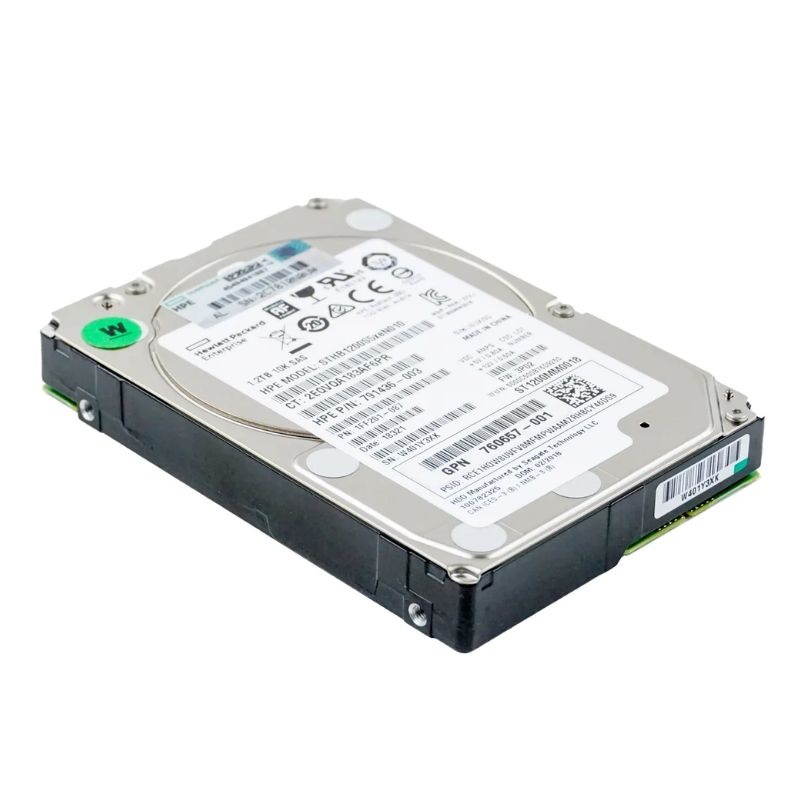


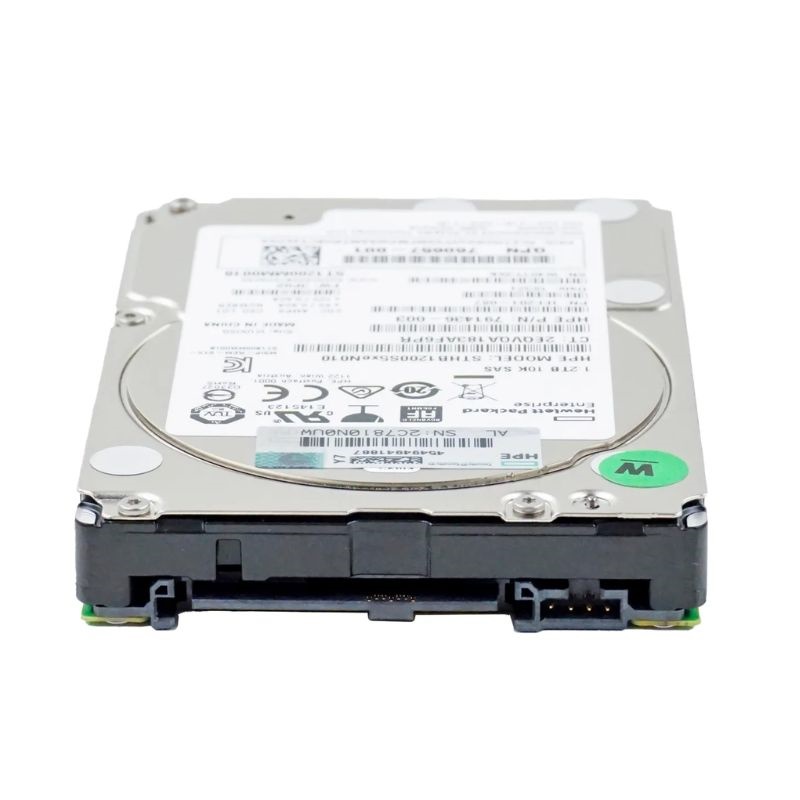
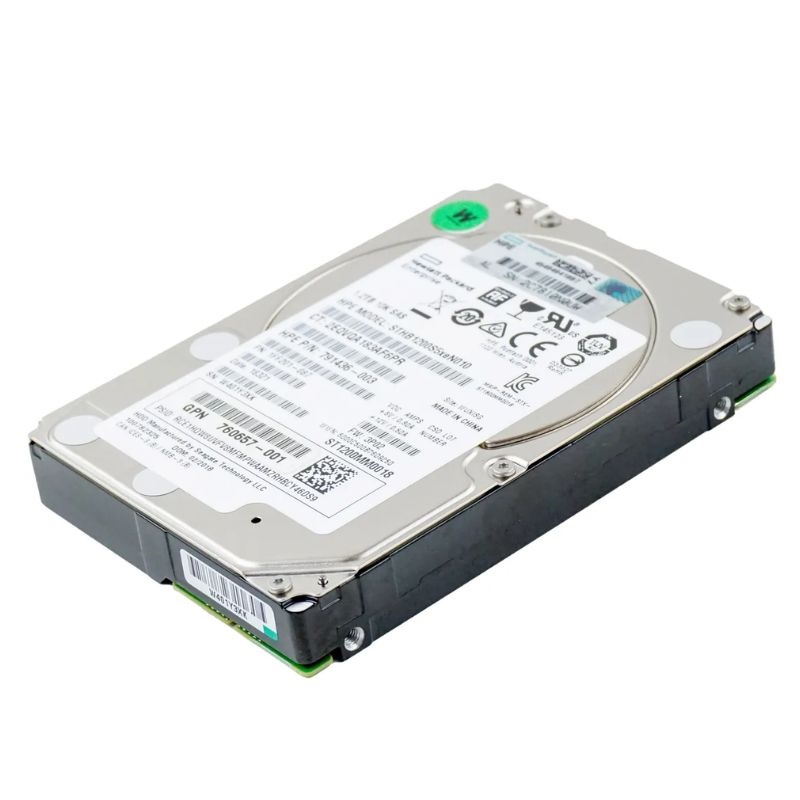
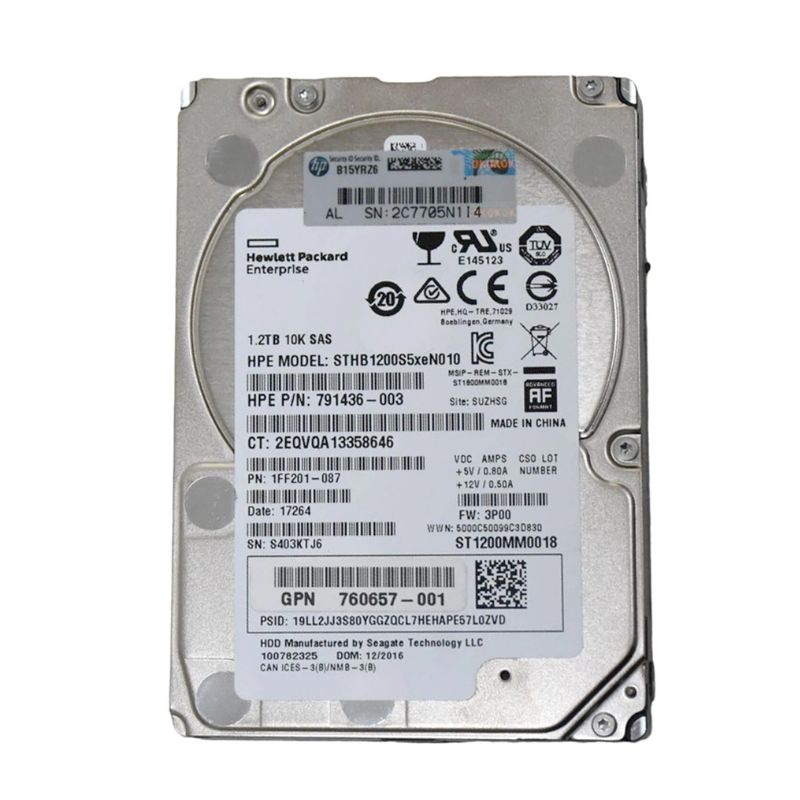
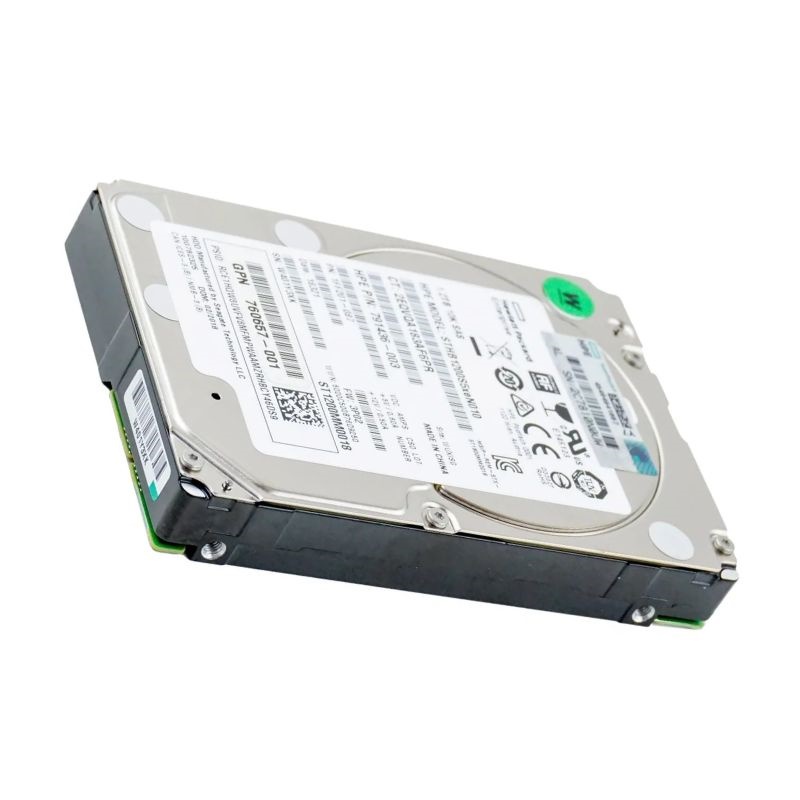
HPE 791436-003 3PAR 1.2TB Dual Port SFF SAS-3 12GBPS 10K HDD. Excellent Refurbished with 1 year replacement warranty
| SKU/MPN | Warranty | Price | Condition | You save |
|---|---|---|---|---|
| 791436-003 | 1 Year Warranty | $334.00 | Factory-Sealed New in Original Box (FSB) | You save: $116.90 (26%) |
| 791436-003 | 1 Year Warranty | $65.00 | Excellent Refurbished | You save: $22.75 (26%) |
The HPE 3PAR 791436-003 is a high-performance 1.2TB SAS-3 HDD designed to deliver exceptional reliability, speed, and durability. Engineered for enterprise storage solutions, this dual-port 2.5-inch drive provides seamless integration with HPE storage arrays and servers, ensuring optimal performance in demanding workloads.
Designed to support enterprise-class workloads, this SAS-3 HDD delivers transfer speeds up to 12Gbps. The 10K RPM spindle ensures low latency and rapid response times, while the dual-port connectivity guarantees continuous availability for mission-critical applications. Perfect for storage arrays, virtualization, and high-demand databases, the HPE 3PAR drive excels in both performance and dependability.
This HPE 791436-003 HDD is fully compatible with HPE 3PAR storage systems and many other SAS-enabled servers. Its small form factor allows for high-density storage configurations, maximizing space efficiency without compromising performance. IT administrators can seamlessly scale storage solutions with minimal downtime, leveraging the drive’s dual-port design for fault-tolerant operations.
The HPE 3PAR 791436-003 features a robust build designed to withstand the rigors of enterprise storage environments. With 10,000 RPM operation and advanced SAS-3 interface protocols, this drive minimizes latency and maximizes uptime. Its dual-port configuration allows uninterrupted access even in case of a single port failure, making it a resilient choice for critical business applications.
This enterprise-grade HDD is ideal for organizations seeking high reliability and speed. Its applications include:
The 791436-003 HPE 3PAR 1.2TB Dual Port SFF SAS-3 12Gb/s 10K hard disk drive (HDD) belongs to a premium class of enterprise storage components engineered for high-availability arrays, tiered storage pools, and mixed workload consolidation. Designed for HPE 3PAR storage systems and compatible enterprise platforms, this dual-port small-form-factor (SFF) SAS-3 drive combines high spindle speed (10,000 RPM), SAS-3 12Gb/s interface performance, and hot-pluggable dual-port redundancy to deliver predictable I/O characteristics, low latency, and the robustness required by virtualized data centers and mission-critical applications.
The drive uses the SAS-3 (12 Gbps) interface which provides a substantial bandwidth increase over SAS-2 (6 Gbps), enabling higher throughput per drive particularly beneficial in large-scale arrays or when paired with modern controllers. The 10K RPM spindle speed gives a balance between throughput and power/thermal characteristics, making it ideal for mixed databases, virtualization hosts, backup targets, and applications where rotational-media economics are required.
At 1.2TB per SFF 2.5" unit, the 791436-003 permits high-density deployments in chassis where space is at a premium. When deployed in 2.5" dense enclosures, these drives enable administrators to scale usable raw capacity efficiently while maintaining the performance advantages of rotational media for capacity-oriented tiers or for less write-intensive workloads.
Dual-port SAS architecture provides path redundancy: each drive exposes two independent SAS ports so the storage controller or multipath software can reroute I/O seamlessly if one path fails. Enterprise-grade features include advanced vibration tolerance, error recovery controls, enhanced mean time between failures (MTBF), and firmware tuned for large array interoperability and predictive monitoring.
Although optimized for HPE 3PAR systems, the 791436-003 may be used in other enterprise servers and arrays that accept SAS-3 2.5" drives and support HPE firmware/drive ID compatibility. Always verify compatibility matrices, firmware revision requirements, and vendor interlock policies — particularly in vendor-branded arrays — to ensure the drive is recognized and supported within your storage ecosystem.
Every specification above has operational implications: SAS-3 increases per-drive throughput, 10K RPM reduces average access latency compared with 7.2K alternatives, and the SFF 2.5" package enables greater drive counts per chassis. Dual-port design is essential for fabrics requiring multipathing for uninterrupted service. When choosing drives for arrays, balance capacity, IOPS, latency, and power consumption for the intended tier of storage.
Workloads that benefit most are those requiring consistent sequential and small-block random performance without the premium cost of enterprise SSDs: mixed OLTP/OLAP segments, bulk VM storage where predictable latency matters, and read-intensive analytics where rotational media is still cost-effective. This drive is less appropriate as a primary tier for extremely latency-sensitive microservices or high-frequency write-caching, where NVMe/SSD alternatives would be superior.
When deployed in HPE 3PAR arrays, drives of the same class should be grouped into homogeneous tiers or mixed carefully under HPE's tiering logic. Adaptive optimization algorithms within 3PAR can migrate hot data to SSD tiers while keeping colder or sequential datasets on the 1.2TB 10K disks. Follow HPE's published guidance on supported drive mixes, RAID layouts, and spare drive allocation to preserve redundancy and rebuild performance.
Use redundant RAID levels (RAID-6/RAID-Z, etc., depending on controller) to balance capacity efficiency and fault tolerance. Because rebuild times on 1.2TB 10K drives are shorter than very high-capacity 7200 RPM drives, RAID rebuild windows are more manageable, reducing exposure during drive failure events. Still, consider hot spares and multipath configurations to minimize performance impact during rebuild operations.
Dual-port SAS enables multipath I/O (MPIO) where server or controller-level multipathing software routes I/O over the healthiest path, enabling maintenance and path failover without service interruption. For clustered file systems and SAN fabrics, configure MPIO policies (round-robin, least queue-depth, etc.) according to vendor best practices to maximize throughput while preserving failover predictability.
10K SAS drives offer substantially lower latency and higher sustained random IOPS compared with 7200 RPM nearline drives. While nearline drives may deliver higher sequential throughput and better cost-per-GB, they excel in cold-data tiers. The 1.2TB 10K SAS sits in the middle: better for mixed workloads, while NL-SAS is optimized for capacity-bound workloads.
SSDs provide orders-of-magnitude higher IOPS and lower latency, making them ideal for hot tiers and write-intensive workloads. NVMe further reduces protocol overhead. However, SSDs remain more expensive per gigabyte. Use 1.2TB 10K SAS drives for capacity-tiering where cost-sensitive bulk storage is needed, and reserve SSDs for performance-critical hot data.
Enterprises should model total cost of ownership (TCO): drive price, power and cooling, density (TB per rack U), and performance-per-dollar. The 1.2TB 10K SAS often yields a favorable balance for mid-tier arrays, where some performance is necessary but full flash economics are prohibitive.


 Contact Us
 Information
 Catalog
 Solid State Drives (SSD)
 Network Switches
 Hard Disk Drives
 HBA & Controllers
 PC & Servers
 PC & Server Memory
 CPU & Processors
 Network Routers
 Power Supplies
 Tape Drives & Libraries
 Network Devices
 Computer & Network Cables