(7% discount is applied at checkout)
Cart is empty
Your go-to destination for cutting-edge server products
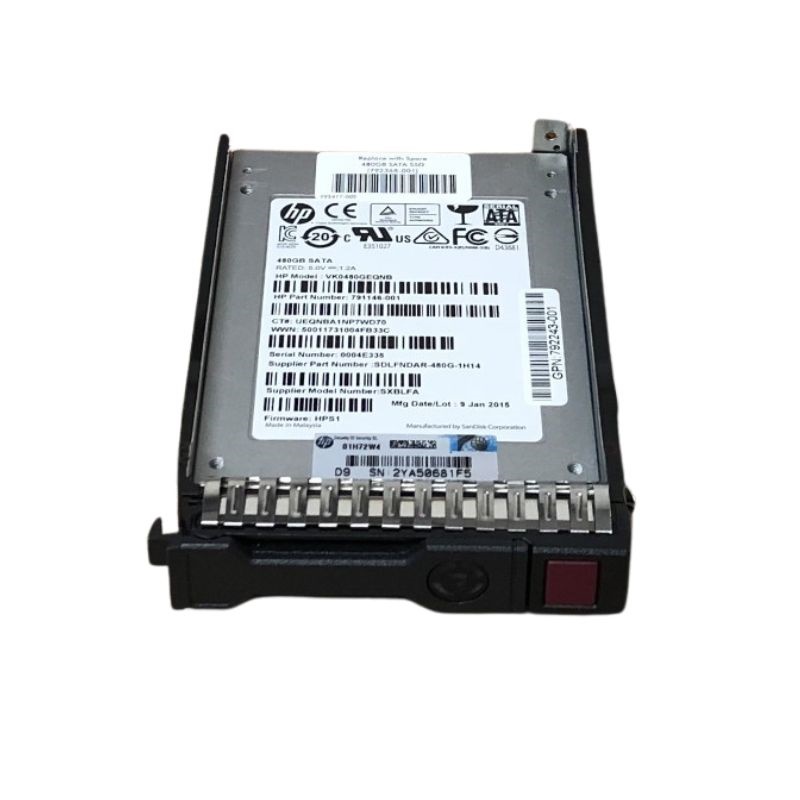


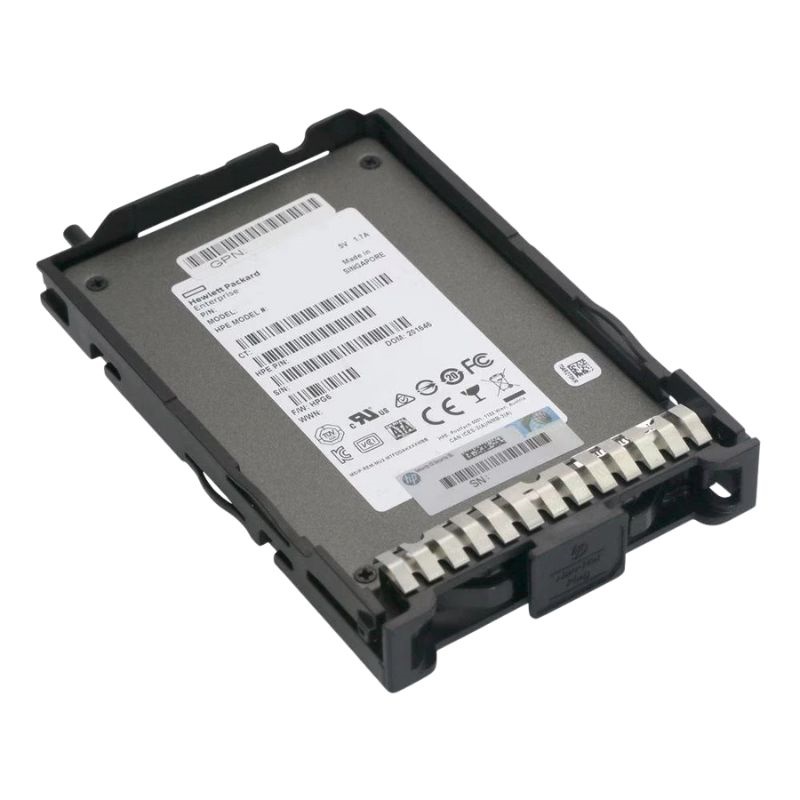
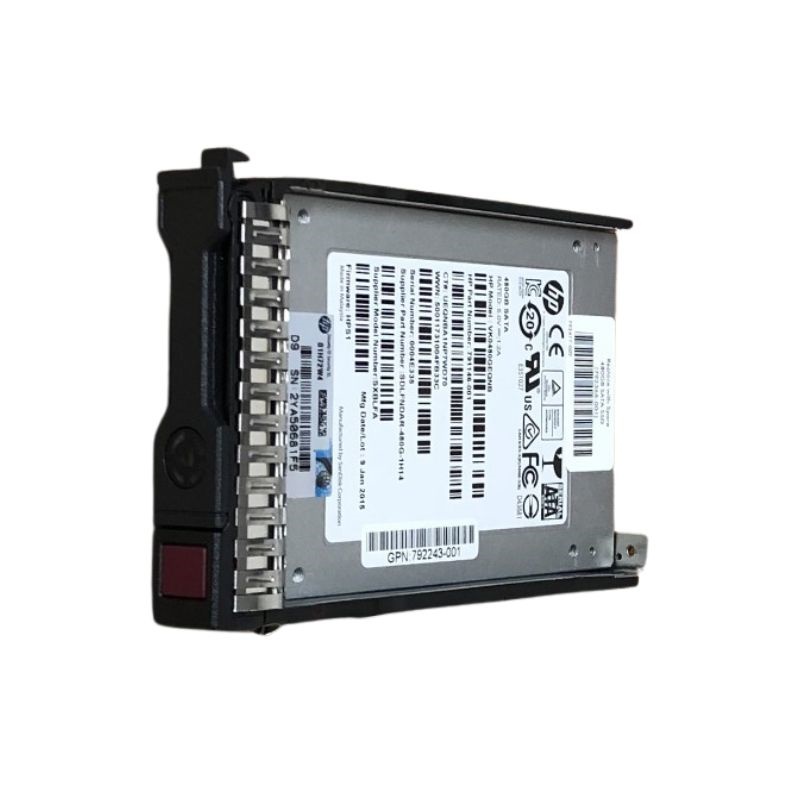
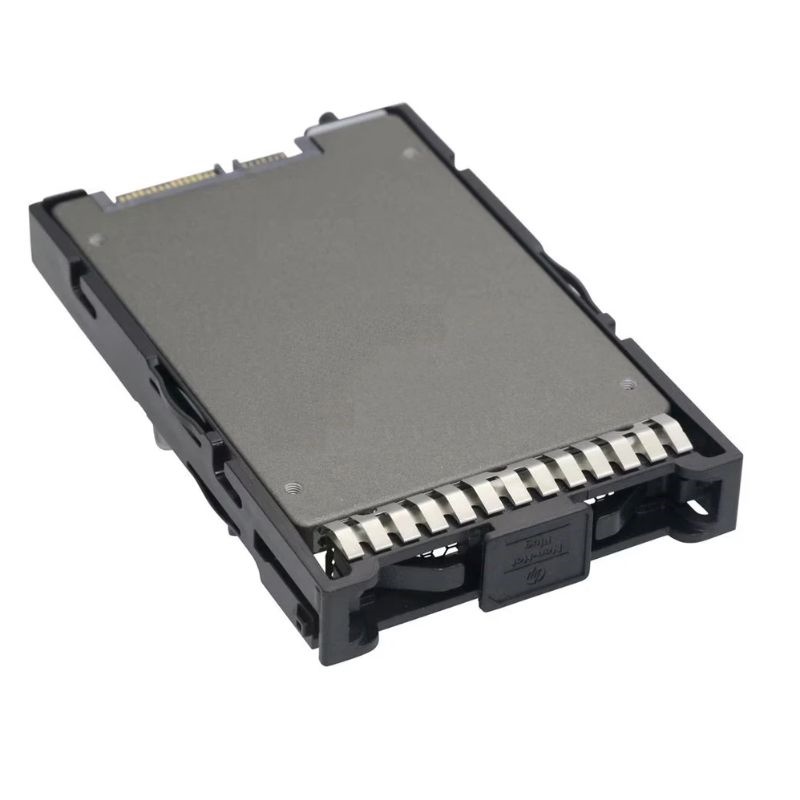
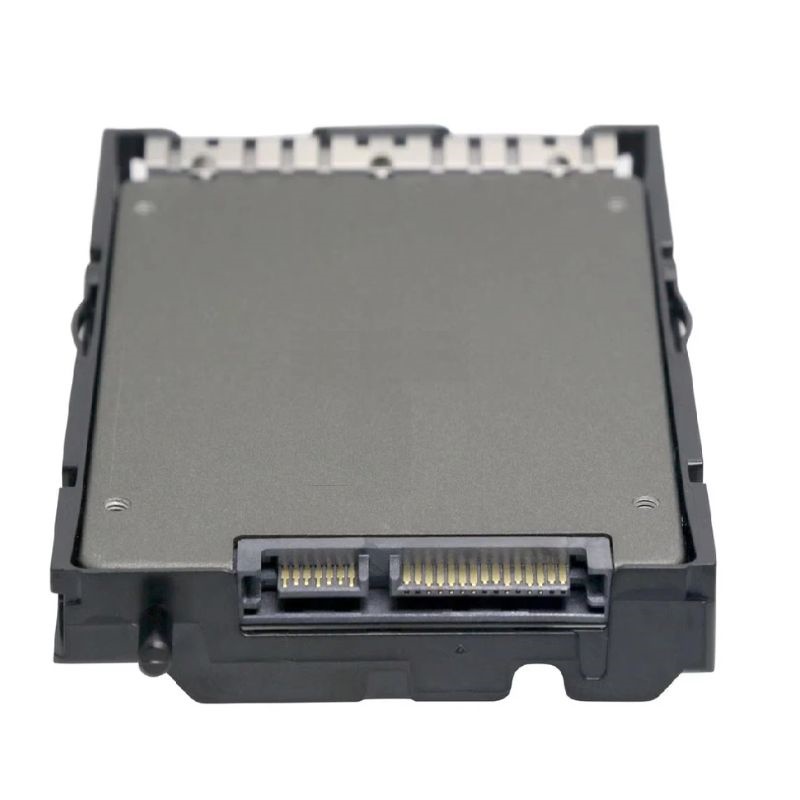
HPE 792243-001 480GB SATA-6GBPS SC 2.5 Inch MLC Read Intensive Solid State Drive. New (System) Pull with 1-Year Replacement Warranty
The HPE 792243-001 480GB SATA-6Gbps SC Small Form Factor Read Intensive MLC Solid State Drive is a highly reliable storage solution engineered for enterprise-grade servers and data center environments. Manufactured by Hewlett Packard Enterprise (HPE), this SSD is designed to deliver consistent performance, dependable durability, and enhanced efficiency across business-critical applications.
With SATA 6Gbps connectivity, the HPE 792243-001 SSD offers quick data transfers, reducing latency and improving input/output efficiency. This makes it an excellent choice for tasks where read operations are more frequent than writes, including analytics, reporting, and cloud services.
Built with Multi-Level Cell (MLC) NAND technology, this SSD offers a balance between endurance and cost-efficiency. It supports read-intensive workloads without compromising on long-term reliability, ensuring consistent operations within enterprise IT environments.
HPE solid state drives are engineered to meet rigorous industry standards. The 792243-001 model undergoes extensive testing to guarantee compatibility with HPE servers and storage systems, making it a trusted solution for organizations aiming to optimize infrastructure performance.
The HPE 792243-001 480GB SSD is purpose-built for enterprises requiring high-performance storage for read-heavy workloads. Its design caters to industries such as finance, healthcare, education, and IT where data accessibility and speed are paramount.
The combination of SATA 6Gbps bandwidth and HPE’s enterprise firmware ensures smooth, stable, and predictable operations. Its compact 2.5-inch form factor makes it suitable for dense server deployments where maximizing storage in limited space is a priority.
This SSD integrates seamlessly into HPE ProLiant servers and storage solutions. It is tested and validated to ensure compatibility, reducing the risks of system errors and providing IT teams with confidence when upgrading existing systems or expanding storage capacity.
Choosing the HPE 792243-001 480GB SATA SSD ensures long-term stability, reduced operational costs, and improved IT infrastructure efficiency. Its balance of capacity, durability, and price makes it an ideal solution for companies seeking reliable enterprise storage performance.
Product family overview — HPE 480GB SATA Read-Intensive SSD
The HPE 792243-001 (also sold under HPE/SanDisk vendor SKUs) is a 480GB, 2.5-inch, SATA 6Gb/s solid state drive engineered for read-intensive enterprise workloads. It is supplied as a small-form-factor (SFF) SC carrier drive with digitally signed firmware, MLC NAND flash and firmware tuned for consistent low latency, high IOPS, and strong data integrity controls. This SKU is part of HPE’s multi-vendor SSD portfolio specifically positioned for high-throughput, read-dominant applications in servers and storage arrays.
Typical published sequential throughput for HPE’s read-intensive 480GB SATA drives ranges from roughly 450 MB/s up to ~530–600 MB/s for sequential reads depending on the exact controller and firmware pairing; random I/O performance is tuned for high read IOPS (tens of thousands of read IOPS at common queue depths). These drives are designed to deliver dramatic improvements over spinning media for read-dominated workloads while remaining cost-effective compared to premium mixed-use or write-intensive SSDs.
Read-intensive SSDs like the HPE 792243-001 sit in a value-optimized position between consumer SATA SSDs and high-end enterprise NVMe or SAS drives. Their architecture and firmware emphasize:
The combination of a mature NAND type (MLC), an enterprise-grade controller and HPE-validated firmware provides a balance between endurance, performance and cost. MLC offers better endurance and sustained performance than consumer TLC parts while still being more affordable than SLC or enterprise-grade 3D TLC with heavy overprovisioning. HPE’s multi-vendor SSD SKUs are selected to meet or exceed published minimum performance targets to ensure predictable behavior across HPE server platforms.
Endurance for the HPE 480GB SATA class of read-intensive drives is typically optimized for reads rather than heavy sustained writes. Vendor data sheets for HPE mixed and read-intensive SKUs often list endurance in terms of DWPD or lifetime writes that reflect this design point. For mixed-use sibling SKUs you may see higher DWPD values (for example, mixed-use variants list values like 3.0 DWPD in some datasheets), while read-intensive parts will emphasize read IOPS and lower write endurance—suitable where write amplification and write frequency are controlled. Always consult the exact P/N datasheet for TBW/DWPD figures before deploying in write-heavy environments.
Many OEM listings present the drive as hot-pluggable with an SC carrier—a crucial feature for enterprise deployments because it enables field replacements and in-server replacements without downtime. If your deployment requires non-hot-pluggable drives (desktop or compact array), confirm the exact product variant since some SKUs differ only in carrier/firmware signatures.
To extract consistent performance from an HPE read-intensive 480GB SATA SSD, follow these vendor and storage best practices:
SSDs change rebuild dynamics—drives can reconstruct faster but sustained rebuild writes can stress remaining drives. For read-intensive drives, a rebuild is primarily write-heavy; ensure your RAID controller and spare capacity can handle rebuild IO without causing latency spikes for production reads. Optionally, throttle rebuild activity during peak hours.
Because SATA SSDs consume far less power than spinning disks during active and idle states, they offer reduced rack power and cooling budgets. However, in dense SSD deployments thermal design still matters: SSDs are sensitive to sustained elevated temperatures which can accelerate wear and trigger thermal throttling. HPE-qualified drives include thermal sensors and firmware algorithms to throttle or report conditions before data integrity is compromised. Enterprise monitoring is recommended for heavy IOPS clusters.
HPE SSDs emphasize data integrity: full data-path protection, power-loss protection strategies, and error correction mechanisms to reduce the chance of silent data corruption. Digitally-signed firmware ensures drives are identified and validated by HPE server firmware, which reduces the risk of unsupported third-party firmware interactions. These attributes matter for enterprises where data fidelity is non-negotiable.
When evaluating the 792243-001 against other SSD tiers, consider these tradeoffs:
The 792243-001 is a strong fit when:
Related product lines you may want to evaluate include HPE mixed-use SATA SSDs (for more balanced read/write durability), HPE SAS SSDs for higher reliability and in some cases better enterprise features, and HPE NVMe/U.2 options for lower latency and greater parallelism where application performance demands it. When planning upgrades, match the storage tier to application I/O characteristics rather than simply replacing like-for-like.


 Contact Us
 Information
 Catalog
 Solid State Drives (SSD)
 Network Switches
 Hard Disk Drives
 HBA & Controllers
 PC & Servers
 PC & Server Memory
 CPU & Processors
 Network Routers
 Power Supplies
 Tape Drives & Libraries
 Network Devices
 Computer & Network Cables