(7% discount is applied at checkout)
Cart is empty
Your go-to destination for cutting-edge server products


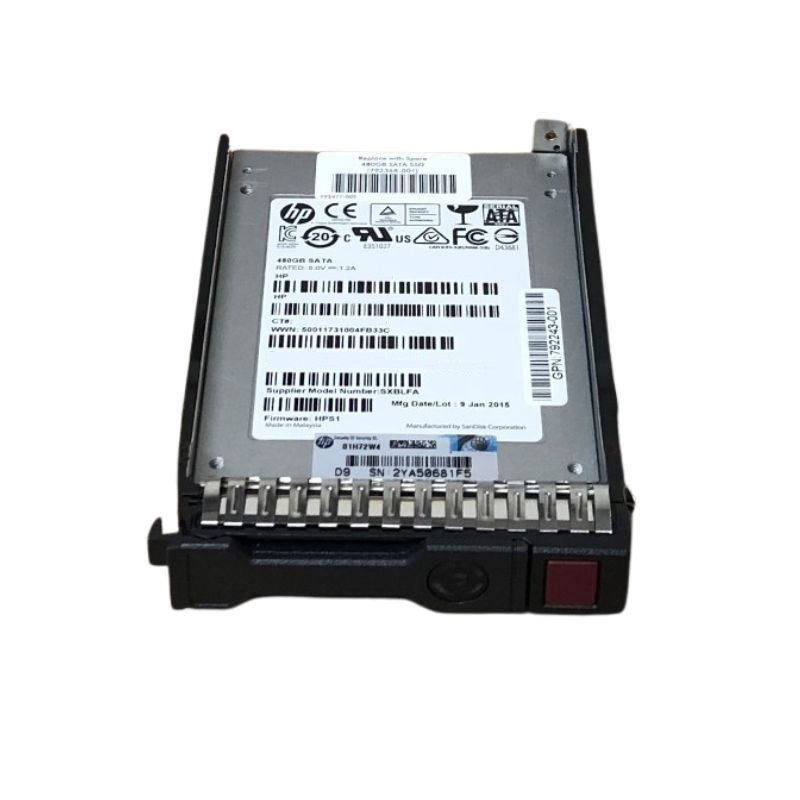
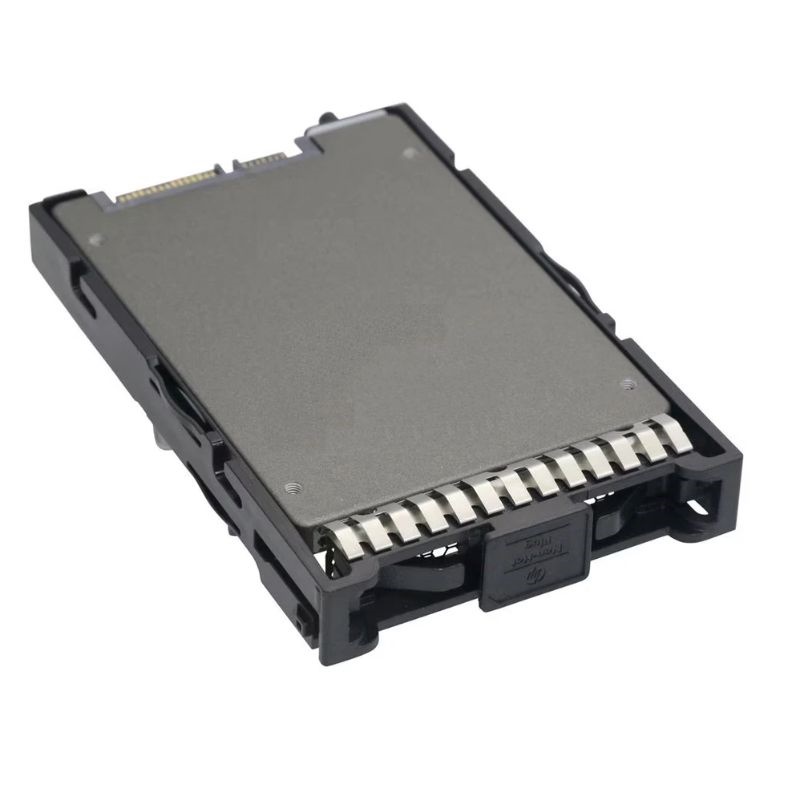
HPE 792368-001 480GB SATA 6GBPS Value Endurance MLC SFF Solid State Drive. New Sealed in Box (NIB) with 3 years Warranty
Product Overview of HPE 792368-001 480GB SATA 6Gbps Solid State Drive
The HPE 792368-001 0 Hours 480GB SATA 6Gbps Value Endurance MLC SSD is a highly reliable enterprise-grade storage solution designed for HP servers. With a 2.5-inch form factor, hot-swap capability, and advanced MLC NAND technology, it offers both durability and consistent performance for mission-critical workloads. Businesses and IT administrators can rely on this drive for faster data processing, smooth application performance, and energy-efficient operations.
Designed for enterprise environments, the HPE 792368-001 provides high read and write speeds with reduced latency. The 6Gbps SATA interface ensures seamless data transfer, while its multi-level cell (MLC) NAND flash supports endurance for workloads requiring frequent read/write cycles. Whether used in a database server, virtualization host, or storage array, it maintains consistent uptime and performance.
This solid-state drive is designed for seamless integration with HP ProLiant and other supported servers. Its compatibility ensures enterprises can upgrade or replace storage without worrying about hardware conflicts. By following HP-certified specifications, the 792368-001 delivers stable performance within enterprise data centers.
With its 2.5-inch small form factor, this SSD is space-efficient, making it ideal for dense server racks. It supports quick swap and replacement features, allowing IT teams to maintain uptime during hardware upgrades. The drive’s SATA 6Gbps interface ensures fast connectivity, while its 480GB capacity is suitable for databases, business applications, and enterprise storage pools.
Provides 480GB of enterprise-level storage, suitable for handling moderate to heavy workloads in business applications.
Equipped with a SATA 6Gbps connection, it supports reliable high-speed transfers for data-intensive operations.
The 2.5-inch design saves rack space and allows for high-density server configurations.
MLC NAND flash technology ensures a balance of cost-effectiveness and endurance, making it dependable for enterprise usage.
Businesses requiring consistent performance, secure data storage, and easy integration into HP systems benefit greatly from this SSD. Its hot-swap capability minimizes downtime, while its optimized design ensures it meets enterprise requirements.
The HPE 792368-001 SSD is versatile and ideal for multiple enterprise use cases. It improves storage efficiency and ensures uninterrupted system operations.
The 792368-001 HPE 480GB SATA 6GBPS Value Endurance MLC SFF Solid State Drive is a purpose-built storage component designed for HPE servers and storage systems that require a balance of durability, predictable performance, and cost-efficient capacity. This category covers the specific OEM-branded 480GB SATA drive using multi-level cell (MLC) NAND, a Small Form Factor (SFF) 2.5" physical profile and a SATA III interface (6 Gbps). The drive is targeted at mixed workload environments where consistent write endurance, low-latency access, and enterprise manageability are required without the higher cost of NVMe or enterprise-class endurance tiers.
The SFF 2.5" SSD follows standard enterprise mechanical dimensions and electrical signalling for SATA III. It is typically rated for low power draw in steady state and higher transient draw during peak I/O. This makes it practical for blade enclosures and rack servers where power budgets are carefully managed.
While exact numbers vary by firmware and test methodology, drives in this class emphasize consistent zero-queue and low-latency performance for random reads and reads mixed with moderate writes. Sequential throughput is constrained by the SATA 6 Gbps link but is still adequate for many system and archival tasks.
The term “Value Endurance” indicates NAND and firmware tuned so the drive provides a usable endurance rating higher than consumer-grade TLC while remaining cost-efficient relative to higher endurance enterprise SSDs. MLC cells typically support more program/erase cycles than TLC, improving longevity under write-heavy workloads. That said, exact endurance metrics (such as DWPD, TBW or MTBF) should be checked against the manufacturer's datasheet for the 792368-001 SKU before deployment.
The 792368-001 is identified and marketed as an HPE-compatible drive. Because it is an OEM SKU, it is often validated for specific HPE generations and controllers. Common integrations include:
SATA drives are typically attached to HBA or RAID controllers. When used in RAID arrays, be aware of write-cache behavior, battery/flash-backed cache implications, and rebuild characteristics. For mixed SSD/HDD arrays, segment SSDs into tiers where their low-latency benefits are most impactful (OS, caches, hot datasets).
Use the 480GB SATA MLC SSDs as system boot volumes or OS partitions. The reduced seek time and improved random IOPS compared to HDDs significantly speed boot times, patching, and service restarts.
This class of drive works well as local storage for virtualization hosts that require responsive guest OS performance. With 480GB capacity, you can allocate multiple VMs for test/dev or production workloads that are not highly write-intensive.
Deploy as a caching layer (either hypervisor-level or application-level) to accelerate read-dominant workloads and reduce latency to back-end HDD arrays.
Use for indexes and frequently-accessed files in relational databases or application servers where low-latency reads matter more than ultra-high sustained write throughput.
Regular monitoring of SMART attributes, firmware updates through HPE Service Pack for ProLiant (SPP) or direct HPE firmware channels, and proactive capacity planning are crucial. Keep an inventory of drive firmware versions to ensure consistency across RAID pairs and to avoid unexpected compatibility issues during server updates.
SSDs reduce some failure modes found with HDDs but require the same rigorous backup and HA planning: RAID for availability, frequent backups for data integrity, and tested restore procedures. For critical workloads, mirror OS partitions and use RAID-protected volumes for data — never treat a single SSD as the sole source of truth.
MLC (two bits per cell) occupies a middle ground:
The 792368-001 MLC-based drive is therefore well-suited when write endurance matters but budget constraints rule out SLC or higher-endurance enterprise SSDs.
NVMe drives deliver far higher throughput and much lower queue depths, beneficial for latency-sensitive, high-concurrency workloads. However, SATA still provides advantages:
For migrations or heterogeneous environments, SATA 480GB MLC SSDs remain a pragmatic upgrade path from HDDs.
When planning an SSD deployment, compute total cost of ownership (TCO) by comparing costs per usable GB, power savings (SSDs draw less power than HDDs), improved performance (fewer servers or faster time-to-completion), and maintenance overhead. 480GB SSDs can reduce storage footprint and accelerate operations, but consider a hybrid architecture to balance capacity and performance economically.
If future workloads demand lower latency and higher concurrency, plan for NVMe adoption on a measured timetable. However, SATA MLC drives like the 792368-001 can act as a transitional layer: accelerate current services today while architecting for NVMe adoption later.
A designation indicating higher endurance characteristics than consumer-grade drives, tuned for enterprise/workstation usage patterns while maintaining moderate cost.
Flash memory storing two bits per cell — a balance of performance and endurance between SLC and TLC.
A 2.5" drive size commonly used in modern servers and dense storage configurations.
Common endurance and reliability metrics: Terabytes Written, Drive Writes Per Day, and Mean Time Between Failures. Use them to compare expected life for your workload.


 Contact Us
 Information
 Catalog
 Solid State Drives (SSD)
 Network Switches
 Hard Disk Drives
 HBA & Controllers
 PC & Servers
 PC & Server Memory
 CPU & Processors
 Network Routers
 Power Supplies
 Tape Drives & Libraries
 Network Devices
 Computer & Network Cables