(7% discount is applied at checkout)
Cart is empty
Your go-to destination for cutting-edge server products
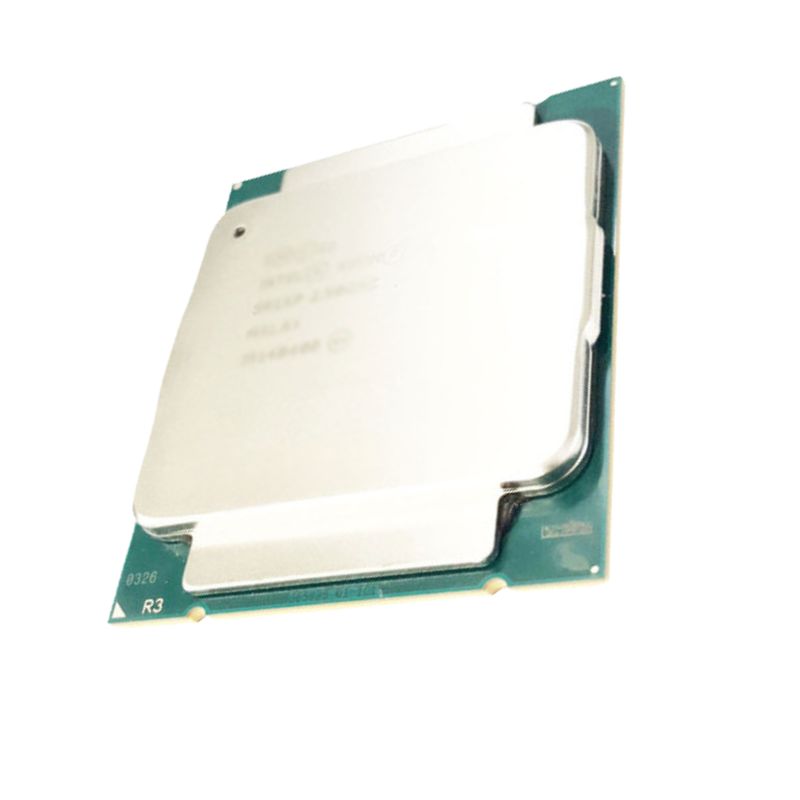


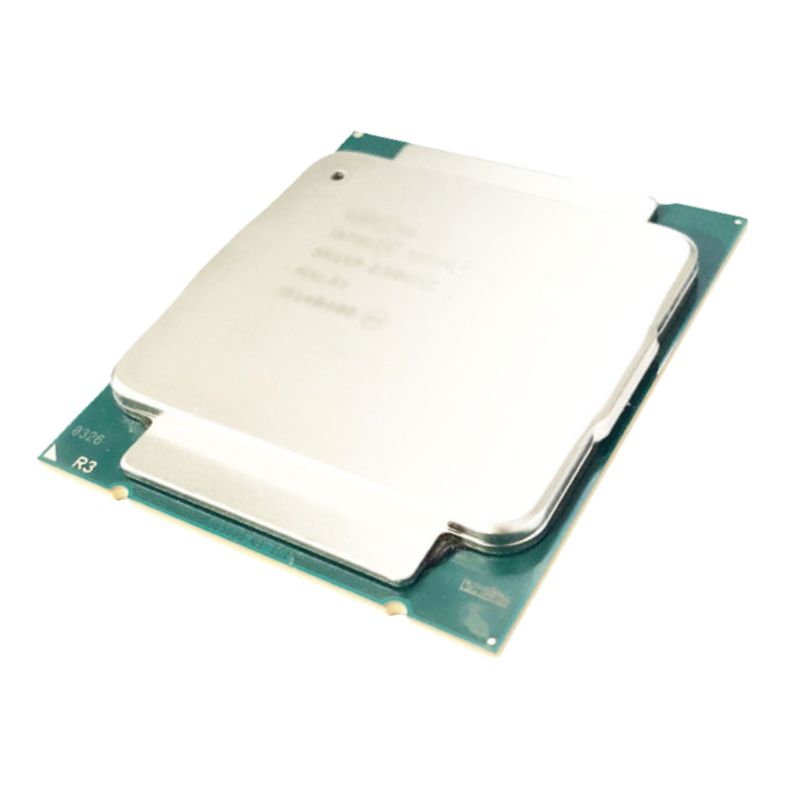
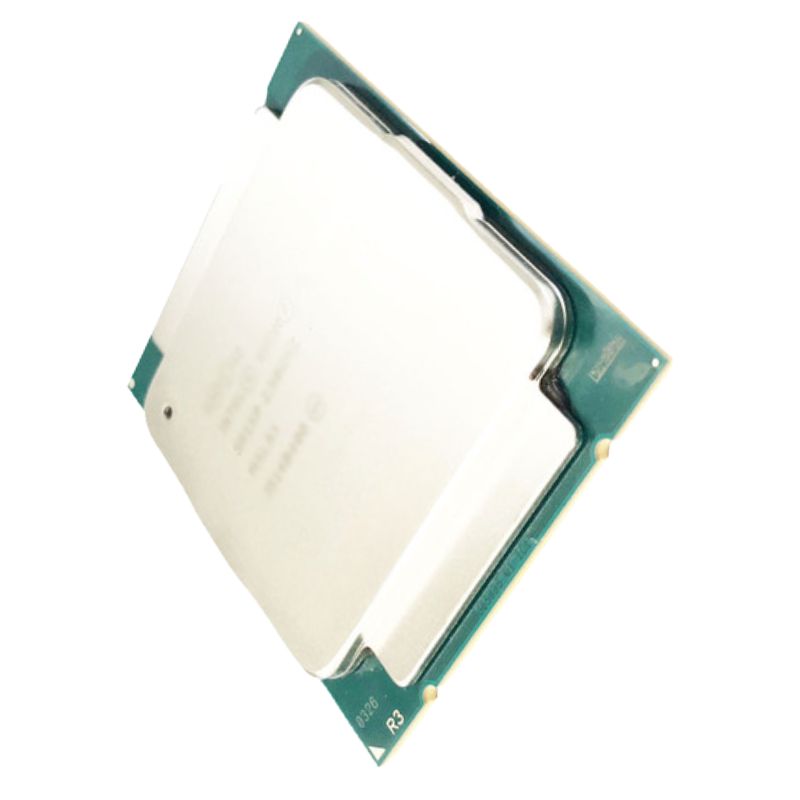
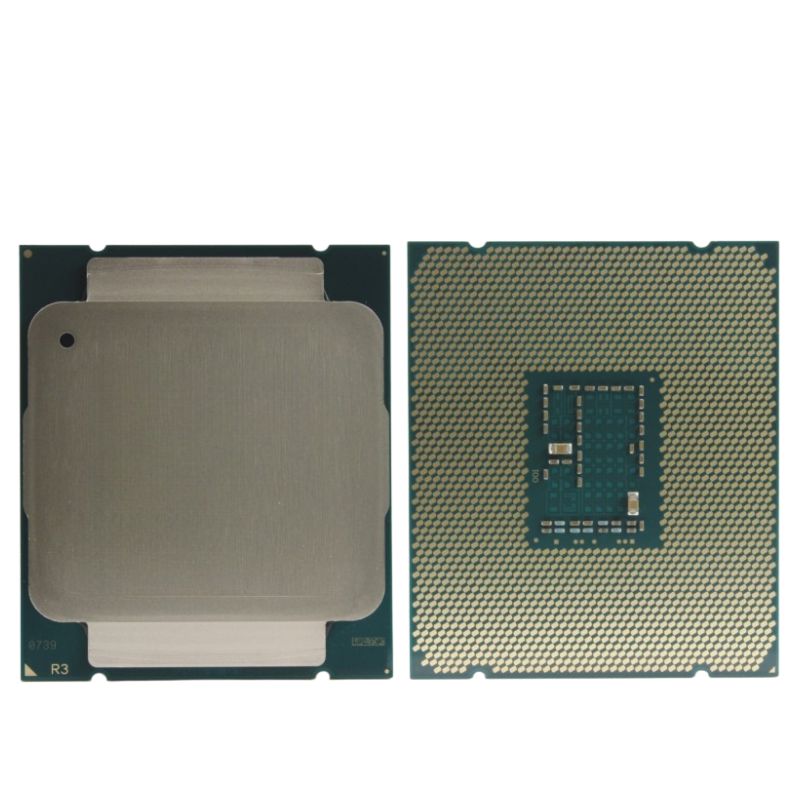
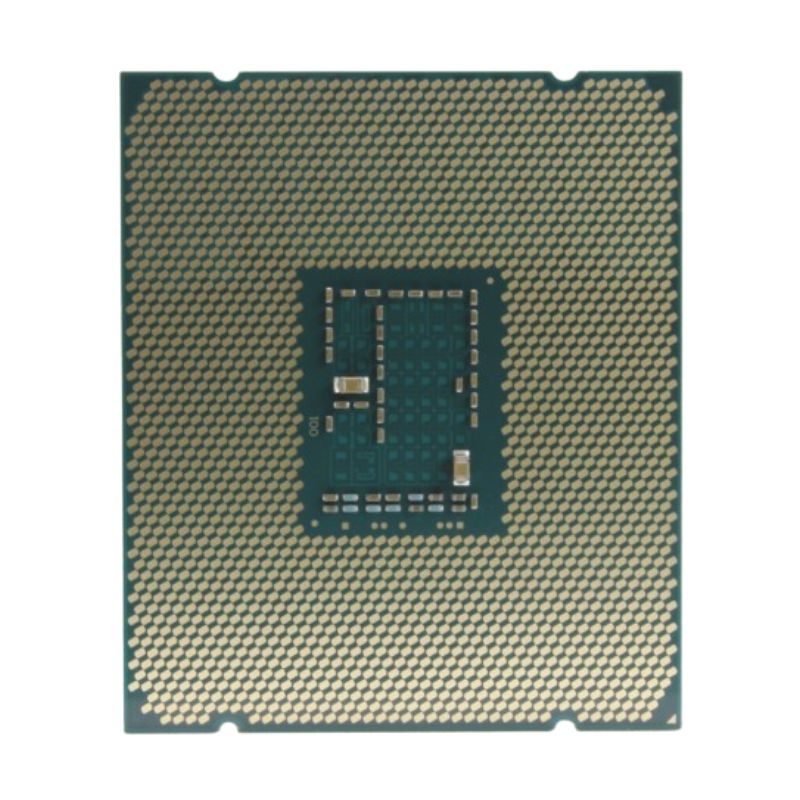
HPE 801232-L21 ML350 Gen9 Intel Xeon E5-2620v4 (2.1GHz/8-core/20MB/85W) FIO Processor. New (System) Pull with 1 year replacement warranty
The 801232-L21 HPE ML350 Gen9 Intel Xeon E5-2620v4 (2.1GHz/8-core/20MB/85W) FIO Processor Complete Kit is a high-performance solution designed to boost reliability, scalability, and computing efficiency in enterprise-grade server environments. This kit provides the necessary hardware to enhance the functionality of HPE ML350 Gen9 systems while supporting mission-critical workloads.
With its Intel Xeon E5-2620v4 processor, this kit delivers consistent computational power and reliable performance, supporting virtualization, database management, and demanding business applications.
The 85W power rating ensures balance between performance output and energy consumption, reducing operational costs without compromising speed or reliability.
Designed for HPE ML350 Gen9 systems, this kit provides scalability options for growing workloads, making it a future-ready investment for data-driven enterprises.
Perfectly engineered to integrate with HPE ProLiant ML350 Gen9 servers, ensuring smooth installation and optimal hardware compatibility.
The Intel Xeon E5-2620v4 is an 8-core part built on Intel’s Broadwell-EP microarchitecture. It features a 20MB shared L3 cache that reduces latency for multi-threaded workloads and improves cache coherency across NUMA domains. The 2.1GHz base frequency provides a conservative thermal envelope, while Intel Turbo Boost enables higher clock rates on fewer cores when thermal headroom allows, improving single-threaded responsiveness for mixed workloads.
This category pairs optimally with DDR4 Registered DIMMs (RDIMMs) and Load-Reduced DIMMs (LRDIMMs) supported by the ML350 Gen9 platform. With quad-channel memory support on the platform, administrators can exploit higher memory bandwidth for virtualization, in-memory databases, and analytics. The processor’s memory controller coordinates low-latency access patterns and benefits from ECC for data integrity in enterprise environments.
The 8-core Xeon E5-2620v4 is positioned as a versatile mid-range performer — ideal for small-to-medium virtualization clusters, web application servers, and centralized file services. Its combination of multi-core throughput and moderate clock speed makes it cost-effective for VMs that scale horizontally rather than depending on high single-thread frequency.
For database and caching workloads, the 20MB L3 cache and reliable memory subsystem make the processor a good fit for small to mid-sized OLTP and caching tiers. While high-frequency, single-thread-bound database queries may benefit from higher-clocked models, this kit provides predictable latency and low power draw per core — which improves overall TCO (Total Cost of Ownership).
With AVX2 support, the part accelerates vectorized operations used in analytics and data transformation workloads. It is an economical choice where multiple parallel jobs need to co-exist without pushing to high thermal or electrical budgets.
The kit is engineered specifically for HPE ProLiant ML350 Gen9 systems (and many DL-series servers that share the FCLGA2011/v3 socket family and Broadwell-compatible firmware). Deployers must verify server firmware/BIOS revisions — HPE recommends certain Service Pack for ProLiant (SPP) releases to ensure microcode compatibility and to unlock all processor features.
Customers often cross-reference the 801232-L21 with other E5-v4 family SKUs when planning upgrades. The processor’s moderate TDP allows it to act as an in-situ upgrade from older E5-v2/v3 parts in many rack and tower servers, often delivering better core-per-watt performance. For customers seeking higher per-core performance or larger cache, stepping up to higher-end v4 SKUs is possible — but may require power-supply or thermal headroom validation.
With an 85W thermal design power, the E5-2620v4 balances energy efficiency and performance. In multi-socket configurations, cumulative TDP must be considered for power supply sizing and cooling strategy. The ML350 Gen9 chassis was designed with adequate airflow for typical enterprise CPU configurations, but dense multi-socket or mixed-CPU deployments require validation with power and thermal profiles under expected workloads.
SMBs running file services, virtualization, directory services, and lightweight databases benefit from the price/performance balance this kit offers. The combination of multi-core throughput and manageable power consumption reduces operational costs while enabling predictable scaling as business demands grow.
The tower and compact rack compatibility of ML350-class servers make the E5-2620v4 kit suitable for branch office compute nodes and edge workloads that need local processing, caching, or data aggregation — especially when bandwidth constraints make local processing preferable to cloud roundtrips.
VDI pools with mixed-task users (knowledge workers, light productivity) can be architected using these CPUs to balance concurrent VM density and acceptable responsiveness. Proper memory sizing and storage IOPS planning are crucial for VDI success — CPU is one part of a combined resource planning exercise.
For realistic benchmark results, test with workload-specific suites — e.g., SPECvirt for virtualization scaling, Sysbench or HammerDB for database throughput, and application-level tests for web and caching tiers. Avoid synthetic microbenchmarks as sole indicators; combine them with sustained, end-to-end tests that reflect real-world concurrency and IO patterns.
This processor kit positions itself as an economical upgrade for enterprises that need expanded core counts without significantly increasing cooling or power infrastructure. Evaluating ROI should consider the combined cost of the kit, any required RAM expansion, potential SPP/firmware updates, and labor for installation versus the performance uplift and extended service life of the host server.
Use tabular or list-based presentations for spec-heavy sections so buyers can quickly scan for clock speeds, core counts, TDP, socket type, and SKU lists. Include comparison tables that show adjacent SKUs in the E5-v4 family to help buyers choose the right part.
Display verified customer reviews, warranty badges, and HPE-authorized reseller logos. Offer images showing the kit contents laid out, close-ups of the heat sink, and annotated photos highlighting what’s included — all with descriptive alt text containing target keywords.


 Contact Us
 Information
 Catalog
 Solid State Drives (SSD)
 Network Switches
 Hard Disk Drives
 HBA & Controllers
 PC & Servers
 PC & Server Memory
 CPU & Processors
 Network Routers
 Power Supplies
 Tape Drives & Libraries
 Network Devices
 Computer & Network Cables