(7% discount is applied at checkout)
Cart is empty
Your go-to destination for cutting-edge server products
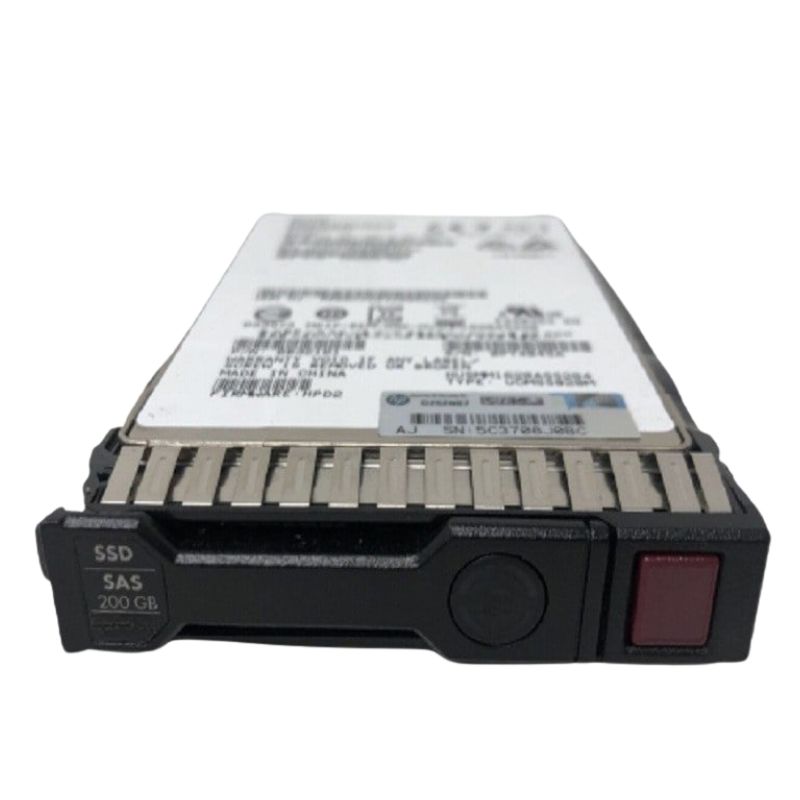


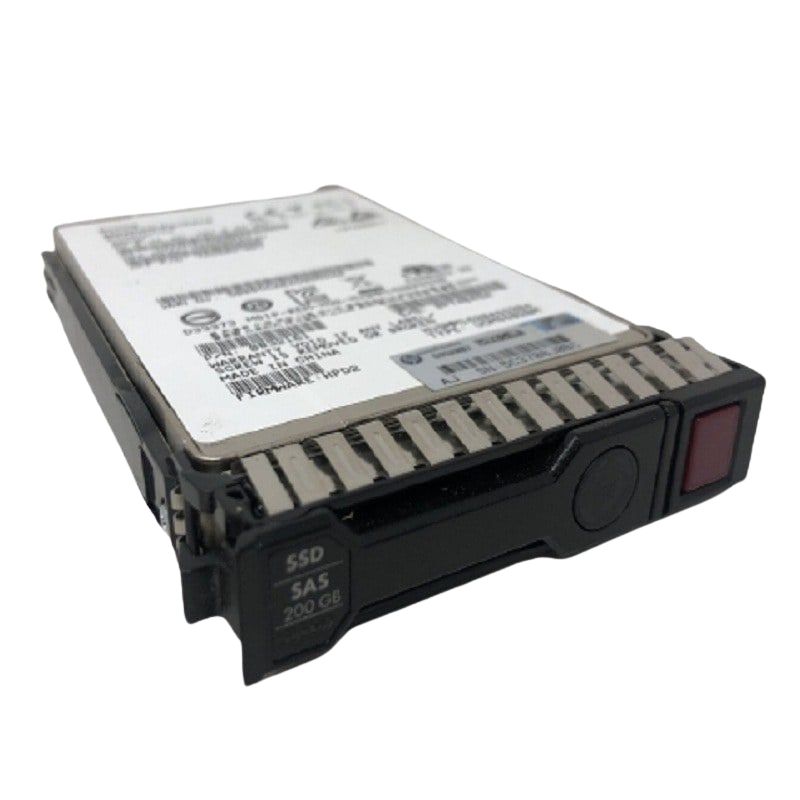
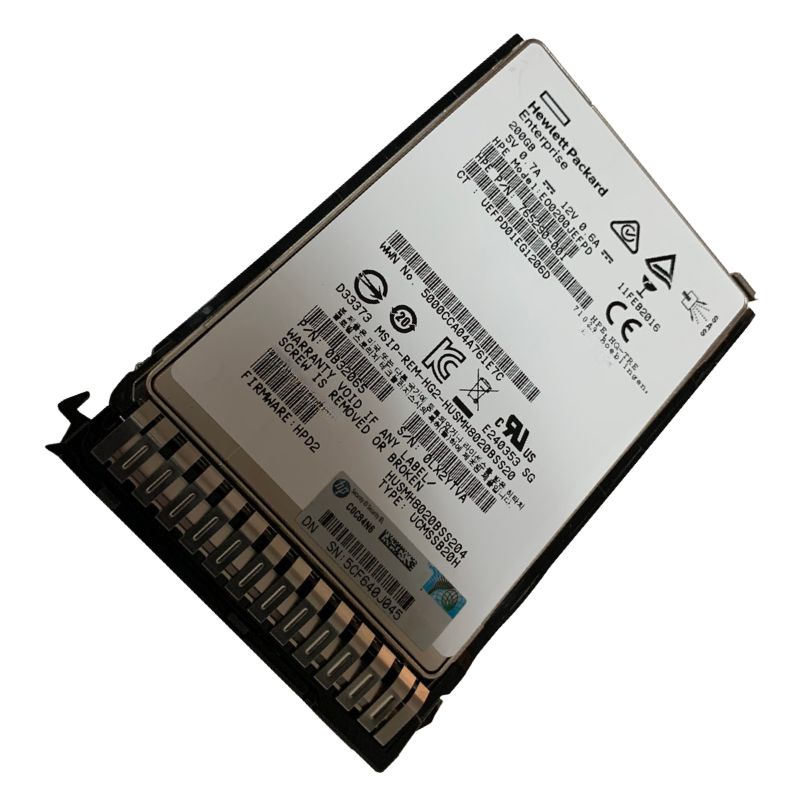
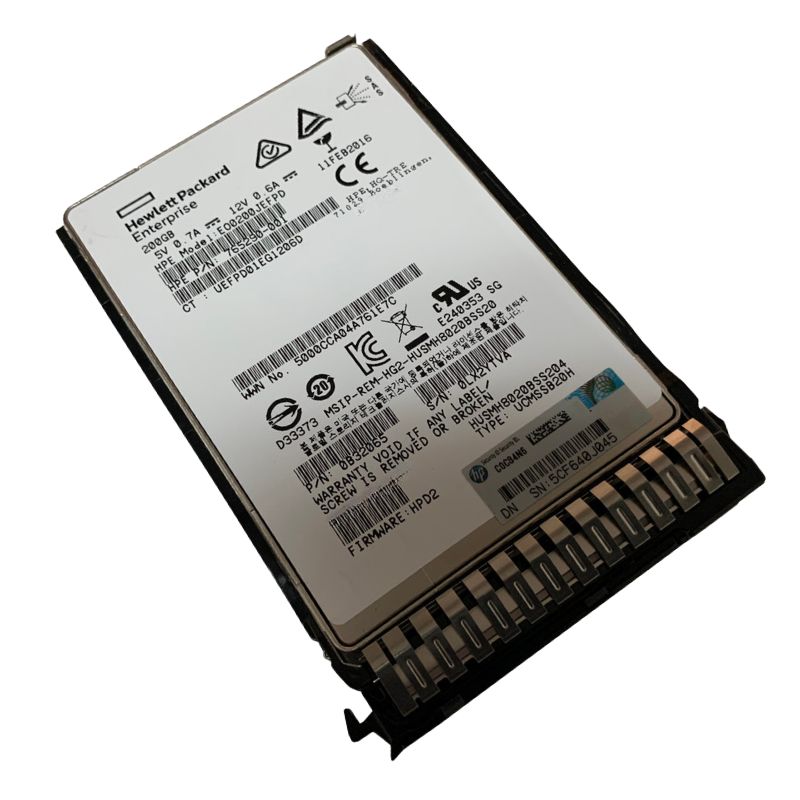
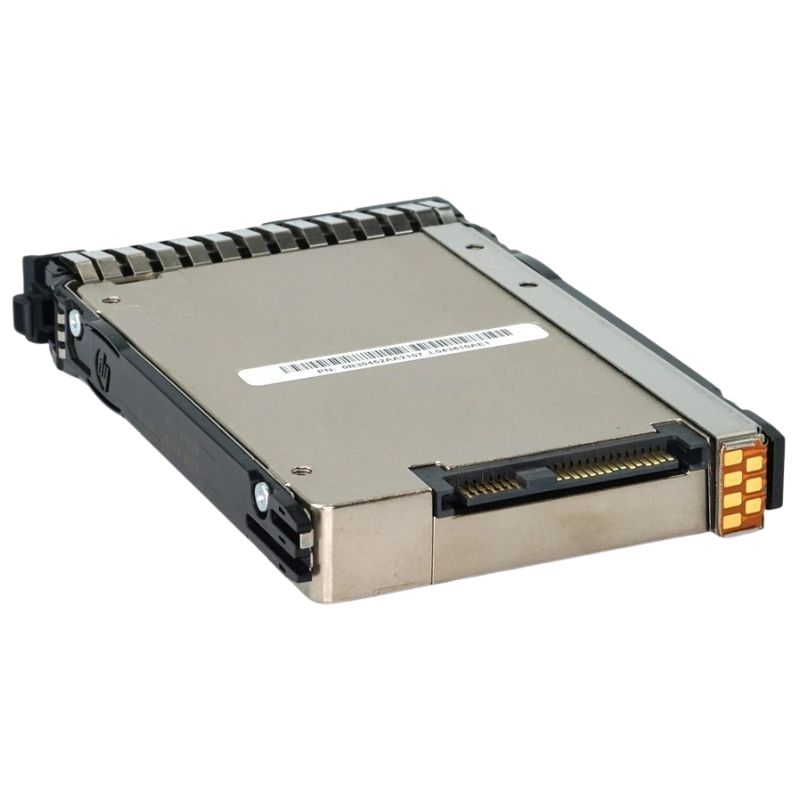
HPE 802578-B21 200GB SFF SAS-12GBPS SC Write-Intensive MLC Enterprise G8 G9 Solid State Drive. Excellent Refurbished with 1 Year Replacement Warranty
The HPE 802578-B21 200GB SFF SAS-12GBPS SC Write-Intensive MLC Enterprise G8 G9 Solid State Drive represents a focused segment of enterprise-class storage engineered to deliver sustained write performance in mixed and write-heavy server workloads. Built for compatibility with HPE ProLiant G8 and G9 platforms and designed to operate within HPE storage ecosystems, this 2.5-inch small form factor (SFF) drive combines a SAS 12 Gbps interface with multi-level cell (MLC) flash optimized for write-intensive endurance. The “SC” designation emphasizes HPE’s secure and certified manufacturing pathway, while the 200GB capacity positions the unit as a high-performance tier for caching, logging, transactional databases, and virtualization workloads. Understanding the defining characteristics of the 802578-B21 is essential when architects, system administrators, and procurement specialists evaluate storage tiers within enterprise server farms.
This HPE SSD utilizes the 12 Gbps SAS interface to marry enterprise-class reliability with low-latency access and high I/O operations per second (IOPS). The 2.5-inch SFF profile allows denser drive configurations in blade chassis, rack-mounted enclosures, and converged infrastructure nodes. Internally, the drive uses write-intensive MLC NAND optimized with firmware routines that prioritize endurance and deterministic write latency. Enterprise-grade controllers and over-provisioning strategies reduce write amplification and extend usable life. Error correction, power-loss protection, and advanced wear-leveling algorithms further ensure data integrity under sustained write cycles. The design assumes persistent workloads where writes dominate reads — for example, database logging, VM swap, and messaging queues — and is tuned accordingly to provide consistent throughput over time rather than peak burst numbers alone.
Performance metrics for the HPE 802578-B21 are best understood in context: this SSD aims to deliver strong sequential throughput as well as reliable random write performance under enterprise queue depths. The SAS-12Gbps interface removes a common bottleneck in earlier generations, enabling higher sustained throughput across multiple concurrent threads. For workload architects this means the drive is particularly well suited to write-intensive tasks such as relational database transaction logs, continuous ingest pipelines, swap and page file acceleration, and virtualization hosts where random write I/O is significant. In hybrid storage tiers, the 200GB capacity is often deployed as a tier-0 or tier-1 caching layer in front of larger capacity HDDs or as a high-performance partition within an all-flash array configuration. The drive’s firmware tuning reduces latency jitter, an important attribute for latency-sensitive enterprise applications where predictable response times are critical to SLAs.
Endurance rating is one of the core differentiators for write-intensive SSDs, and the HPE 802578-B21 is designed with endurance characteristics that match the demands of heavy-write environments. Write-intensive MLC combined with enterprise-grade controller features yields a drive capable of sustaining high write workloads across its rated lifetime. Reliability features include full device-level power-loss protection that safely commits volatile cache to flash in the event of sudden power interruption, enterprise-grade E2E (end-to-end) data protection to guard against internal corruption, and robust ECC that corrects multi-bit errors. Additionally, the drive supports SMART attributes and telemetry that integrate with HPE management software, enabling administrators to monitor health, remaining life, and operational warnings. These telemetry streams support proactive maintenance, allowing replacement before a drive reaches critical wear thresholds and ensuring predictable serviceability within large deployments.
Compatibility is a major practical advantage when selecting the HPE 802578-B21. Specifically tested and validated for HPE ProLiant G8 and G9 servers, the drive integrates with HPE Smart Array controllers and HPE system management stacks. This deep integration enables common operational flows such as secure firmware updates, RAID configuration, and automated health reporting within HPE OneView or other HPE tools. In environments where firmware standardization, vendor-backed interoperability, and predictable update paths are mandatory, using an HPE-qualified SSD reduces the risk of unsupported firmware interactions and simplifies lifecycle management. Administrators can leverage HPE diagnostic and provisioning utilities to verify firmware revisions, run drive-level tests, and implement rolling replacement procedures without disrupting RAID arrays or clustered services.
Enterprise IT teams will find several natural use cases for this drive. First, as a dedicated log and journal device for databases and distributed storage engines, the drive’s write optimization ensures that sustained append-only operations do not prematurely degrade performance. Second, in virtualization clusters, small but numerous VMs often produce a high random write mix; using the 200GB drive as local caching or hot-tier storage reduces latency compared to HDD-only hosts. Third, in high-frequency data acquisition and telemetry systems, where continuous streams of small writes arrive from sensors or transactional endpoints, the SSD’s endurance and consistent write performance lower the risk of I/O tail latency. Finally, in hybrid arrays, these drives are ideal as a write buffer or for metadata acceleration — places where small capacity with strong write endurance yields outsized value by accelerating the entire storage stack.
Within HPE’s broader SSD portfolio, the 802578-B21 occupies a specialized niche: write-intense, small form factor drives for enterprise-class servers. Compared to read-intensive MLC or TLC drives optimized for sequential reads and high density, this model emphasizes write endurance and sustained write throughput. Compared to consumer or client-grade SSDs, the drive includes enterprise features such as diagnostic telemetry, power-loss protection, and validated firmware for server-class controllers. In an HPE deployment strategy, it is common to pair these drives with higher-capacity, cost-optimized drives for colder data or to use them exclusively in environments where writes dominate. Understanding how this drive differs from read-optimized or mixed-use SSDs helps IT teams make informed decisions when mapping application patterns to storage tiers.
When deployed in RAID configurations, write-intensive SSDs like the 802578-B21 must be considered for rebuild impact and redundancy models. SSD rebuild patterns differ from HDDs: rebuilds may stress remaining drives and the controller due to higher sustained I/O during recovery. For this reason, some architects choose higher RAID levels or spare pools, and configure staggered rebuild priorities to balance recovery time and system performance. Additionally, combining SSDs with NVMe or SAS tiers within a storage array requires careful mapping of logical volumes to physical capacity to ensure that writes are directed to the intended endurance-optimized pool. Documentation from HPE and controller vendors provides validated guidance for recommended RAID levels and rebuild settings to minimize risk during drive failures.


 Contact Us
 Information
 Catalog
 Solid State Drives (SSD)
 Network Switches
 Hard Disk Drives
 HBA & Controllers
 PC & Servers
 PC & Server Memory
 CPU & Processors
 Network Routers
 Power Supplies
 Tape Drives & Libraries
 Network Devices
 Computer & Network Cables