(7% discount is applied at checkout)
Cart is empty
Your go-to destination for cutting-edge server products
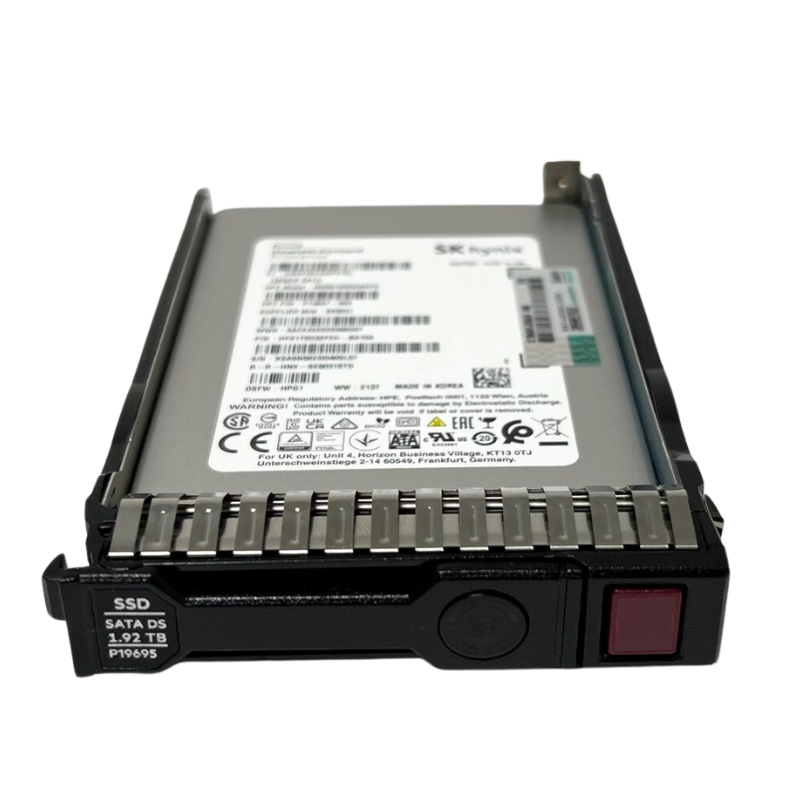


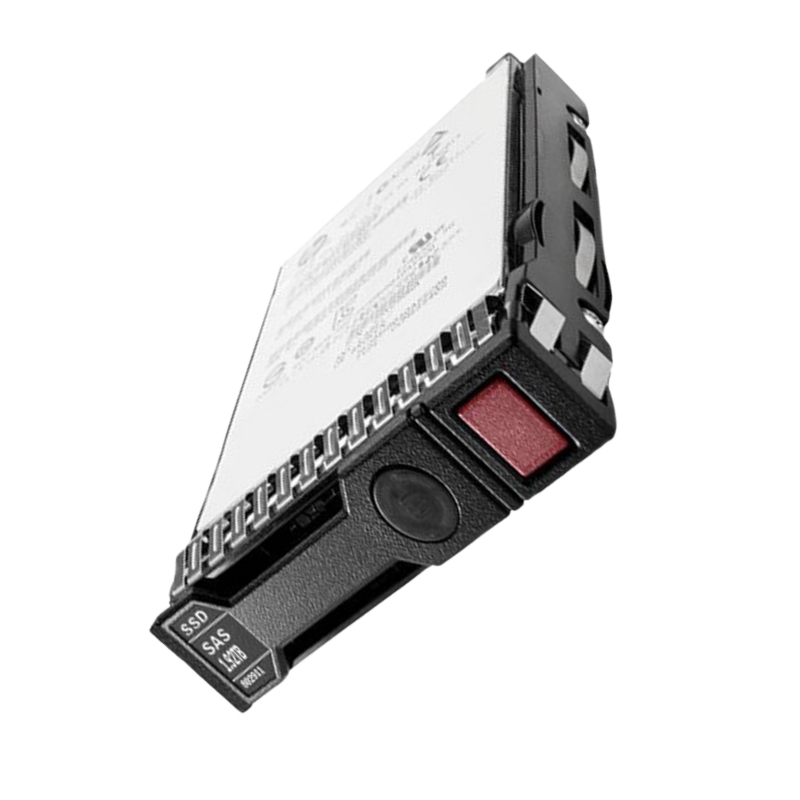
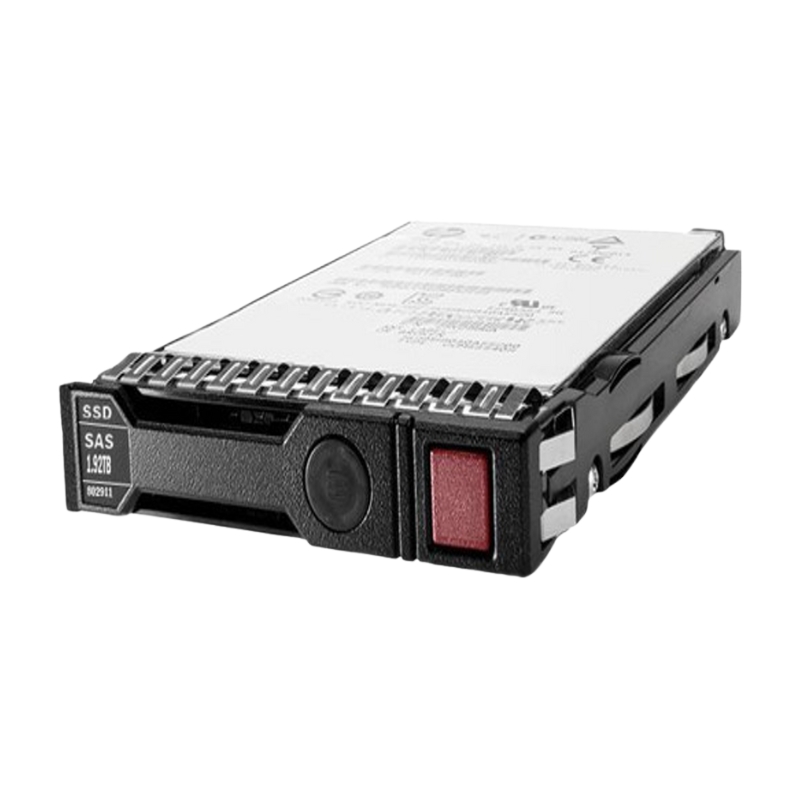
HPE 802891-B21 1.92TB SFF SAS-12GBPS SC Read-Intensive Value Endurance G8 G9 Solid State Drive. Factory-Sealed New in Original Box (FSB) with 3 Year Warranty
| SKU/MPN | Warranty | Price | Condition | You save |
|---|---|---|---|---|
| 802891-B21 | 1 Year Warranty | $646.00 | Excellent Refurbished | You save: $226.10 (26%) |
| 802891-B21 | 1 Year Warranty | $1,088.00 | Factory-Sealed New in Original Box (FSB) | You save: $380.80 (26%) |
The HPE 802891-B21 1.92TB solid state drive is positioned for environments that demand predictable, cost-efficient capacity with strong read performance and broad compatibility across HPE Gen8 and Gen9 platforms. Built in a small form factor suitable for 2.5-inch bays, this drive communicates over a 12 Gbps SAS interface, enabling data center architectures to sustain high request rates and low latency for read-dominant workloads. The model designation signals HPE’s part numbering and platform alignment; the “read-intensive” and “value endurance” classifications indicate an endurance profile optimized for workloads where sequential and random reads substantially outnumber writes, while still delivering enterprise-oriented reliability, maintainability, and interoperability in ProLiant servers and HPE storage systems.
Physically, the drive adheres to SFF dimensions and hot-pluggable mechanics typical of modern enterprise bays, allowing seamless replacement and upgrades without extended downtime. The 12 Gbps SAS link provides dual-port capability in many implementations, enabling multipath, failover, and high-availability topologies when paired with appropriate HBAs or RAID controllers. The solid state architecture removes the mechanical constraints of spinning media, reducing seek times and eliminating rotational latency, which translates to consistent response times under mixed concurrency. From a cabling and tray perspective, the unit mounts into industry-standard 2.5-inch carriers, making it suitable for dense server configurations where rack space and I/O consolidation matter.
Using a 12 Gbps SAS interface means the device can sustain much higher aggregate throughput than older 6 Gbps SAS devices, while providing the signal integrity and enterprise features associated with SAS—such as robust error detection, multi-path connectivity, and controller-level management. In practical deployments, the achievable throughput depends on workload characteristics, controller capabilities, and the host stack; read-intensive SSDs typically deliver high IOPS at low latency for small-block random reads and strong sequential bandwidth for large-block streaming reads. Architects will find the combination of SAS reliability and SSD responsiveness particularly beneficial for database read replicas, virtualization boot volumes, caching tiers, and content delivery where numerous concurrent reads create the primary performance envelope.
This drive is tailored for read-heavy applications that prioritize predictable read latency and performance per watt over maximal write endurance. Typical target workloads include scale-out file systems, web and application server caches, analytics nodes performing frequent lookups, media streaming front-ends, and large virtual desktop infrastructure pools where read amplification is the dominant pattern. Performance metrics that matter for these scenarios include consistent random read IOPS at sub-millisecond latency, stable sequential read bandwidth under sustained load, and minimal performance degradation as the drive approaches usable capacity. The value endurance classification means the drive balances cost and longevity, delivering many enterprise operational cycles for read-centric use while offering enough write capability for software updates, logging, and other necessary writes without requiring the same overprovisioning as higher-endurance drives.
Latency sensitivity is one of the chief advantages of SSDs in general and of this product class specifically. For services where microsecond and low-millisecond response windows are business-critical, the drive’s flash media and controller combination aims to reduce tail latency and provide consistent I/O completion times under mixed concurrency. IOPS capability should be considered relative to the storage controller and the server’s queue management; designing for QoS entails aligning drive counts, RAID levels, and host-side queuing policies to avoid hotspots. When multiple drives of this model are aggregated, the system can present a high-performance read fabric capable of serving many simultaneous clients without the unpredictable spikes that plague HDD-based configurations.
The HPE 802891-B21 is engineered to integrate smoothly with HPE ProLiant Gen8 and Gen9 servers and chassis that accept 2.5-inch SAS drives. Compatibility is not only physical; the firmware, drive reporting, and HPE management utilities interact to provide health telemetry, predictive failure alerts, and secure firmware update pathways. Using HPE’s management stack—such as the Integrated Lights-Out (iLO) and storage controller firmware—administrators can monitor drive SMART attributes, temperature, and error rates, and apply vendor-supplied firmware updates as part of routine maintenance. This integrated visibility enables proactive replacement and consistent asset management throughout the drive’s lifecycle.
Enterprise storage architectures frequently rely on RAID controllers or software-defined storage layers to provide redundancy and data protection. The SAS link and enterprise-grade feature set make the drive compatible with HPE Smart Array controllers and many third-party RAID controllers that accept standard SAS drives. When used in RAID configurations, the drive contributes to faster rebuild times and lower read latency for degraded arrays compared to HDDs, which improves overall service availability. For software-defined stacks, the drive’s read-optimized behavior can enhance caching layers and tiering strategies, where frequently-accessed blocks reside on this SSD tier while colder data remains on higher-capacity spinning media.
Endurance for a read-intensive, value-endurance SSD focuses on how the device’s flash media is provisioned and how wear-leveling algorithms extend usable life while keeping cost-per-gigabyte competitive. Value-endurance drives typically offer sufficient write tolerance for regular operating system writes, patch cycles, and logging, but they are not designed for sustained heavy write workloads such as intensive database transaction logging without appropriate architectural mitigations. The economic benefits manifest in lower total cost of ownership when the drive’s cost per gigabyte, power consumption, cooling footprint, and performance per watt are compared to spinning disks. In many data centers, replacing a set of HDDs with a smaller number of SSDs of this class reduces rack space, lowers cooling demands, and simplifies I/O design—delivering both performance gains and operational savings.
The HPE 802891-B21 finds natural roles in a number of deployment patterns. In database ecosystems it can provide fast lookup and index storage for read-scaled replicas or reporting nodes. In virtualization, it excels as a boot and image store for virtual machines where high-volume reads occur during boot storms or when many VMs access shared templates. In web and application serving, the drive’s fast random read characteristics help deliver content quickly under concurrent requests. In analytics clusters, storing frequently referenced datasets on SSD tiers can dramatically accelerate query response times. Content delivery and streaming front-ends benefit from the drive’s ability to sustain multiple simultaneous read streams with consistent latency.
When designing for high availability, redundancy strategies such as RAID 1, RAID 10, or erasure coding should be evaluated in light of the drive’s performance characteristics. For read-heavy loads, mirroring can deliver immediate read-scaling benefits by allowing read distribution across multiple mirrors, while RAID 10 balances fault tolerance with performance. Ensuring power loss protection at the controller level and leveraging battery-backed cache or capacitor-backed cache can protect in-flight data and maintain metadata consistency during outages. Multipathing and dual-port SAS configurations can be used to provide resilient I/O paths, minimizing disruption in the event of a controller or path failure.


 Contact Us
 Information
 Catalog
 Solid State Drives (SSD)
 Network Switches
 Hard Disk Drives
 HBA & Controllers
 PC & Servers
 PC & Server Memory
 CPU & Processors
 Network Routers
 Power Supplies
 Tape Drives & Libraries
 Network Devices
 Computer & Network Cables