(7% discount is applied at checkout)
Cart is empty
Your go-to destination for cutting-edge server products
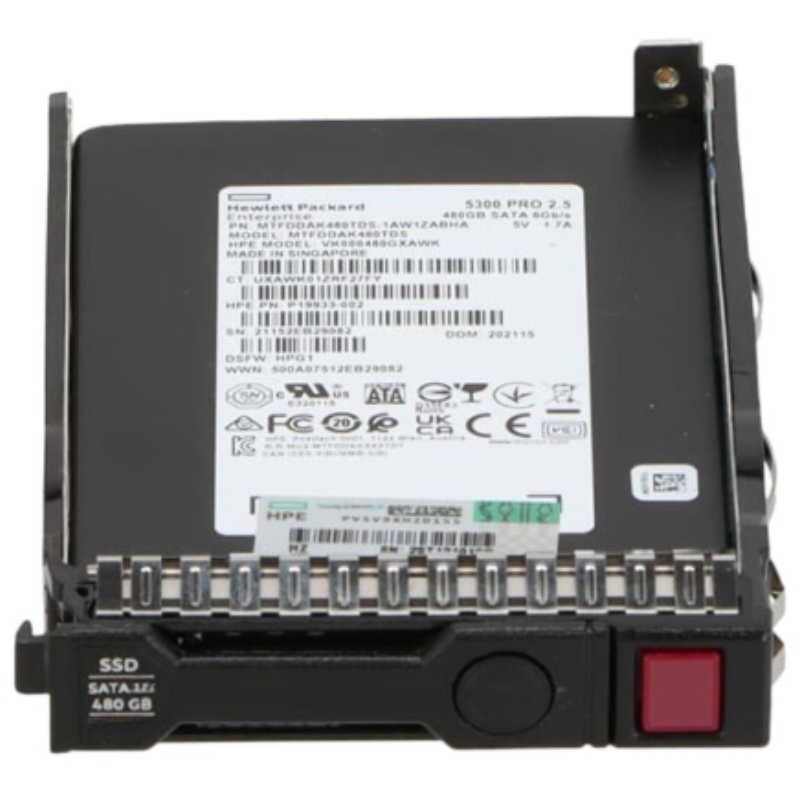


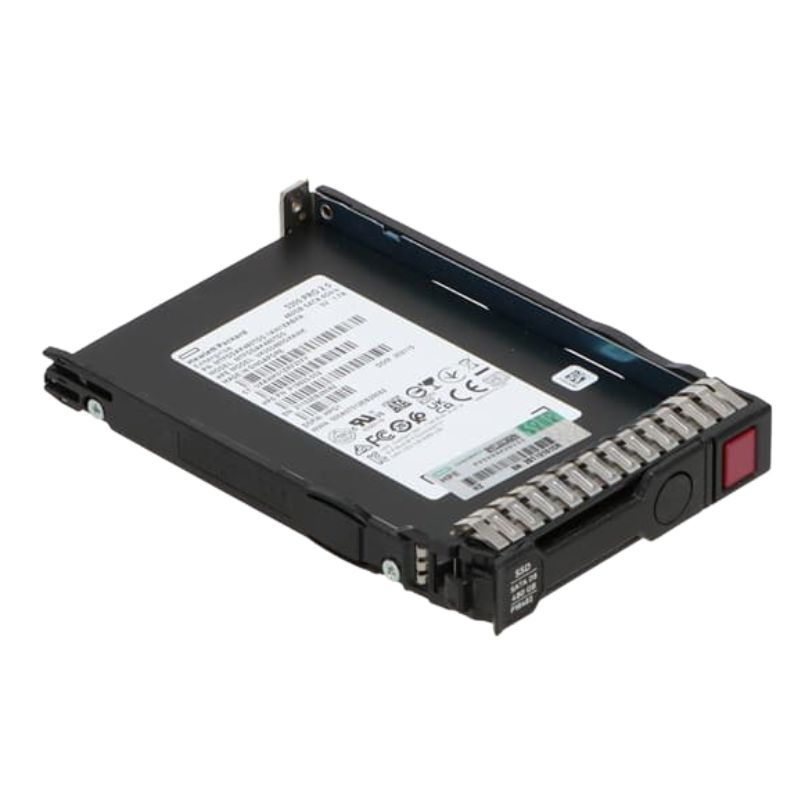
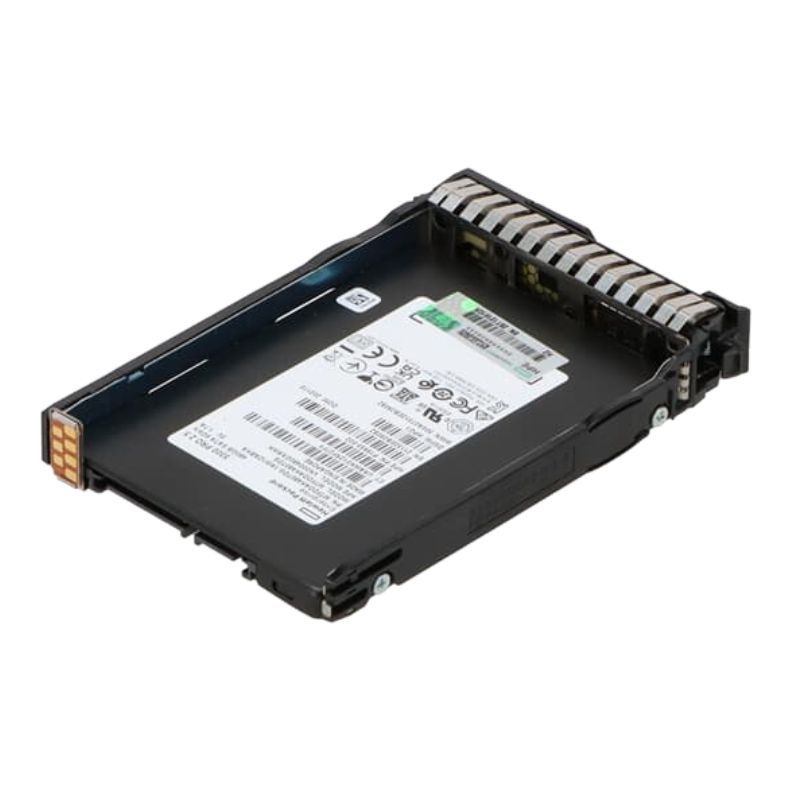
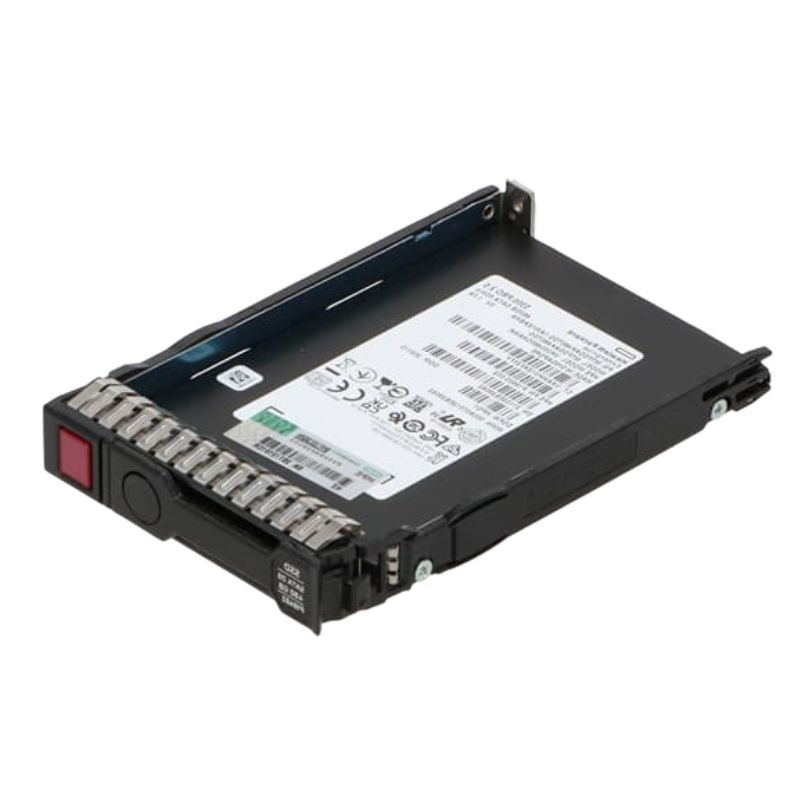
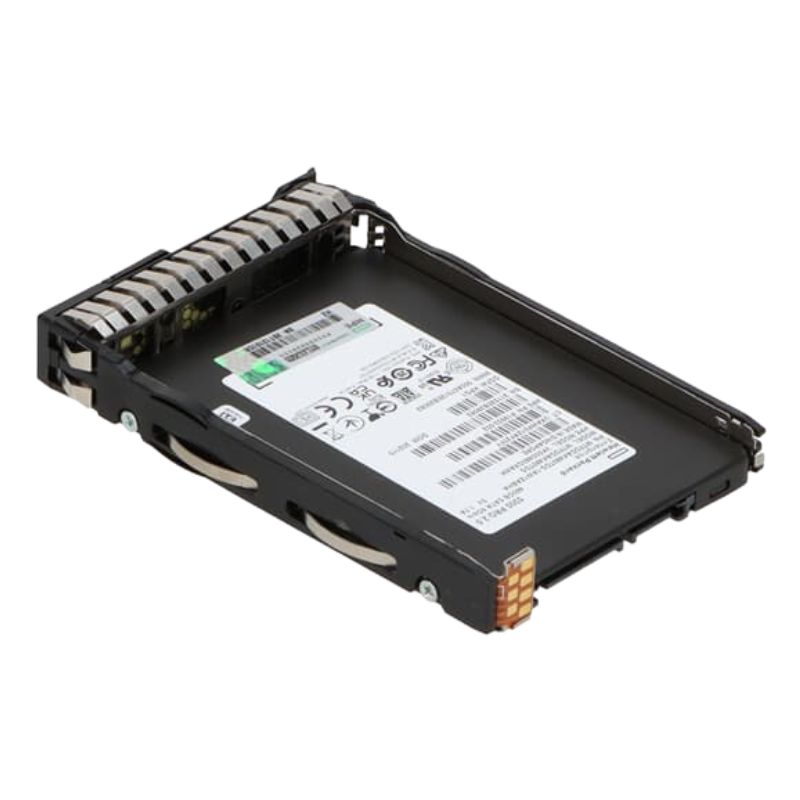
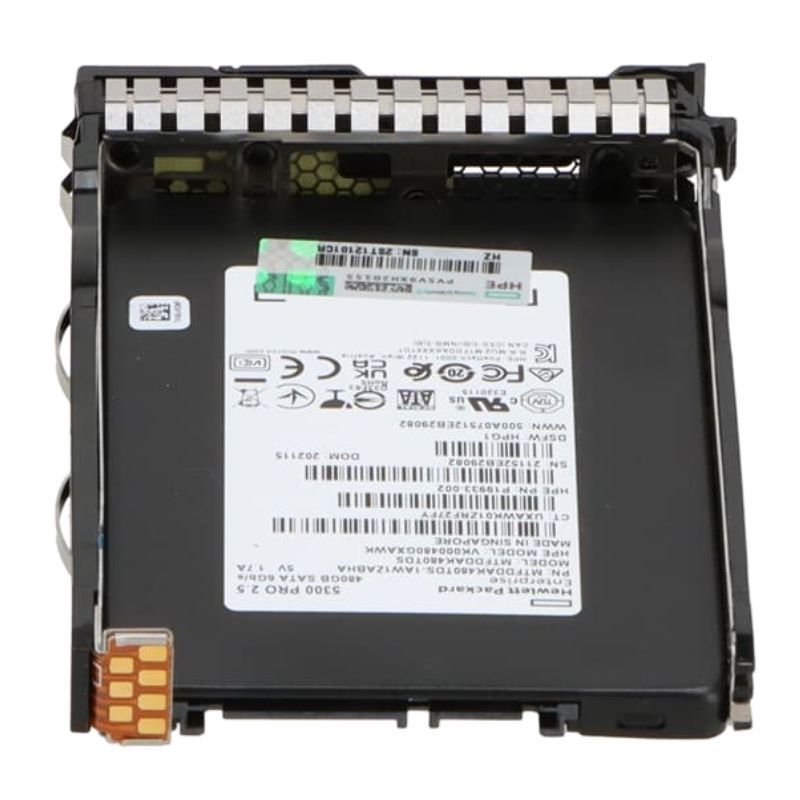
HPE 804593-H21 480GB SATA-6GBPS SFF DS SC Read-Intensive G9 G10 Solid State Drive. Excellent Refurbished with 1 year replacement warranty
The HPE 804593-H21 480GB SATA-6GBPS SFF DS SC Read-Intensive G9 G10 Solid State Drive represents a focused category of server-grade storage designed for mixed enterprise workloads that favor read-heavy I/O patterns. This category description emphasizes the combination of a 480GB capacity in a small form factor (SFF), a SATA 6.0 Gbps interface, dual-sided short (DS SC) packaging, and firmware and hardware tuning that optimize performance and endurance for read-dominant applications. Buyers exploring this category are typically seeking an affordable, energy-efficient, and reliable solid state drive (SSD) that integrates cleanly into HPE ProLiant Gen9 (G9) and Gen10 (G10) server platforms while delivering predictable low-latency behavior for caching, boot volumes, virtual machine images, content delivery, and read-cached databases.
Physically, the HPE 804593-H21 is a small form factor unit intended for dense server bays where space efficiency is a priority. The SFF designation indicates that the drive is suited for 2.5-inch bay slots typical of modern enterprise servers and storage enclosures. The DS SC note references a dual-sided component layout and short connector footprint that align with HPE’s sled and carrier designs, ensuring robust fitment and hot-swap capability on compatible chassis. The SATA-6GBPS interface is a well-established standard that balances broad compatibility with adequate throughput for many read-intensive workloads; it simplifies deployment by using widely supported host bus adapters and storage controllers, and avoids the complexity of PCIe/NVMe plumbing where extreme write performance is not required.
Within this category, compatibility with HPE ProLiant G9 and G10 servers is a central selling point. The drives are validated to work with HPE’s hardware RAID controllers, software-defined storage stacks, and server firmware versions that are commonly maintained in enterprise environments. The SFF DS SC design is compatible with HPE drive carriers and caddies; when installed in certified positions, the drive participates in the server’s thermal and power management. Organizations standardizing on HPE platforms benefit from vendor-validated interoperability, which reduces integration risk during rollouts and replacements.
The “Read-Intensive” classification for the HPE 804593-H21 line is meaningful: firmware, NAND selection, and overprovisioning levels are tuned to maximize read throughput and IOPS while providing acceptable endurance for workloads where reads vastly outnumber writes. In practical terms, applications such as web content serving, virtual desktop infrastructure (VDI) read caches, operating system boot drives, and analytical query acceleration are ideal fits. Latency performance in read paths is typically optimized to deliver consistent sub-millisecond responses under normal load, and the drive’s internal controller manages read amplification and wear-leveling in ways that minimize the write amplification impact on overall NAND lifetime.
Throughput over the SATA-6GBPS interface is constrained by the interface ceiling, but well-engineered read-intensive SSDs fully utilize available bandwidth for sequential and random reads. For single-drive deployments, peak sequential read and sustained read throughput deliver measurable benefits over spinning media, while random read IOPS often show an order-of-magnitude improvement compared to comparable HDDs. Latency remains a critical KPI for read-sensitive applications: the drive’s controller and firmware stack are designed to prioritize predictable read latency, even under mixed background housekeeping tasks such as garbage collection. System architects should consider queue depth, host controller configuration, and RAID overhead when modeling expected I/O latency across arrays built from these drives.
Endurance ratings for the HPE 804593-H21 480GB SATA drive are set to match read-intensive duty cycles: the manufacturer publishes write endurance figures and mean time between failures (MTBF) that reflect expected lifespans for conservative write workloads. Because read-intensive drives are not primarily optimized for continuous, heavy write cycles, they carry endurance class labels and DWPD (drive writes per day) numbers appropriate for workloads with far fewer daily write operations. Reliability metrics include sustained performance under thermal stress, error correction capability, bad block management, and power-loss protection strategies relevant to enterprise environments. When planned and monitored properly, these drives deliver years of service in read-heavy deployments.
The HPE 804593-H21 category excels in multiple enterprise roles. Primary applications include hosting operating system volumes and boot images for servers, storing frequently accessed virtual machine images, providing read cache and metadata storage for hybrid arrays, and serving as a low-latency tier for read-heavy database queries. Content delivery networks, software build farms, and analytics systems that perform repeated read scans over stored datasets will see pronounced benefits in responsiveness and throughput. In mixed-use infrastructures where cost and power efficiency are essential, these 480GB SATA read-intensive drives serve as a cost-effective middle-ground between high-capacity HDDs and high-performance NVMe solutions.
One advantage of categorizing storage around the HPE 804593-H21 part number is the deep integration with HPE management toolsets. HPE System Insight Manager, iLO, and array firmware often surface drive-level health metrics, predictive failure alerts, and firmware update channels that are aligned with the vendor’s service lifecycle. These management capabilities simplify operations by enabling administrators to monitor SMART status, retired sector counts, drive temperature, and endurance consumption across fleets of servers. In environments that already use HPE management, the drives fit seamlessly into proactive maintenance and automated update workflows.
Deploying drives from the HPE 804593-H21 category requires attention to physical installation, firmware compatibility, RAID configuration, and thermal provisioning. Drive carriers and caddies must be HPE-certified to maintain drive retention and airflow expectations. RAID choices matter: RAID levels that favor read performance, such as RAID 10 for mixed workloads or RAID 5/6 for capacity efficiency, interact with SATA performance characteristics and rebuild times. Because SATA SSDs complete rebuilds faster than HDDs for the same capacity, recovery windows are shorter, but administrators must still account for background operations and potential performance impacts during rebuilds. Additionally, administrators should configure host controllers to use AHCI or appropriate RAID modes as recommended, and enable features that improve command queuing behavior to match workload patterns.
Using these SATA read-intensive SSDs in RAID arrays changes rebuild dynamics relative to HDD arrays. Faster read throughput reduces time to rebuild, but RAID controller limits and host CPU can become bottlenecks during reconstruction. Administrators should review rebuild priority settings, background scrub rates, and the interaction of RAID stripe sizes with SSD alignment to maximize effective throughput while minimizing impact on live services. Maintaining hot spares and a tested replacement workflow reduces downtime risk in case of drive failure.
Comparatively, SATA SSDs such as the HPE 804593-H21 occupy a space between high-capacity HDDs and high-performance NVMe SSDs. Against HDDs, they offer dramatic improvements in latency, random IOPS, and power efficiency, while typically costing more per gigabyte. Versus NVMe solutions, SATA read-intensive drives are more affordable and easier to deploy on servers lacking PCIe lanes or NVMe backplanes. NVMe remains the better choice for write-heavy and ultra-low-latency scenarios, but the SATA read-optimized category provides an attractive performance uplift where cost and compatibility constraints exist.


 Contact Us
 Information
 Catalog
 Solid State Drives (SSD)
 Network Switches
 Hard Disk Drives
 HBA & Controllers
 PC & Servers
 PC & Server Memory
 CPU & Processors
 Network Routers
 Power Supplies
 Tape Drives & Libraries
 Network Devices
 Computer & Network Cables