(7% discount is applied at checkout)
Cart is empty
Your go-to destination for cutting-edge server products
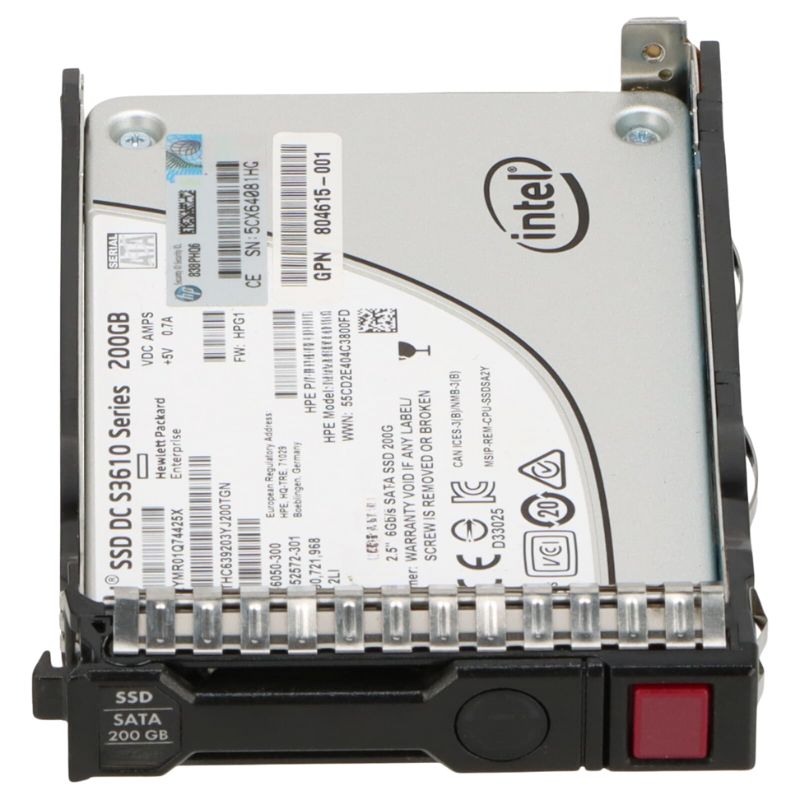


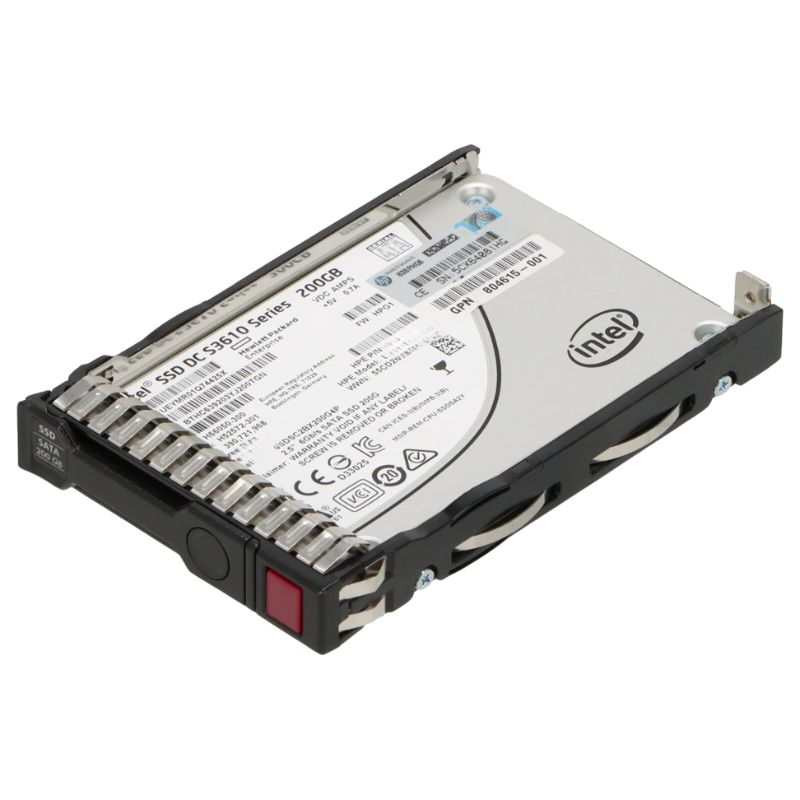
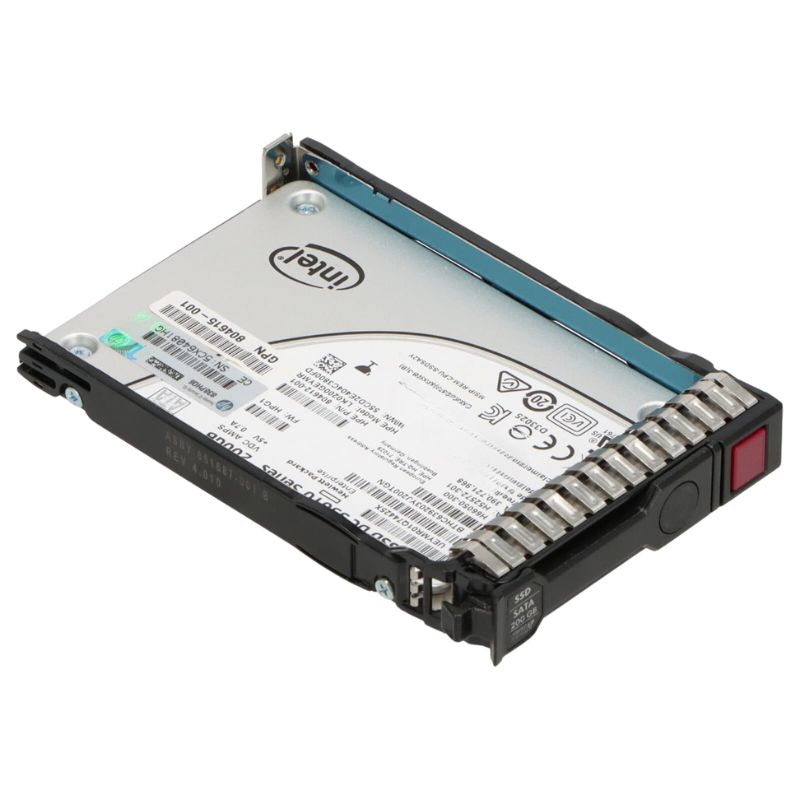
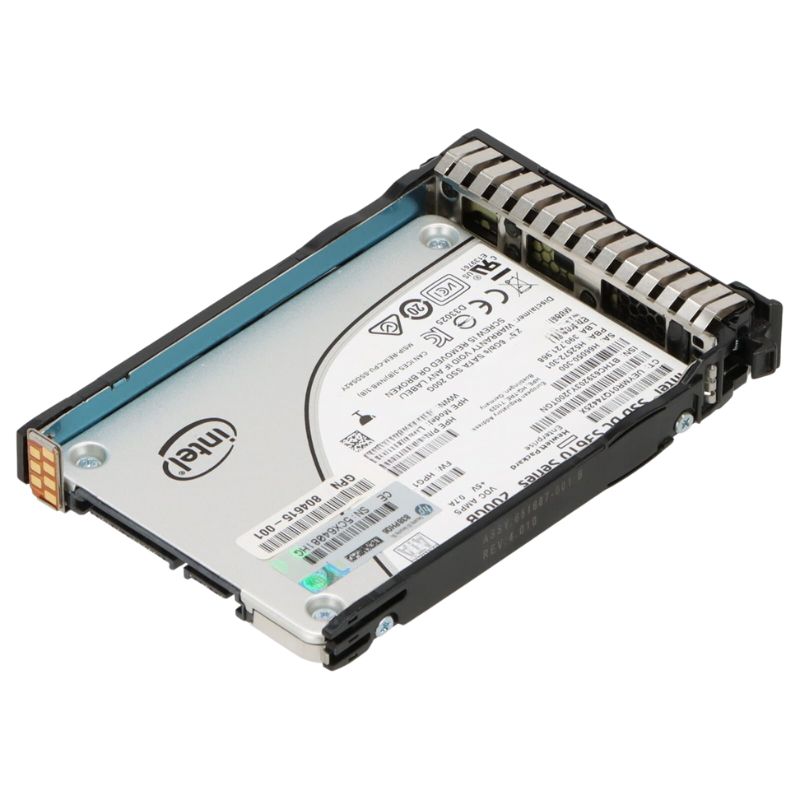
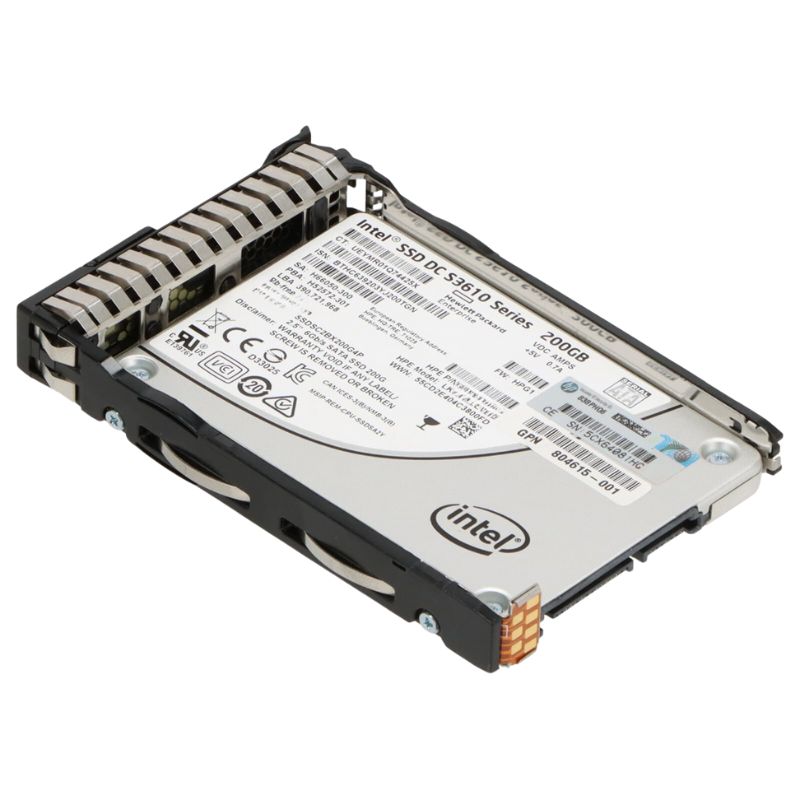
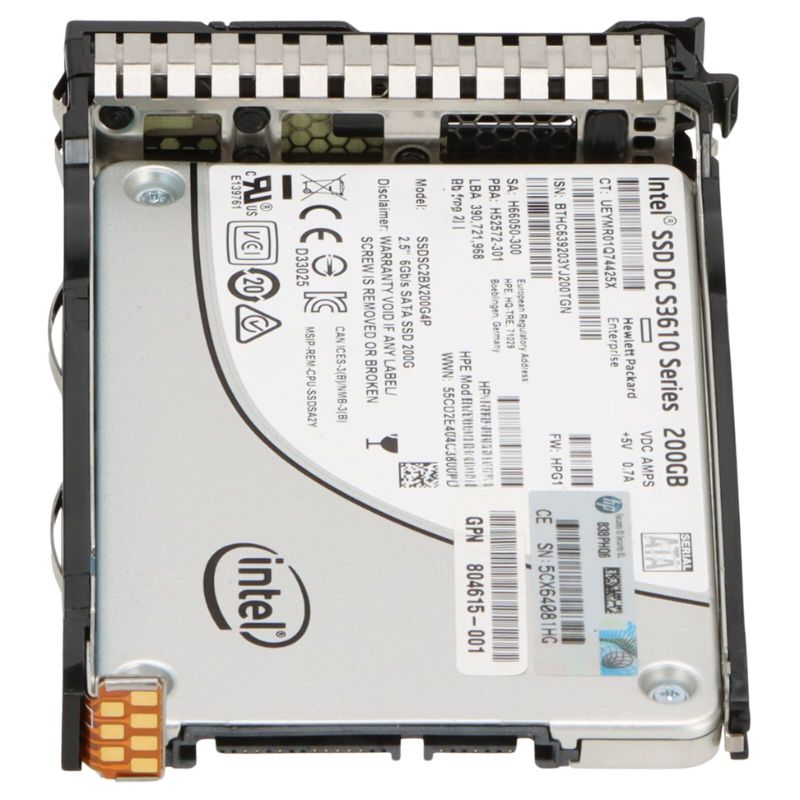
HPE 804613-B21 200GB SFF SATA-6GBPS SC Mixed-Use Server Hot-Swap MLC PLP SSD. Excellent Refurbished with 1 year replacement warranty
The HPE 804613-B21 200GB 2.5in SATA-6G SC Mixed Use G8 G9 Solid State Drive represents a focused category of enterprise-class storage designed for mixed-use workloads in HPE ProLiant Gen8 and Gen9 servers. This category centers on reliability, predictable performance, and compatibility with HPE server ecosystems while balancing endurance and cost-efficiency. The 200GB capacity and 2.5-inch SFF form factor are optimized for high-density environments that need fast, low-latency storage for operating systems, caching, virtual machines, and tiered storage strategies. Built around SATA-6Gb/s interfaces and HPE-validated firmware, drives in this category marry the practical economics of SATA with enterprise-focused features such as power loss protection, consistent write performance, and qualified compatibility across HPE platforms.
The 2.5-inch small form factor (SFF) design of the HPE 804613-B21 family enables servers to host a larger number of drives per chassis compared with 3.5-inch options, improving capacity per rack unit and allowing architects to build higher-performance storage topologies with lower physical footprint. The compact SFF profile is ideal for blade and rack servers, where drive bay density directly influences the compute-to-storage ratio and overall data center return on investment. Thermal characteristics and mechanical fit are engineered to HPE specifications, ensuring secure mounting, effective airflow, and consistent thermal behavior under sustained workloads.
The SATA-6G interface provides a cost-effective channel for delivering solid-state speeds to a broad set of workloads. While not matching the raw throughput of NVMe devices, SATA-6G remains an economical and broadly compatible option for system builders and administrators who require fast random I/O and low latency without changing server backplanes or controllers. This makes the 804613-B21 category a natural fit for system refreshes where preserving existing SATA infrastructure is preferable to adopting new buses. SATA technology in this category benefits from mature controller support, robust firmware testing, and established diagnostic tooling in HPE server environments.
A 200GB drive capacity serves specific roles in modern storage architectures. In mixed-use categories such as this, the 200GB size is frequently selected for boot and system volumes, hypervisor hosting, caching layers, and read/write acceleration tiers within an overall tiered storage strategy. Because mixed-use SSDs are balanced for both read and write operations, a 200GB device can operate as a high-performance localized cache in front of higher-capacity HDD arrays or as a primary datastore for small, latency-sensitive virtual machines. Capacity planning around the 200GB unit requires recognition of its endurance profile and intended Write Per Day (WPD) usage; administrators should consider replication, snapshot cadence, and RAID configurations when mapping workloads to these drives.
Mixed-use SSDs are engineered to tolerate a blend of read-heavy and write-heavy operations, making them versatile for real-world enterprise environments. The endurance metrics in this category reflect firmware optimizations and NAND selection tuned to deliver consistent performance over a meaningful service life. Mixed-use Class SSDs typically provide higher endurance than read-intensive parts while offering a more cost-effective alternative to write-intensive models. This positioning allows IT teams to deploy the 804613-B21 drives in scenarios where occasional sustained writes occur—such as database transaction logs, mail servers, and mixed multi-tenant virtualized workloads—without incurring the higher per-GB costs of write-optimized flash.
Performance for the HPE 804613-B21 category prioritizes low latency and consistent IOPS across mixed access patterns. The drive firmware manages garbage collection, wear leveling, and background maintenance tasks to mitigate latency spikes. Predictable tail-latency and strong small-block random IOPS at typical enterprise queue depths are essential for VM density, application responsiveness, and SLA compliance. When architecting solutions, administrators should factor in queue depth, host bus adapter (HBA) capabilities, and controller cache settings to ensure the drives perform to expected levels. Quality of service (QoS) considerations in multi-tenant environments may also necessitate additional storage-layer controls—such as IOPS capping, reservation, or QoS policies at the hypervisor or array layer—to prevent noisy-neighbor effects.
Enterprise SSDs that serve in the HPE 804613-B21 category commonly include capacitive power loss protection to preserve in-flight data during sudden power failures. Firmware-level safeguards ensure that write caches are flushed and that metadata structures remain intact, reducing the risk of data corruption and accelerating recovery after unexpected outages. Error correction code (ECC), end-to-end data path protection, and robust SMART telemetry are integral to the drive’s ability to maintain data integrity while providing operational transparency to storage administrators. These features combine to lower the risk profile when these drives are used for critical system volumes or performance-critical application layers.
One of the defining benefits of this category is tight compatibility and validation with HPE ProLiant Gen8 and Gen9 server families. HPE-validated firmware ensures that the drives interact predictably with integrated storage controllers, RAID adapters, and system management tools such as iLO and HPE SmartStorage. Validation reduces integration surprises during deployment, accelerates firmware upgrades, and simplifies lifecycle management by aligning drive diagnostics with HPE’s monitoring ecosystem. Organizations that run homogeneous HPE server fleets will find the HPE 804613-B21 category particularly convenient, enabling consistent behavior across maintenance windows and hardware refresh cycles.
The HPE 804613-B21 200GB mixed-use SSD category fits a broad set of deployment patterns. These include but are not limited to: operating system and hypervisor boot volumes, database log volumes, caching and tiering layers in hybrid arrays, VDI master image acceleration, and small to medium virtual machine datastores. In clustered or hyperconverged environments, these drives frequently serve as a performance tier that complements higher-capacity mechanical disks for bulk storage. In many scenarios, administrators combine multiple 200GB SSDs in RAID configurations to increase throughput and redundancy, while ensuring that the chosen RAID level balances rebuild time and performance requirements.
When integrating the HPE 804613-B21 drives into RAID arrays, administrators must consider the tradeoffs among performance, redundancy, and rebuild impact. RAID levels that prioritize redundancy, such as RAID 6, provide strong protection at the expense of increased write amplification during rebuilds, which can stress endurance. RAID 10 offers a balance of write performance and rebuild speed but requires more drives for equivalent capacity. Careful selection of RAID stripe size and understanding controller cache behavior are critical for optimizing performance. It is also advisable to employ proactive monitoring to identify early signs of drive wear or SMART warnings, enabling replacement before failures occur.
Rack planning must account for both the density benefits and the thermal load introduced by larger populations of SFF SSDs. Power distribution, cooling capacity, and cable management all become important when maximizing drive count per unit. The HPE 804613-B21 category facilitates higher drive counts with lower power consumption per drive than many disk-based alternatives, but cumulative power draw and heat generation should be modeled during capacity planning. Integrated rack-level monitoring and redundant cooling design reduce operational risk and help maintain the performance envelope for sustained workloads.


 Contact Us
 Information
 Catalog
 Solid State Drives (SSD)
 Network Switches
 Hard Disk Drives
 HBA & Controllers
 PC & Servers
 PC & Server Memory
 CPU & Processors
 Network Routers
 Power Supplies
 Tape Drives & Libraries
 Network Devices
 Computer & Network Cables