Main Information about HPE 834973-B25
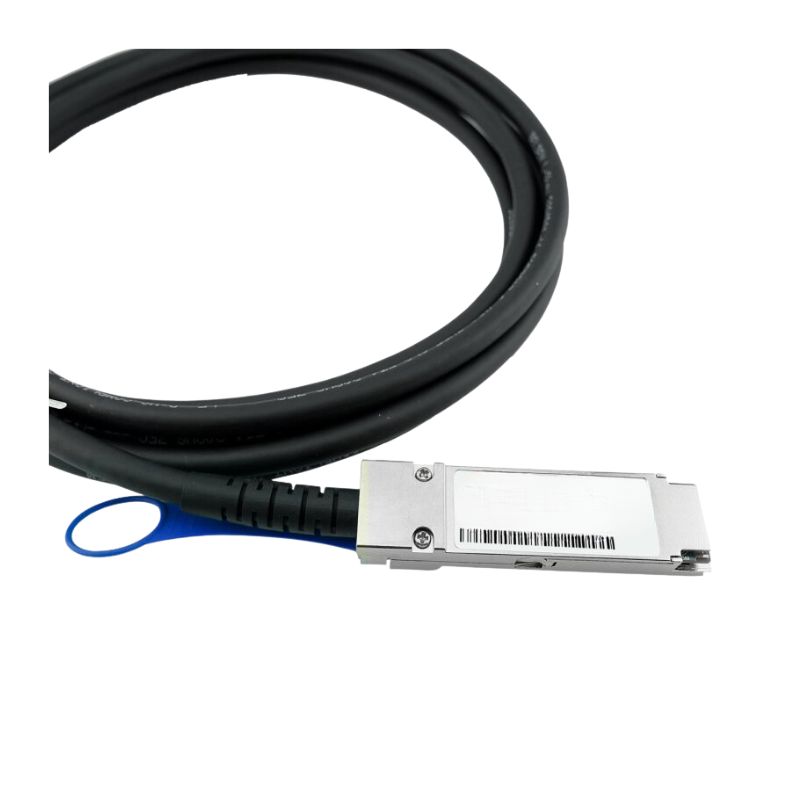
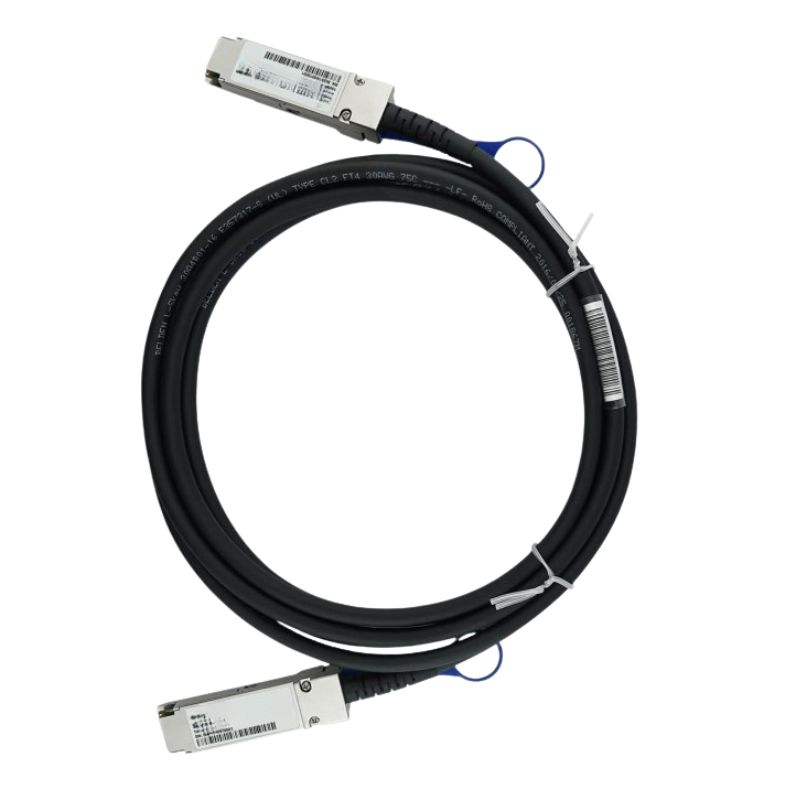
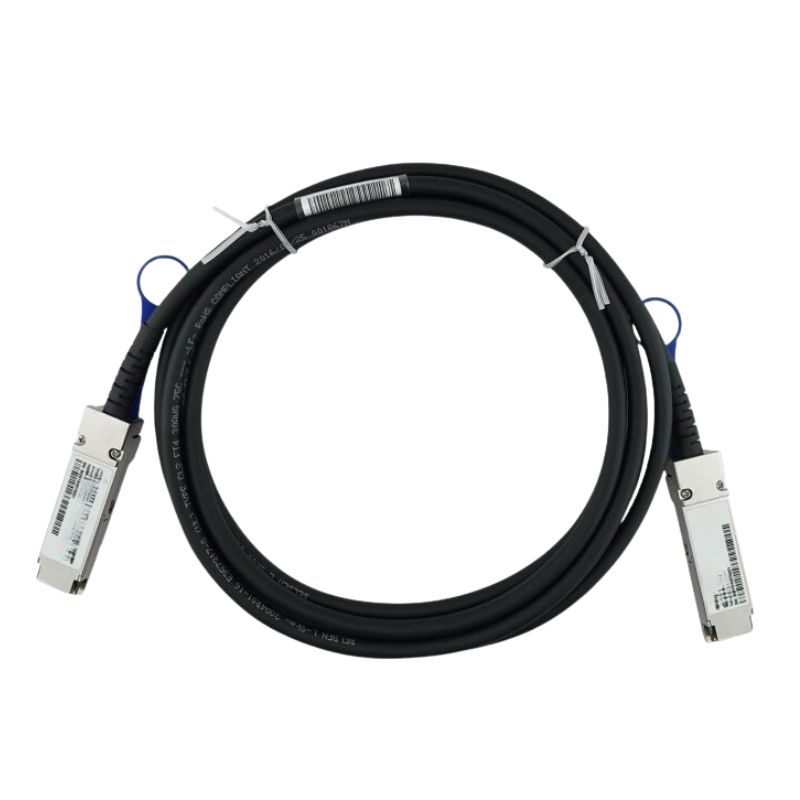
The HPE 834973-B25 3 Meter Infiniband EDR QSFP Copper Cable is designed to deliver dependable connectivity for data center infrastructures, enterprise networks, and high-performance computing environments. Manufactured by Hewlett Packard Enterprise (HPE), this high-quality cable ensures reliable performance, optimal transmission speeds, and long-lasting durability.
Essential Product Specifications
- Manufacturer: Hewlett Packard Enterprise (HPE)
- Part Number / SKU: 834973-B25
- Product Type: 3 Meter Infiniband Cable
- Interface Type: QSFP Copper Cable
- Cable Length: 3 meters
Key Features of the HPE 834973-B25 Cable
This HPE Infiniband QSFP cable is crafted for seamless data transfers and high-speed interconnects. It enhances communication between servers, storage arrays, and networking devices.
Highlighted Benefits
- Supports Infiniband EDR technology for advanced networking solutions
- 3-meter length provides flexible installation options
- Built with durable copper material ensuring stability
- Designed for low-latency and high-bandwidth applications
- Optimized for data-intensive workloads in enterprise environments
Applications and Usage
The 834973-B25 QSFP Copper Cable is ideal for data center connectivity and is compatible with a wide range of HPE hardware. It is commonly used in:
- Enterprise-grade network infrastructure
- Server-to-switch interconnections
- High-performance computing environments
- Storage system linkups for fast data access
- Bandwidth-demanding cloud solutions
Advantages Over Standard Cables
- Enhanced signal integrity for reduced transmission errors
- Optimized compatibility with HPE servers and storage
- Tested for enterprise-grade performance
- Long-lasting durability with quality copper design
Additional Considerations
When integrating into your IT setup, consider the cable length, environment, and compatibility with existing infrastructure. The 3-meter HPE 834973-B25 is versatile enough to support multiple deployment needs while maintaining efficient data throughput.
Key Use Cases and Typical Deployments
This cable is frequently chosen for environments where performance and low latency are critical and where distances between devices are short — typically within the same rack or adjacent racks. Common deployment scenarios include:
- High-performance computing (HPC) clusters requiring RDMA and minimal latency for parallel workloads.
- Machine learning training farms and GPU clusters where fast inter-node communication accelerates training time.
- Enterprise and hyperscale data centers optimizing east-west traffic between top-of-rack (ToR) switches and compute nodes.
- Storage networks employing InfiniBand-attached storage appliances or NVMe over Fabrics (NVMe-oF) over InfiniBand.
The HPE 834973-B25 for InfiniBand Connectivity
Selecting the HPE 834973-B25 DAC provides several advantages compared with fiber or longer copper alternatives when the environment allows short-range connections:
- Cost efficiency: Passive copper DACs are typically less expensive than active optical transceivers plus fiber patching for equivalent short distances.
- Power savings: Passive copper cables do not require external power or active electronics at the transceiver, reducing power consumption.
- Plug-and-play simplicity: Direct attach cabling is straightforward to install — no transceiver modules to configure and fewer moving parts.
- Optimized latency: The direct electrical connection reduces serialization and conversion delays, beneficial for latency-sensitive applications.
Technical Specifications and Capabilities
The technical design of the 834973-B25 targets robustness, signal integrity, and compatibility. Below are the primary characteristics and capabilities that make this cable an excellent fit for modern interconnect fabrics.
Physical Characteristics
- Length: 3 meters (fixed-length direct-attach copper).
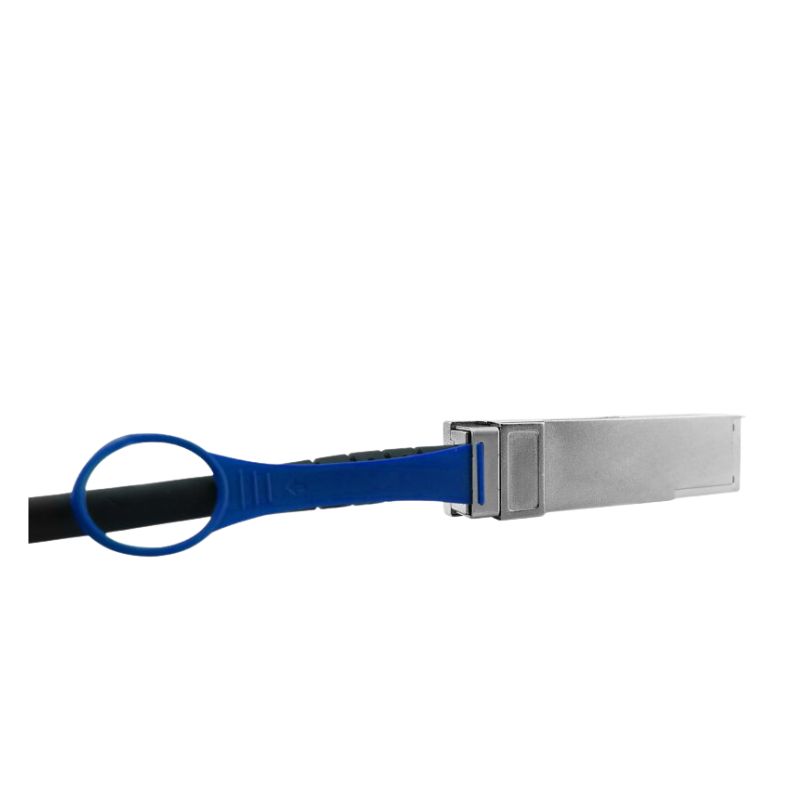
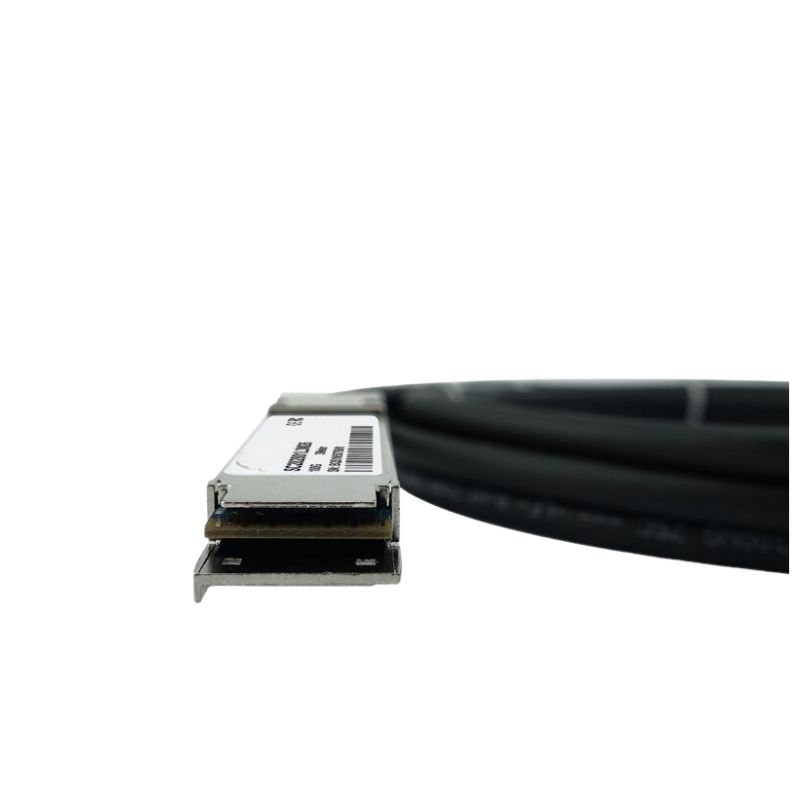
- Connector Type: QSFP (Quad Small Form-factor Pluggable) compatible ends designed for InfiniBand EDR ports.
- Cable Type: Copper twinaxial assembly with high-quality shielding to minimize crosstalk and EMI.
- Durability: Reinforced strain relief and robust plug housings for repeated insertions and reliable mechanical life.
Electrical & Performance Specs
- Protocol Support: InfiniBand EDR (Enhanced Data Rate), backward compatible with FDR/DDR where supported by host and switch firmware.
- Data Rate: Up to 100 Gbps aggregated bandwidth (EDR-class signaling).
- Latency: Extremely low per-hop latency optimized for RDMA, MPI, and other HPC messaging layers.
- Power Dissipation: Passive operation — minimal additional power draw beyond port signaling.
Performance Tuning and Network Optimization
To extract the best performance from an InfiniBand EDR fabric using HPE 834973-B25 cables, consider both hardware and software-level tuning steps. These optimizations help reduce bottlenecks, maintain high throughput, and improve overall cluster efficiency.
Fabric Topology and Layout
- Design fabrics for minimal hop count in latency-sensitive applications — keep critical nodes as close together physically and logically as possible.
- For multi-rack clusters, use high-speed EDR-capable switches at aggregation points and maintain consistent cable types to prevent mismatched link behavior.
Driver and Firmware Considerations
- Ensure that host channel adapters (HCAs) and switch firmware are updated to versions that support EDR and the specific behavior required by your middleware (MPI, RDMA libraries, storage drivers).
- Validate link speed negotiation — some systems may default to lower speeds if auto-negotiation fails, so check OS and adapter logs for link training messages.
Transport and Middleware Settings
- Tune RDMA and MPI parameters (e.g., eager/rendezvous thresholds, buffer sizes) to match typical message sizes and application patterns for best latency and throughput.
- For NVMe-oF over InfiniBand, align queue depth and IO submission parameters with the NIC/switch capacity to avoid queue stalls.
Comparisons: DAC vs. Optical Transceivers
Choosing between a direct-attach copper cable and an optical transceiver-plus-fiber solution depends on distance, cost, power, and the specific fabric design. Below is a comparison to help guide purchasing decisions.
Advantages of Direct-Attach Copper (DAC)
- Lower upfront cost for short distances (typically under 5–7 meters for DACs).
- No separate transceiver modules — fewer individual components to manage.
- Lower overall power consumption and simplified cabling for dense rack deployments.
Advantages of Optical (Active Optical Cable or SFP/QSFP with Fiber)
- Longer reach over tens to hundreds of meters, suitable for cross-rack and cross-aisle connections.
- Immunity to electrical interference and easier compliance with certain electromagnetic constraints.
- Modular transceivers allow flexible upgrades and replacements independent of cable runs.
Choosing the Right Option
For short-span, high-density rack environments where cost and power are key constraints, the 834973-B25 DAC remains a highly attractive option. For longer spans, or where future-proof flexibility of transceivers is required, fiber-based solutions are preferable.





 Contact Us
 Information
 Catalog
 Solid State Drives (SSD)
 Network Switches
 Hard Disk Drives
 HBA & Controllers
 PC & Servers
 PC & Server Memory
 CPU & Processors
 Network Routers
 Power Supplies
 Tape Drives & Libraries
 Network Devices
 Computer & Network Cables